

Ex-Mossad chief Yossi Cohen says he’s not entering politics, for now
Former spy master recalls Netanyahu telling him he was preparing him as potential successor, says country needs new leadership
 Add ToI as a Preferred Source on Google
Luke Tress is The Times of Israel's New York correspondent.
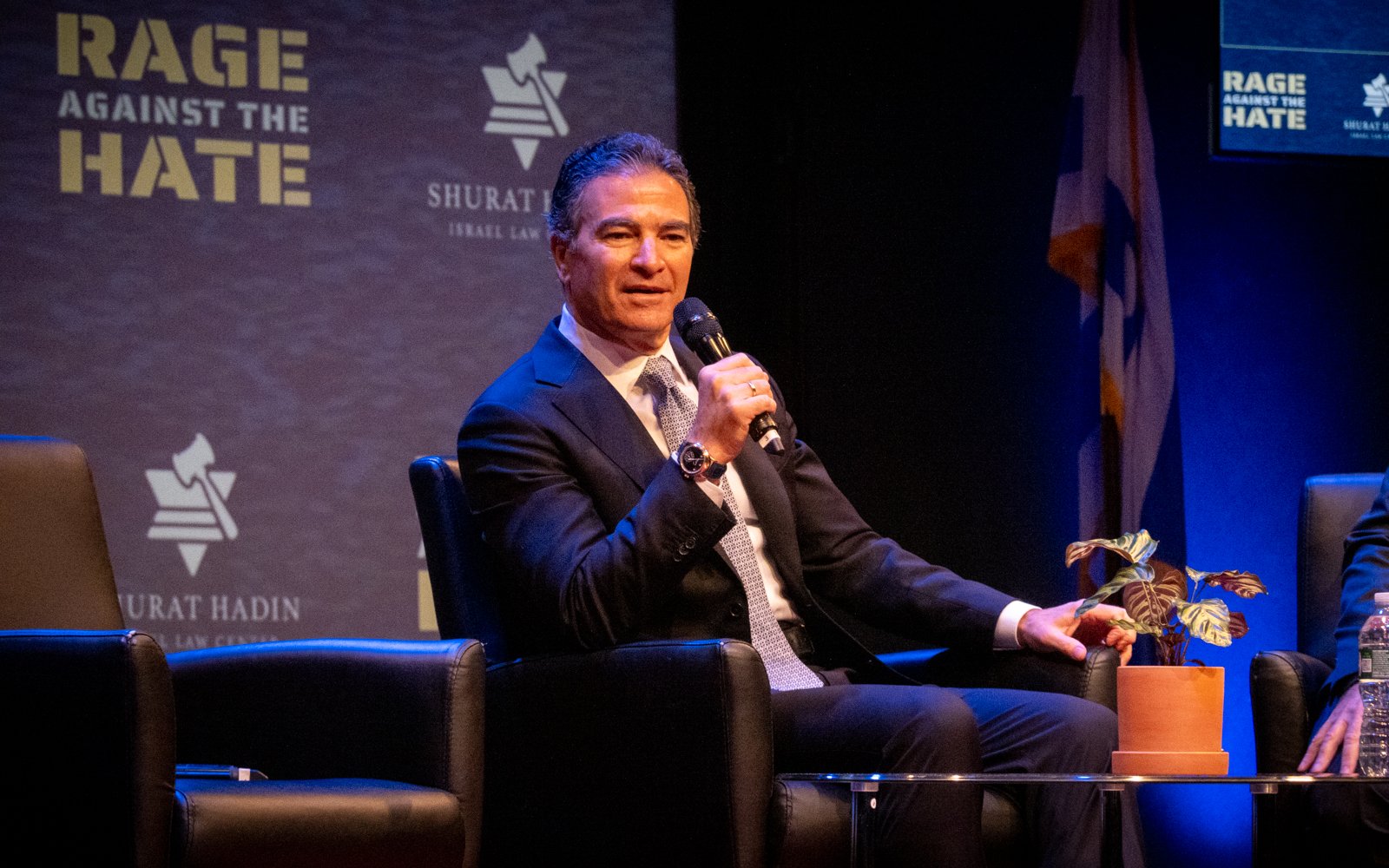
NEW YORK — Former Mossad chief Yossi Cohen on Monday indicated that he will not run in the next election, after years of media speculation that he is eyeing the premiership and may run for Knesset at the next opportunity.
“The answer is no. Not now. Let’s wait and see what happens next,” Cohen said when asked about running in the next election.
Cohen has long been linked to Prime Minister Benjamin Netanyahu, who appointed him as Mossad head after he served as the premier’s national security adviser, with the premier reportedly viewing him and fellow longtime confidant Ron Dermer as potential successors. Cohen led the Mossad from 2016 to 2021.
“It all starts with the prime minister of today, when I was still the director of Mossad, announces that I may be the heir,” Cohen said, referring to Netanyahu. “That was in 2018 or ’19, I believe. Then my wife said, ‘No. Never. You don’t do that. We don’t do that.’”
“But I think that things have been dramatically changed after October 7th and there is a need of, probably, fresh leadership, not only in other countries, but in Israel too.”
“The consideration is always there, but the decision now is a no,” Cohen said, speaking to an audience at a conference hosted by the Israeli legal advocacy group Shurat HaDin.
Cohen’s comments on Monday appeared to mark a turnaround since June, when he said in a podcast, “The public is pushing hard, and for real change to happen, I need to be prime minister.”
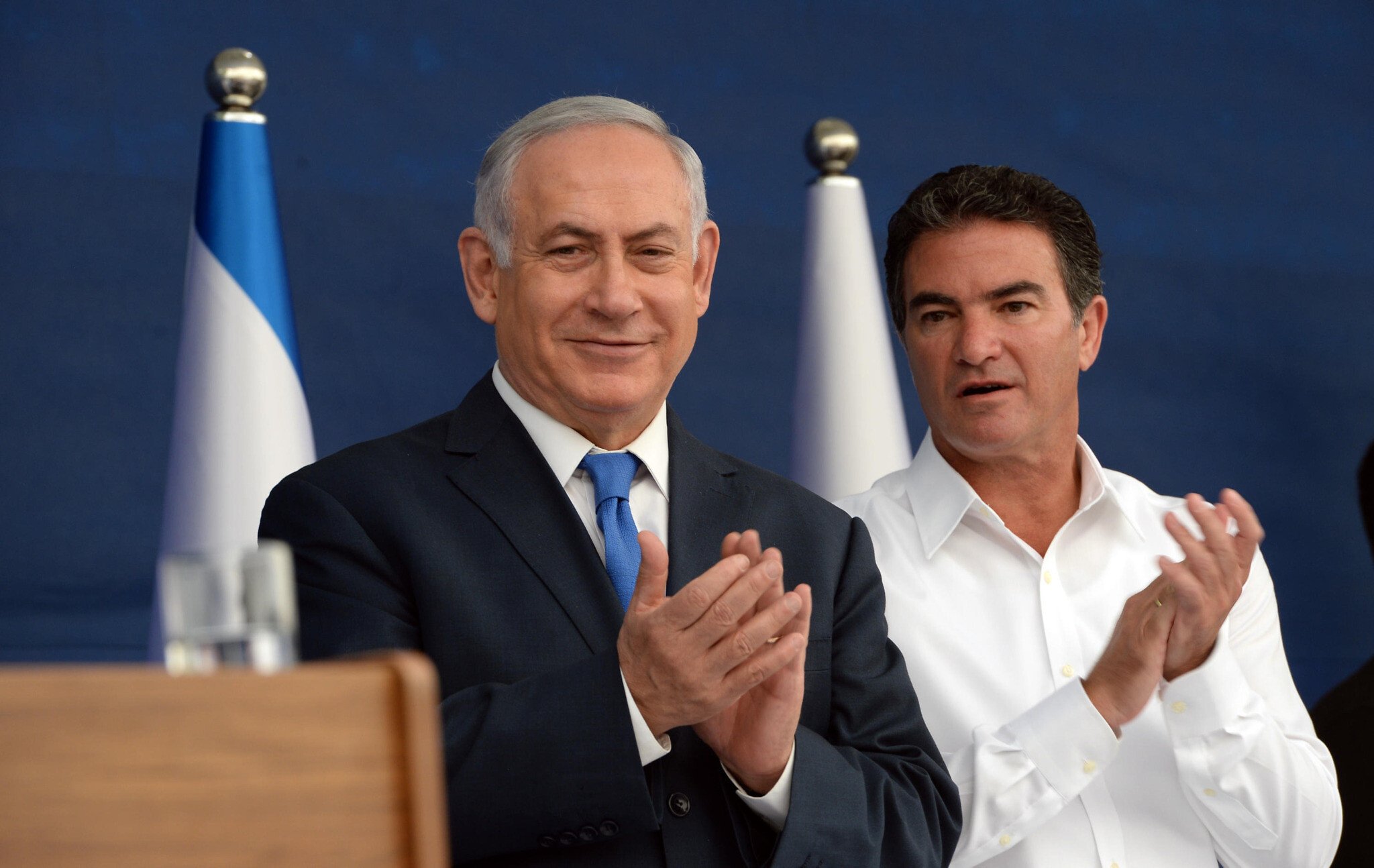
Last month, he stoked further speculation during an interview with Channel 12 news, saying Netanyahu should no longer serve as premier because he “can’t unify” Israel the way it needs.
In June, Channel 12 reported that Cohen was considering creating a new political party to run in the next election.
According to the network, Cohen has previously discussed forming alliances with former prime minister Naftali Bennett, Yisrael Beytenu chairman Avigdor Liberman, and Netanyahu himself.
The report said, however, that Cohen was leaning toward forming his own party, as he believes Israel needs political change and that he would bring something new to the table.
Elections are scheduled for October 2026. Early elections can only happen if the Knesset votes to dissolve itself, or if the state budget is not passed by the end of May, in which case the Knesset dissolves automatically.
Cohen spoke to the US crowd at the Shurat HaDin conference at the Museum of Jewish Heritage in Manhattan. The conference, called “Rage Against the Hate,” focused on Jewish activism “in the wake of October 7th.” Cohen was interviewed in English by Israeli journalist Ariel Kahana.
The pro-Israel media spokespeople Yoseph Haddad and Eylon Levy, and prominent lawyer Alan Dershowitz, also spoke at the conference, as well as Jewish community legal advocates and media analysts.
Cohen also said that Israel should alter its intelligence sharing with Western countries that pursue anti-Israel policies in world forums.
Cohen made the statement a day after Israel exposed a transnational terror network run by Iran’s Islamic Revolutionary Guard Corps. The terrorist network was behind a string of recent attacks on Jewish sites in Western countries, including Greece, Germany and Australia, the Mossad said.
A number of countries, including Australia, recognized a Palestinian state at the UN General Assembly earlier this year, in a diplomatic affront to Israel.
“I think that we have to exchange this kind of coordination, that is eventually saving their lives, with better support,” Cohen said.
Cohen said he had been in the UK shortly before British Prime Minister Keir Starmer declared the UK’s recognition of a Palestinian state.
“We had given them so much intelligence that saved British lives,” he said.
“They received so much intelligence from us, for the sake of the UK, not against any Israelis or Jewish elements inside London, not synagogues or rabbis. It’s properly in the streets of London, and hoping that they will reciprocate with a better relationship,” he said. “Currently, this is not the case.”
He pointed to Israeli intelligence informing Australia about an Islamic State attempt to bomb a flight from Australia in 2017.
“We had given the Australians probably one of the most important pieces of intelligence that saved hundreds of people’s lives,” he said. “That was our intel, and what do we get in return from Australia?”
“I do not propose that the Mossad or Israeli intelligence forces will cease collecting or sharing intelligence with our partners around the world to save other people’s lives, but I do offer that it should be traded differently,” he said.
Cohen also discussed Mossad’s 2018 operation to steal Iran’s nuclear archive from a warehouse in Tehran in a historic achievement for the agency. He said the Mossad planned the operation for two years and that agents had made “hundreds of visits” to the warehouse housing the documents.
He applauded the Israeli-US strike on Iranian nuclear facilities this year, saying the attack had “for now, delayed dramatically the ability for Iran to acquire nuclear weapons.”
Cohen said Iran was at its weakest point since the 1970s, and that, in the past, “we tried” to foment regime change in Iran.
“We tried so hard to make the people of Iran uprise, go against their own regime, but Iran treats them so brutally, so they cannot,” he said.





The Times of Israel Community.