

Finance minister vows to cut red tape to allow US embassy move
In order to facilitate Jerusalem move by May 14, Kahlon instructs zoning authorities to exempt security-related construction work from lengthy permit process
 Add ToI as a Preferred Source on Google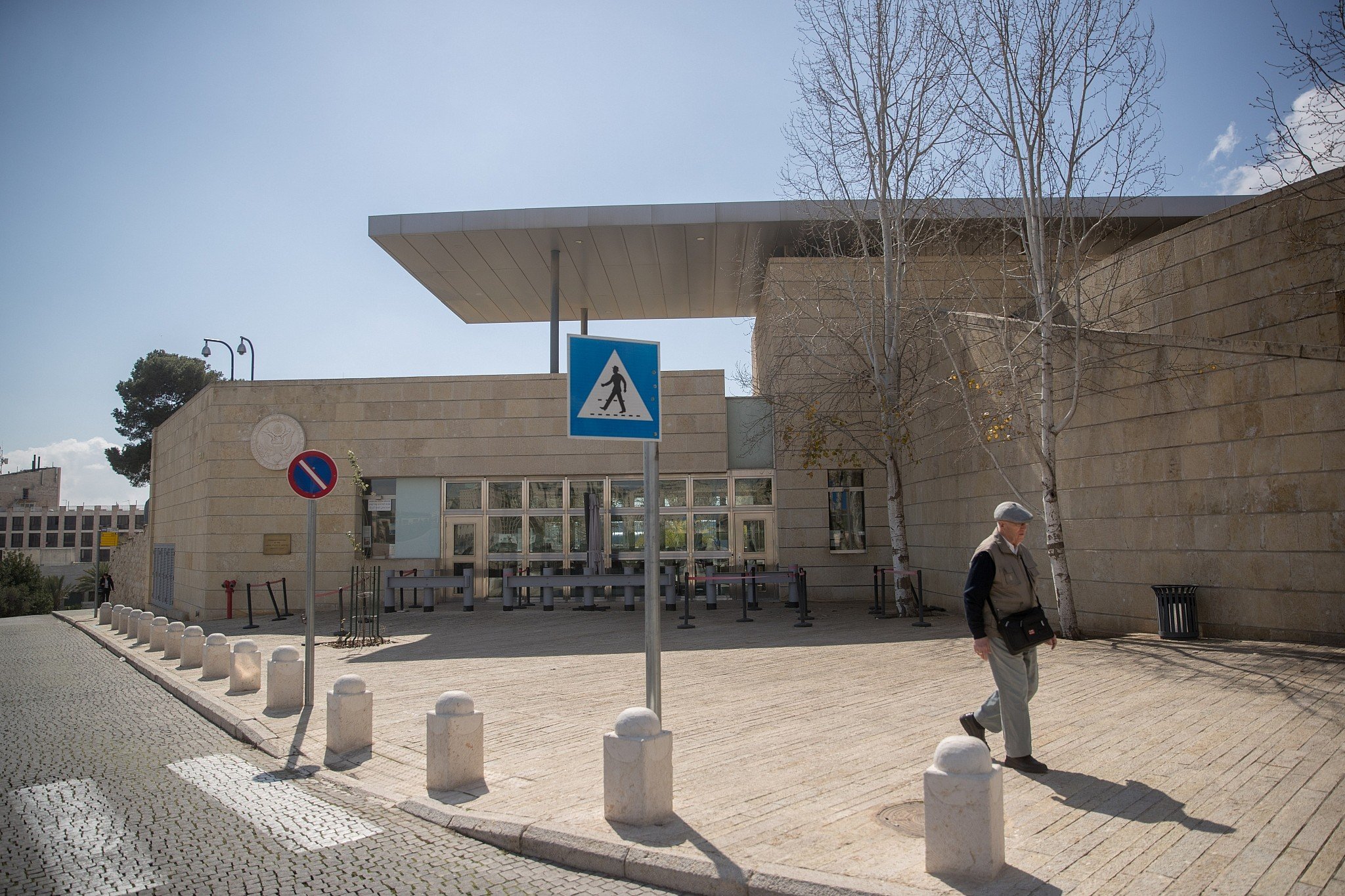
Finance Minister Moshe Kahlon announced Wednesday he was instructing Israel’s planning and zoning authorities to offer the US diplomatic mission in Israel a blanket exemption from certain zoning requirements in order to allow for the moving of the US embassy to Jerusalem by Israel’s 70th independence day on May 14.
Over the past few days American officials have reportedly met with the relevant Israeli authorities to get permission for urgent security-related construction work they say is necessary to convert the consulate in the Arnona neighborhood in southern Jerusalem into an embassy.
According to a Hadashot TV news report, the Americans want to build a three-meter (10-foot) wall around the site and pave a new road from the site, among other changes. However, the site’s current zoning status does not allow for such changes.

In a Hebrew-language statement Wednesday, which he also posted on Twitter, Kahlon said:
“I am delighted, both as finance minister and as [the official] responsible for planning in the State of Israel, to sign today a recommendation to the [National] Council [for Planning and Construction] to issue an exemption from an infrastructures construction permit in order to enable the American embassy to move from Tel Aviv to Jerusalem, our eternal capital. Good luck, and [do it] as quickly as possible!”
In a follow-up tweet, Kahlon turned to English and addressed US President Donald Trump directly.
“President @realDonaldTrump, I’m happy to inform you that we are moving forward with the preparations, making sure that no bureaucracy slows down the process of moving the US embassy to Jerusalem.”
Kahlon’s letter instructs the council to hold an emergency meeting to issue the exemption, which will allow the security-related construction work to go ahead without waiting for the council’s famously lengthy approval process.
The push by the finance minister followed a Tuesday report by Hadashot that warned that red tape may hold up the embassy move.
Senior officials including Prime Minister Benjamin Netanyahu and Foreign Ministry Director General Yuval Rotem vowed to ensure the bureaucracy would not cause delays.
Rotem reportedly sent a letter to Kahlon earlier in the week warning that if the construction work was not granted an immediate exemption, the planned embassy move on May 14 would be at risk.
“The process of requesting an amendment to the existing site plan is expected to take a long time, and will not allow completion of the work on the date set for the embassy’s move,” wrote Rotem. “Without these works being completed, the compound will not meet the mandatory requirements of the State Department for [housing] the American Embassy.”
The proximity to the Passover festival, which begins on March 30, also threatened to delay the approval process.
A statement from Netanyahu’s office said Tuesday night, “The prime minister will act decisively and quickly to ensure that the American embassy will move at the appointed time and he will not allow unnecessary bureaucracy to harm the process.”
Since Trump’s announcement on December 6 that the US recognized Jerusalem as Israel’s capital and planned to move its embassy from Tel Aviv to the holy city, his administration has been sifting through options for fast-tracking the relocation.
According to reports, the US will initially retrofit a small suite of offices in the consulate facility to accommodate Ambassador David Friedman and key aides, while Friedman will still also maintain an office at the current embassy in Tel Aviv, which would thenceforth be considered a branch of the Jerusalem embassy. Jerusalem consular staff will continue to provide consular services such as issuing passports and visas at the building. (The US Consulate on Jerusalem’s Agron Street, which is responsible for Palestinian areas, will continue to function as before.)
The rest of the embassy staff will remain at first in America’s current facility in Tel Aviv. Over time, the Arnona facility will be expanded to accommodate more embassy personnel. The expansion could ultimately involve an adjacent property that currently houses a home for senior citizens. It will come under US control in the next few years under a previous arrangement, officials said.
Finally, a new purpose-built embassy will be planned and constructed.








The Times of Israel Community.