

Focus on the females when DJ Miri Petel is in the house
This Jerusalem deejay spins sets for weddings, festivals and women’s parties, bringing a different groove to the music
 Add ToI as a Preferred Source on Google
Jessica Steinberg, The Times of Israel's culture and lifestyles editor, covers the Sabra scene from south to north and back to the center
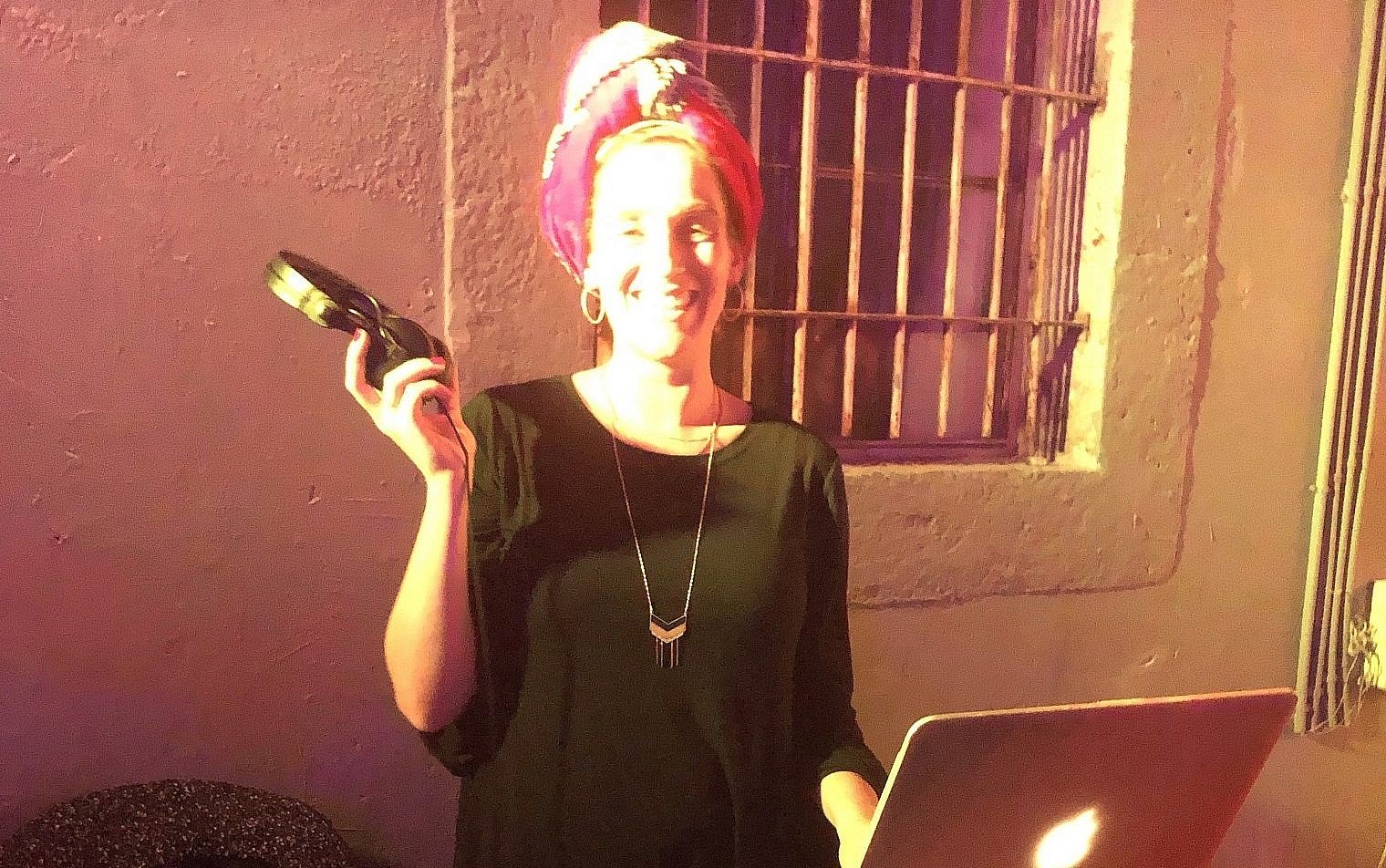
The high-ceilinged basement room of Beit Alliance in Jerusalem was dimly lit, close with the scent of sweat and full of gyrating women. Only women. Some barefoot and in tank tops, others with turbaned heads signaling their married state, they were swaying their hips, hands in the air, dancing to their own rhythms and the thumping bassline.
At the front of the room was DJ Miri Petel, her hair wrapped in a printed scarf and topped with headphones, hoop earrings swinging as her eyes scanned the board in front of her, cuing the playlist for this women-only dance party.
She looked up occasionally to grin, because this scene was worth about a thousand smiles.
“They’re just grooving out there,” she said.
It wasn’t the first women’s dance party hosted by Petel, a Jerusalem-based deejay. She has helped establish an entire world based on women spinning music, a world that locally has heretofore been mostly, although not entirely, dominated by men.
“Deejaying requires a lot of energy, but it also foments happiness,” said Petel, at her house in the capital’s Ein Kerem neighborhood a few weeks earlier. “It allows me to express myself.”
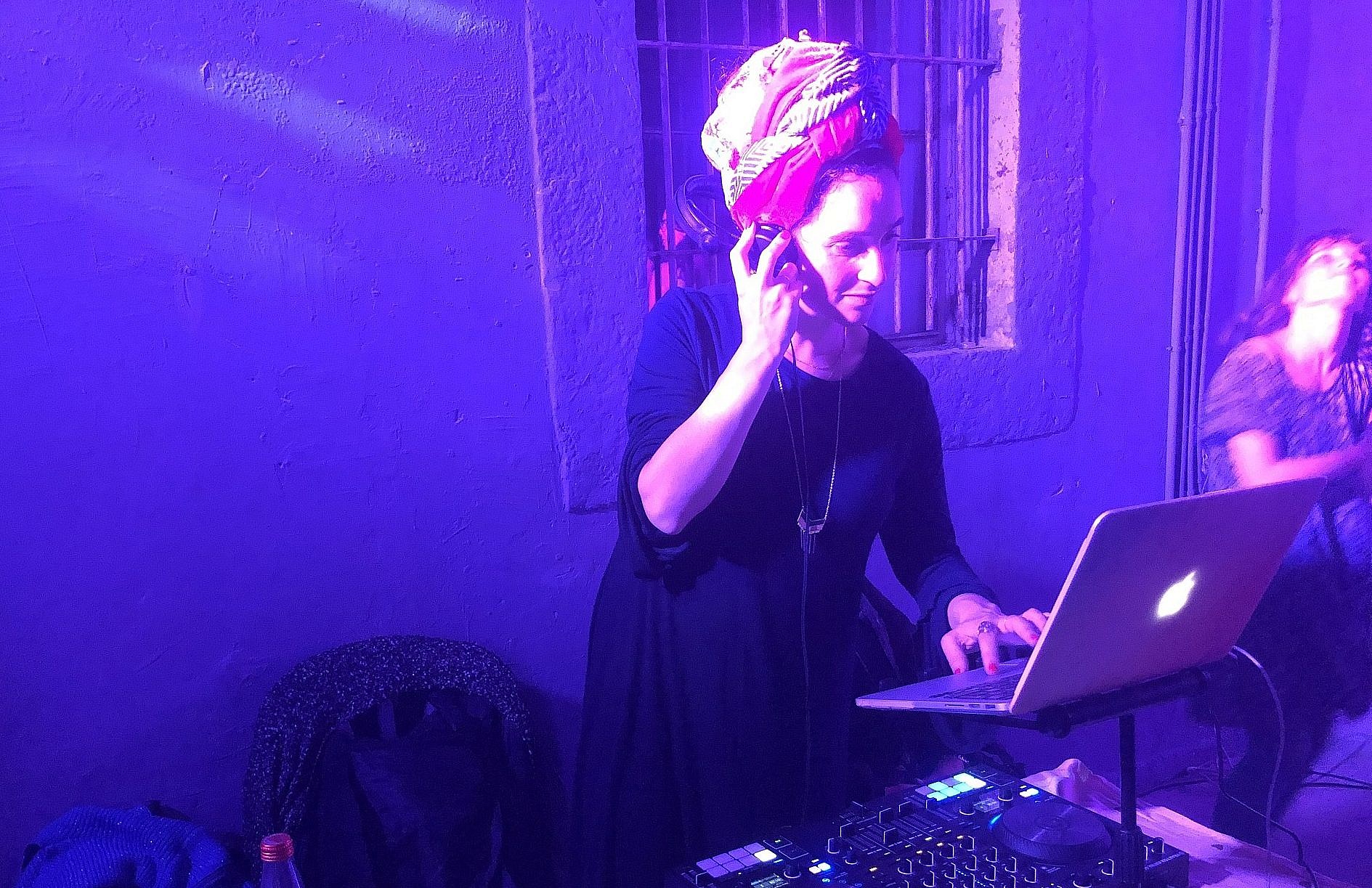
On Petel’s regularly scheduled women’s-only dance nights, the scene is simple: She rents a large space, announces it on Facebook and sets up a room with some strobe lights and her deejay station. There’s usually another room where women sell handmade jewelry and secondhand clothing, and a small bar selling cups of pumpkin soup and bottles of water. There’s usually no alcohol served, often because the rental spaces don’t have a liquor license.
“A little wine could be nice,” said Petel. “But they don’t really need it.”
They really don’t, these women who come from all over the country and have seemingly endless sources of energy for dancing their hearts out.
“They come from everywhere, from Mizpe Ramon and Eilat and the Golan and Petah Tikva,” she said. “The whole week before, they’re all talking about it.”
And when they finally arrive at the specified location, often in Jerusalem, they dance and dance and dance through the evening.
אחיות, איזה מקבץ מדהים של נשים שבאות לרקוד בשביל השמחה שלהן.זה עונג גדולתודה לכל אחת שהיתהתודה לכל הצוות שעמד מאחורי היופי הזהתודה למי שבאה להגיד שהיה לה מדהיםתודה ה'תן לנו עוד !!!שבת מבורכת❤
Posted by די ג'יי מירי פטל \ Dj Miri Petel on Friday, January 11, 2019
Petel’s most recent sold-out party included “music that you mostly won’t know,” she wrote beforehand on her Facebook page, “and some that you do. A little mainstream, world, a little trance, some Hebrew music. It’s not a mainstream party, and also not a wedding. It’s, of course, a party, but open to all kinds of genres.”
Her collection of songs numbers in the thousands, and one evening can include up to a hundred.
Petel warned ahead of time that there wouldn’t be much pop music, but a mixture of whatever wants to make her dance — and never anything that’s misogynist or full of raunchy profanity. For this deejay, it’s all about the positive energy.
“It’s just amazing, people just need this,” she said during that Thursday night dance part, during one of the few moments when she turned away from her controller. “It’s a kind of a miracle, all these people showing up.”
It’s that indefinable rush of energy that got Petel into this business, working as a deejay for weddings, bar and bat mitzvahs, music festivals and other events.
First, however, she trained as a dancer, and was occasionally hired to help stir up the energy among guests at weddings. But it was music that moved Petel, and she ended up learning a lot about the deejay business at Boogie, a non-profit Jerusalem music-and-dance event founded by Avi Edry, who created the event in order to bring Jerusalemites closer together.
“Miri was a regular,” said Edry.
Edry usually deejays the Boogie events himself, but occasionally hosts other young deejays, always aiming to bring other people into the Boogie circle. Petel learned a lot from Edry and his Boogie events, she said, particularly the inclusiveness that’s always replicated at her own parties.
Two and a half years ago, a friend asked Petel to deejay her wedding, and Petel went into business on her own. She bought equipment and hung out her shingle, and she hasn’t looked back.
A female deejay needs to enjoy thinking outside of the box, said Petel. She described the job as reading the crowd and the celebrants, and successfully navigating the event that’s unfolding on the dance floor.
Being a deejay is about listening and hearing, said Petel.
“Weddings are complicated,” she said. “It’s a crossroads of a lot of things, and you’re the person who ties it all together. It’s not just a happy occasion, it’s millions of things, expectations, and family and arguments. It’s very psychological.”
The world of the deejay, said Ariella Reshef, a student of Petel’s, is a very male world, and Petel brings “something quiet and listening that’s special,” she said. “She’s very specific in how she teaches.”
To be a deejay is to offer “a pipeline of happiness and good energy,” said Petel, along with a good dose of modesty. The deejay is up on the platform, a center of attention but wholly connected to the crowd.
“It’s a dialogue, not a monologue,” said Petel. “I want us to have fun together, to speak the same language. The celebrants have to rely on me, they can’t be in control of everything.”
למי שתהה איך נראהקורס תקלוט לנשיםהנה חלון קטןלתקלוט הביכורים של 11 בנות אמיצותשהלכו על זה וזרחו עוד קצת בעולםהפעם זה מהמחזור שסיים בינואר האחרון.עבר זמן ועדיין זה ממש מדהים לראות מה נוצרתודה עמוקה לכל השותפים לעשייה הזה -חבר ואמן שהולך איתי דרך ארוכהצילם וערך את היופי הזה – Tamir Platzmann Studioסטיילינג – נופר בארימוזיקה בול לפוני -Quarter to Africa – רבע לאפריקה בית אליאנס ו בטי בארץ הוינטג' תבורכו, איזה שותפות מדהימה.בקרוב נפתח עוד מחזור בתל אביב הפיצו את האור!מלא אהבה,מירי והצוות.
Posted by די ג'יי מירי פטל \ Dj Miri Petel on Tuesday, June 19, 2018
Petel is currently seven months pregnant, and is preparing for the very near future when she won’t be deejaying for several months, at least.
She has been teaching deejay courses to women, and has now created a niche of female deejays, although only a small number end up working the circuit as a profession.
“There are courses for deejays, but they’re very male and dark and techno,” said Petel, who tends toward a much wider selection of music. “Learning how to deejay is about curiosity, a love of music and people and it’s mostly a hobby for most people. By day they work in the Finance Ministry or as teacher and at night they deejay. It’s just something they’ve always wanted to do.”
What’s unusual about Petel’s courses is her presence as a woman, said Reshef, 33, a high school Bible teacher who now frequently works with Petel, and is pursuing her own deejaying career during a year-long sabbatical.
“It’s not just learning to be a deejay, but gaining confidence in ourselves and belief in ourselves to be able to go out and do that,” she said.
There’s now a wealth of female deejays, according to Reshef, women who specialize in different music or events, with some focusing on festivals and public parties, and others on bar or bat mitzvah parties and weddings.
And while a surplus of female deejays in a relatively small market is a worry for Petel’s Boogie mentor Edry, who asks, “how many deejays are really necessary,” Petel said she’s not afraid of the competition.
“You have to want to be a deejay,” she said. “And if there are more deejays, there will be more parties and more demand. We’ll create niches within the deejay world.”
And, of course, there are the women’s parties.
The women’s dance parties aren’t organized only for religious women who wouldn’t dance at a mixed club of men and women. They’re for women because “women just want to dance,” said Petel. “When women dance with women, they just do what they want, it’s not about how they look in the eyes of others.”
Petel’s next women’s-only dance party is on February 18. Follow her Facebook page for more information.










The Times of Israel Community.