

For many Muslim Americans, Mamdani’s win is a milestone for representation and diversity
Socialist NYC mayor-elect’s victory ‘sends a powerful message that Muslims are not just part of this nation’s civic fabric, we help shape it,’ says one voter
 Add ToI as a Preferred Source on Google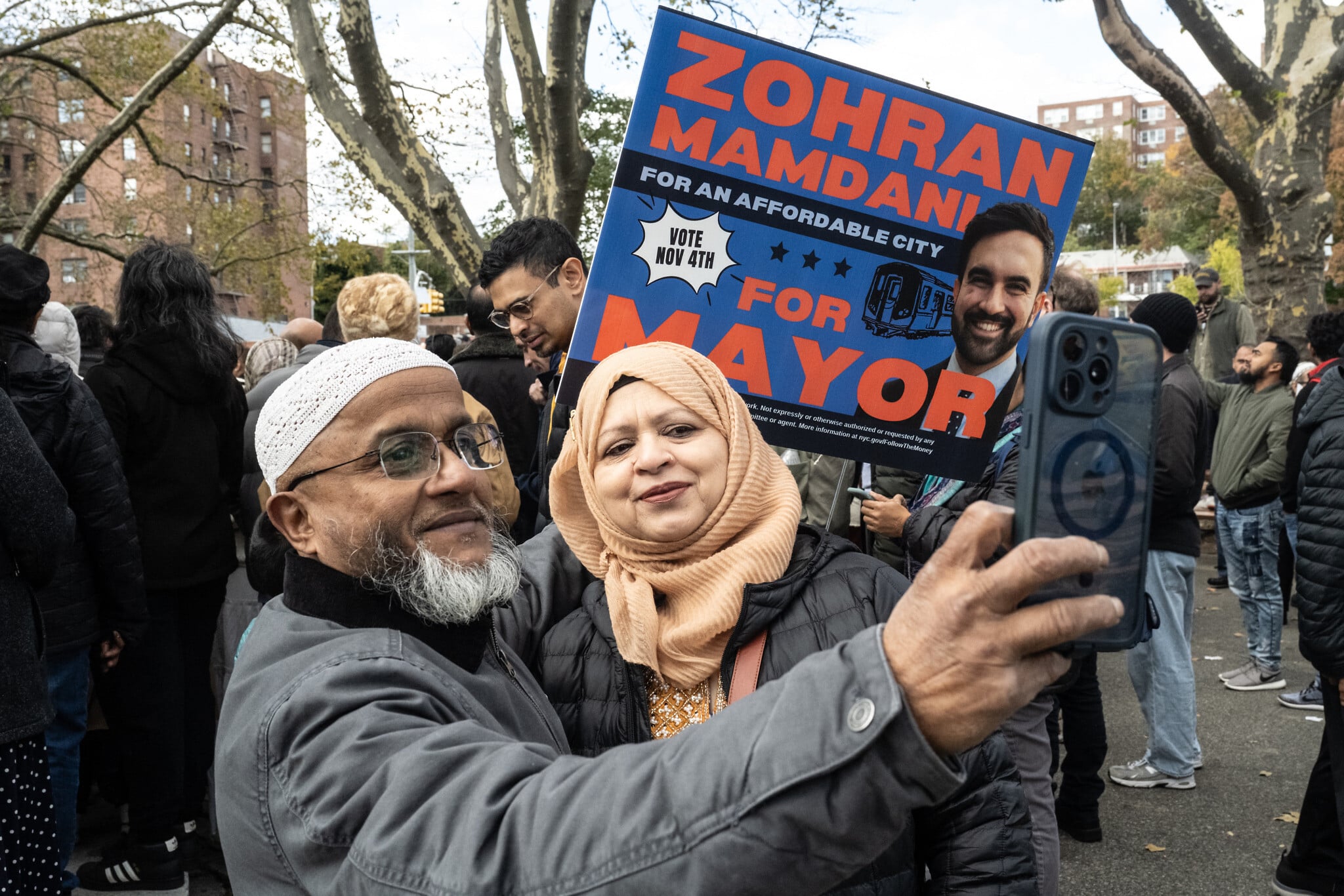
Zohran Mamdani’s historic election as New York City’s first Muslim mayor has sparked excitement and hope among American Muslims.
Many are relieved and proud that anti-Muslim rhetoric directed at Mamdani during the campaign didn’t discourage New Yorkers from voting for him.
“For the first time in a very long time I feel hope — as a Muslim, as a Democrat, as an American, as an immigrant,” said Bukhtawar Waqas, who literally jumped for joy and called her father to celebrate.
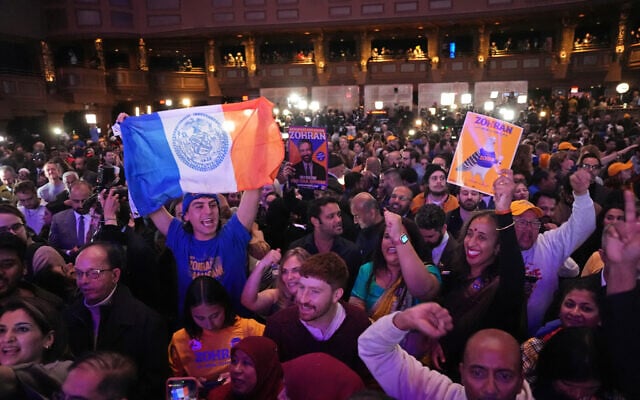
She said she attended Mamdani’s victory speech and was reassured by the diversity of New Yorkers around her despite any challenges that may be ahead.
Growing up, Waqas, a Pakistani American physician, never thought she’d see a Muslim become mayor of New York City. She said she gravitated toward Mamdani’s messages to the working class and found his affordability vision to have wide resonance.
Mamdani won the vast majority of Muslim voters; about 9 in 10 Muslim voters supported him, according to the AP Voter Poll. They made up a very small group of voters in the city: about four percent of NYC voters were Muslim.
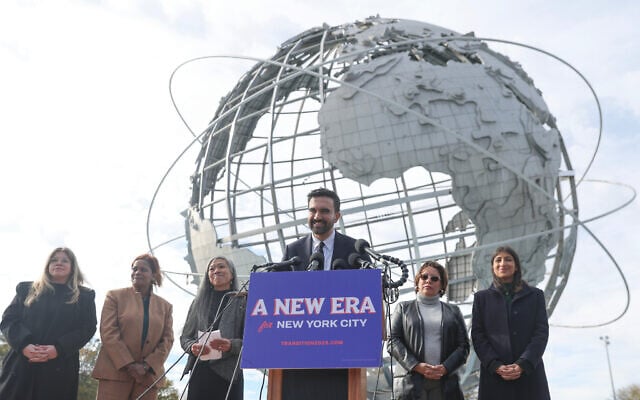
Mamdani, a democratic socialist who cast his win as a boon for blue-collar workers struggling to get by, campaigned on an agenda that includes free buses, free child care and a rent freeze for rent-stabilized apartments.
Not only the city’s first Muslim mayor, he will be its first of South Asian heritage and the first born in Africa.
His vehement criticism of Israel and its war against Hamas in Gaza — after the terror group launched a shock invasion of Israel, massacring 1,200 and seizing 251 hostages — were points of contention during the race, with some of Mamdani’s detractors lambasting him over his attacks on the Jewish state and its leaders, and his reluctance to condemn calls to “Globalize the Intifada.” Opponents caution his anti-Israel rhetoric risks inciting animosity toward Jews supportive of the country.
Lives shaped by 9/11’s legacy
But Sylvia Chan-Malik, who teaches about Islam in America at Rutgers University, argued Mamdani’s victory enables “a collective sigh of relief from Muslim New Yorkers, which would ripple across the country.”
“The legacy of 9/11 and the War on Terror has wholly shaped the lives of entire generations of Muslims in NYC and beyond,” she said, adding that it also offers some reassurance that “there are many non-Muslims who see through the lies and distortions about Islam.”
Waqas said some of the antagonism Mamdani faced reminded her that Islamophobia “is certainly alive and well — and it’s heartbreaking.”

During his speech, Mamdani said that “no more will New York be a city where you can traffic in Islamophobia and win an election.”
Wa’el Alzayat, CEO of Emgage Action, a Muslim American advocacy organization that endorsed Mamdani, said the victory was a rebuke to those who stoke fear and express anti-Muslim bigotry. Calling it a historic moment, he said Mamdani “won on the issues,” including affordability.
Given 9/11 and its aftermath, it’s hard to overstate the symbolic weight of Mamdani’s win, said Youssef Chouhoud, who teaches political science at Christopher Newport University.
“It sends a powerful message that Muslims are not just part of this nation’s civic fabric, we help shape it,” Chouhoud said. “For years, American Muslims have worked to show that we belong in this society. Mamdani is showing that we belong in the halls of power, and that we’re ready to lead.”

A shift from outsiders to insiders
Muslims make up a small but racially and ethnically diverse percentage of Americans. In the aftermath of the 9/11 attacks, many have faced hostility, mistrust, questions about their faith and doubts over their Americanness. In the years since, many have also organized, built alliances and wrote their own nuanced narratives about their identities.
“The bigger story here is how a community once seen mainly as outsiders or even scapegoats has steadily built political capital and visibility,” even as some tensions remain, said Chouhoud. “With every gain comes pushback.”
With Mamdani’s win, Chouhoud said he keeps “thinking about all those young immigrant boys and girls throughout New York who will be standing just a bit taller.”
New York City resident Ibtesam Khurshid, a Bangladeshi American, is proud that Mamdani succeeded “without betraying any part of his identity.” She is excited that her children will “witness that a South Asian Muslim can lead our great city.”
His win speaks to New York’s open-mindedness and diversity, she said, adding she hopes his visibility and that of other Muslim politicians can further shatter stereotypes.
Many Mamdani supporters and detractors will be watching to see whether he delivers on his promises. Before Mamdani, 34, won a stunning upset over former New York Gov. Andrew Cuomo in June’s Democratic primary, he was a state lawmaker unknown to most New Yorkers. Cuomo, who also ran against him in Tuesday’s general election, has argued Mamdani was too inexperienced.
“I will wake each morning with a singular purpose: To make this city better for you than it was the day before,” Mamdani promised in his victory speech.
Gaza war a factor
Takiya Khan, who canvassed for Mamdani, said a candidate’s faith and ethnicity have no bearing on her voting decisions, but his support of Palestinian rights and ideas for New York City were a significant draw.
While many Jewish leaders and Jewish New Yorkers have sounded the alarm over Mamdani’s anti-Zionist rhetoric, the new mayor-elect has acknowledged that many Jews disagree with his stances on Israel and has vowed to fight antisemitism as mayor.

Khan said Mamdani’s victory may be impactful. Also on Tuesday, Democrat Ghazala Hashmi became the first Muslim and first Indian American to win statewide office in Virginia.
“That could be a catalyst for more Muslim mayors, more Muslim politicians to be in office and we need that representation because America is a country for everybody,” she said.
New York voter Ismail Pathan, an Indian American, was heartened by the support Mamdani received from so many who “don’t look like him.”
“The United States is a country of different cultures. That’s what makes us incredible,” Pathan said. “Being able to — especially as I’m about to have a child and bring them into the world — to say, ‘Oh look, a Muslim man was elected mayor in New York,’ how incredible of a thing is that?”







The Times of Israel Community.