

Former IAF chief: Israel’s next wars will be ‘orders of magnitude more challenging’
Amir Eshel tells DefenseTech Summit that October 7 was merely a ‘tasting menu’ of what’s to come, and that modern armies don’t yet have solutions for ‘evolving threats’
 Add ToI as a Preferred Source on Google
Stav Levaton is a military reporter for The Times of Israel

A former commander of the Israeli Air Force warned Monday that Israel will face threats in the coming years that are more severe than what it experienced during and since the Hamas attack on southern Israel on October 7, 2023.
Speaking at a defense summit at Tel Aviv University, Amir Eshel — who also served as the director general of the Defense Ministry from May 2020 to February 2023 and is now a senior partner at venture capital firm Aurelius Capital — called for urgent national preparation and large-scale investment in defense innovation.
“October 7 was experienced in Israel as a modern war and a successful one, which is true,” Eshel said at the DefenseTech Summit, held by the Defense Ministry’s R&D directorate, of Hamas’s attack on southern Israel, which employed ground forces, rockets, drones and hang gliders. “I want to argue that we went through, in some aspect, a tasting menu. The next wars – ours and everyone else’s – will be orders of magnitude more challenging. We must prepare now.”
Eshel outlined a future battlefield flooded with “magnitudes [more threats] than the Iranian attack on October 1, 2024,” including stealth and AI-powered autonomous drones, along with electronic warfare, directed-energy weapons, cyber operations, and attacks on critical civilian and military infrastructure.
During that attack, Iran fired 181 ballistic missiles at Israel, most of which were intercepted by Israeli, US, and Jordanian air defenses, though some impacted inside Israel. An earlier Iranian attack on Israel, in April 2024, also featured around 170 drones and 30 cruise missiles.
“It will be a different ball game,” Eshel said Monday, warning that modern armies “currently lack effective defensive solutions against those evolving threats.”
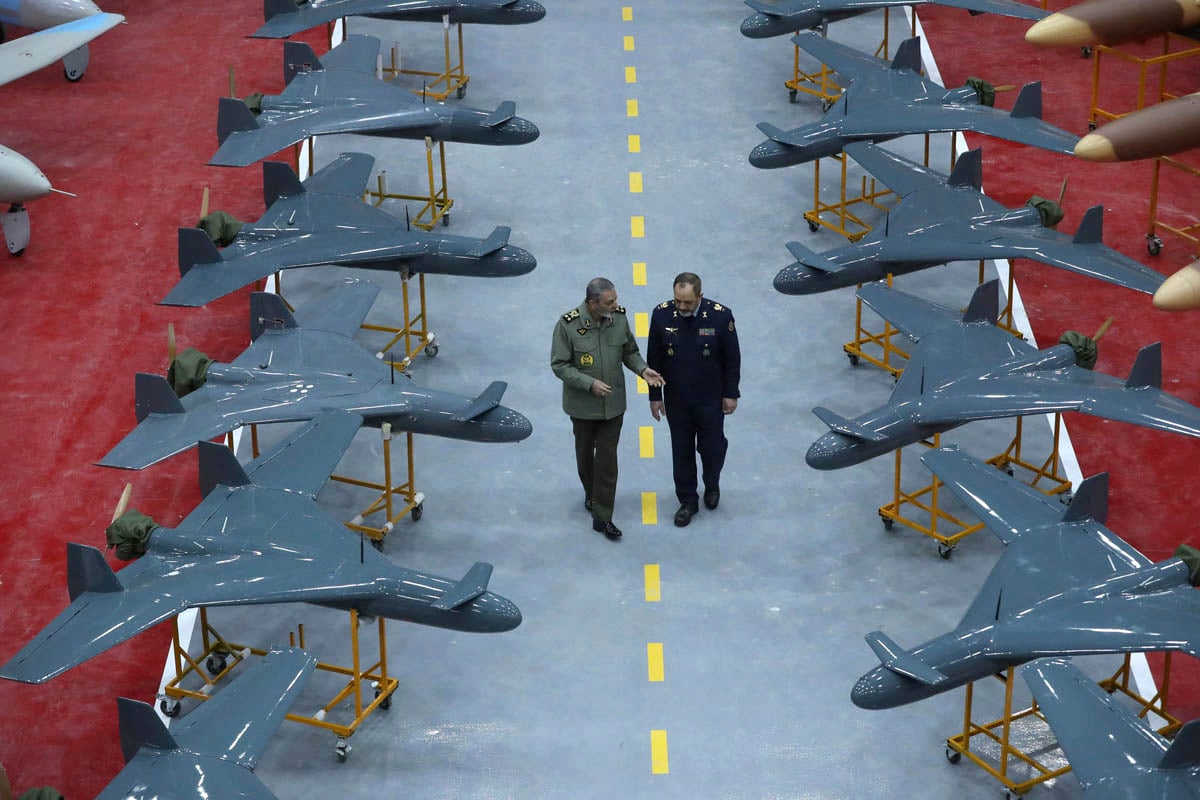
Despite rising global demand for security technologies, Eshel said that commercial investors remain hesitant due to fears of tech bubbles and past experiences in the offensive cyber sector.
He urged a national focus “to acquire ‘good enough,’ mass-produced, and affordable offensive and defensive capabilities,” adding that Israel’s defense exports will become increasingly vital as new US regulations on emerging technologies take effect.
“Israel remains one of the global leaders, but competition is first,” he said. “Israel’s qualitative military edge is based on US support and genuine Israeli technology. We should boost our efforts to preserve and extend the edge…. This is the moment.”
Eshel spoke Monday, the same day that the Defense Ministry announced that the IDF would receive the high-powered laser interception system, dubbed “Iron Beam,” at the end of this month.
The Iron Beam — which was created by Rafael Advanced Systems Ltd. and has been in development for over a decade — is not meant to replace the Iron Dome or Israel’s other air defense systems, but to supplement and complement them, shooting down smaller projectiles and leaving larger ones for the more robust missile-based batteries such as the David’s Sling and Arrow systems.
Rafael said in September that it had declared the Iron Beam operational following testing that involved the interception of rockets, mortars, and drones.
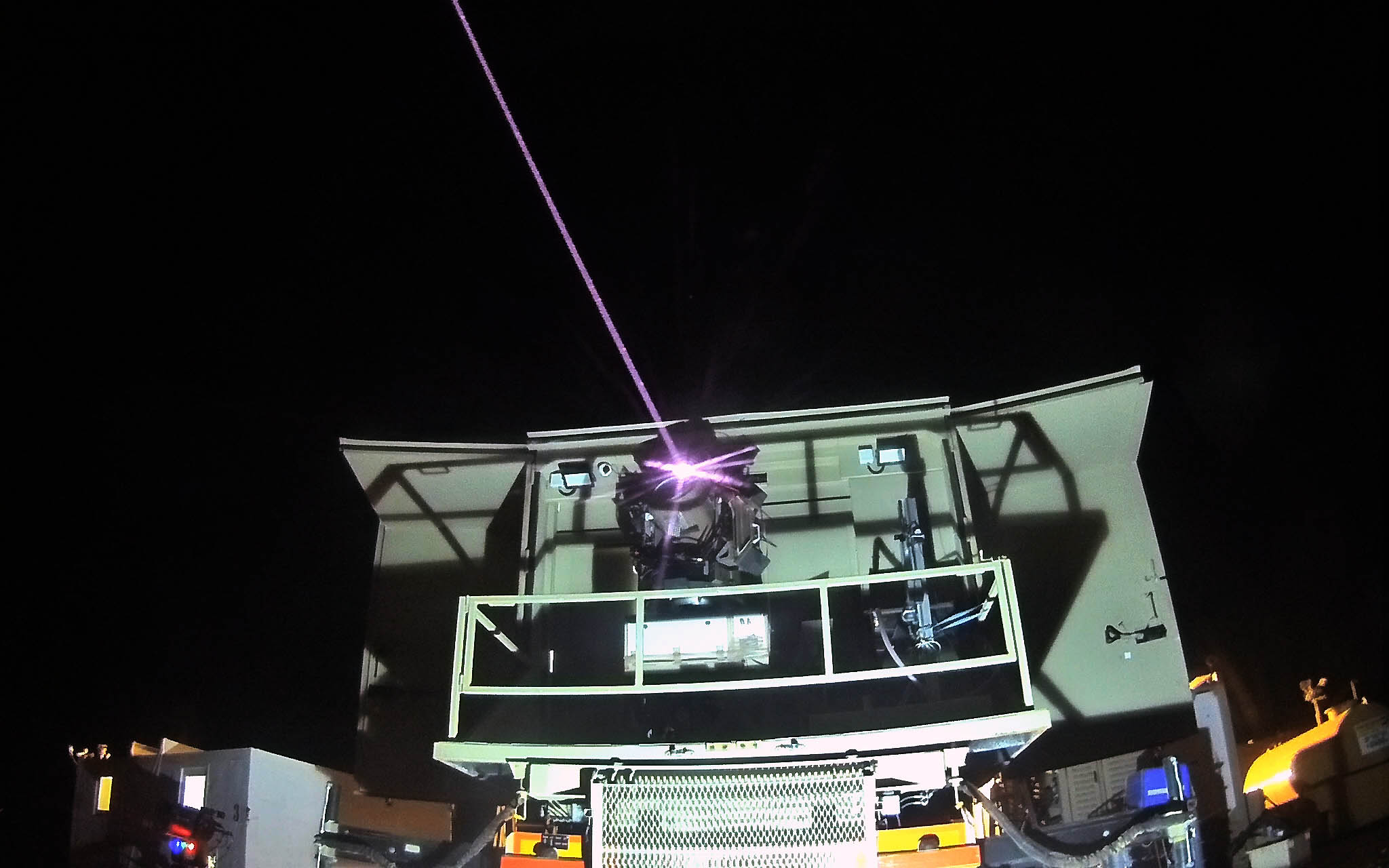
Also speaking at the DefenseTech Summit on Monday, Brig. Gen. Benny Aminov, the head of the Defense Ministry’s military research and development unit, said that the threat of drones crossing Israel’s borders was “moving toward a solution.”
“In recent weeks, we have achieved a technological breakthrough in enemy drone detection, and we are now working on interception solutions using drone-based systems that enable response to swarm scenarios while accelerating the development of new directed-energy weapons,” he said.
In the past year, there have been frequent attempts to bring weapons and drugs over the Egyptian border using drones, with the military struggling to detect and shoot down the relatively small devices.
Emanuel Fabian and Times of Israel staff contributed to this report.









The Times of Israel Community.