

France on a mission to restore lost Middle East clout
Emmanuel Macron aims to fill vacuum left by US, seeking to resolve Lebanon crisis, Iran missile development
 Add ToI as a Preferred Source on Google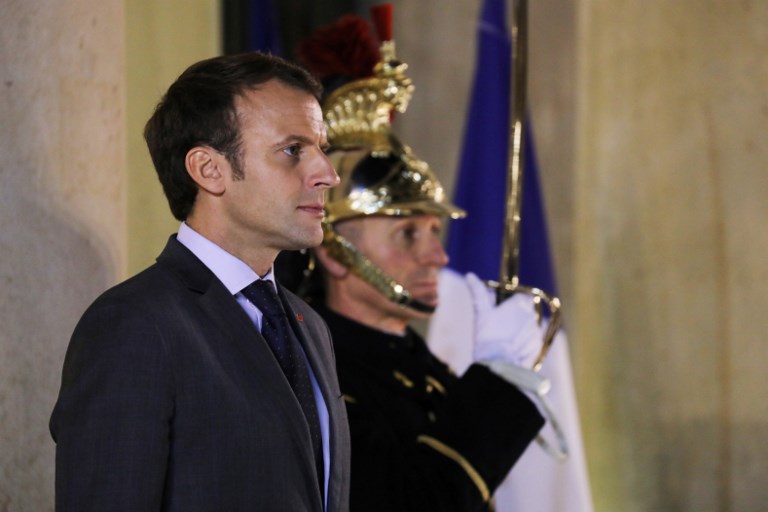
PARIS, France (AFP) — From mediating in the crisis in Lebanon to defending Iran’s nuclear deal, President Emmanuel Macron aims to fill the vacuum left by an isolationist America to boost France’s clout in the Middle East.
On Saturday, Macron hosted Lebanese Prime Minister Saad Hariri for talks aimed at trying to resolve the crisis triggered by Hariri’s shock decision to resign on November 4.
Hariri’s announcement, which he made in Saudi capital Riyadh, was seen as a serious escalation of the regional battle for dominance between Saudi Arabia and Iran being fought by proxies in Syria, Iraq, Yemen, Lebanon and other countries.
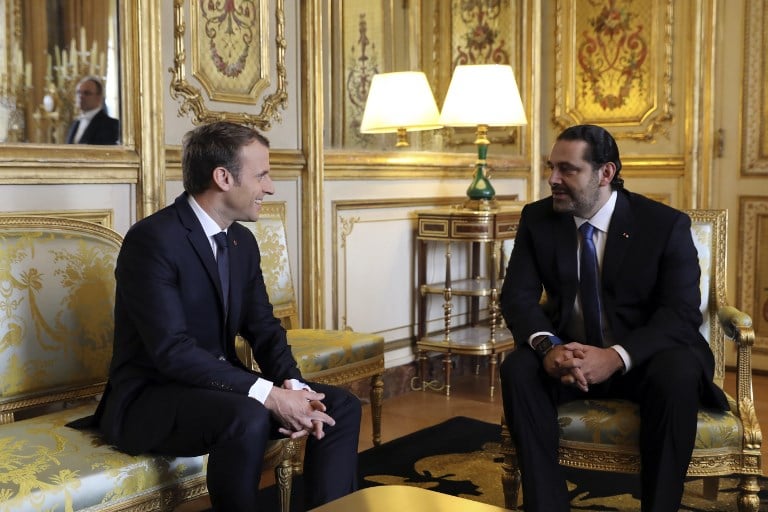
Into the fray strode Macron, who was elected this year on a promise to restore France’s international standing after years in which, in the Middle East particularly, the former colonial power had looked increasingly irrelevant.
“Macron is extremely opportunistic and is filling the void left by the US and the UK in the Middle East, positioning France as a playmaker in the region along with Russia,” said Olivier Guitta, the managing director of GlobalStrat, a geopolitical risk consultancy firm.
Walking diplomatic tightrope
France had mandate power over both Lebanon and Syria during the first half of the 20th century but its influence in the two countries has waned in recent years, in tandem with France’s economic decline.
By inviting Saudi-backed Hariri to Paris, holding telephone talks with the leaders of the US, Saudi Arabia, Israel and Egypt, and announcing a visit next year to Iran, Macron hopes to re-establish France as a key player in the region.
“It’s important to talk to everyone,” the 39-year-old politician, a rookie in diplomatic terms, said after a surprise visit to Riyadh on November 10.
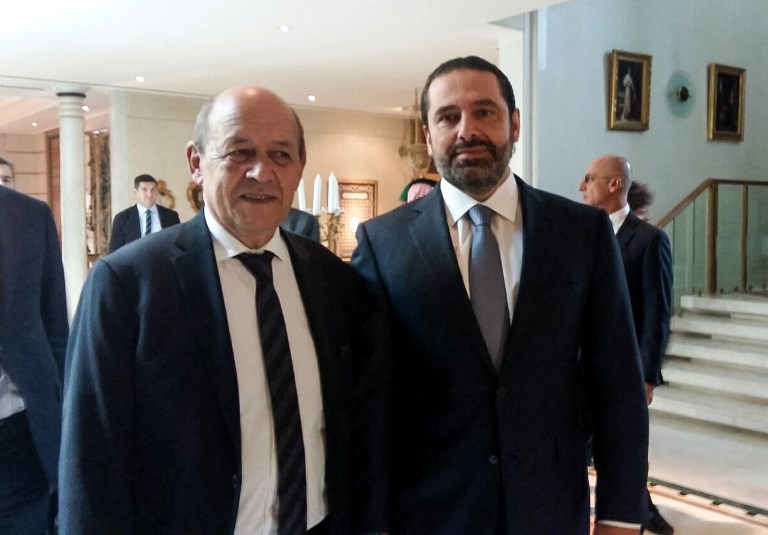
In Lebanon, historically a battleground for proxy wars and where the Iranian-backed Shia Muslim movement Hezbollah has been increasingly assertive, the media broadly welcomed Macron’s intervention.
For the pro-Hezbollah newspaper Al-Akhbar it signaled the return of France to the posse of powers jostling for influence, “alongside the Americans, the Saudis and the Iranians.”
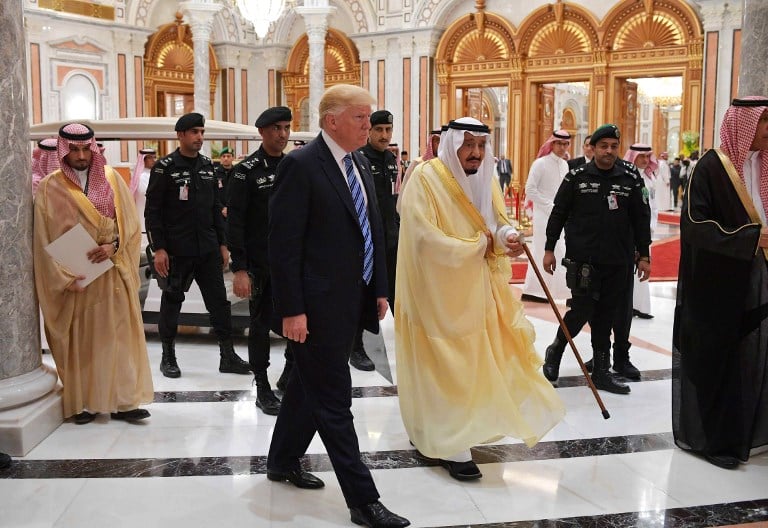
Macron drew particular praise for reaching out to all sides, unlike US President Donald Trump, who has voiced unconditional support for US ally Saudi Arabia over longstanding foe Iran.
As with the Paris climate agreement, which Macron has staunchly defended in the face of Trump’s climate skepticism, the French president has also stood by a landmark nuclear deal reached with Iran in 2015 that Trump has called into question.
“If you want to stop any relation with Iran regarding nuclear activity, you will create a new North Korea,” Macron told Time magazine in an interview earlier this month.
But he has also attempted to assuage US and Israeli concerns about a resurgent Iran, by repeatedly criticizing Tehran’s ballistic missile program.
At the weekend he went further, accusing Iran and Hezbollah of “destabilizing action… in the region.”
For GlobalStrat’s Guitta, the statements showed France’s position had changed little and that it remained “one of the most vocal critics of the Iranian regime.”
Lost prestige
Frederic Charillon, a professor at Sciences Po university in Paris, said France’s youngest ever president stood to gain from even modest advances.
“If France allows the least diplomatic progress it will regain prestige it lost in the region in recent years and strengthen its position in future negotiations on Syria,” he wrote in Lebanon’s L’Orient le Jour newspaper.
But by trying to court all sides, he risked drawing a blank with one of them, Charillon warned.
Success in Lebanon would burnish his reputation as a consummate negotiator, four months after he got Libya’s rival leaders to agree to a conditional ceasefire at talks in Paris.
Some observers have, however, expressed skepticism about France’s ability to play a leading role in the Middle East, where the US, Russia and their allies have traditionally called the shots.
Hazem Hosni, professor of political science at Cairo University, said he believed France’s influence would remain limited to its former mandates and colonies in French-speaking Lebanon, Tunisia, Algeria, Morocco, and, to a lesser extent, Syria.
France’s diplomacy is “in the historical context of France’s presence in these areas,” he said.








The Times of Israel Community.