

Haifa museum offers artists’ views of home, new exhibits post-October 7
Art museum reconfigures its winter season after the Hamas attacks on Gaza border communities to highlight the losses that so many have faced
 Add ToI as a Preferred Source on Google
Jessica Steinberg, The Times of Israel's culture and lifestyles editor, covers the Sabra scene from south to north and back to the center
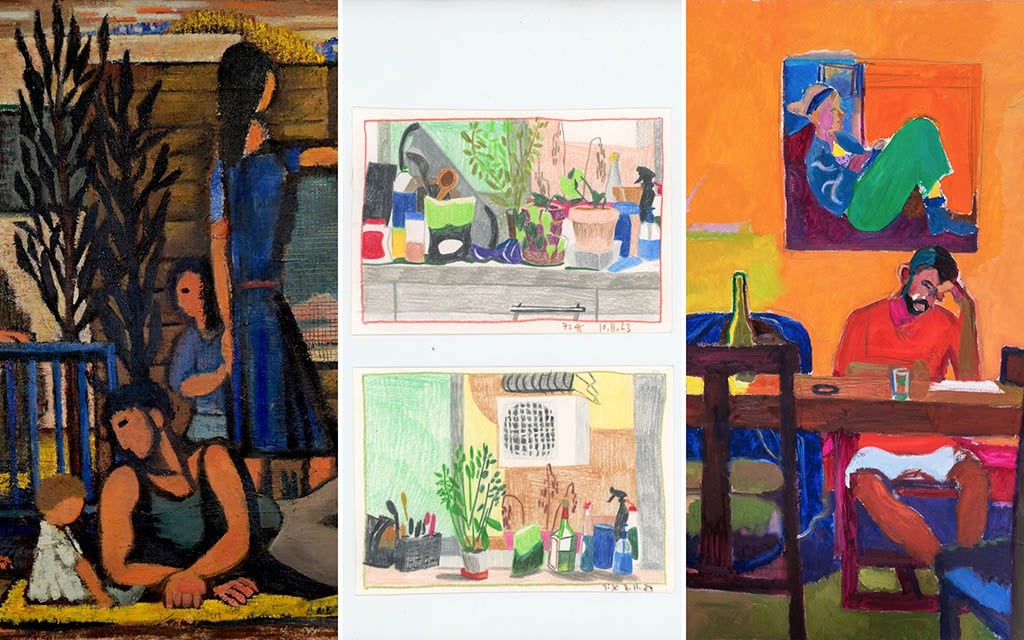
Haifa, like so many other Israeli cities, is currently housing Israeli refugees from the south and north, those who fled the Hamas attacks of October 7 or the northern threat of Hezbollah.
The subject of home — what it means, how it’s characterized, what it looks like — is the many-layered theme of four new exhibits at the Haifa Museum of Art, which reconfigured its winter season and opened all four on February 1.
The four exhibits, including “A Sun-Kissed Land: Schusterman Collection at the Museum”; “At Home: Dwelling of Love and Anxieties” with works by five Israeli artists, and “Piranesi: Views of Rome,” are all open through June 2024.
One way or another, all four exhibits offer different ways of looking at the concept of home, and what it means right now.
Kobi Ben-Meir, the head curator of the museum, began rethinking the museum’s planned exhibits in the week after October 7. As Ben-Meir heard, saw and read about the horrors of that day, what stayed with him were the descriptions of people hiding in their safe rooms, trying to hold the heavy doors shut against the terrorists.
“I kept thinking about being in our houses, with our loved ones, and being most afraid for what we love most,” said Ben-Meir. “I tried to get to that place with these exhibits, looking at the beautiful, small, banal things in our homes and lives, and how important that is to us.”
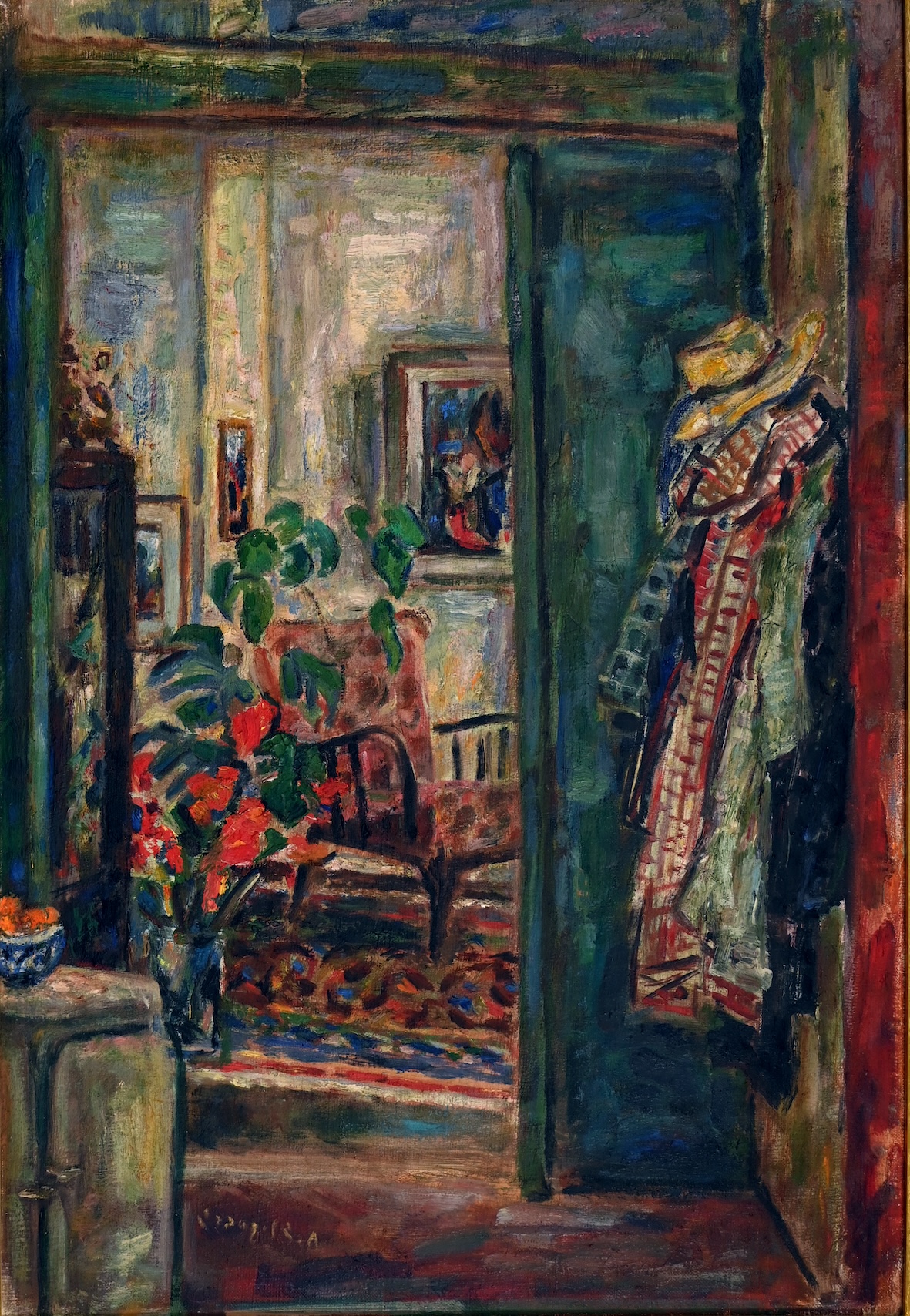
Perhaps the exhibit that speaks most to that frame of mind is “At Home: Dwelling of Love and Anxieties,” with works by five contemporary Israeli artists, Ira Eduardovna, Aram Gershuni, Tzion Abraham Hazan, Uriel Miron and Hilla Spitzer, with one jewel box of a gallery dedicated to ten works by Édouard Vuillard, one of the great French interior artists of the early 20th century.
All six artists explore domestic settings, observing and capturing common, mundane objects such as soup bowls, carpets and chairs, finding beauty, meaning and memories, as well as the fear of what threatens to disturb domestic stability.
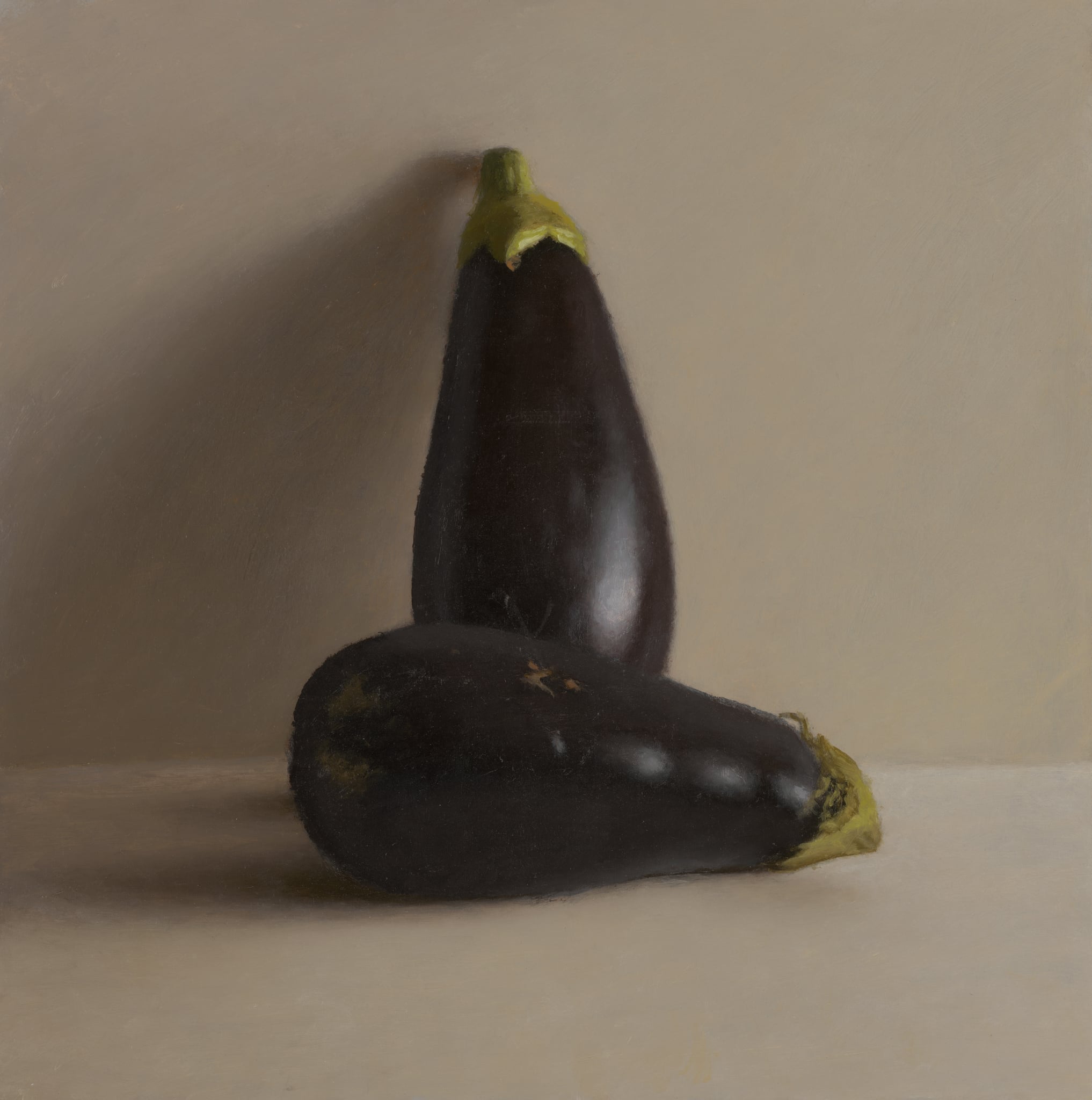
One can begin with Gershuni’s small, exacting oil portraits that explore everyday items like eggplants and kitchen utensils, as well as his father’s face. His works include two new pieces, empty chairs that seem to signify the remaining 134 hostages held in Gaza.
Next door is Eduardovna’s video work, showing her mother’s dining room table carefully set for four with the objects of her immigrant life, porcelain plates and stemmed glassware that gets shaken up by an unseen force.
Ben-Meir called it a compliment to Eduardovna’s mother, who always put things in order, no matter how much she and her belongings were moved around.
In another gallery are the outlandish, almost prehistoric-looking sculptures made by Miron from the innards of a home, such as carpet lining and formica, insulation foam and plywood, as Miron created slivers of memory out of the many places he’s lived in during his lifetime.
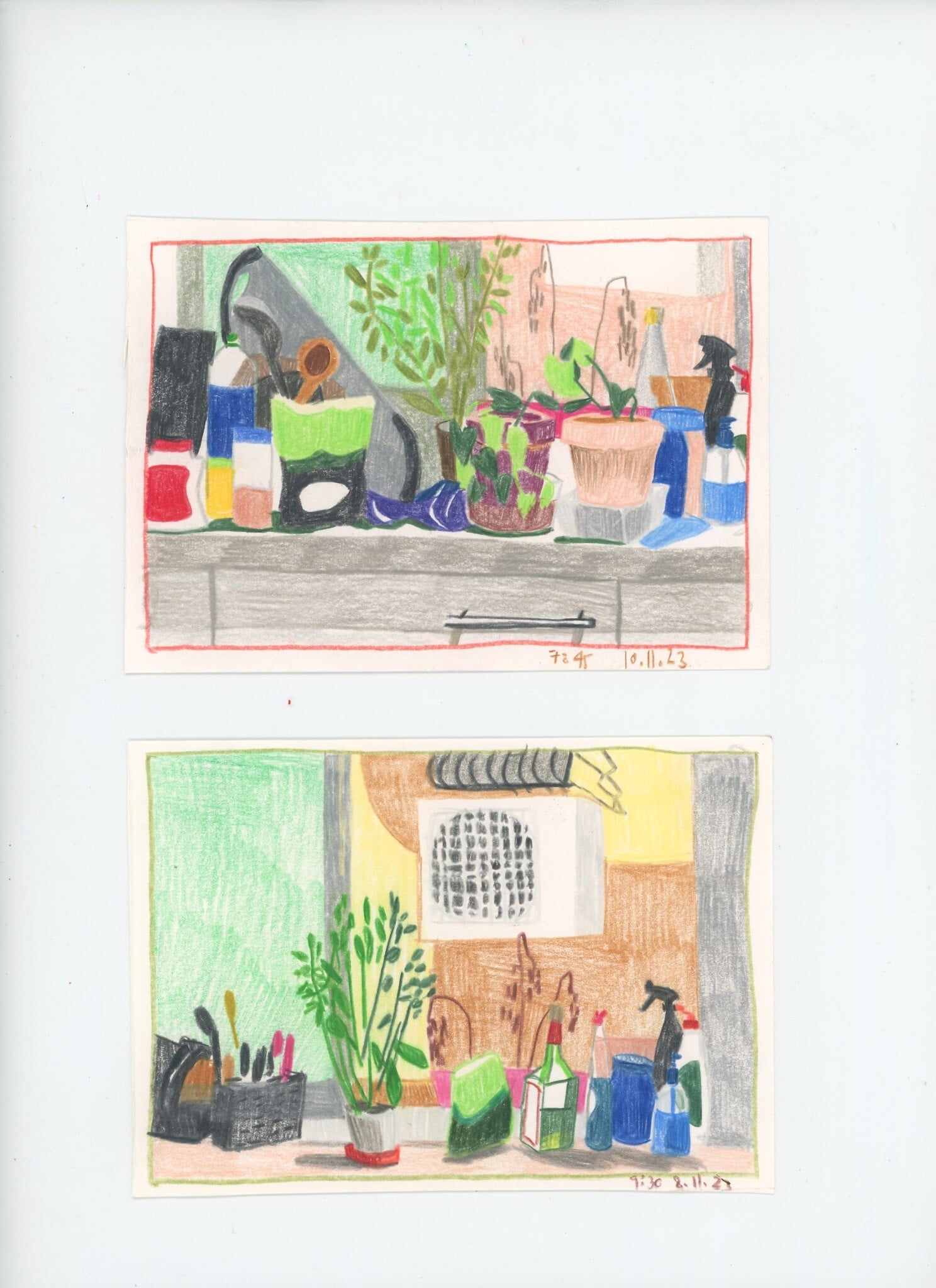
Meanwhile, the walls of another gallery are lined with Hilla Spitzer’s “Good Morning” drawings, simple, postcard-sized colored pencil drawings of her kitchen, drawn every morning before she begins her day. The view is always the same, of her kitchen sink and counter, the window that looks out onto neighbors’ windows and air conditioning units, showing what’s new and different in this same, banal frame each day.
And perhaps the most painful images are those from the short film by Tzion Avraham Hazan, who filmed in the Kibbutz Be’eri dining hall in 2019, using kibbutz members as his actors, seated with the detritus of a holiday dinner table, the white tablecloth littered with dirty dishes as they reenacted a battle scene familiar to them using dishes, silverware and the ‘blood’ of a discarded beet.
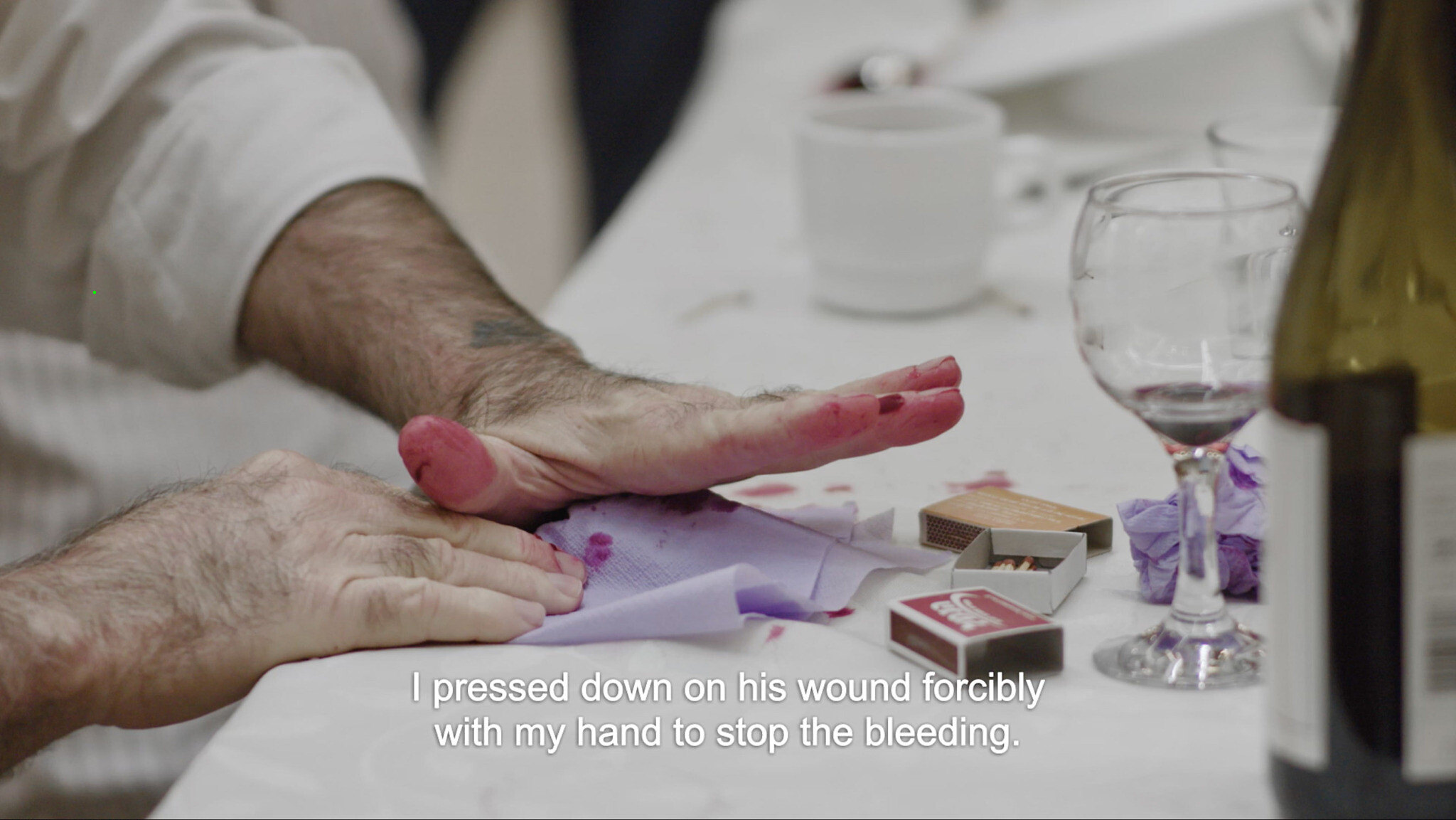
Two of the people in the film were killed on October 7, said Ben-Meir, a visceral reminder of their mostly comfortable home as it existed just four years earlier, and what happened to them and their kibbutz on that black Shabbat.
There is also the ode to French painter Vuillard with ten pieces gathered from local collectors and museums, offering the opportunity for the Israeli public to “meet” the French master of interiors, textures and fabrics of home.
There are similarities between Vuillard’s work and “Natalia Zourabova Living in a Painting,” one of the museum’s four exhibits.
Zourabova, a Moscow-born artist who now lives in Tel Aviv after some years spent in the desert town of Arad, tends to focus mostly on her own abode, the rooms and objects of her house and how she views them on any given day.
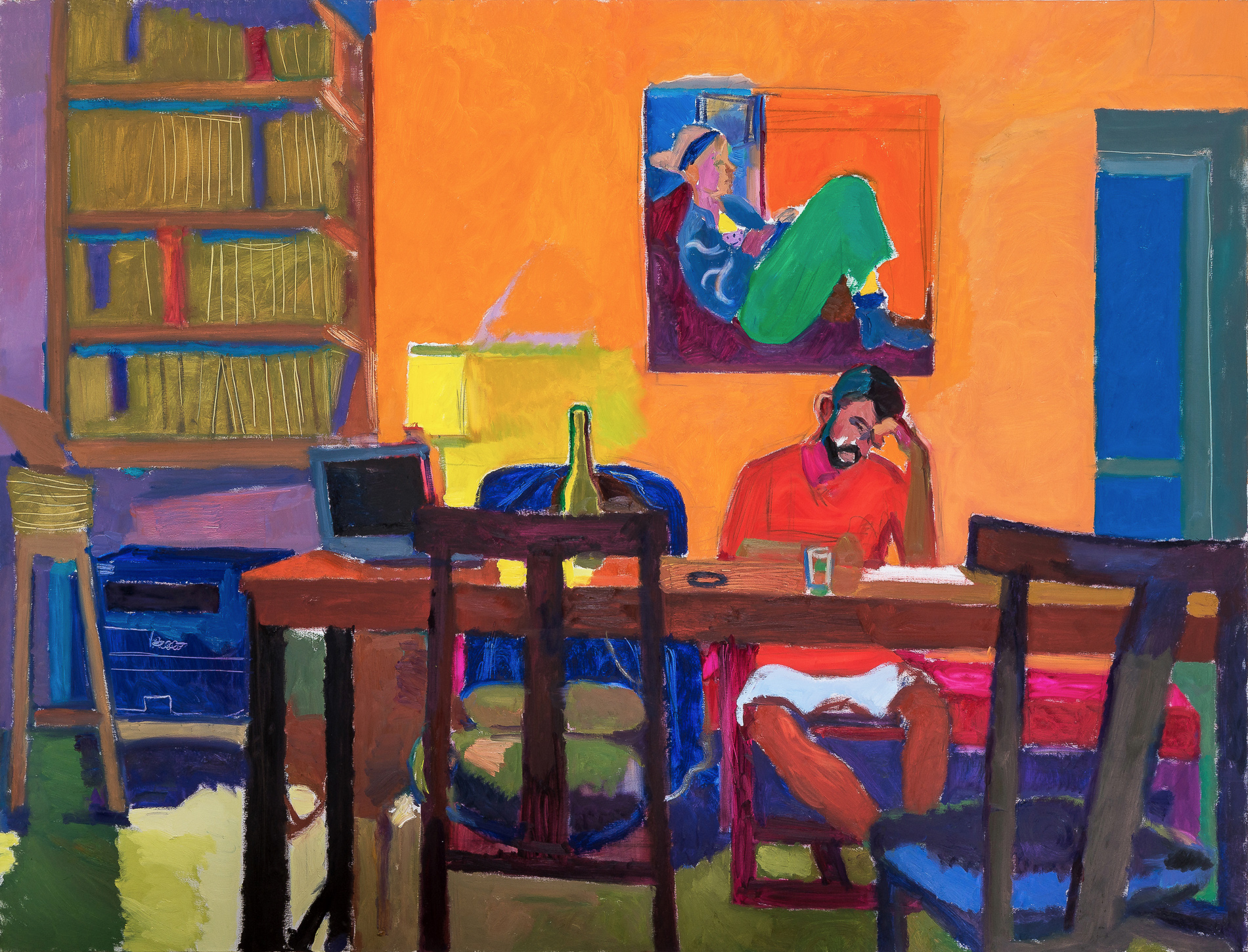
Her living room, and the objects and people in it, which include her partner, daughter and cat, are repeated in numerous paintings.
“She’s obsessive about interiors,” said Ben-Meir, “that’s what interests her and as long as she can remember, she paints the room that she lives in.”
The wall of her living room may be painted as purple in one painting, and orange in another, “depending on how she felt that day,” he said.
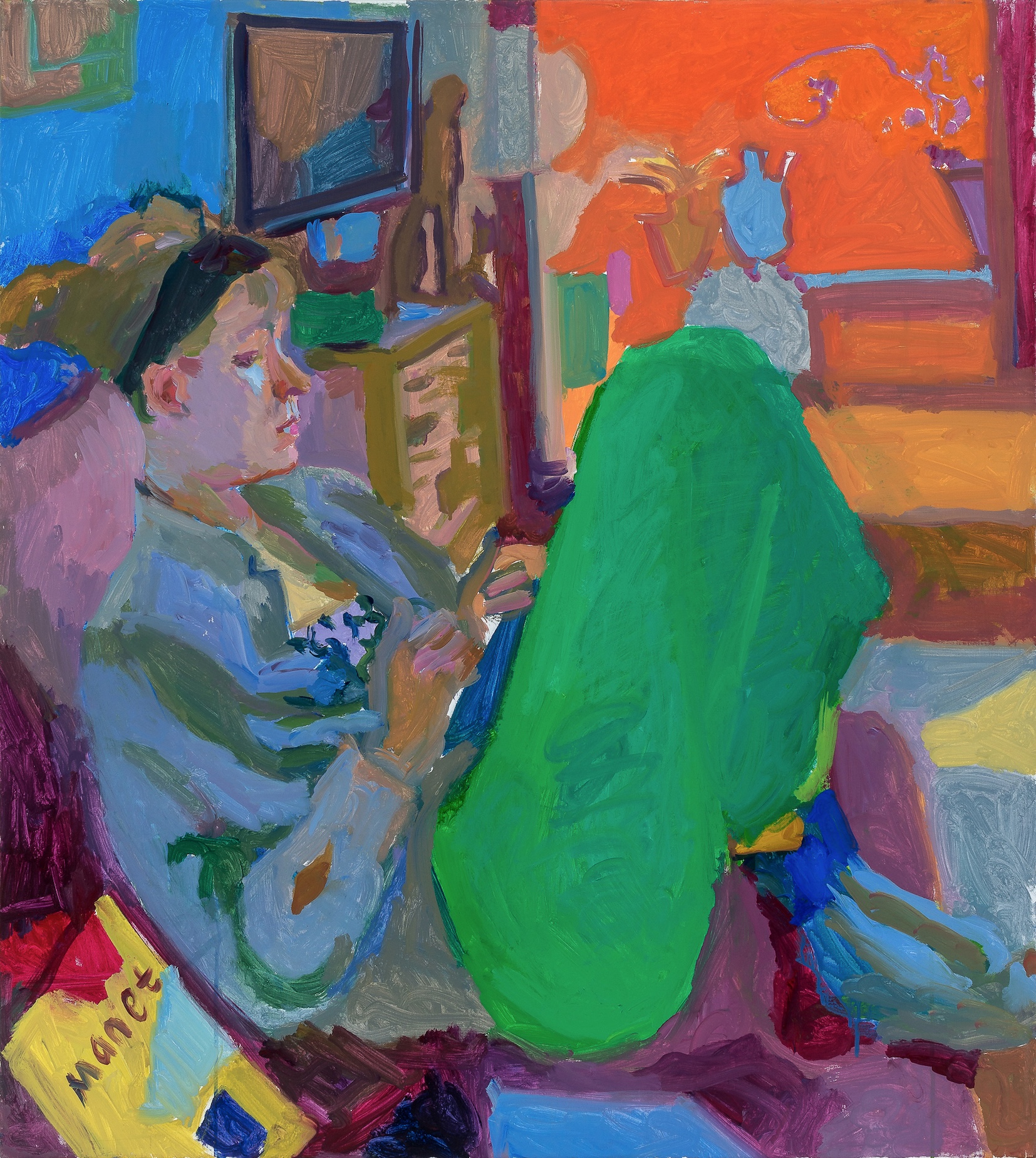
While many of the Zourabova paintings were done before October 7, some are more recent, full of color and life despite the horrors of that black Shabbat, “because that’s what she does,” said Ben-Meir. “It’s the reality of her house in this situation.”
There’s also a dialogue taking place between Zourabova’s works and the neighborhood in which the museum is located.
Two tall windows were recently uncovered and reopened to the outside, revealing the museum’s own home situated between two long-time Haifa neighborhoods, the Arab Israeli area of Wadi Nisnas and Hadar Carmel, a mostly working-class community of Russian-Israelis.
The museum building itself was first a girls’ school in the 1930s, educating girls of all stripes and religions before becoming a home for new immigrants after 1948 and then the museum in 1967.
On one of the museum’s upper floors is the exhibit of new artworks donated by Lynn Schusterman, now part of the museum’s permanent collection, solidifying its own role as a home for Israeli art in Haifa.
“A Sun-Kissed Land” is made up of two galleries of artworks permanently donated to the museum by Schusterman, the American billionaire philanthropist, who collected the artworks with her late husband, Charles Schusterman.
The cluster of paintings, curios and tapestries are works from the first half of the 20th century, adding a layer that was missing to the museum’s existing collection that focuses on Israeli art from the 1950s and on.
“It shows how creativity was born here,” said Ben-Meir.
There are works from the first years of the Bezalel art school, Hanukkah candelabras embedded with ancient coins, along with maps and tapestries featuring the efforts of the first aliyah.
These are works that fill in the blanks, said Ben-Meir, demonstrating that the issues that were relevant in the 1920s are still relevant now, with Mordechai Levanon’s farmer in the field and Yohanan Simon’s 1950 portrait of a kibbutz family at home after a day of work.
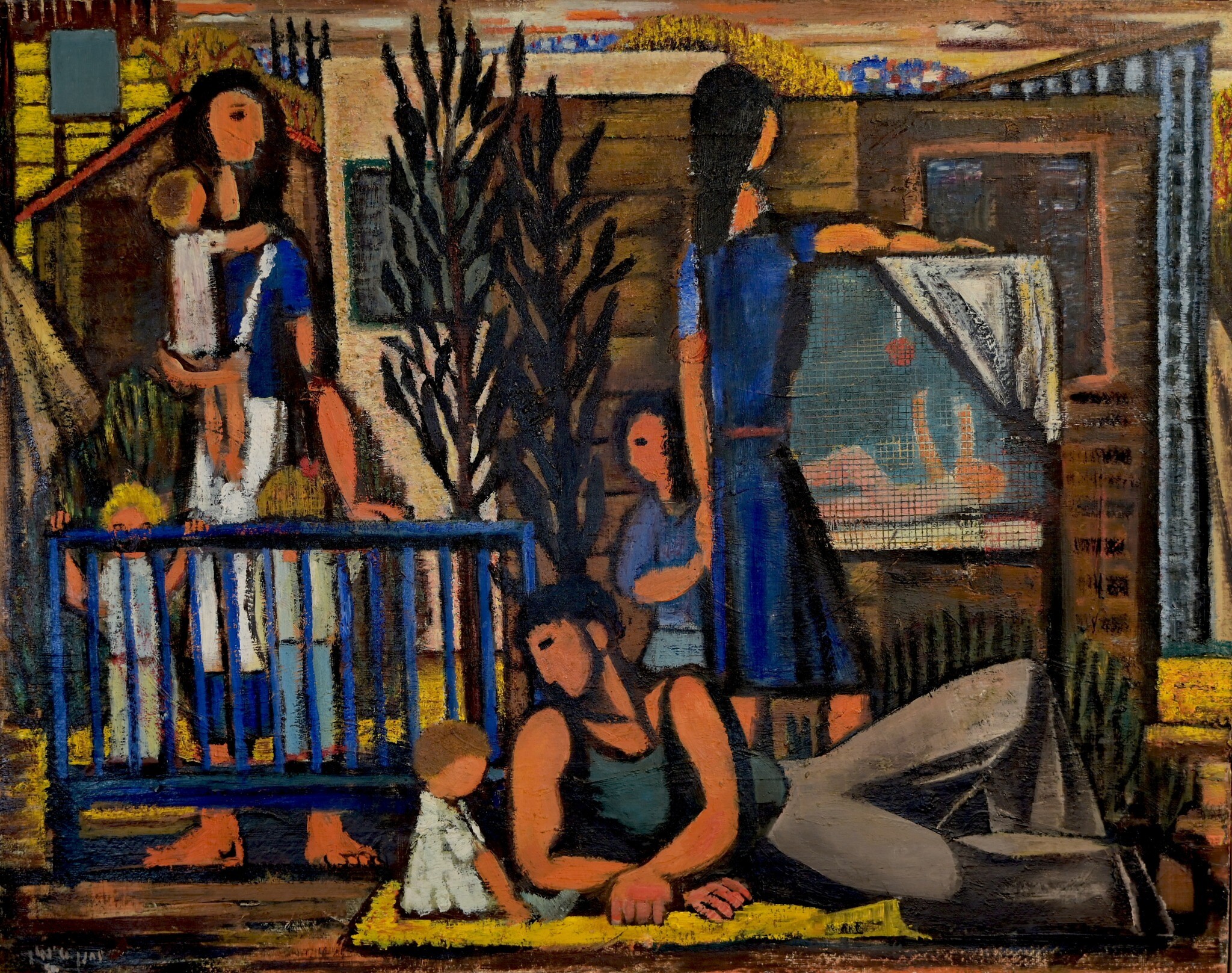
For Ben-Meir, the Simon painting echoed the hours and days before October 7 in the Gaza border communities, the joys of coming home and being at home, with one’s loved ones, all in one painted scene.






The Times of Israel Community.