

Haredi MK complains Sephardic students are ‘crowding’ into Ashkenazi girls’ schools
UTJ party’s Moshe Gafni laments there is ‘no room’ in high schools in Beit Shemesh, demands Shas party open more institutions for Sephardim
 Add ToI as a Preferred Source on Google
Sam Sokol is a former political correspondent at The Times of Israel. He was previously a reporter for the Jerusalem Post, Jewish Telegraphic Agency and Haaretz. He is the author of "Putin’s Hybrid War and the Jews"

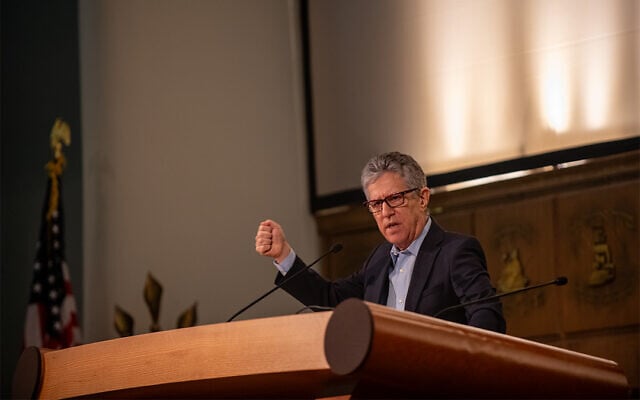
United Torah Judaism MK Moshe Gafni on Monday called on the Shas party to open additional schools for Sephardic students in the city of Beit Shemesh so that “your girls” don’t need to “crowd into our institutions.”
Discrimination against Sephardic students has plagued the Haredi community for years and critics charge that many Ashkenazi schools maintain unofficial quotas of Sephardic students stemming from racism against families of Middle Eastern origin.
United Torah Judaism represents Haredim of Ashkenazi, or European, origin, while Shas represents those of Middle Eastern and North African extraction.
“There is a problem with the high schools. Why do we have to constantly crowd together and reach a situation where there is no room?” Gafni asked in comments made at the opening of the school year in the increasingly ultra-Orthodox city.
“There is no room for Ashkenazim, no room for Sephardim. Shas is a big party, it has capabilities, it also has an education system that [can] open schools where girls can go. Why do we have to constantly deal with these problems?”
In a written statement accompanying a video of his remarks, Gafni was quoted as saying that Shas should establish new schools so “your girls will have a place to study comfortably… without having to crowd into our institutions.”

According to Channel 13, dozens of Sephardic girls in Beit Shemesh were not accepted to schools this year. Efforts by the city to persuade Ashkenazi institutions to accept the students led some rabbis to threaten not to open their schools this year.
The network reported that Rabbi Dov Lando, one of the most prominent rabbinic leaders of the so-called “Lithuanian” stream of ultra-Orthodoxy, instructed the rabbis not to accept the girls.
In a statement, the Shas party replied that its mission is “to establish excellent educational institutions for the Sephardic community, and it has been operating with great success for decades throughout the country.” Gafni’s remarks, it said, “made it clear how important it is that the Shas movement continues to be strong and independent, and how much the Sephardic community cannot rely on any other party to take care of it.”
Gafni’s rhetoric was “outrageous,” tweeted Yisrael Beytenu MK Yulia Malinovsky. “In the year 2025 in the State of Israel, MK Gafni is against integrating Mizrahi students into educational institutions. Where does this racism come from?… Every child in Israel has the right to education and Gafni’s words are a disgrace.”
Channel 13 reported in July that a prominent Haredi girls’ seminary in Jerusalem was planning on operating a separate institution for Sephardic students, with a separate entrance from that of their Ashkenazi peers, after it was required by the municipality to accept students of Sephardic origin.
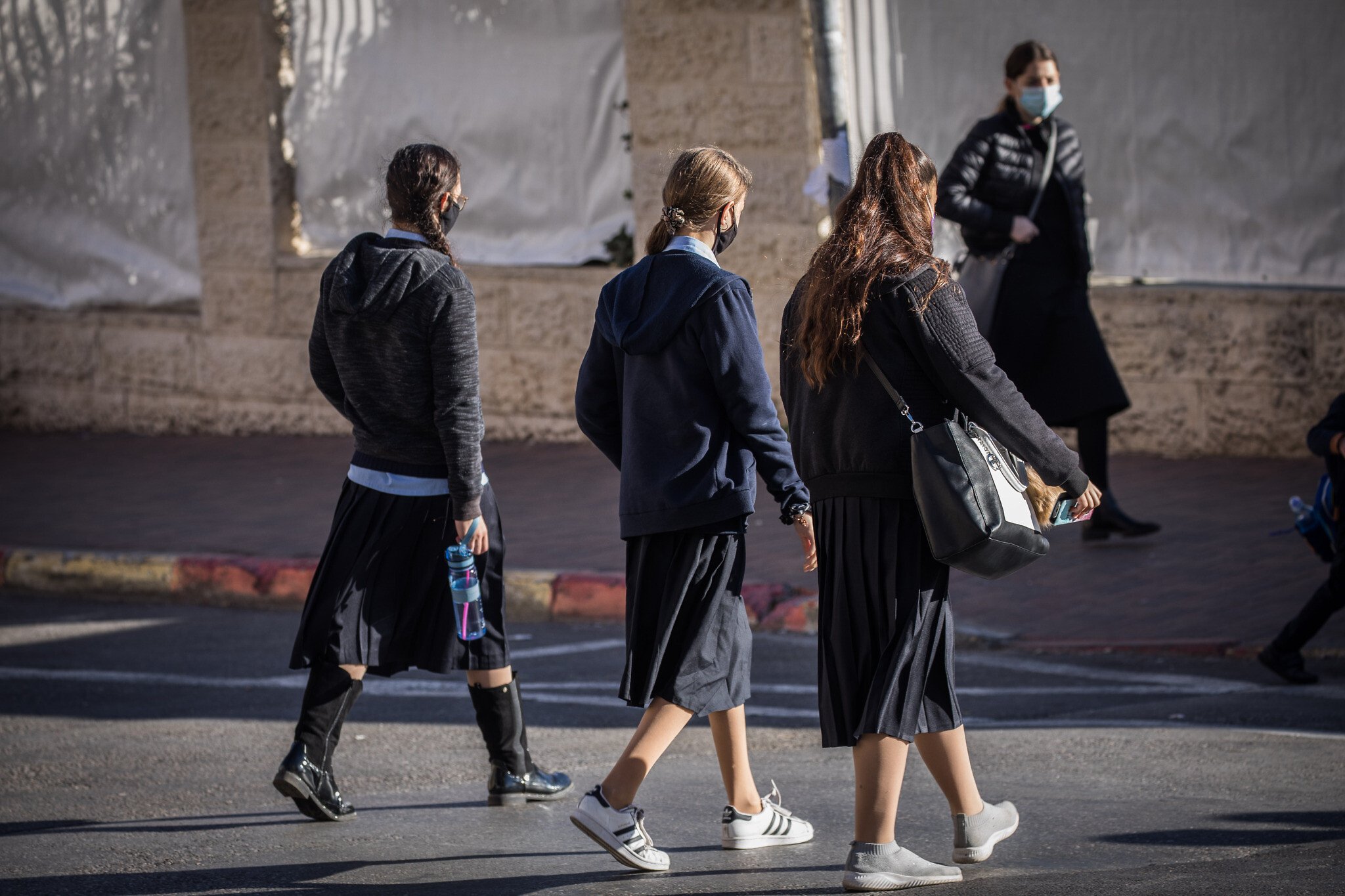
At the time, it was reported that some 440 Haredi girls in Jerusalem, 73 percent of them Sephardic, had not been accepted into any seminary. As a result, the municipality decided to assign students to seminaries independently and required the schools to accept them.
As in Beit Shemesh, this led to pushback from leading Ashkenazi rabbis, including Lando, who instructed school principals to refuse to cooperate.
Millions in additional funding
Gafni’s comments came on the heels of a reported government decision on Sunday to approve the transfer of NIS 40 million ($11.9 million) in state funding to ultra-Orthodox schools affiliated with the Shas party’s Bnei Yosef educational network over the objections of the Attorney General’s Office.
According to the Kan national broadcaster, Education Minister Yoav Kisch presented the cabinet with a proposal omitting any requirement for the schools to teach core curriculum subjects as a condition for the funds, contradicting government guidelines and a High Court of Justice ruling.
Shas’s schools are fully state-funded and are expected to teach the entire core curriculum. However, a study by the Israel Democracy Institute released last month found that only a small fraction of the ultra-Orthodox boys’ elementary schools that fail to teach core curriculum subjects as required by law face any sanctions.

In a statement to Kan, Kisch’s office said that the approval of the funds fully complied with both government guidelines and court rulings and that the position of the Attorney General’s Office had not been accepted by the government.
The cabinet also voted to implement an across-the-board cut of 0.6% to government ministries in order to fund security for schools for the upcoming academic year, acceding to the demands of Kisch and National Security Minister Itamar Ben Gvir.
Rossella Tercatin contributed to this report.








The Times of Israel Community.