

Holy sites reopen in Jerusalem’s Old City after over a month of closure
Muslim worshipers throng Al-Aqsa gates for dawn prayers; extended ‘Ramadan hours’ remain in place for Jewish visitors to Temple Mount; police gear up for Holy Fire ceremony; Western Wall reopens
 Add ToI as a Preferred Source on Google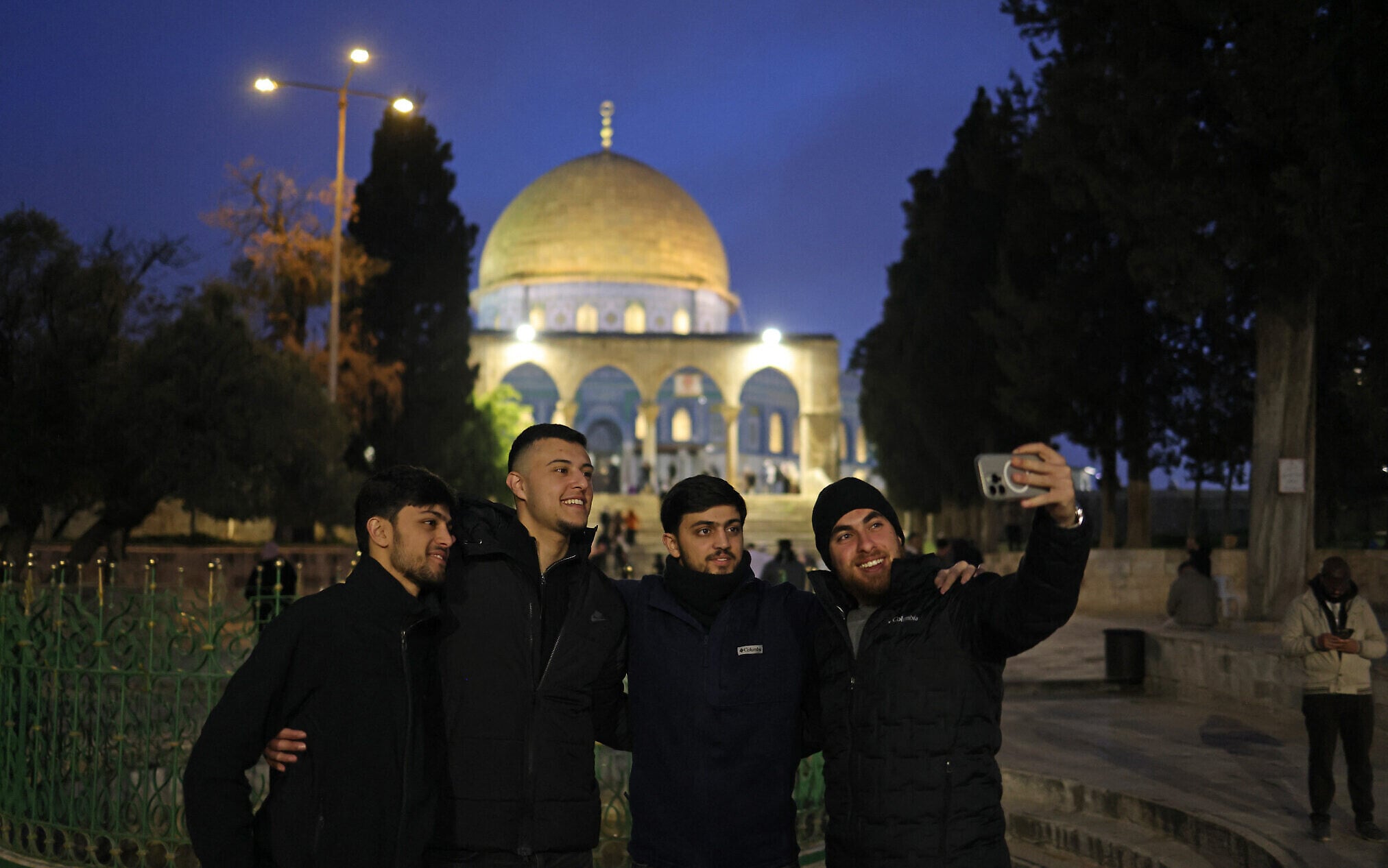
Thousands of Muslim worshipers streamed through the gates of Al-Aqsa Mosque on the Temple Mount before dawn Thursday, the first time public prayer has been held at the site for over a month due to the war with Iran.
The prayer took place in the wake of the police decision to reopen all holy sites in Jerusalem’s Old City for public gatherings in light of the two-week ceasefire declared Tuesday.
Police announced the move soon after the Home Front Command loosened its wartime safety guidelines, allowing for public gatherings in Jerusalem to take place without limitations.
Hundreds of officers were deployed to the Old City, as law enforcement predicted a large influx of people in the area. Indeed, a large, cheering crowd was seen flowing through one of the large gates to the Al-Aqsa complex, after employees opened the doors.
Some worshipers were seen distributing dates and coffee in the mosque, celebrating the site’s reopening.
Scuffles broke out between some individuals and police, leading to the brief arrest of one Arab Israeli woman, according to the Wadi Hilweh Information Center, an Arab news site based in Jerusalem.
دخول المقدسيين للمسجد الأقصى بعد فتح أبوابه التي أغلقها الاحتلال 40 يوما متواصلا.
لكن ذلك لا يعني أن عدوان الاحتلال قد انتهى، إذ ليس من حق الاحتلال أساسا أن يغلق المسجد لأي سبب كان، وتذرعه بالأوضاع الأمنية وصفة شيطانية يستغلها لفرض هيمنته الكاملة على المسجد المبارك، ثم تكريس… pic.twitter.com/YwOPtmsrwy— يونس أبو جراد (@YunusAbujarad) April 8, 2026
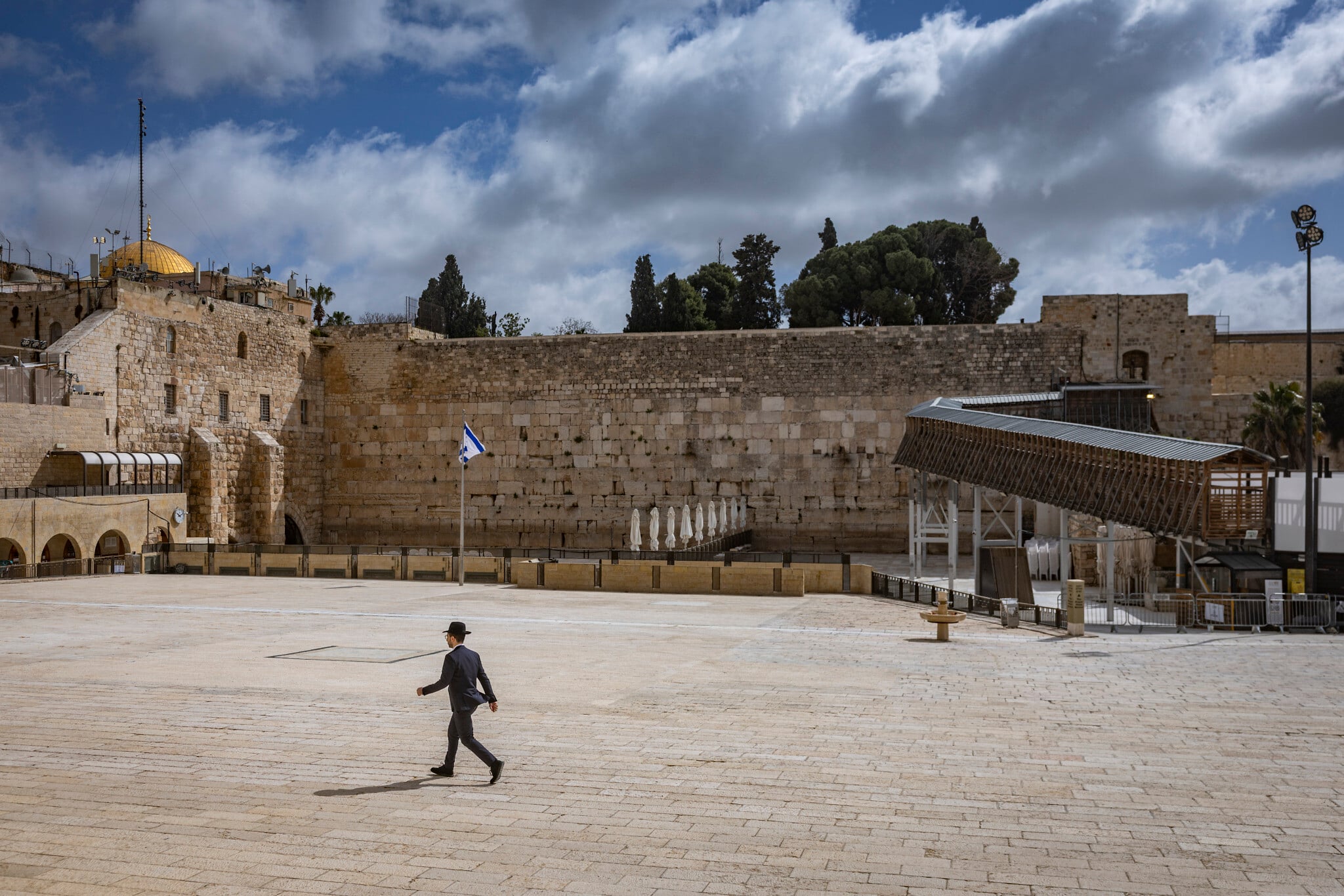
Later in the morning, Jewish worshipers flocked back to the Western Wall plaza, which had been limited to small crowds of no more than 50 people at once for most of the war.
Announcing the reopening, the Western Wall Heritage Foundation, a government company which operates the site, rejoiced over worshipers’ return.
“It is stirring to see the nation of Israel in all its stripes once again flocking to the Western Wall, the beating heart of the Jewish people, after an extended period of restrictions,” the foundation said in a statement.
The foundation implored authorities to boost the number of worshipers permitted at the plaza during wartime.
The sight of the masses “expresses more than anything the deep need, apparent during wartime, to permit the expansion of the number of worshipers,” it said in the statement, but added that such a move should be made “responsibly and with an appropriate framework.”
Meanwhile, Jewish visitors also went up to the Temple Mount and were seen prostrating themselves near the eastern wall of the flashpoint site. Another group was filmed singing directly opposite the Dome of the Rock.
This was despite the ostensible ban on non-Muslim prayer at the site as part of the informal “status quo” agreement between Israel and Jordan, which manages the complex. The ban has fallen away in recent years, with police regularly allowing public Jewish prayer to take place in areas further from the Dome of the Rock.
With the Temple Mount’s reopening, Jewish visitors were able to ascend in the morning from 6:30 to 11:30 a.m., and in the afternoon from 1:30 to 3 p.m. — slightly longer visitation times than what was customary before the start of this year’s Ramadan.
In February, amid pressure from activists, police lengthened Jewish visitation times in the mornings by an hour as “compensation” for the site’s closure in the afternoon during the Muslim holy month: 6:30 to 11:30 a.m. instead of 7 to 11 a.m. The move had ruffled feathers among many Muslims and sparked condemnation from the Palestinian Authority, which claimed it would morph into police’s permanent policy even after Ramadan ended.
On Thursday, this appeared to be the case, with the extra hour remaining in place despite the restoration of afternoon visits for Jewish groups.
וכעת – הר הבית נפתח שוב ליהודים אחרי 40 יום בהם היה סגור בעקבות המלחמה@GLZRadio https://t.co/4XWtnGXffg pic.twitter.com/95y8nNsWcC
— נועם נקש || Noam Nakash (@nakash_noam) April 9, 2026
According to Beyadenu, an organization dedicated to cementing a Jewish presence atop the Temple Mount, a man was detained by police on suspicion of attempting to recite the Kaddish prayer there.
As crowds returned en masse to the Old City, police began preparing for the Holy Fire ceremony slated for Saturday — an annual event observed by Orthodox Christians a day before Easter, which often attracts massive crowds to the Church of the Holy Sepulchre.
Police said that they held meetings in recent weeks with Jerusalem’s Christian leaders which “strengthened coordination with the various denominations” ahead of the event. They said they set a maximum capacity limit, but did not elaborate how many people
Worship during wartime
During hostilities with Iran, the Old City served as a focal point of controversy for Jews, Muslims and Christians, raising questions about the freedom to worship during times of war.
Earlier this week, before the ceasefire was called, Jewish religious leaders filed a petition in the High Court demanding that restrictions be eased on public gatherings at the Western Wall and Temple Mount.
Judges subsequently boosted the number of people permitted at the sites from 50 to 100.
In March, police sparked an international outcry after barring the Latin Patriarch from entering the Church of the Holy Sepulchre on Palm Sunday. Police later reached an agreement with the Latin Patriarchate allowing for limited Christian prayer at the site.
During the latter half of Ramadan, law enforcement shut Al-Aqsa Mosque due to the war, leading Muslims to pray en masse outside the Old City walls on Friday mornings. Police violently dispersed several of these gatherings, citing Home Front Command regulations.




The Times of Israel Community.