

If you’re asking about Abbas’s successor, you’re not paying attention
Amid the crisis surrounding the Palestinian leader’s health, the PA has continued to function fairly smoothly, and the West Bank public has showed no sign of panic

 Add ToI as a Preferred Source on Google
Avi Issacharoff, The Times of Israel's Middle East analyst, fills the same role for Walla, the leading portal in Israel. He is also a guest commentator on many different radio shows and current affairs programs on television. Until 2012, he was a reporter and commentator on Arab affairs for the Haaretz newspaper. He also lectures on modern Palestinian history at Tel Aviv University, and is currently writing a script for an action-drama series for the Israeli satellite Television "YES." Born in Jerusalem, he graduated cum laude from Ben Gurion University with a B.A. in Middle Eastern studies and then earned his M.A. from Tel Aviv University on the same subject, also cum laude. A fluent Arabic speaker, Avi was the Middle East Affairs correspondent for Israeli Public Radio covering the Israeli-Palestinian conflict, the war in Iraq and the Arab countries between the years 2003-2006. Avi directed and edited short documentary films on Israeli television programs dealing with the Middle East. In 2002 he won the "best reporter" award for the "Israel Radio” for his coverage of the second intifada. In 2004, together with Amos Harel, he wrote "The Seventh War - How we won and why we lost the war with the Palestinians." A year later the book won an award from the Institute for Strategic Studies for containing the best research on security affairs in Israel. In 2008, Issacharoff and Harel published their second book, entitled "34 Days - The Story of the Second Lebanon War," which won the same prize.
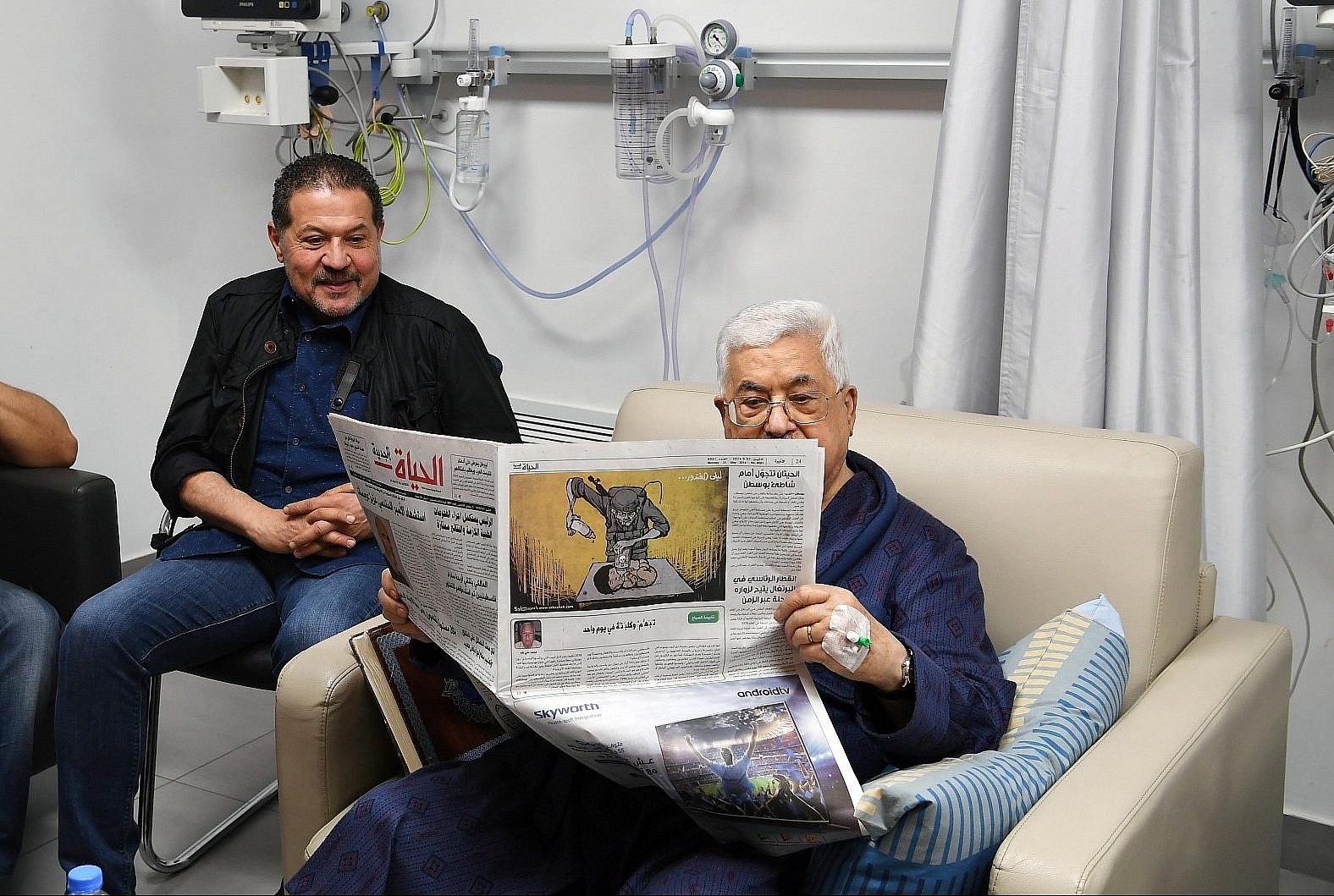
If there are no last-minute alarms, Palestinian Authority President Mahmoud Abbas will be released from the hospital in the coming days. Sources close to him say this could happen as soon as Saturday.
His condition is fine, they say; he doesn’t have a high fever, is walking and composed, and is getting updates all the time on diplomatic and security matters.
In short, after almost a week’s hospitalization in Ramallah, sources now insist 83-year-old Abbas is not in life-threatening danger.
Still, his rush to the hospital on Sunday, just days after he had been released after minor ear surgery, as well as the fog that in the first days surrounded the issue of his health, with rumors and denials running rampant, created a sense that the question of succession is more relevant than ever.
And yet no clear answer has emerged.
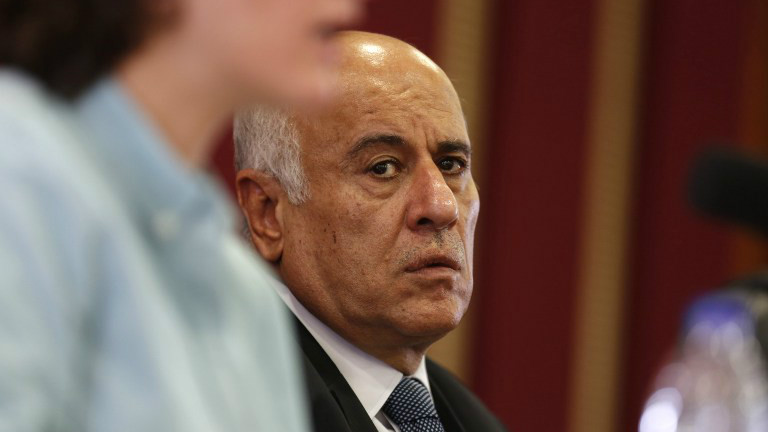
Innumerable names have been cited in Hebrew media, most of them familiar: Palestinian sports chief Jibril Rajoub, top Fatah leader Mahmoud Aloul, PA premier Rami Hamdallah, jailed former head of Fatah’s Tanzim armed wing Marwan Barghouti, and maybe even the exiled former Gazan security chief Mohammed Dahlan. But while the candidates jockey, and Israeli analysts play the name game, ordinary West Bank Palestinians don’t seem to care.
They are not too concerned about personnel changes in the Palestinian Authority; they’re more focused on the economy, jobs and on clinging to the relative quiet of recent years.
In many ways, the Israeli conversation surrounding Abbas’s heirs recalls the discussion in Israel in 2011 about possible successors to Egyptian strongman Hosni Mubarak: Would it be his son Gamal, his other son Alaa, perhaps his former spy chief Omar Suleiman, or maybe former army chief Mohammed Tantawi?
That debate became moot; Mubarak was ousted.
Could we be missing something similar in the West Bank in 2018? While Israelis vet the various Fatah candidates seemingly primed and ready to step into Abbas’s shoes, is there a Palestinian version of an Arab Spring waiting in the wings for the day after Abbas?
The situation in the West Bank is very different from that in Egypt ahead of the 2011 revolution. But if there’s one lesson to be learned from watching the Middle East of late, it is surely not to place too much faith in the ostensible certainties of yesteryear.
There are several key factors that appear to make a radical shake up unlikely — or, if there is a dramatic post-Abbas political shift, that could mitigate any fallout.
First, the economic situation in the West Bank is a lot better than in Egypt or Gaza. Most West Bank Palestinians would prefer the status quo to a revolution or coup against the Palestinian Authority — primarily to avoid a return to the chaos that reigned in Palestinian cities at the beginning of the millennium, with armed militias in the streets and a surge in terror attacks against Israelis that brought a corresponding spike in Israeli military incursions into Palestinian population centers. That was a period of economic collapse to which few West Bank Palestinians wish to return.
Second, as we have discovered in the course of Abbas’s current health “crisis,” what Palestinians characterize as the “system” — the Palestinian Authority as a body, as an entity — did not stop functioning. On the contrary, everything kept running fairly normally. The officials who manage the administrative wheels of the Palestinian Authority, and of the Fatah faction that controls the PA, showed they could be trusted to fulfill their functions even without direct daily supervision from above. That may seem obvious for more established political and administrative institutions, but it amounts to a positive sign in the case of the PA.
Third, the Palestinian public showed no signs of panic or anxiety, and certainly did not take to the streets either in support of or opposition to Abbas, a successor or any sort of revolution.
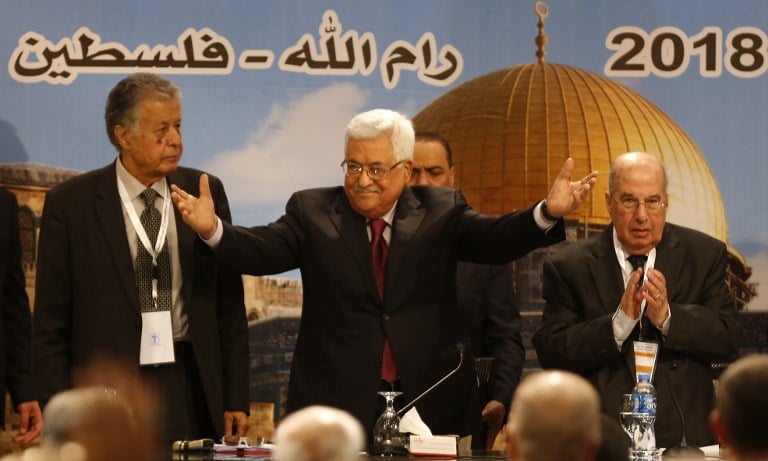
Credit should be given where it’s due. It isn’t just the Palestinian public that ensured calm in recent days. The Fatah-PLO establishment is well aware that these are Abbas’s twilight years and is working hard to ensure its own preservation by ensuring the survival of that “system.” The extensive talk of an heir has largely missed this vital factor: It is the broader elite who will determine what happens. They will either unite around one candidate, or, if they cannot do so, two or more leaders will divide Abbas’s responsibilities between them across the various institutions he leads: the PLO, Fatah and PA.
How might this play out? Nothing is yet certain, of course, but several factors are becoming clear.
It is the institutions and leadership of Fatah that will almost certainly select the next PA leader, probably from among the list of would-be heirs named above.
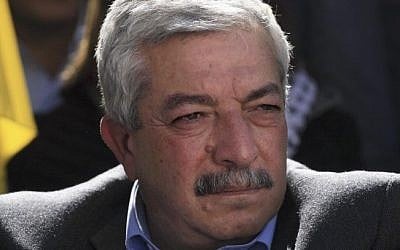
Aloul is the deputy chairman of Fatah, and a central figure among Tanzim activists in the northern West Bank (he is a resident and former governor of Nablus). However, he lacks influence in other parts of the West Bank, and is largely unknown in the international community — a vital arena for the Palestinians’ top leader. He is also relatively unknown among the Palestinian public.
Rajoub, the secretary-general of Fatah’s Central Committee, has a stronger support base in the southern West Bank. He hails from a clan in Dura, south of Hebron, and is influential in Hebron and Bethlehem. He is relatively popular among Fatah activists, and his years as head of the Palestinian Football Association have made him a well-known figure among sports fans and soccer supporters in the West Bank.
He is also considered to be among the more experienced Palestinian leaders on the international scene, despite having quarreled with key Fatah ally Egypt. He also has a great deal of experience dealing with Israel.
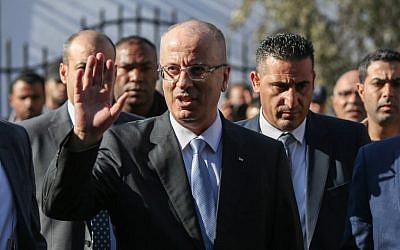
Hamdallah, Abbas’s prime minister, is an unlikely post-Abbas leader, since his selection would involve Fatah picking a leader who isn’t even a member, an unlikely prospect to say the least.
While it is important to keep an open mind and prepare for the worst, there is reason to believe that the pessimistic predictions of chaos on “the day after Abbas” are overblown, and that the Fatah elite will be willing and able to pass the baton on to a new generation without too much drama or internal dissension.
If that happens, none of the likely heirs to Abbas is expected to make major policy changes or set in motion the dissolution of the Palestinian Authority.
The more difficult question, certainly in the long term, is how the Palestinian public, and particularly the young, will react when they come to understand precisely how little has changed with Abbas’s passing. Will there be resentment, and what might be its consequences?







The Times of Israel Community.