

Among non-Jews in Poland, a curious revival — of Hebrew
Anna Lengiewicz says her friends and family were surprised and excited about her new studies. ‘They said it’s a very rare language, especially in Poland’
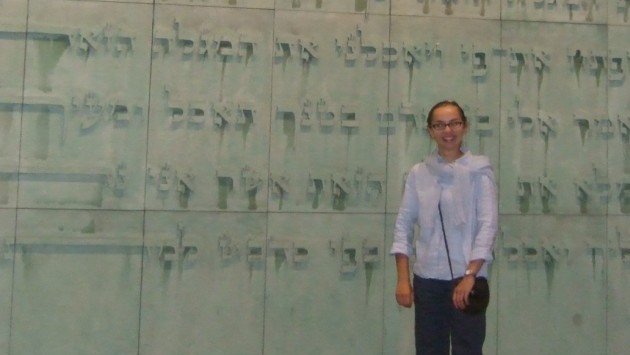
WARSAW — “Tell me,” asked one of my Polish friends, “isn’t it terribly complicated to write from right to left?”
For those who aren’t native to Israel, the Hebrew language can be daunting. From the writing from right to left to the difficult gutteral letters, Hebrew can be off-putting to many, but exotic and intriguing to others.
Strangely enough, one of the countries experiencing a surge in Hebrew studies is Poland. The residents of the Eastern European country, where prior to World War II a Jewish community of 3.5 million members lived, are discovering the magic of Hebrew. The demand for courses and private lessons is constantly growing.
But what would bring Poles, mostly Catholics with no Jewish roots, to want to learn Hebrew?
Conversations with some Hebrew students and teachers in Poland reveal many different reasons: Social or business connections with Israelis, curiosity about Poland’s Jewish history, love or Israeli spouses.
Anna Zaluska, 25, divides her time between several institutes. She teaches modern Hebrew in two schools and biblical Hebrew in the Babylon Foundation for Preserving Languages and Cultures in Warsaw.
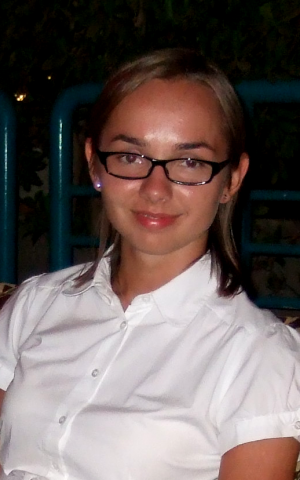
She describes how it all began: “I was 17 when I participated in an essay competition about the history of Polish Jewry. The purpose of the competition, which took place all over Poland, was to encourage young people to find traces of former Jewish life in their hometowns. I wrote a paper on the Jewish community in Suwalki, the city in which I then lived.
“I had never been interested before in the Jews that lived in the city, though I had heard about its Jewish history.”
Zaluska began researching at a local archive and read articles about Jews in Poland. She interviewed elderly Poles about their Jewish neighbors and one mentioned there was still a Jew, named Adelson, an older man who still lived in Suwalki. It was suggested she interview him about the Jews that lived there.
“Happily Mr. Adelson agreed to meet and be interviewed. His life and family story were amazing and I dedicated most of my essay to it.”
Later she found out she’d won the competition thanks to his story.
“During the awards ceremony, someone told me about Hebrew studies in Poland. I thought to myself, ‘Who would want to study Hebrew here? Why would people choose such a strange field?'” Little did she know that two years later she would follow suit.
“Since the competition I could not stop reading about Poland’s Jewish history and Hebrew literature, and I ‘discovered’ the Hebrew language.”
After graduating high school she was accepted to the Hebrew studies program at Warsaw University.
“I remember telling Mr. Adelson, excitedly, that I was accepted to Hebrew studies. He looked at me and said ‘It is beautiful and exciting that you have decided to learn Hebrew, but tell me please – how are you going to make a living after graduating? From Hebrew you won’t make a living.’
Zaluska says proudly, “Today I have completed my master’s degree in Hebrew, visited Israel three times and studied Hebrew at the Hebrew University in Jerusalem, and now I teach Hebrew. I am very happy with my choice. The people I met in Israel gave me the feeling that it was the right decision. Unfortunately I couldn’t share all those feelings with Mr. Adelson. He died two years ago.”
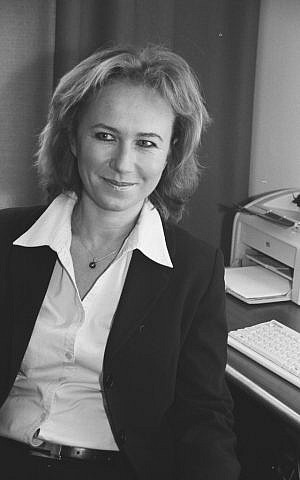
Anna Lengiewicz, a 46-year-old lawyer from Warsaw, is a typical Hebrew student. The reason that drew her to study Hebrew is common business with Israelis who over the years became her close friends.
“I started learning Hebrew six months ago in private lessons. I have many Israeli clients who became friends and I would like to interact with them in their native language. I was in Israel a few times. It’s so hot and humid, but it is such a beautiful country,” she says.
Lengiewicz reports her friends and family were very surprised and excited about her new studies. “They said it’s a very rare language, especially in Poland, but also very interesting. A difficult language, but beautiful.”
Lengiewicz says she intends to continue her studies until she speaks fluently. “What is particularly complicated for me is the reading, not just the writing. I have learned quite a few words — hello, how are you, I want to drink wine. Sometimes I flub a few words, what makes my friends laugh, but it’s a part of our relationship.”
Similarly to Lengiewicz, Piotr Pietrzak, 33, also came to Hebrew through his job. He works in an investment company in Warsaw that collaborates with Israeli companies. Additionally he wanted to connect with a friend with Jewish roots. Pietrzak has visited Israel several times and recalls a surprising experience.
“Last time I was in Israel, two men started talking to me in Polish. They said, ‘You have learned Hebrew to talk to us, but we speak Polish and we will speak Polish for you.’ It was as surprising for me to hear them speak Polish as it was for them to see that I speak Hebrew,” says Pietrzak.
He finds one significant difference between Hebrew and Polish: “What first struck me was the directness of the language and the direct way in which Israelis speak.”
Currently Pietrzak’s favorite author is the prize-winning Israeli writer Etgar Keret. He was exposed to Keret’s work since in addition to basic values of the Jewish culture and religion, the Hebrew and Jewish studies programs in the Warsaw University includes books by Keret and Eshkol Nevo, and songs by Aviv Gefen, Efrat Gosh, Berry Sakharof, Zohar Argov, Mosh Ben-Ari and more.
Another former Warsaw University student, Anna Piatek, 25, is also teaching Hebrew in two schools, in addition to giving private lessons. Like her friend Zaluska, she also completed an MA in Hebrew at the Warsaw University and for her thesis paper she wrote on prejudices about Jews, a particularly sensitive issue among Poles.
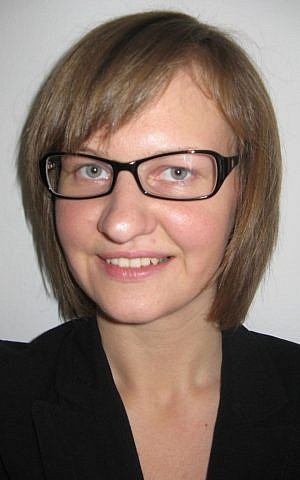
“I started thinking about Hebrew when I was in high school. Polish youth learn a lot about World War II and the Holocaust, read books about concentration camps, and this affects our world view. I thought about the history and culture of Polish Jews and was interested in Hebrew and Yiddish. I loved the way Hebrew sounds, and I decided to explore it. During my studies I visited Israel twice – the first time I was only traveling, but during the second stay I studied Hebrew. I am already planning more trips to Israel.”
Piatek says she doesn’t have a “typical” student and the motivations for their studies are as varied as they are.
“I had a student who learned Hebrew because his ex-wife now lives in Israel and has an Israeli husband. Others want to learn Hebrew for work — business, artistic or scientific collaboration with Israelis.”
Piatek says she also teaches two children, one of whom comes from a Polish Jewish family, and the other a daughter of an Israeli family living in Poland. There are also women with Israeli boyfriends or husbands, and others who, despite being Catholics, want to read the Bible in its original language.
In recent years, Piatek says, many young Poles have become interested in Judaism, Israel and Hebrew, and the increasing number of her students reflects that. She adds that there are many festivals, lectures and events and “the image of Jews and Judaism has changed a lot in Poland. For this reason, I am very angry when I hear Israeli guides telling their young students that Poland is a very dangerous place for Jews or just a big Jewish cemetery. It’s simply not right. It does not help to build better connection between Poles and Israelis.”
She adds: “My oldest student is 60 years old and the youngest is 6. There are those who simply love to learn new languages and choose Hebrew because it’s unique and beautiful. Some want to travel to Israel or were there in the past, fell in love with the language, people or country. Now they want to go back there and understand more.”








The Times of Israel Community.