

In southern Likud stronghold, young Ethiopians lose patience with status quo
While their parents have long voted for Netanyahu’s party, younger generation jaded by years of discrimination are demanding more from lawmakers of all parties
 Add ToI as a Preferred Source on Google
Jacob Magid is The Times of Israel's US bureau chief
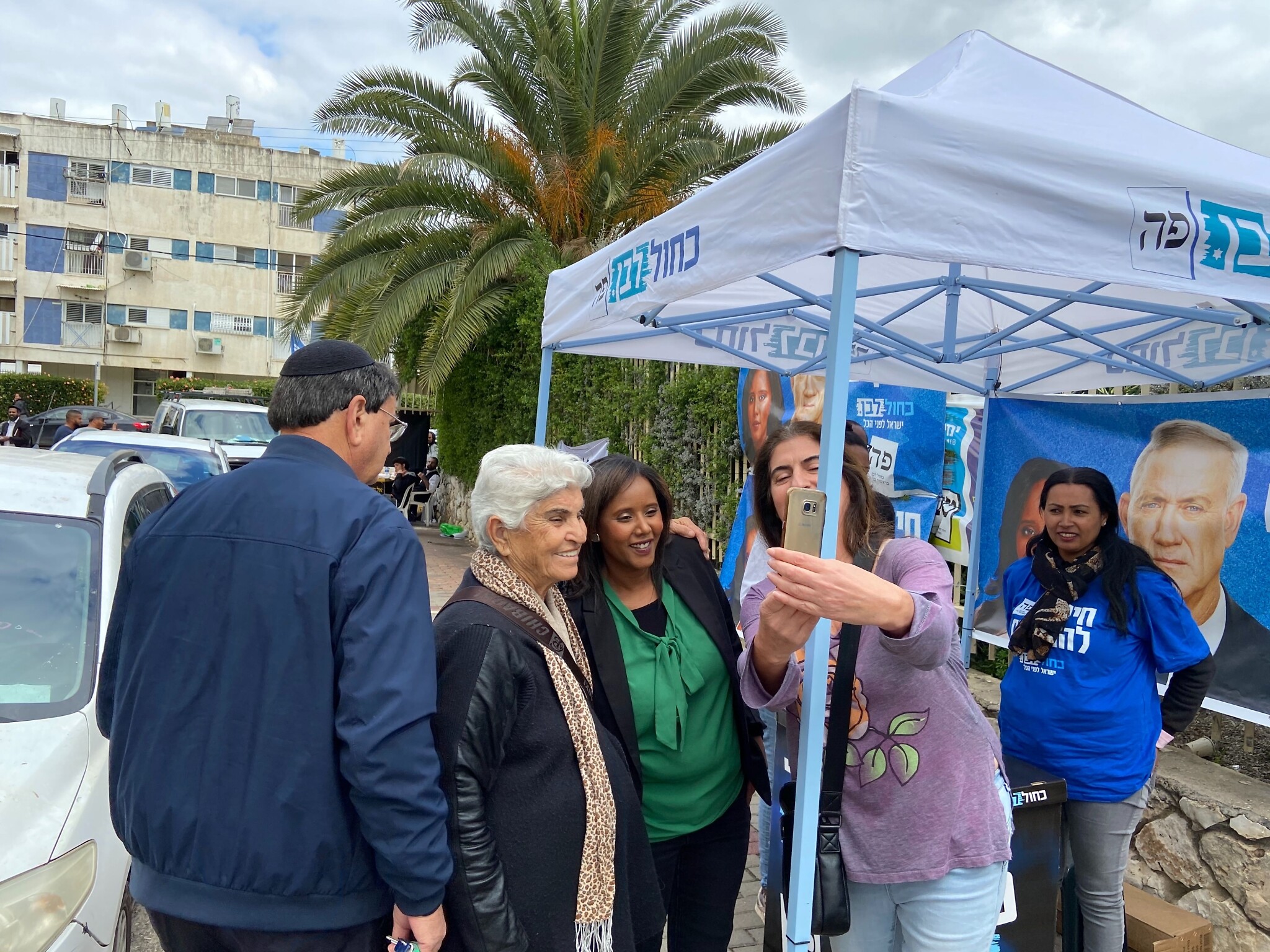
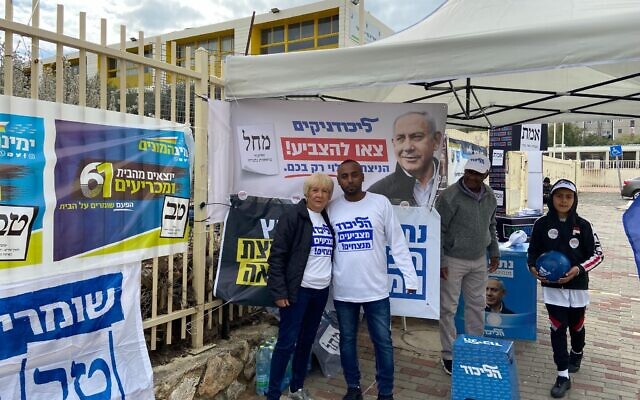
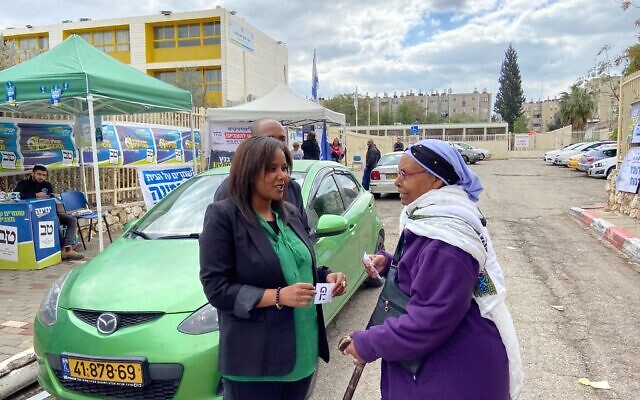
KIRYAT MALACHI — Activists from just about every party had pitched tents outside the Amit elementary school in the southern town of Kiryat Malachi for Monday’s election, but the residents slowly streaming in to vote were clear that the results in their community would hardly be a competition.
“Only Bibi!” shouted 71-year-old Likud volunteer Ruti Mana at just about every voter who walked by. Most of them gave her a thumbs up or echoed “only Bibi” in response, albeit lethargically — either due to the early hour or because they had lost their enthusiasm after the first two elections within the past 12 months.
Still, anyone asked was quick to declare Kiryat Malachi a Likud stronghold. Forty-one percent of the 11,547 envelopes counted here in last September’s election contained Likud slips. The second largest party — Shas — won just 19% of the vote, followed by Blue and White at 12%.
The southern periphery town of 23,000 also boasts the highest percentage of Ethiopian Israelis in the country — 16% — who locals said have long voted similarly to their neighbors.
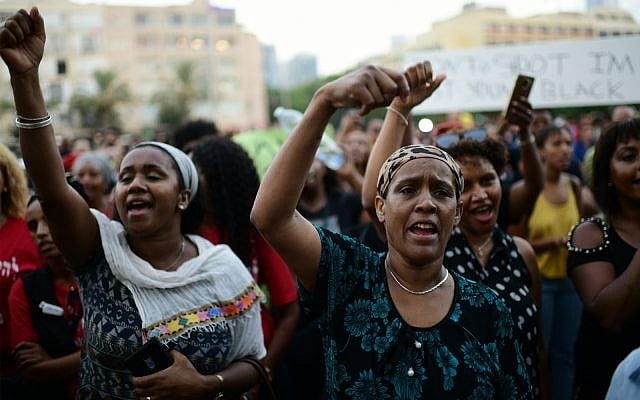
However, recent years have wrought a shift among the younger generation, disillusioned by what they say has been longstanding discrimination by law enforcement and neglect from other government offices. The frustration climaxed last summer after an off-duty police officer shot dead unarmed 19-year-old Solomon Tekah, sparking mass protests across the country.
“The older generation will vote Likud until the day they die, but among the younger generation, there’s a lot less willingness to continue giving Bibi [Netanyahu] our support,” said Karen, a Blue and White supporter outside the polling site.
“We want a party that will truly represent us. Pnina has come to every one of our protests, so for me that party is Blue and White, said Karen, referring to the centrist alliance’s MK Pnina Tamano-Shata.
Last month, the lawmaker joined dozens of demonstrators outside the Kiryat Malachi police station after a TV report revealed that officers there had mocked and disparaged people of Ethiopian origin in a unit-wide WhatsApp group. Just before noon on election day, news broke that the commander of the station Shai Mizrachi had been removed from his position.
Michal Avera-Samuel, who heads the Fidel Association for the Education and Social Integration of Ethiopian Jews in Israel, clarified that while there is a feeling of dissatisfaction among youth, that does not mean they are all voting for the same party on election day.
“There is much disagreement and diversity in opinions among the youth and efforts by the big parties to move us as one unit in their direction will not work,” she argued, in an apparent knock at both the Blue and White and Likud parties.
Parties across the political spectrum are seeking the support of the Ethiopian-Israeli community — which now numbers 150,000 people — some reaching out for the first time. Shas and United Torah Judaism, both ultra-Orthodox parties, held salon events targeting members of the Ethiopian community, and the Joint List Arab-majority party launched a campaign of its own against police brutality, featuring signs across the country in Amharic.
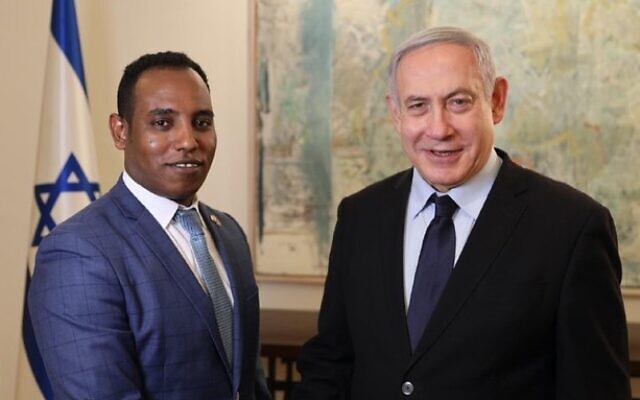
The community was twice in the spotlight of the Likud campaign: first in January when Netanyahu convinced Blue and White MK Gadi Yevarkan to defect in exchange for a higher spot on the premier-led Knesset list as well as promises to advance issues concerning the Ethiopian community, and last week, 43 members of the Falash Mura community from Addis Ababa were airlifted to Israel in a government-sponsored operation, accelerated by Netanyahu to take place before Monday’s vote.
Avera-Samuel refrained from directly criticizing either move, but said the cabinet had already passed a decision in 2015 to bring the remaining 8,000 Ethiopian Jews to Israel and that the issue had largely been forgotten until the recent election.
As for Yevarkan’s jump to Likud, she said it further demonstrates a divide among youth in the sector, which might have been less marked in the last election when both of the Knesset’s only Ethiopian-Israeli MKs were part of the Blue and White party.
Chaim Tekaleh, a 31-year-old Likud supporter and Kiryat Malachi resident, said that most of his friends weren’t pleased with the decision made by Yevarkan to bolt Blue and White. “It was clearly self-interested. On the other hand, the right is more likely to be able to form a government so if he wants to influence, Likud provides him with the best opportunity to do so.
“I understand the trend among my friends who are calling for Netanyahu’s ouster, but the problems our community needs answers to run much deeper than Balfour street,” Tekaleh, said referring to the location of the Prime Minister’s Residence.
“An end to over-policing, an end to the discrepancy in funds given to our communities compared to those in the center [of the country] — these aren’t goals you can achieve simply by changing the government,” Tekaleh continued. “Bibi and the right are in the best position to deliver on these demands.”
As he finished speaking, the young man’s face lit up when he noticed Tamano-Shata had arrived. “Pnina, welcome!” he said, greeting her with a high five and a hug, despite still wearing his Likud shirt.
The 39-year-old lawmaker received similar greetings from the other Ethiopian-Israelis at the polling site, regardless of party affiliation.
“The only ones who don’t vote Likud here are Ethiopian,” she whispered to The Times of Israel between hugs.

Tamano-Shata grabbed a handful of Blue and White leaflets from her party’s canopy and began trying to pass them out to voters.
“Only Bibi,” said an older Ethiopian gentleman, who respectfully declined.
“Bibi, Bibi, but you and I both know that I’m your first phone call when you want something done,” Tamano-Shata responded, smiling.







The Times of Israel Community.