

In xenophobic climate, immigration museums remind Americans of their roots
After targeted disruptive actions, guides attempt to thwart increased anti-immigrant rhetoric through historical facts
 Add ToI as a Preferred Source on Google
Reporter at The Times of Israel

NEW YORK — At the Tenement Museum of New York, visitors walk through the home and workplace of two Lower East Side Jewish families who lived there at the start of the 20th century. It usually draws those interested in the life of newly arrived immigrants in the late 1800s and early 1900s. On some tours, they can even “meet” landlords and residents, and assume the role of tenement inspectors.
But since Donald Trump’s election, visitors making anti-immigrant comments have disrupted the generally convivial atmosphere of tour groups. In one case a man shouted an obscenity followed by, “Vote Trump!” and stormed out with his wife after throwing a laminated document on the ground, recounted Annie Polland, the museum’s senior vice president for education and programs.
The Tenement Museum isn’t the only one reporting such incidents. Across the nation, those harboring anti-immigrant views have targeted other museums devoted to telling the story of immigration.
As such, these institutions are strengthening their resolve when it comes to their mission: telling how immigrants molded the present-day United States but also teaching how immigration will keep shaping the country. By 2055 the US will no longer have a single ethnic or racial majority, according to Pew Center.
“Our mission hasn’t changed because of these incidents. Instead, the mission has become in more relief. People want to talk about it more. People are appreciative that this space exists,” Polland said.
Given that Trump — who actually received the Ellis Island Medal of Honor in 1986 — cast immigration in a negative light during the campaign, the increased hostility isn’t altogether surprising. After all, he spoke of marauding bands of violent illegal immigrants and threatened to ban Muslims from entering the country.
But it does present a unique challenge to museum educators across America: how to diplomatically deal with hostile or untrue remarks about immigrants.
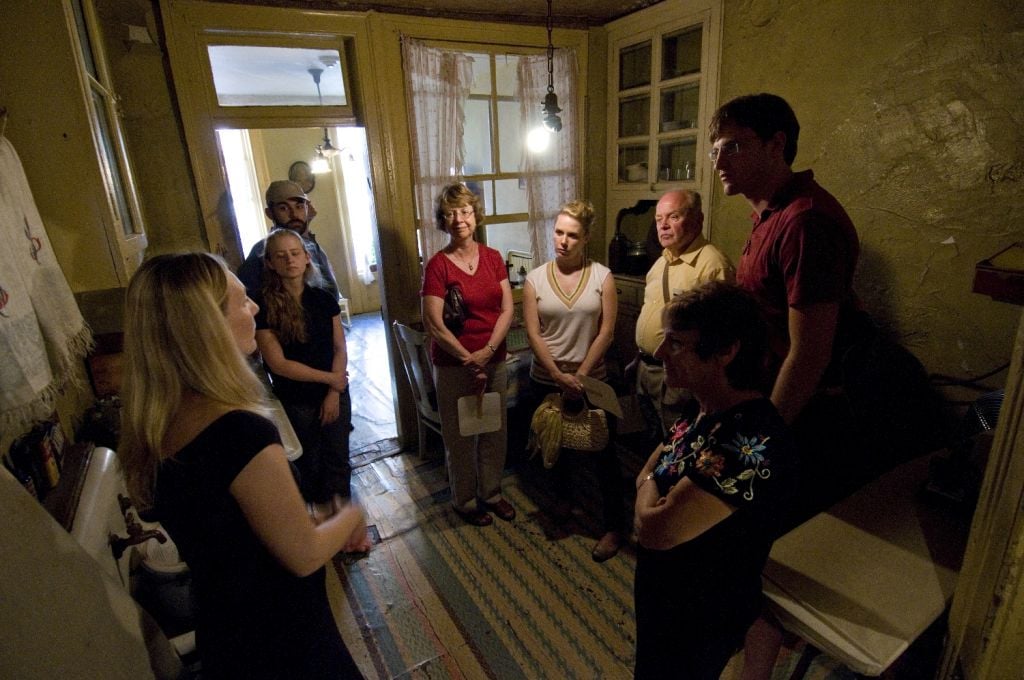
“Personally, I’ve seen a little bit more reaction; the election brought everything to the forefront. There’s a certain segment of visitor who will say things like ‘Isn’t it wonderful what my grandparents did to come through Ellis Island — but those immigrants today.’ There are a few more people who roll their eyes when I talk, or say they are tired of hearing immigration talked about,” said Danelle Simonelli, a park ranger at the Ellis Island National Museum of Immigration.
“I understand immigration is a pretty controversial topic and I’m not here to tell you what to think about policy. I just don’t want you to jump to a knee jerk reaction,” she said.
‘I’m not here to tell you what to think about policy. I just don’t want you to jump to a knee jerk reaction’
Over the 20 years she’s worked at Ellis Island, Simonelli has learned to preempt some of the more negative comments by inserting a little history and commentary at the end of a tour. For example, she might tell the group how in the mid-1920s, Ellis Island’s role wound down because of newly enacted quotas.
“I might also tell them that those quotas came because a number of Americans thought my grandparents, who came from southern Italy, were the kind of low-class riff-raff they didn’t want coming into this country,” she said. Simonelli said she sometimes mentors new rangers on how to handle more adversarial tourists.
To be sure, it’s a small fraction of people who, aside from voicing their views, actually act on their hard line rhetoric, but there have been incidents.
Last month, signage at the New Americans Museum in San Diego was defaced with anti-immigrant slurs. In early December the president of the Idaho Black History Museum discovered a racial slur written in snow on a shed’s rooftop.
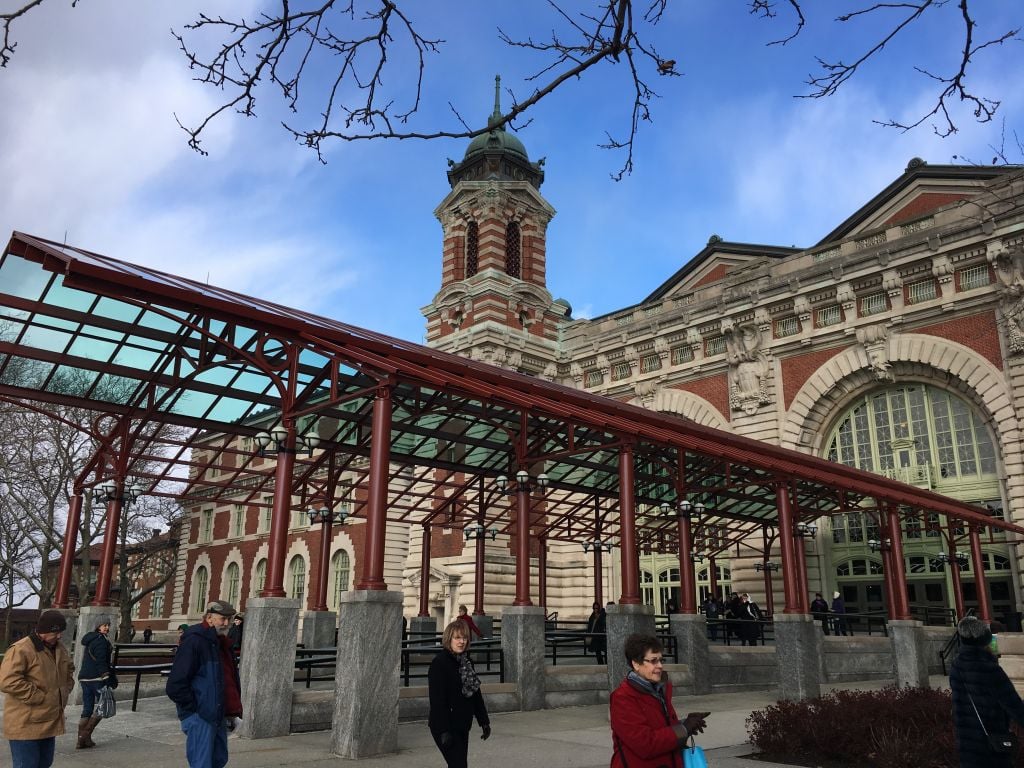
In general, museums that focus on groups that have been marginalized are being targeted, said Sarah Pharaon, the senior director of methodology and practice at the International Coalition of Sites of Conscience. About 50 museums across the US, including Ellis Island and the Tenement Museum belong to the coalition.
“I think the tenor of our spaces is highly influenced by whatever is going on, and that’s why we are seeing more vitriolic comments, or graffiti in some spaces, as in the case of the New Americans Museum,” Pharaon said.
‘We are in a unique position in a critical time in the US, where people are trying to find accurate information’
“But we are also seeing a willingness to visit from people who didn’t come to these places before, whether out of a moment of solidarity or out of genuine sense of questioning and searching for additional knowledge. We [museums] are in a really unique position in a very critical time in the United States where people are trying to find accurate information,” she said.
At the Tenement museum, guides and educators gather at the start of each month to discuss how best to engage visitors and diffuse potentially combustible situations with facts, figures and calm.
“Most people that say things aren’t overtly hostile. They might say something like ‘In my neighborhood everybody is illegal,’” Polland said. “The guide can say something like ‘That’s interesting that you say this; nationwide trends shows this to be the case.’ We want to be proactive, and for guides to think about their responses. Given the political climate, we want them to be empowered.”
Since its infancy, America stood as a beacon for the persecuted and for those seeking a better economic life.
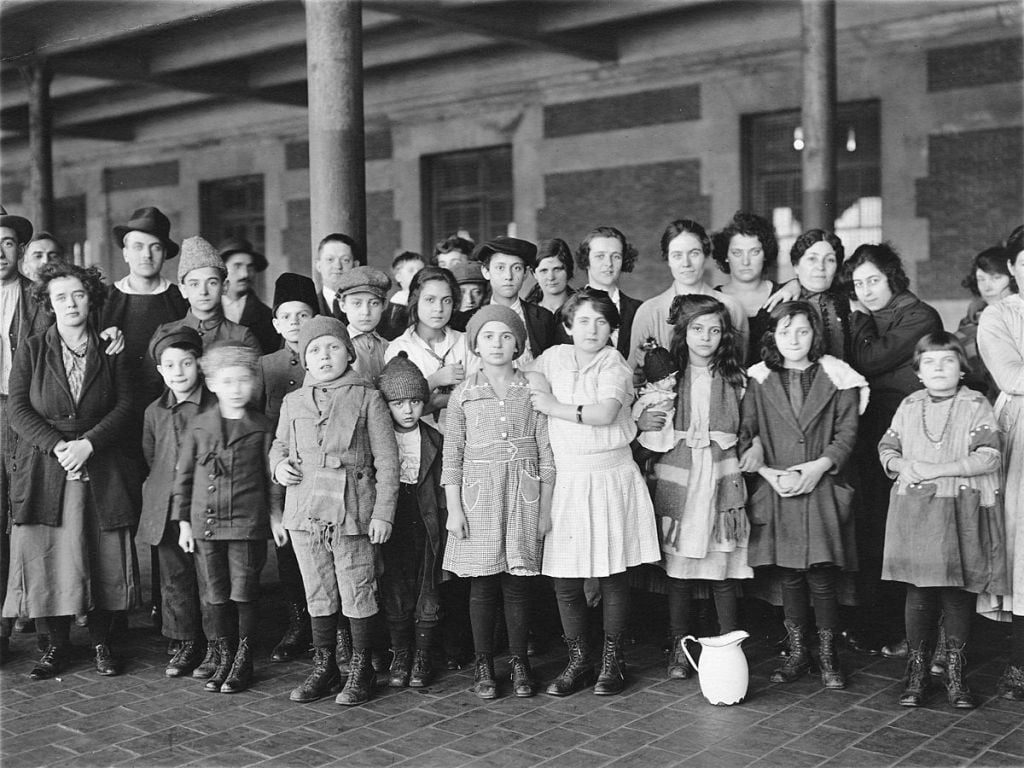
Six years after the American Revolution, Thomas Paine wrote how the new nation was already “the asylum for the persecuted lovers of civil and religious liberty from every part of Europe.”
Then, at least 6,000 people flocked to the nation each year. Over time those numbers ebbed and flowed, depending on worldwide economic situations and global conflict. With that tide came anti-immigration sentiment and legislation.
There was the 1882 Chinese Exclusion Act and The 1907 “Gentlemen’s Agreement” with Japan. In 1924, Congress passed the Johnson Reed Act, which imposed a quota on European immigration; Jewish and Italian immigrants were among the hardest hit.
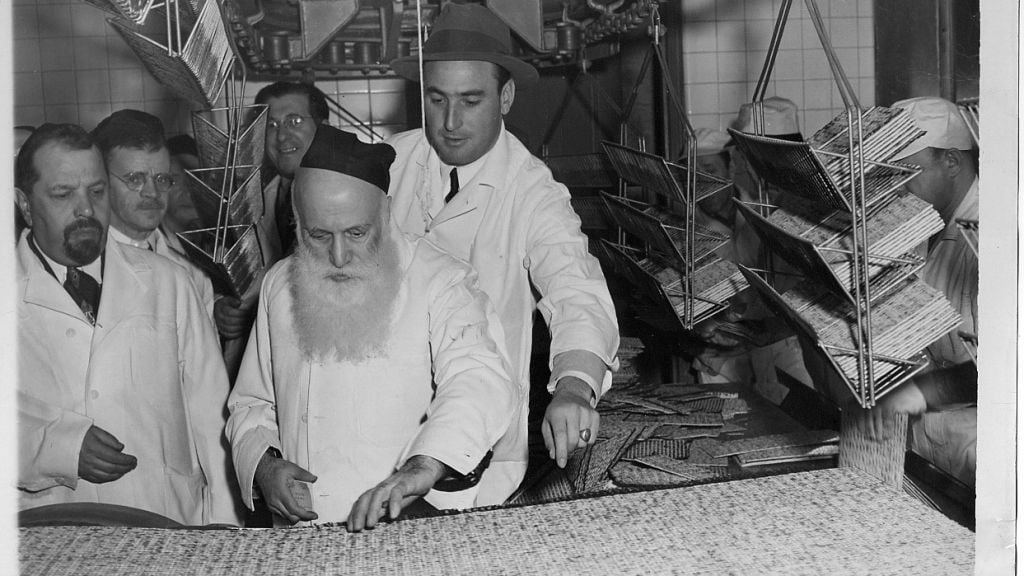
There were also times of expansion and reform to immigration laws.
In 1965 President Lyndon Johnson signed the Hart-Celler Act effectively erasing the quota system, which previously tilted in western Europe’s favor. In 1986 during the Reagan administration, Congress passed the Immigration Reform Act, giving amnesty to 3 million illegal immigrants.
Today one in five Americans was either born in a foreign country or has a parent who was born abroad. And while 50% of Americans hold favorable views toward legal immigrants, 34% regard legal immigrants as a threat to American customs and values, according to PRRI, a non-partisan, non-profit research institution.
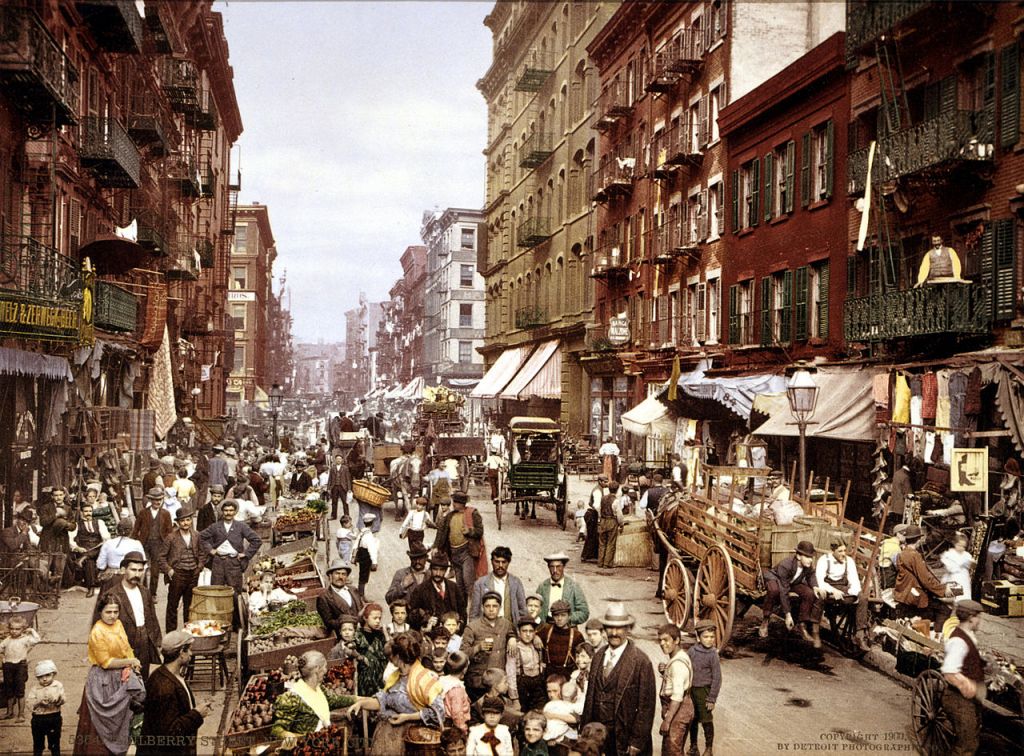
With these demographics in mind, museums are holding and planning exhibits that explain these trends. In the Lower East Side, the Tenement Museum is planning an exhibit about migrants from China and Puerto Rico as well as Jewish Holocaust survivors, to open in July 2017. At Ellis Island there is already a temporary exhibit about Syrian immigrants coming to America in the early half of the 1900s.
Those involved feel it’s a national imperative to understand the effect of these demographic changes. It’s what propels the museum’s educational and cultural programs.
“People have forgotten what their grandparents and great-grandparents went through when they came here — the hostility and hatred they faced. There is a history of prejudice in the US when it comes to immigration law and unwritten prejudice in America,” Simonelli said.
“It’s our job, particularly in the ranger division, to educate people about the history, or to make connections to the history,” said Simonelli. “If I can make a few people think about something then I’m doing my job and contributing to the national dialogue about a controversial subject that needs to take place.”









The Times of Israel Community.