

Indiana House unanimously advances bill defining, banning antisemitism in schools
If passed by Senate, law will define antisemitism as religious discrimination; critics fear it will be used to silence talk on Israel, though legislation protects fair criticism
 Add ToI as a Preferred Source on Google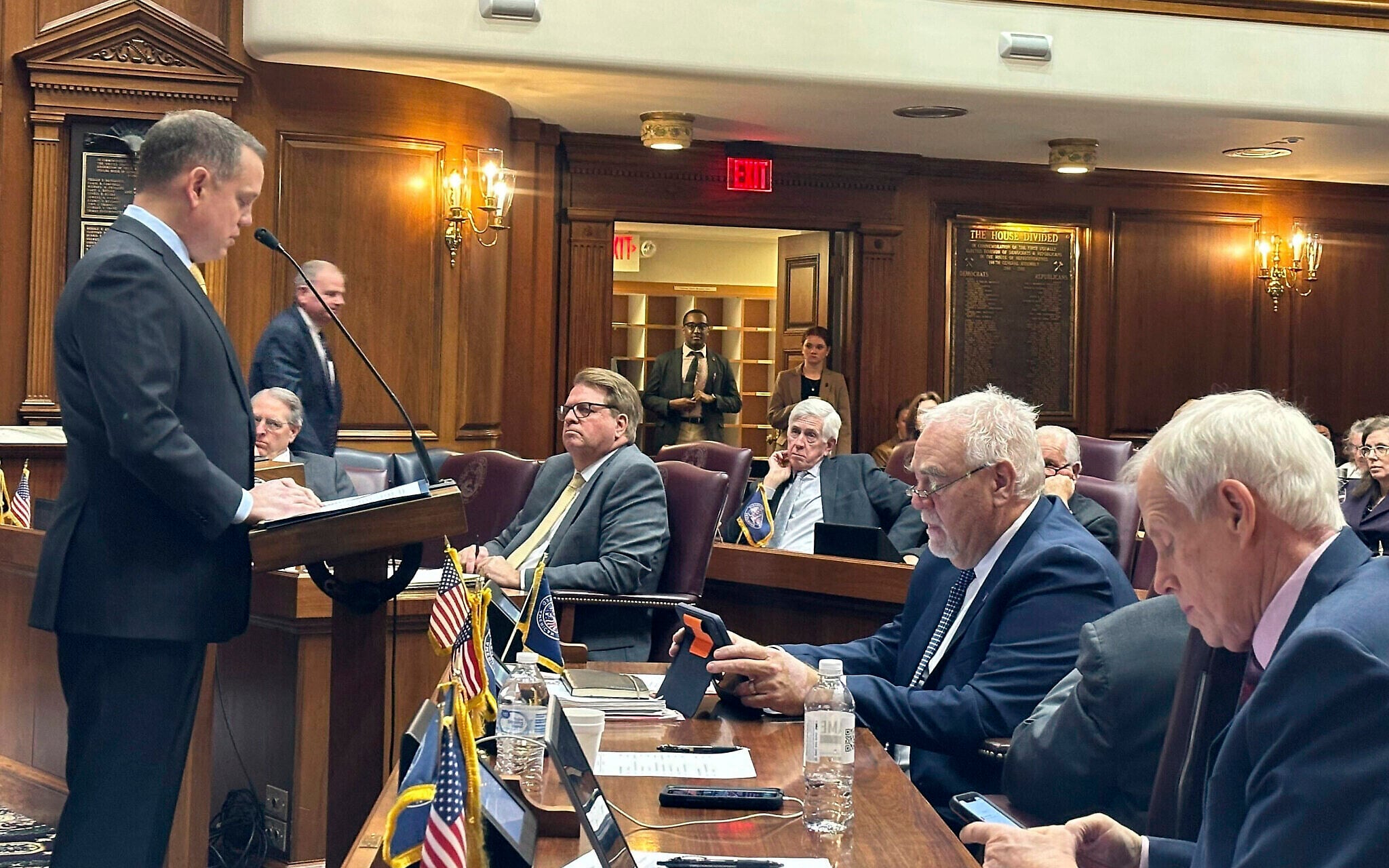
The Indiana House of Representatives unanimously passed a bill Thursday that defines antisemitism as religious discrimination in the state education code, repeating a 2023 vote after a similar bill died in the state Senate.
Backers hope the October 7 Hamas massacre in Israel and the ensuing war on the terror group have spurred renewed support for the bill this legislative session. State lawmakers across the country are expected to use annual legislative sessions for various symbolic and policy proposals centered on the war.
Indiana House Republicans included the bill, House Bill 1002, as one of their five priorities for the 2024 session. The legislation — largely aimed at higher education institutions — would define antisemitism as religious discrimination and “provide educational opportunities free of religious discrimination.”
At a committee hearing this month, lawmakers heard passionate testimony from dozens of people, including high schoolers, undergraduate and graduate students in Indiana.
Advocates for the bill said instances of antisemitism have increased at college campuses in Indiana since the devastating October 7 onslaught, when terrorists stormed into Israel from Gaza, murdering some 1,200 people, mostly civilians, and kidnapping some 240 people to Gaza.
Supporters of the legislation say a working definition of antisemitism in the state education code had been wanting long before October. Opponents of the bill worry it will be used to silence support for Palestinians and criticism of Israel.

The language of the bill currently says antisemitism “does not include criticism of Israel similar to that leveled against any other country.” Critics say the provision is vague and will not adequately protect students, faculty and others who are critical of Israel’s military operations in Gaza, where the Hamas-run health ministry says more than 24,000 people have been killed since October 7.
Figures from the terror group cannot be independently verified, and are believed to include both civilians and Hamas members killed in Gaza, including as a consequence of the terror groups’ own rocket misfires. The IDF says it has killed over 9,000 operatives in Gaza, in addition to some 1,000 terrorists inside Israel on October 7.
About 30 people gathered outside the House chamber on Thursday to protest the measure, and one protester was removed from the gallery before the vote.
Yaqoub Saadeh, 21, president of the Middle Eastern Student Association at Indiana University – Purdue University Indianapolis, said the legislation will infringe on academic freedom and his ability to speak out against Israel.
“I don’t need to feel like as a student I’m going to be either censored or attacked or harassed,” he said.
The House unanimously passed a bill with the same language during the 2023 legislative session. The 2024 bill now goes to the Senate, where it failed to get a committee hearing last year.
House Speaker Todd Huston, a Republican, told reporters Thursday he was “thrilled” about the unanimous vote.
“We feel good about what the House has done and we’ll leave it up to our Senate colleagues,” he said.
Senate President Pro Tem Rodric Bray, a Republican, has said his caucus would take a look at the bill should it pass to his chamber.
“The world’s a little bit of a different place than it was even last year,” he told reporters at a press conference on January 11.

In at least eight statehouses across the country, both Democratic and Republican lawmakers — sometimes working together — have introduced measures to define antisemitism. Some of the measures were introduced after the October 7 massacre.
Others were on the agenda before that: Arkansas passed such a law early last year and one chamber of legislatures in both Georgia and South Carolina did, too. Bills are also pending in at least Florida, Massachusetts, New Jersey and South Dakota.
Lawmakers have also introduced scores of resolutions condemning the brutal October 7 incursion and supporting Israel. Some have pushed bills that would go further. For example, a measure being pushed in Florida would require students who “promote a foreign terrorist organization” to pay out-of-state tuition at public universities. New Jersey lawmakers have proposed reimbursing state residents who left Israel after the attacks.
In Iowa, a resolution to reaffirm support for Israel passed by voice vote Thursday in the House, as other states have done. The Republican-led act condemned Hamas, saying Israel should “oppose any pressure to enact a ceasefire before the State of Israel has secured its safety.”
State Rep. Sami Scheetz, an Arab American of Syrian and Palestinian descent whose district includes Cedar Rapids, Iowa, said the resolution will not change the outcome of the conflict. Scheetz said he voted against the resolution that the “hyper-partisan” Republican majority brought without any consultation with Democrats.
“This is not justice that will lead to a lasting peace,” Scheetz said, citing statistics on the more than 24,000 Palestinians killed and millions displaced. “Republicans in the legislature stood for partisanship and exclusion instead of peace, justice and nonviolence for all.”
Iowa passed a law in 2022 to enshrine the definition of antisemitism in the state code. Thursday’s resolution in the House includes a call for law enforcement to “remain vigilant” in protecting Israeli Americans.
The South Dakota Senate on Thursday approved a resolution affirming the Republican-controlled Legislature’s support of Israel, days after the House adopted the measure, both with overwhelming support.










The Times of Israel Community.