

Internal ultra-Orthodox politics are driving an unprecedented assault on the AG
Facing intense pressure from constituents over the failed draft exemption law, Shas chairman Aryeh Deri and right-wing allies are inciting a rebellion against law enforcement
 Add ToI as a Preferred Source on Google
Shalom Yerushalmi is the political analyst for Zman Israel, The Times of Israel’s Hebrew current affairs website
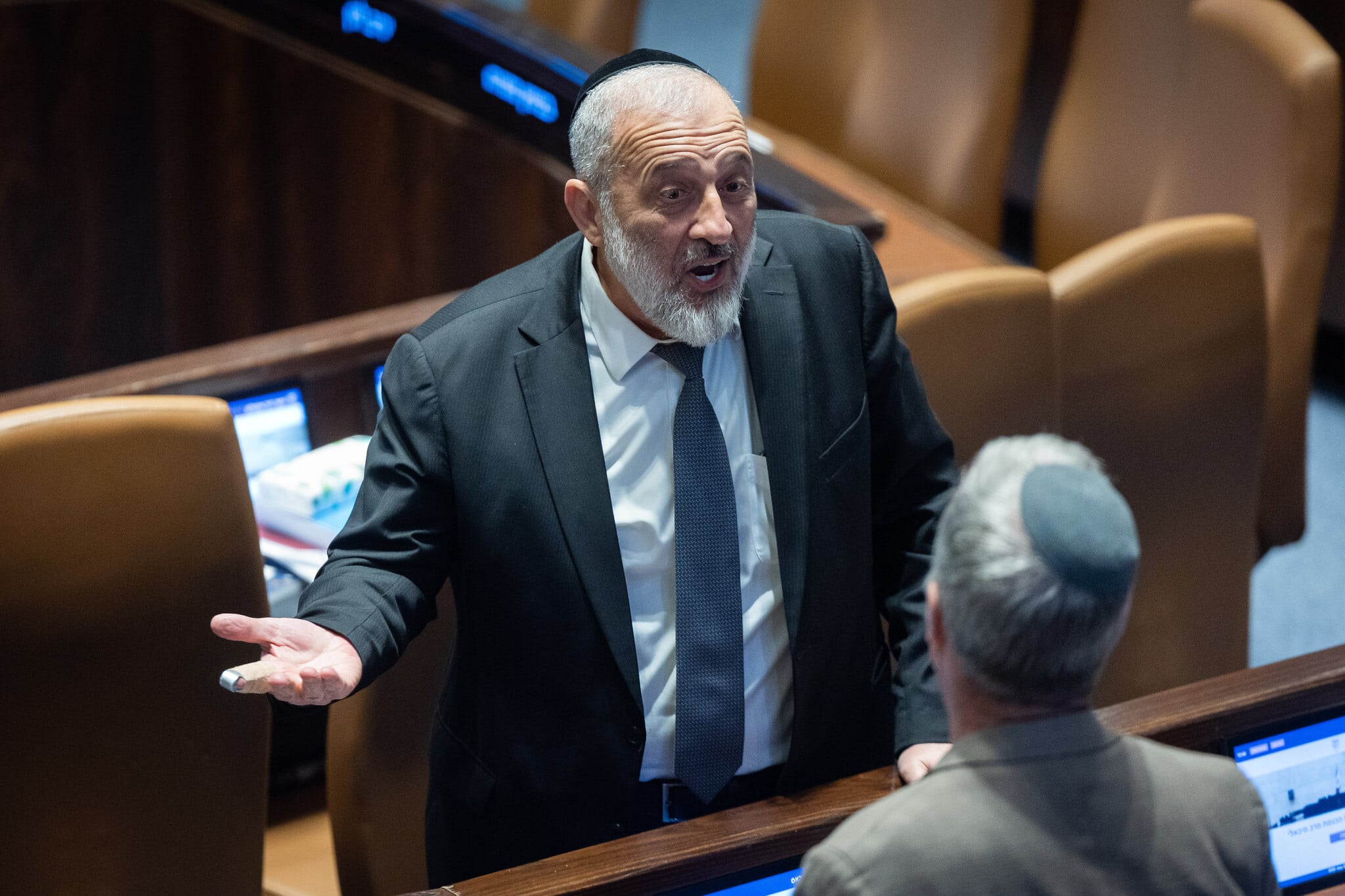
Anyone reading the following broadside against the attorney general would find it hard to believe that Shas chairman Aryeh Deri was the person behind it.
“The detached and anarchist attorney general, who is racing ahead with harsh arrests and sanctions against Torah students, is pushing the Haredi public to the edge and will lead it to a tax revolt, a break with the police, and a deep rift with state authorities,” Deri wrote. “Anyone who cares about the country’s future must rise up against this madness.”
Over the years, Deri has treated law enforcement authorities with respect, especially after having felt their power firsthand. On Sunday evening, however, he deviated from his custom and issued a statement that fit perfectly with the rhetoric of far-right National Security Minister and Otzma Yehudit party leader Itamar Ben Gvir, who is increasingly becoming Deri’s greatest rival for Shas voters.
Later Sunday, the national security minister welcomed Deri’s remarks, echoed them, and even added: “I understand that at long last everyone understands what I shouted from day one, that the criminal and anarchist attorney general must be fired. Unfortunately, at the time I was a voice crying in the wilderness, and my Haredi colleagues opposed her dismissal. She must be sent home. Without that, there is no meaning to right-wing rule.”
Following the Shas chairman and the national security minister, Justice Minister Yariv Levin also joined the festival of rebellion against law enforcement and the tax authorities. “The time has come for us to adopt a series of operative decisions that will return control of the state to the government and put an end to judicial anarchy,” Levin urged.
To provide a governmental imprimatur to these harsh, and perhaps horrifying, remarks, a post from Cabinet Secretary Yossi Fuchs himself arrived overnight Sunday, adding fuel to the general fire.
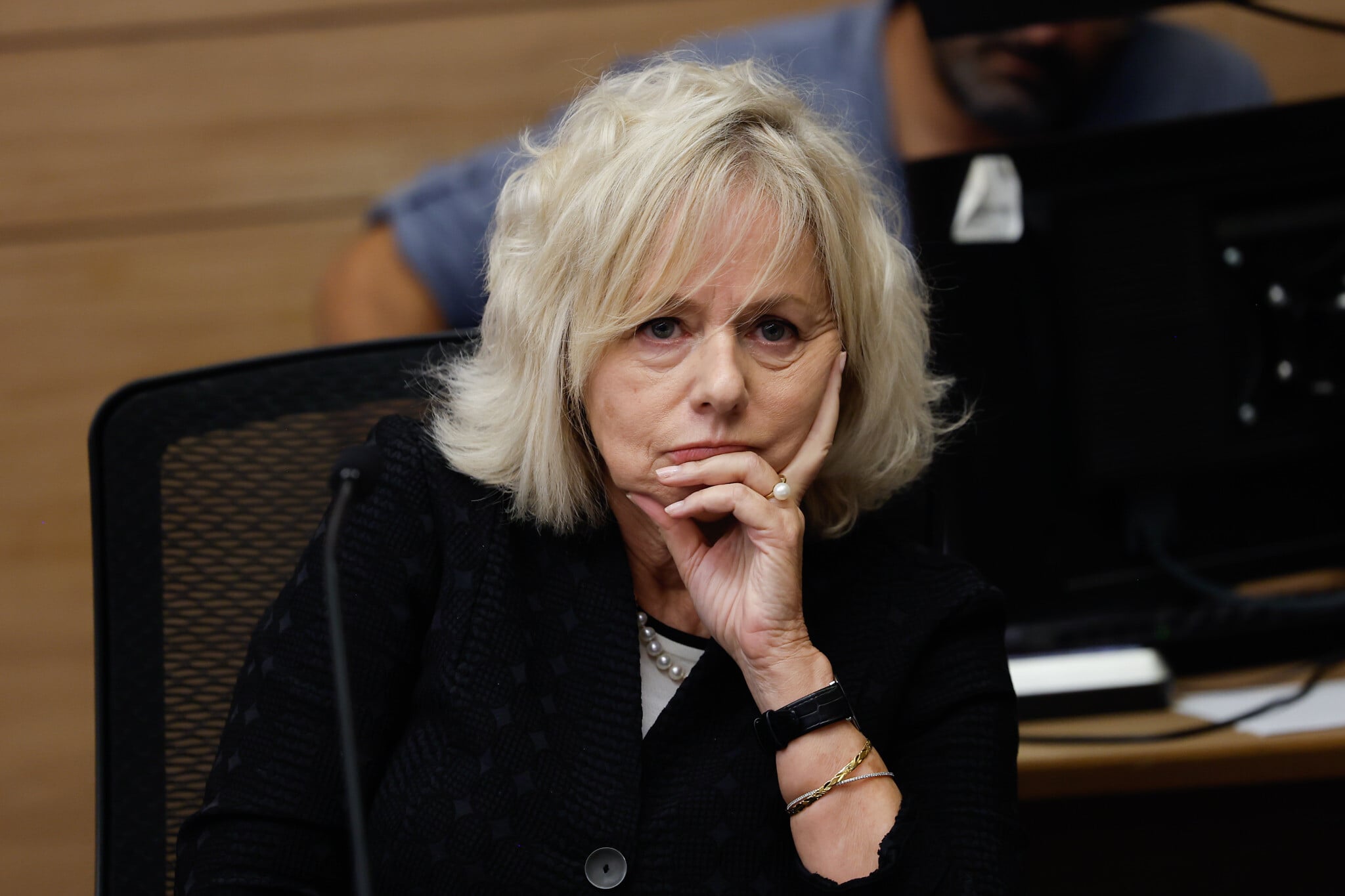
“This is not equal enforcement, but quite the opposite: selective, tendentious, and improper enforcement,” Fuchs wrote. He was referring to Attorney General Gali Baharav-Miara’s decisions concerning the enlistment of Haredi men, as she moves to enforce a landmark Supreme Court ruling from earlier this year that ended the legal framework for blanket draft exemptions.
This sweeping attack on the attorney general, the High Court of Justice, and the police is no accident. It is a negative campaign that will intensify until the elections and may ultimately lead to a significant rupture between a large segment of the public and law enforcement authorities, as well as a tax revolt and mass violations of the law that will demonstrate to everyone what true anarchy looks like in this country.
The elected government and its representatives in government ministries and the Knesset are inciting their massive voter base against the institutions of the state
This is, in effect, a new kind of anarchy: The elected government and its representatives in government ministries and the Knesset are inciting their massive voter base against the institutions of the state.
The internal battles within the right-wing bloc between the various parties, and the distress of the leaders facing their own inflamed constituencies, only hint at the approaching civic disaster.
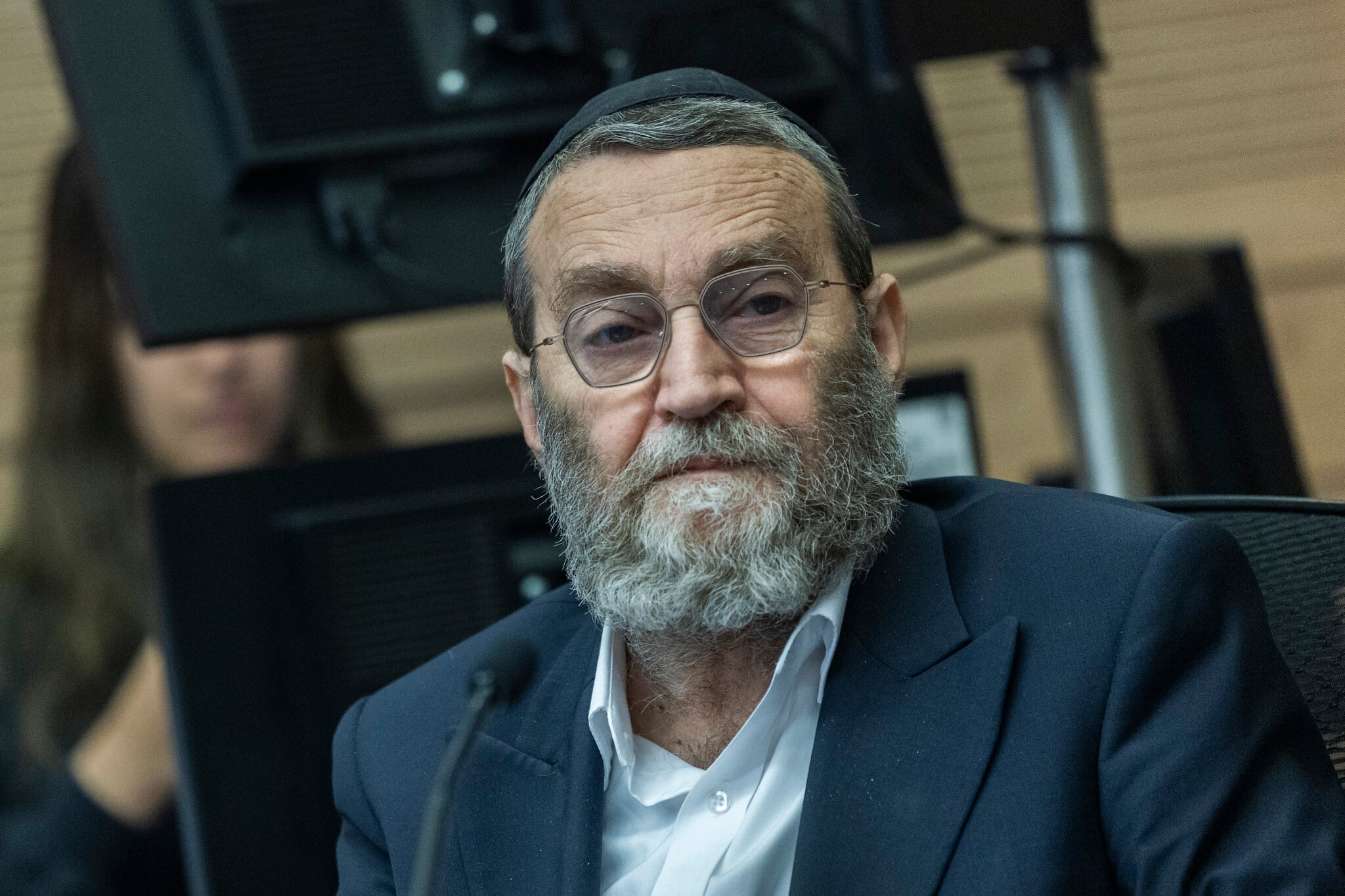
MK Moshe Gafni, the political leader of the Degel HaTorah faction, quoted from Pirkei Avot (Ethics of the Fathers) on Sunday to describe what awaits us here. “Were it not for fear of the government, people would swallow each other alive,” the tractate says.
Gafni, usually a statesmanlike and cautious figure himself, was interviewed on Channel 14 on Sunday — which is an event in itself, given the network’s fiercely pro-Netanyahu, right-wing populist stance. Gafni apparently knows that many yeshiva students watch the network’s flagship program, “The Patriots,” after their night study sessions, and he laid into the police.
“There is cooperation between the leadership of the Haredi public and the police, the district commanders, and the station commanders. I told the police: If your job is going to be to arrest Torah students, like the Romans or the Russians in their time, our leadership will not cooperate with you on the community and municipal level,” he said.
Deri in the hot seat
Two or three events occurred simultaneously over the weekend, bringing relations between government ministers, the heads of the right-wing and Haredi parties, and law enforcement authorities to a dangerous boiling point.
These included the attorney general’s decision on Sunday to halt tax benefits under Section 46 of the Income Tax Ordinance — a clause that grants tax-deductible status to donations, effectively serving as a vital funding lifeline — for yeshivas where students liable for the draft study; the widely publicized series of arrests of Haredi draft evaders over the weekend; and several events within Shas and United Torah Judaism that only heightened internal tensions and the distress of their leaders.
Last Thursday, an unusual incident unfolded at the International Convention Center in Jerusalem during the “Rishon LeZion Prize” ceremony. Former Chief Rabbi Yitzhak Yosef sat onstage at the head of the conference, which was intended to award scholarships and prizes to outstanding yeshiva students.
All the speakers effusively praised the Torah, the rabbis, and the yeshiva students. However, the event soon turned into a protest demonstration by many dozens of young Haredi men against Deri.
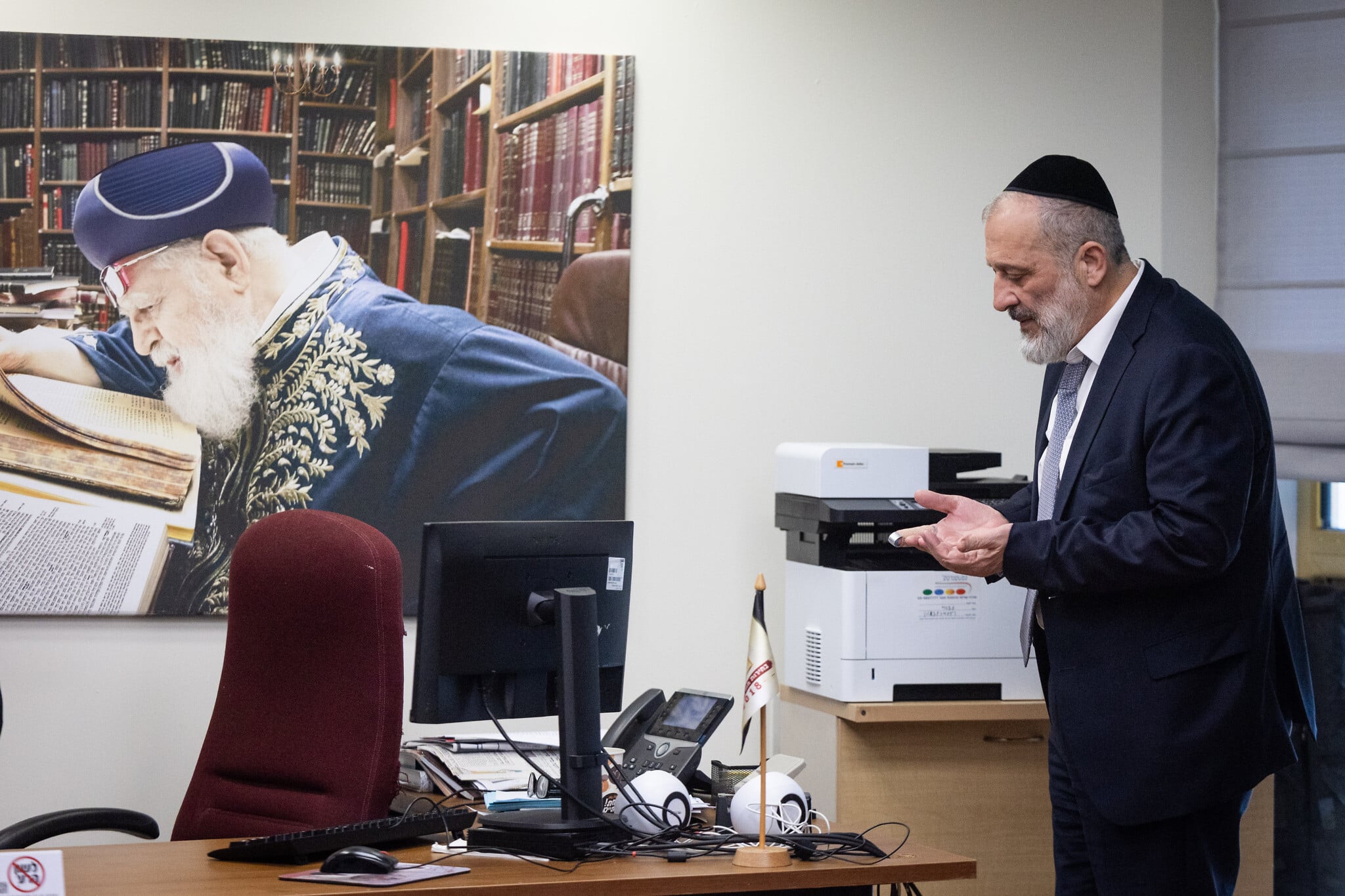
The young men held up signs denouncing the Shas chairman and shouted boos and protest calls every time his name was mentioned by the speakers onstage. Deri himself, who was supposed to be one of the guests of honor at the mass conference, did not show up. Shas’s internal intelligence apparatus had informed him in advance of what awaited him, and he naturally preferred to stay home.
No one in Shas can recall such an event directed against one of the movement’s senior figures in recent years, and certainly not against its popular and undisputed chairman.
The unusual incident at the International Convention Center connects directly to the internal struggles within Shas on the eve of the elections, as well as to the overall war over Haredi enlistment, after the draft exemption law was effectively removed from the Knesset’s agenda in the current term.
Deri’s failure to advance the draft exemption law — despite, and perhaps because of, his closeness to Prime Minister Benjamin Netanyahu — along with the arrests of young Sephardi Haredi men from the geographic periphery, have severely undermined Deri’s winning image and his leadership.
The peak came, as noted, last Thursday at the International Convention Center, but more plot twists are expected. Senior Shas officials tried to explain away the incident by claiming that the young men who demonstrated against Deri were merely infiltrators from the extremist Jerusalem Faction. However, anyone familiar with the movement can easily identify the exact demographic that attended the event.
Deri’s highly unusual statement on Sunday night against the attorney general is also a product of this struggle. An external enemy is always useful for improving one’s standing, distracting attention, and closing ranks — especially if it is an attorney general who refuses to waive anyone’s duty to enlist in the IDF.
From now until the elections, it is reasonable to assume that Deri — along with Ben Gvir and Gafni — will only intensify their attacks on the High Court, the police, and the attorney general.
A furious ultra-Orthodox electorate
But the rebellion is not limited to Shas alone. All Haredi politicians are suffering from the same problem. Within the Ashkenazi factions, enormous anger is building against the ministers and Knesset members who failed to deliver the goods and secure a sweeping exemption from military service for young Haredi men.
In recent days, calls have also been mounting to oust Gafni from his Knesset position after an entire generation in power. As one Degel HaTorah figure told me on Sunday regarding the matter: “Look at what [Religious Zionism leader and Finance Minister] Bezalel Smotrich managed to do in Judea and Samaria with just six seats, and look at how we are failing with 18 Haredi seats,” referring to the combined power of the two ultra-Orthodox parties that hold the keys to Netanyahu’s coalition.
Over the weekend, the Haredi battles over the enlistment law escalated further. In various locations across the country, from Kiryat Gat to Bnei Brak, clashes with the police were recorded following the arrest of several young Haredi men obligated to enlist.
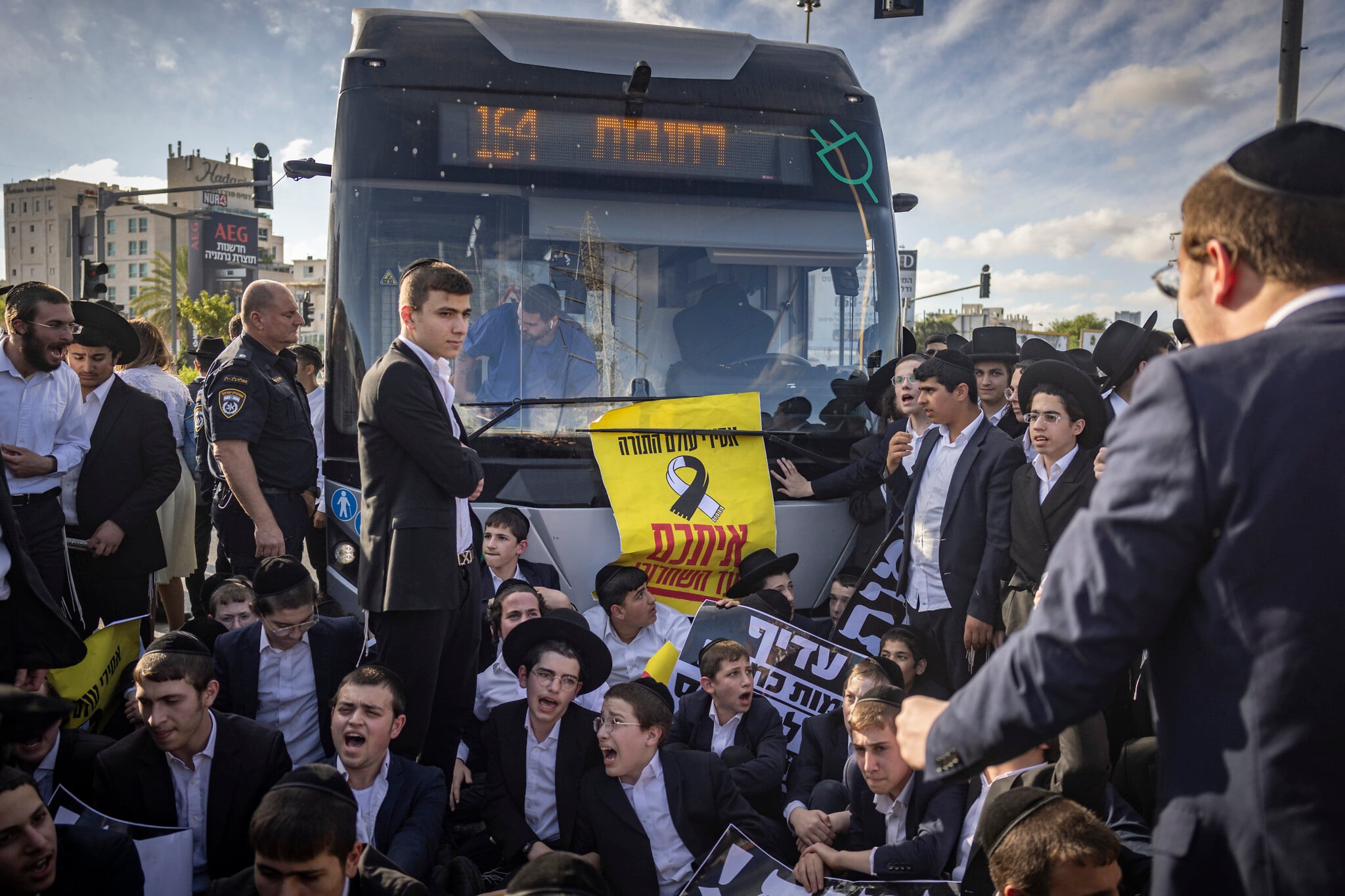
By Sunday, the leaders of the Jerusalem Faction had already called for “violent demonstrations” against the arrest of draft evaders in Jerusalem, Bnei Brak, and elsewhere. The police prepared for major roadblocks, but the demonstrations were ultimately postponed to Monday.
The Jerusalem Faction was pleased to announce that the Military Police were backing down. The faction’s official and insolent statement declared that the Haredim were prepared to give law enforcement authorities — who had dared to arrest the lawbreakers who refuse to enlist — another chance.
“In light of significant developments in our contacts with the military authorities,” the statement read, “and following serious and advanced negotiations taking place in recent hours over the release of a large number of yeshiva and kollel students from military prison, it was decided to postpone the planned demonstrations by 24 hours.”
The IDF Spokesperson hurried to deny this claim. “Contrary to the allegations, no negotiations are being held regarding the release of deserters and draft dodgers from military prison,” the military’s statement clarified.
Overnight Sunday, several more arrests were carried out, and incidents were recorded in Beit Shemesh and other locations. At the Beit Shemesh police station, dozens of protesters broke into the station compound, and clashes erupted on the scene.
Still, it must always be remembered that these protesters represent only a tiny minority of those liable for the draft, and that the vast majority of those arrested are quickly released and treated as heroes within their communities. The violent continuation of this saga will undoubtedly unfold on Monday.






The Times of Israel Community.