

Israel has the upper hand over Iran in Syria, but the ayatollahs won’t give up
Humiliated overnight, Tehran has the proven potential to stir up trouble via Hezbollah, in Gaza, and through terrorism

 Add ToI as a Preferred Source on Google
David Horovitz is the founding editor of The Times of Israel. He is the author of "Still Life with Bombers" (2004) and "A Little Too Close to God" (2000), and co-author of "Shalom Friend: The Life and Legacy of Yitzhak Rabin" (1996). He previously edited The Jerusalem Post (2004-2011) and The Jerusalem Report (1998-2004).
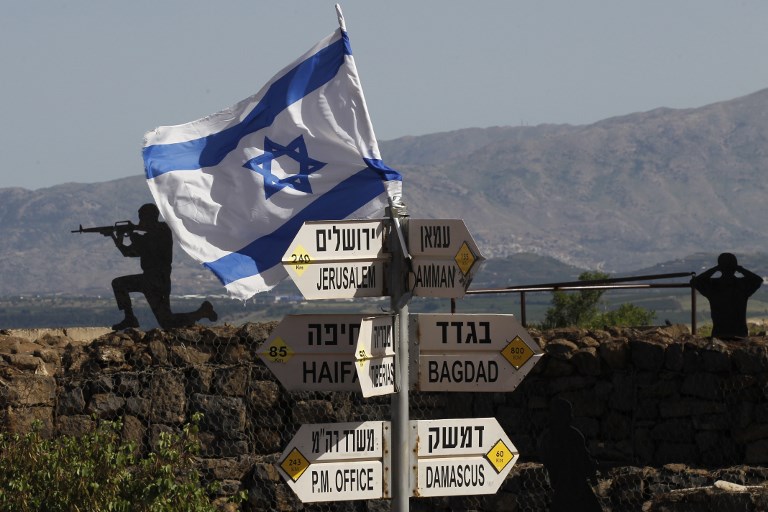
Iran denies that it fired rockets at Israel from Syria late Wednesday. Syria claims its air defenses intercepted a considerable proportion of the missiles that Israel fired in its subsequent retaliation.
But even with such assiduous dissemination of fake news Thursday, and even in the fog of almost-war, it was perfectly clear that Iran’s attempt to batter the Israeli north overnight was thoroughly unsuccessful, and that Israel’s counterstrikes were highly effective.
For all that Iran’s semi-state Fars news agency claimed breathlessly that Israel had “come under attack” for the first time in decades by “tens of rockets” from Syria, four of the 20 rockets fired in Israel’s direction were actually intercepted by the Iron Dome rocket defense systems and the other 16 fell short — landing in Syrian territory.
Israel’s retaliation — which reportedly involved more than two dozen fighter jets, firing several dozen missiles, as well as ground fire at targets close to the border — hit dozens of Iranian military targets including intelligence centers, weapons depots, storage facilities, observation posts, and logistics centers. Syria’s own air-defense facilities were also targeted, the Israeli army said, in what amounted to the largest-ever direct clash between the Iranian and Israeli militaries, and the largest exchange involving Israel in Syria since the 1973 Yom Kippur War.
Defense Minister Avigdor Liberman said that “nearly all” of Iran’s military sites in Syria had been destroyed. But plainly the potential threat from across the north remains potent. The IDF remains on alert. Defensive measures remain in place. The public is being told by ministers that further nights of rocket attacks from Syria may well lie ahead.
Tehran will not take kindly to the dramatic realization of Israel’s vow to ensure there is no permanent Iranian military presence across the northern border.
This round of the conflict constituted a decisive success for Israel. But it was just that: only a round in the conflict — against a regime in Tehran that works relentlessly for the destruction of Israel.
For now, Iran’s own military capabilities in Syria are relatively limited.
For now, Iran has refrained from calling Hezbollah — which has 140,000 rockets and missiles deployed in south Lebanon, all pointing in Israel’s direction — into the action.
For now, Russia, the key powerbroker in Syria right now, whose presence has been central to the maintenance in power of its ally, the Assad regime, is not taking an overt position against Israel’s actions. Indeed, on Wednesday, just hours before the escalation, President Vladimir Putin was giving Prime Minister Benjamin Netanyahu a particularly warm audience in Moscow. Heading home on Wednesday evening, Netanyahu said he had no reason to believe the Kremlin would attempt to limit Israel’s freedom of operation in the region; hours later, the Iranians fired their rockets and Israel struck firmly back.
But things can change quickly when military hostilities escalate; one of the few things to confidently expect is the unexpected.
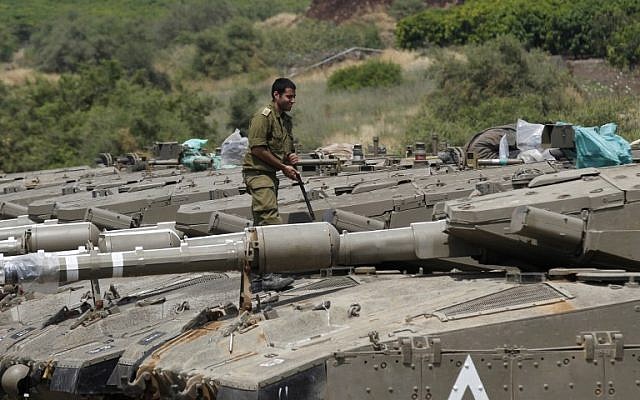
A cornered Iran — losing members of its own military forces in the Israeli strikes, humiliated by Israel’s recent capture of its nuclear weapons archive, threatened by a US president less accommodating than his predecessor — is a serious danger. Outmatched in Syria for now, Iran, apart from Hezbollah, has other options for wreaking harm and havoc.
It has assets in Gaza, where Israeli forces have for weeks been grappling with mass border protests accompanied by Hamas-encouraged violence. In recent weeks, hundreds of Gazans have sought to breach the fence and get into Israel; last week, a mob attacked the Gazans’ own side of the main crossing used for supplies, trashing Gaza’s own fuel lines. More such protests and violence are expected Friday and in the days after that, in the run-up to next week’s opening of the US embassy in Jerusalem.
Iran also has a proven readiness to engage in vicious terrorism against Israeli and Jewish targets abroad — including, for example, the two major attacks it orchestrated in Buenos Aires in the early 1990s in which over 100 people were killed.
Israelis in the north went about their business as usual on Thursday. Kids went to school. Grown ups went to work. But the public bomb shelters are open.
Israel is determined not to repeat the mistake it made in southern Lebanon, after it left the security zone in 2000, and again after the Second Lebanon War in 2006 — allowing the build-up of a massive hostile military force, Hezbollah, directly across the border.
Before Wednesday night, Israel publicly vowed over and over that it would not allow Iran to build itself a significant military presence in Syria. Israel struck missile convoys and bases — sometimes acknowledging the strikes, sometimes allowing the facts to speak for themselves.
The Iranians were determined not to heed the message. And Wednesday night’s Israeli actions, however decisive, will not change their strategic goals.






The Times of Israel Community.