

Israel said to balk at backing US on Venezuela over fears for Jewish community
Jerusalem reportedly pressured by Washington to support opposition leader Juan Guaido, but worries Maduro regime may act against Jews in retaliation
 Add ToI as a Preferred Source on Google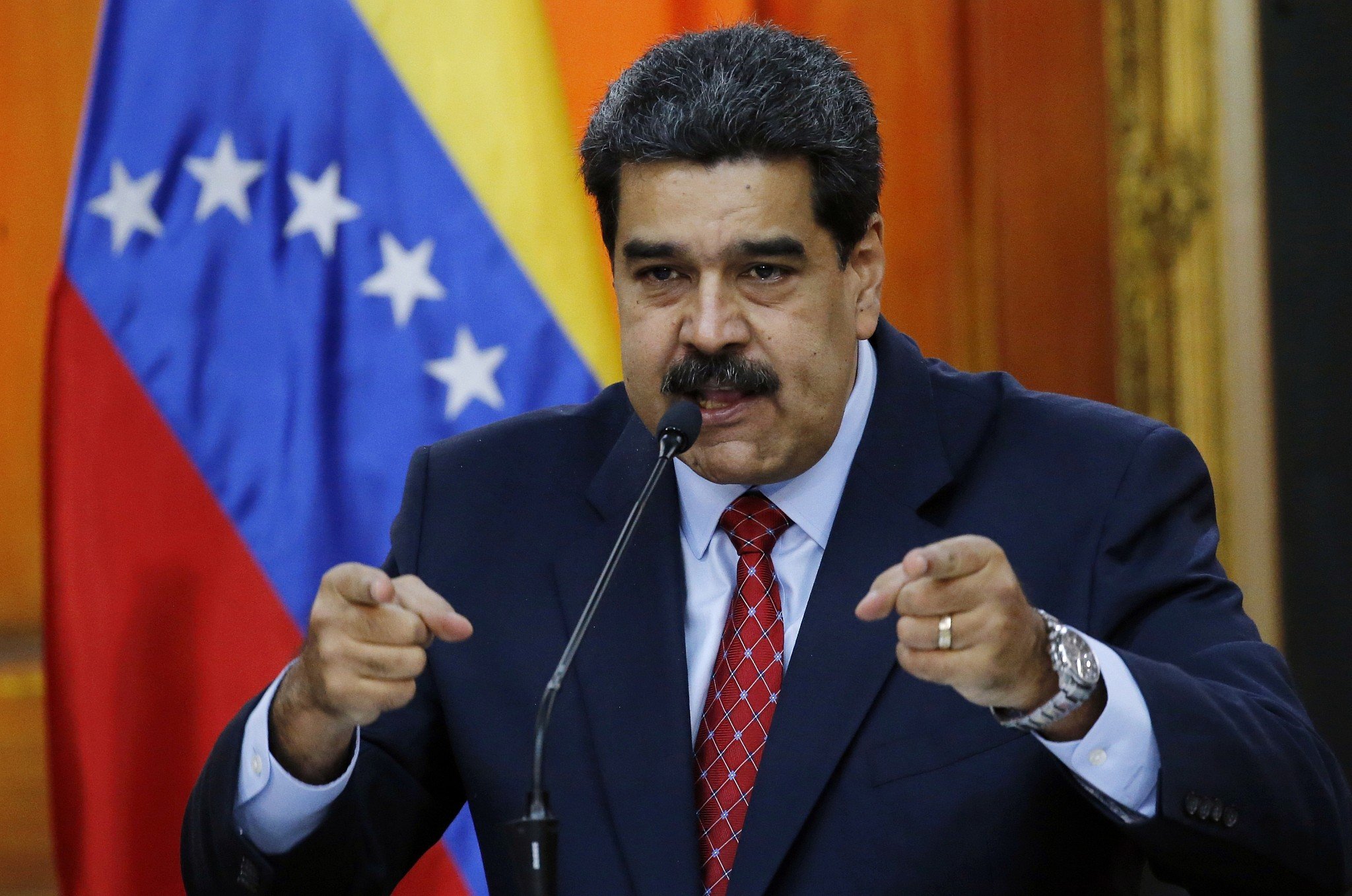
The Trump administration has reportedly asked Israel to publicly back the US attempt to force the resignation of Venezuelan President Nicolas Maduro and throw support behind opposition leader Juan Guaido, who has declared himself interim president.
However, Jerusalem is said to be stalling on an announcement amid concerns the Maduro regime could respond with measures that could imperil members of the Venezuelan Jewish community.
Israeli officials told Channel 13 news that State Department officials made the request to diplomats at the embassy in Washington DC on Thursday, and that other US allies who have yet to declare their support for either side have also been asked to issue statements of support for Guaido.
According to the outlet, Foreign Ministry officials will meet in Jerusalem on Sunday to discuss the request and draft a recommendation for Prime Minister Benjamin Netanyahu, who will then have to decide whether Israel will join its Western allies in support of Guaido, or maintain its silence.

While Venezuela once had one of the largest Jewish communities in the region, numbering some 25,000 in 1999, only about 6,000 Jews are believed to remain in the country, with many of the rest fleeing to Israel, Canada, the US and elsewhere.
Maduro and his predecessor Hugo Chavez, who broke off ties with Israel in 2009, have both been strident critics of Israel, and some Jewish community leaders have expressed fears of the government stoking anti-Semitism.
The US has been pushing for the international community to back Maduro’s ouster.
At the UN on Saturday, US Secretary of State Mike Pompeo urged all nations to end Venezuela’s “nightmare” and support Guaido.
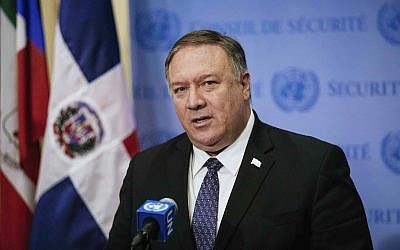
“Now is the time for every other national to pick a side,” Pompeo told the Security Council. “No more delays, no more games. Either you stand with the forces of freedom, or you’re in league with Maduro and his mayhem.”
France and Britain on Saturday joined Spain and Germany to turn up the pressure on Maduro, saying they would follow the US and others in recognizing Guaido unless Venezuela called new presidential elections within eight days.
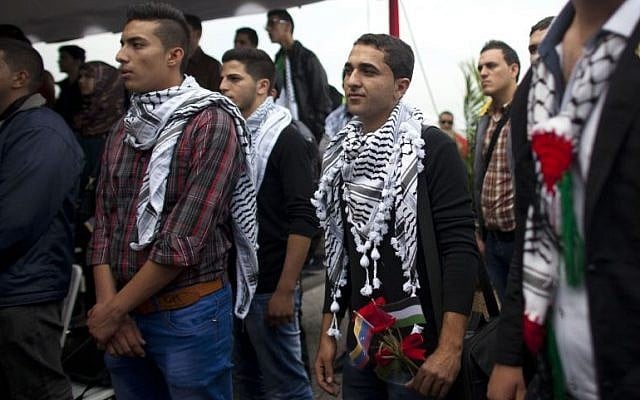
On Thursday, high-ranking Palestine Liberation Organization official Ahmad Majdalani lashed out at the Trump administration for its support of Guaido, saying it was “an extension of the Trump administration’s policy of denying the will of peoples.”
The US said last week it would use the “full weight” of US economic and diplomatic power to push for the restoration of Venezuela’s democracy and backed Guaido when he declared himself interim president last Wednesday in a defiant speech before masses of anti-government demonstrators who took to the streets to demand Maduro’s resignation.
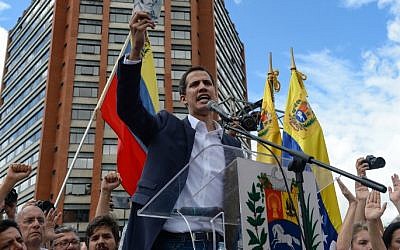
The council meeting came a day after Guaido vowed to remain on the streets until his country has a transitional government, while Maduro dug in and accused his opponents of orchestrating a coup.
“They can cut a flower, but they will never keep spring from coming,” Guaido told supporters Friday, alluding to a similar phrase from the Chilean poet Pablo Neruda.
In a rival press conferences, Guaido urged his followers to stage another mass protest next week, while Maduro pushed his call for dialogue.
Each man appeared ready to defend his claim to the presidency no matter the cost, with Guaido telling supporters that if he is arrested they should “stay the course” and peacefully protest.
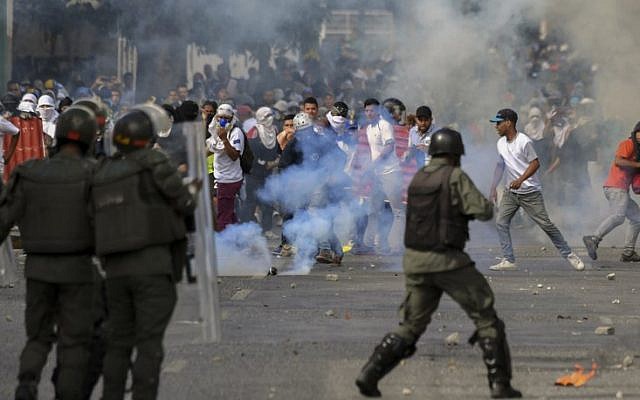
But the standoff could set the scene for more violence and has plunged troubled Venezuela into a new chapter of political turmoil that rights groups say has already left more than two dozen dead as thousands take to the street demanding Maduro step down.
Guaido took a symbolic oath of office Wednesday proclaiming himself the nation’s constitutional leader on grounds that Maduro’s re-election last year was fraudulent — an allegation supported by the US, the European Union and many other nations.
Guaido’s move is the most direct challenge to Maduro’s rule despite years of protests at home and international efforts to isolate the regime amid a growing humanitarian crisis fueled by falling oil prices and government mismanagement.


The Times of Israel Community.