

Israel still woefully unprepared for major earthquake, lawmakers warn
Despite 20 years of warnings, country lacks a central body for emergency preparedness, and efforts to upgrade old buildings are insufficient, Knesset committee finds
 Add ToI as a Preferred Source on Google
Zev Stub is the Times of Israel's Diaspora Affairs correspondent.
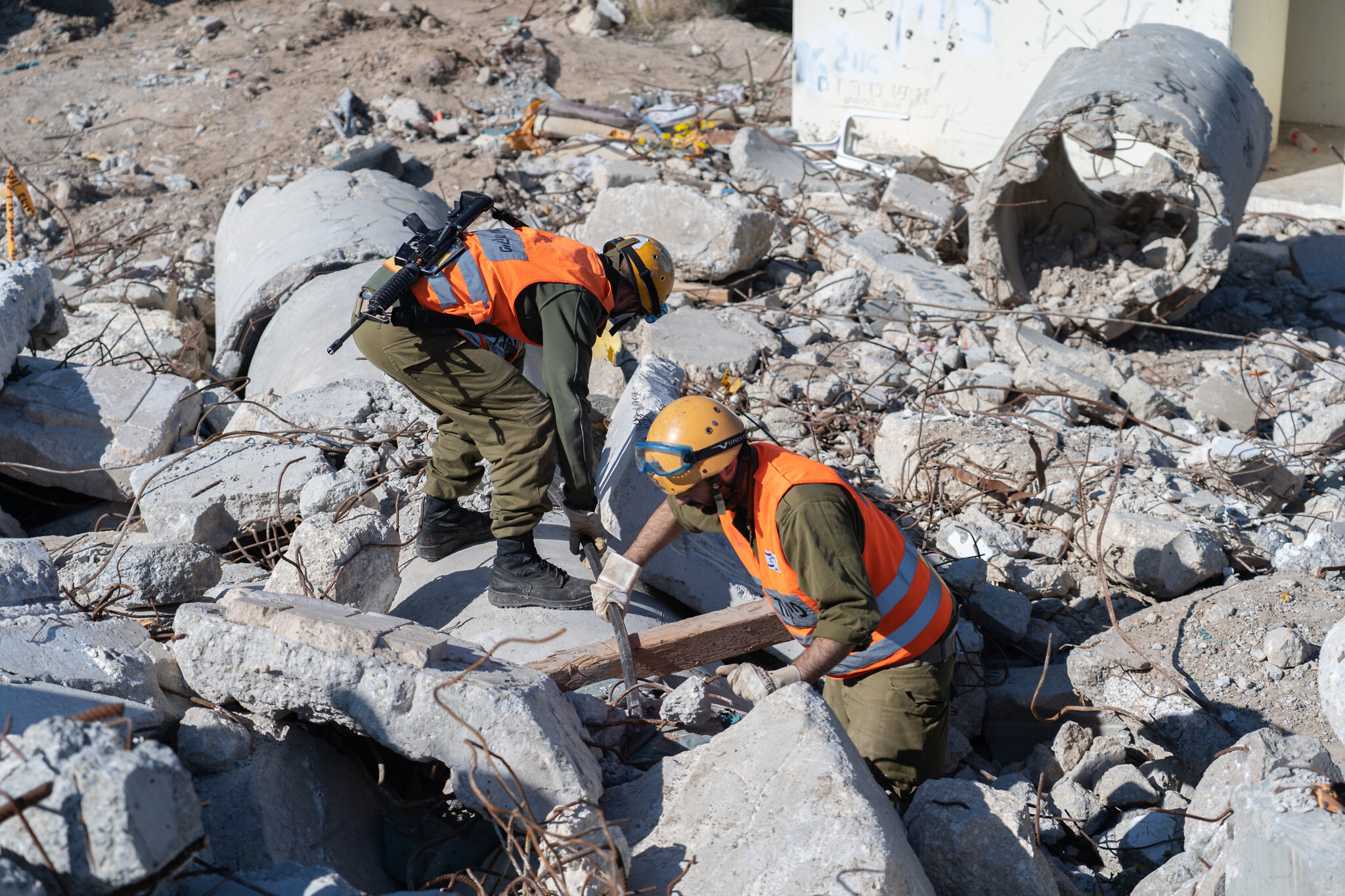
Despite more than 20 years of warnings and repeated state audits highlighting systemic gaps, Israel remains woefully unprepared for a major earthquake, officials told the Knesset Internal Affairs and Environment Committee Tuesday.
While there is imminent danger of an earthquake that could potentially cause a mass casualty event, the country lacks a government body with authority and responsibility for managing home front preparedness, a situation similar to the one that hampered the civilian response to the Hamas massacre on October 7, 2023, according to a Knesset Research and Information Center report prepared ahead of the meeting.
A strong earthquake could result in over 16,000 deaths throughout the country and $50 billion in damages, according to a policy paper prepared for the meeting by the Urban Renewal Forum.
The last disaster assessment prepared by the state in 2012 estimated that a seismic disaster would leave 7,000 dead and destroy 28,000 buildings, Knesset researcher Nurit Yachimovich-Cohen said at the meeting.
No central body or agency is currently charged with implementing a nationwide emergency plan, Yachimovich-Cohen stressed. Instead, that responsibility is pushed off to a complicated patchwork of government ministries and municipal authorities, with implementation ultimately falling to local councils, she said.
“We are talking about a level of disaster that Israel is not even remotely prepared to manage,” said Yesh Atid MK Debbie Biton, noting an earthquake in Turkey that killed some 60,000 people in 2023. “How can it be that there is no one in the country charged with managing this?”
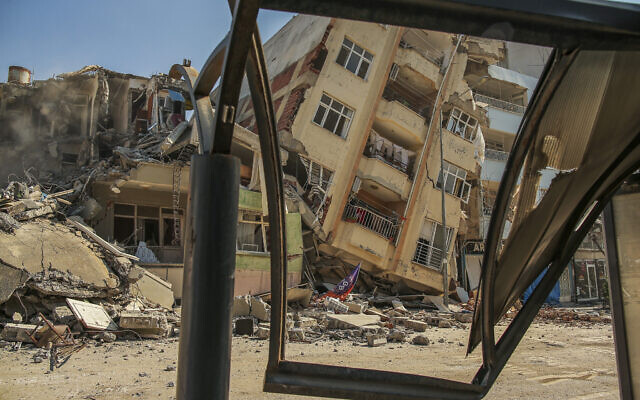
Israel’s western areas straddle the seismically active Syrian-African Rift, a region in which experts estimate that a major earthquake occurs every 80 to 100 years. The last major tremor struck in 1927, killing 500 people and injuring 700, and there are fears that the next one may be imminent.
Since 1980, residential buildings built in Israel have been required to comply with an engineering code designed for earthquake resistance, known as standard 413. However, nearly all of the residential buildings and hospitals in high-risk zones built before 1980 remain unfortified and vulnerable to collapse, the report said.
Earlier this summer, State Comptroller Matanyahu Englman warned that some 80,000 residential buildings across Israel, with more than 810,000 apartments, do not meet the standard for earthquake resistance.
Despite efforts to encourage the upgrading of buildings to the newer standard, primarily through the urban renewal plan known in Hebrew as Tama 38, only 3,900 buildings, or about 5 percent of the country’s vulnerable residential buildings, have been reinforced over the last two decades, the Knesset report revealed. Another 11,200 buildings, or 14% of the total, have requested permits for such renovations but have not carried them out, due in part to long building timelines.
The Tama 38 plan allows builders to upgrade existing buildings at no cost to residents in exchange for the right to add extra apartments, which the builder can sell at a profit. The problem with this model is that it only works when such an arrangement is profitable for the builder, making it viable only in large markets like Jerusalem and Tel Aviv, according to officials at the meeting.
Cities like Tiberias, Beit She’an, Safed, Kiryat Shmona and Hatzor Haglilit, seen as the most vulnerable to earthquake damage, have seen sparse Tama 38 implementation, due to lower real estate values. In Tiberias, which sits directly on the Syrian-African Rift, only 26 buildings out of 600 eligible buildings have been renovated to comply with earthquake standards, a city representative said.
“We’re talking about a tool that doesn’t fix the problem,” Yesh Atid MK Yorai Lahav-Hertzanu said. “The bottom line is that Tama 38 isn’t helping in the cities that need it most. Perhaps we need to develop a different model.”

Meanwhile, public infrastructure is similarly unprepared, the report found. A state audit found that 60% of hospitals are either not earthquake-resistant or lack data regarding their structural integrity. This means that in a mass casualty event, these medical centers could be rendered unusable, compounding the crisis.
Additionally, of a NIS 3.5 billion ($1.1 billion) budget allocated in 2010 to strengthen public buildings, only 4% of those funds had been utilized by 2024, the report said.
Meanwhile, relevant government bodies have been stripped of resources, the Knesset report noted. The National Emergency Authority (RACHEL), which is responsible for coordinating the civilian home front, recently saw its budget slashed from NIS 182 million ($49 million) in 2018 to just NIS 80 million ($21.5 million) in 2023.
At the same time, the Interministerial Steering Committee for Earthquake Preparedness saw its budget cut by 60% between 2016 and 2022, leaving it with only three permanent employees and no statutory authority to compel government ministries to act.
The Urban Renewal Forum said Israel’s insufficient preparation for the Gaza war exposed how a lack of central planning can lead to systemic failure in a national disaster.
“In the Swords of Iron [Gaza] war, we saw how an entire country was left for days without central control, without organized civilian command, and without a single authority capable of managing a multi-focal event,” the forum wrote. “The exact same pattern is likely to occur in the next earthquake — only this time it is not an external enemy, but buildings collapsing on their residents.”









The Times of Israel Community.