

Israel warns of heightened terror threat to Israelis, Jews abroad ahead of holiday period
National Security Council says Iran, Hamas, Hezbollah and global jihad groups are stepping up efforts; 25 Israelis and Jews killed in attacks overseas since war began; October 7 anniversary raises risk
 Add ToI as a Preferred Source on Google
The National Security Council issued an updated warning Sunday of terror threats against Israelis and Jews abroad ahead of the Jewish holiday season, which begins this weekend with Rosh Hashanah and ends three weeks later with the conclusion of Sukkot.
The NSC stressed that the assessment did not constitute new travel warnings, but was intended to reflect the latest trends in global terror activity and their impact on the threat facing Israelis abroad.
In a statement, the NSC, which is part of the Prime Minister’s Office, said Iran and its proxies, Hezbollah, Hamas and other Palestinian terror groups, and global jihadi groups Islamic State and al-Qaeda, remain highly motivated to target Israelis and Jews worldwide.
Israel’s recent conflicts against Iran, Hezbollah, Hamas and others, together with “incitement campaigns,” have led “to a steep increase in terrorist factions’ motivation to attack Israeli and Jewish targets around the world,” the NSC said.
The council again warned that October 7 — the third anniversary of Hamas’s 2023 onslaught — could “be the focus of protests and demonstrations (possibly involving violence), as well as increased efforts to carry out attacks.”
Iran, Hamas step up overseas threats
The NSC said Iran and its proxies remain the primary source of global terror threats against Israelis and Jews, with Tehran also motivated by a desire for revenge over blows it has suffered in recent years. Iran has sought to advance attacks through its own terror networks, various proxies and criminal organizations, according to the council.

Potential targets include Israeli diplomatic missions, senior Israeli officials, security personnel, Jewish community institutions and individual Israelis, the council said. It also described Hezbollah as a “significant potential threat,” citing the severe blows the group suffered in its war with Israel and its desire to avenge the deaths of senior members.
Israeli officials have warned for months of an unusually high rate of Iranian efforts to carry out attacks abroad.
On Sunday, Channel 12 reported that Israeli security agencies, at times working with international partners, had thwarted dozens of terror plots worldwide over the past year, including planned attacks against Israelis and Jews.
Some of the plots were foiled just minutes before they were due to be carried out, according to the network.
While Iran and its terror proxy Hezbollah have been behind efforts to attack Israelis abroad, Hamas — another terror group backed by Iran — is increasingly attempting to mount attacks overseas as it struggles to operate in the West Bank and continues to observe the ceasefire in Gaza, the report said.
Israeli officials nonetheless continue to regard Iran as a principal global terror threat. A senior National Security Council official told Channel 12 that Tehran has “significantly expanded” its organizations and infrastructure used to advance attacks abroad, describing the campaign as part of a “strategic doctrine.”
In March, a senior National Security Council official said veterans of Israel’s security establishment could not recall Iranian attempts on such a scale, amid what the official described as “record Iranian motivation” to target Israelis overseas.
In May, US prosecutors accused an alleged member of the Iran-aligned Kataeb Hezbollah militia of helping orchestrate at least 18 attacks in Europe and two in Canada targeting Jewish sites. The alleged campaign included synagogue attacks, arson and bombings and was described by prosecutors as part of an Iranian-linked “psychological warfare” operation.
Israeli intelligence has said Tehran increasingly relies on criminal organizations and non-Iranian operatives in an effort to obscure its role. In October 2025, the Mossad said an Islamic Revolutionary Guard Corps Quds Force network had been behind plots and attacks against Jewish and Israeli sites in Greece, Germany and Australia, including arson and surveillance operations.
The council said Hamas was investing significant efforts in establishing terror infrastructure in Europe and other countries, with the aim of carrying out “revenge” attacks or high-profile attacks against Jews and Israelis.
The warning follows a series of European investigations into alleged Hamas networks. In October 2025, German authorities arrested three suspected Hamas foreign operatives accused of procuring an AK-47, pistols and ammunition for attacks on Israeli or Jewish institutions. The Mossad said it had worked with German intelligence on the case.
A fourth suspected operative was arrested in January 2026 after German prosecutors alleged that he also helped obtain ammunition for Hamas. Earlier investigations also accused Hamas members of establishing weapons caches in Bulgaria and Denmark for possible future attacks on Jewish and Israeli targets in Europe.
Islamic State and al-Qaeda also continue to issue explicit calls for attacks on Jews, according to the NSC, which said the threat was particularly prominent in Africa and Asia but also extended to European capitals and the United States, including through lone attackers and locally organized plots.
The Houthis have also called for attacks on Israel and Israelis traveling to Somaliland and elsewhere in Africa, the council said.
The council noted a “marked increase in lone-wolf attacks” stemming from “ideological radicalization” and “worsening anti-Israel discourse online.”
According to the NSC, 25 Israelis and Jews have been killed in terror attacks abroad since the outbreak of the war. It described lone-wolf terrorism as a dispersed and unpredictable threat, often directed at accessible “soft” targets such as mass gatherings, community centers and places of worship.
Travel warnings and precautions
The council advised against travel to high-risk countries including Iran, Syria, Lebanon, Iraq and Yemen — which is in any case forbidden by law — as well as countries near Iran, and Egypt (including Sinai), Jordan, Somaliland and others.
The full advisory specifically identified Azerbaijan, Turkey and the United Arab Emirates as countries near Iran that remain exposed to activity by Iranian terror networks. Jordan, Qatar, Somaliland and Egypt, including Sinai, remain under a Level 4 warning, with Israelis advised to avoid travel there entirely.
The NSC also urged travelers to avoid, where possible, connecting flights through countries subject to a Level 4 warning, and said Israelis transiting through such countries must not leave the airport terminal.
The council urged Israelis to exercise caution and refrain from displaying Israeli or Jewish symbols in countries with a Level 3 threat level, which are classified as “medium threat” — including the UAE, South Africa, Saudi Arabia, Georgia, Armenia and Azerbaijan.
It additionally recommended limiting the use of Hebrew in crowded public places in Level 3 countries, avoiding real-time location sharing on social media, and hiding or removing online material indicating service in the IDF or other Israeli security forces.
Travelers were also advised to remain particularly alert around Chabad centers, kosher restaurants and synagogues, to stay away from demonstrations and protests, and to avoid political discussions with strangers.
In case of suspected threats abroad, Israelis should first contact local security services and then the NSC’s hotline at +972-2-6667444.
The Foreign Ministry’s situation room can also be reached at +972-2-5303155 or via WhatsApp at 050-5073969.
Recent attacks on Jewish communities
The warning comes after a particularly violent period for Jewish communities abroad. In March alone, The Times of Israel documented at least 14 attacks, incidents or alleged plots targeting Diaspora Jewish institutions across Europe, Canada and the United States, including shootings, bombings, arson and a car-ramming. Jewish security officials said at the time that the threat environment was at a historic high.
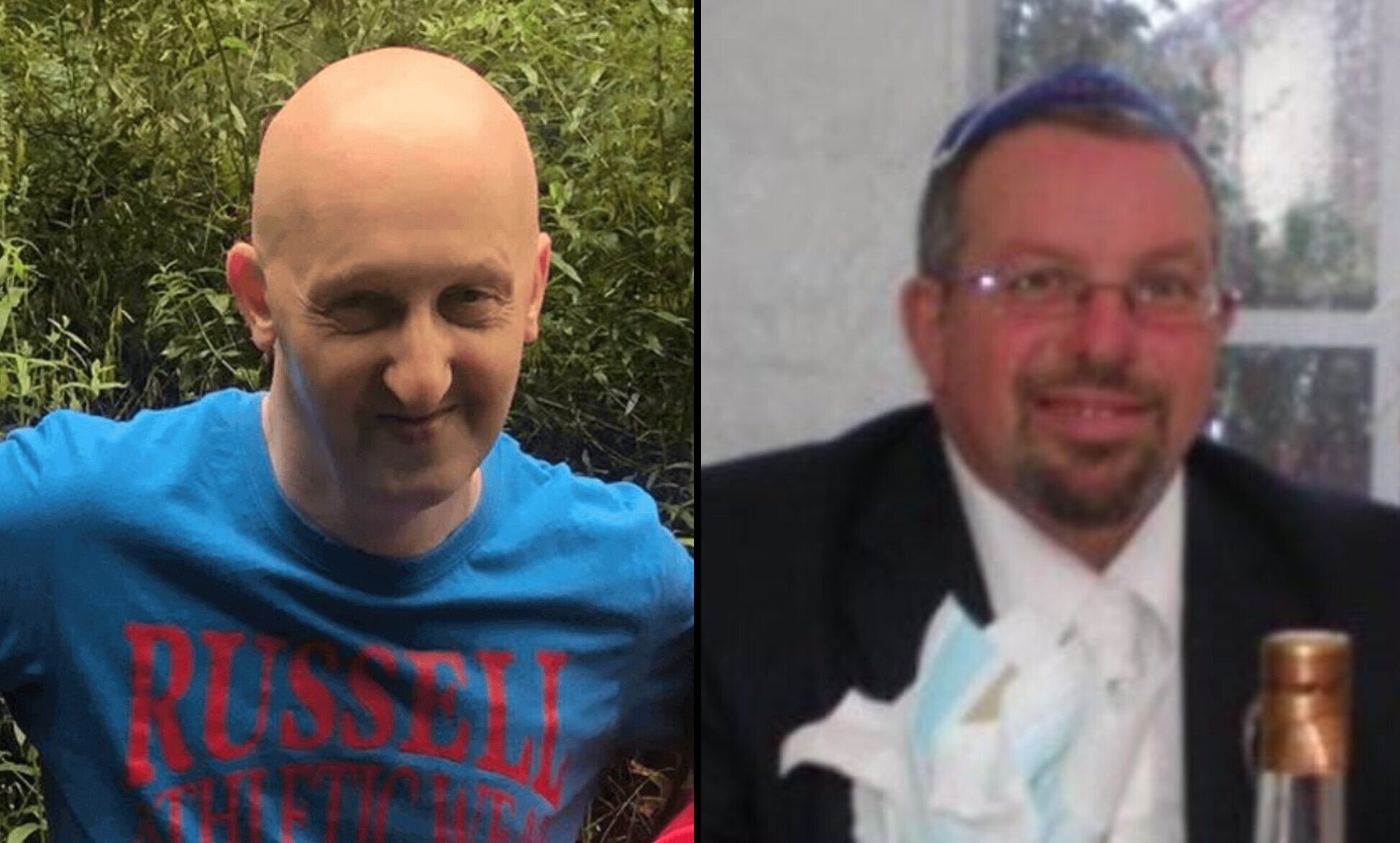
The High Holiday period has also previously been targeted. Two people were killed on October 2, 2025, when British-Syrian citizen Jihad al-Shamie rammed his car into the gates of Manchester’s Heaton Park Synagogue during Yom Kippur prayers and attacked worshipers. More than 800 people gathered at the synagogue last week to mark a year since the attack.
In 2019, a far-right gunman attempted to storm a synagogue in Halle, Germany, on Yom Kippur while dozens of worshipers were inside. After failing to get through the synagogue’s doors, he shot and killed a woman nearby and a man at a kebab shop.




The Times of Israel Community.