

Jewish London bridges gap for asylum seekers from Muslim countries
While beneficiaries are often unaware who volunteers on their behalf, synagogue drop-in spots have provided essentials for at least one refugee who was once taught to vilify Jews
 Add ToI as a Preferred Source on Google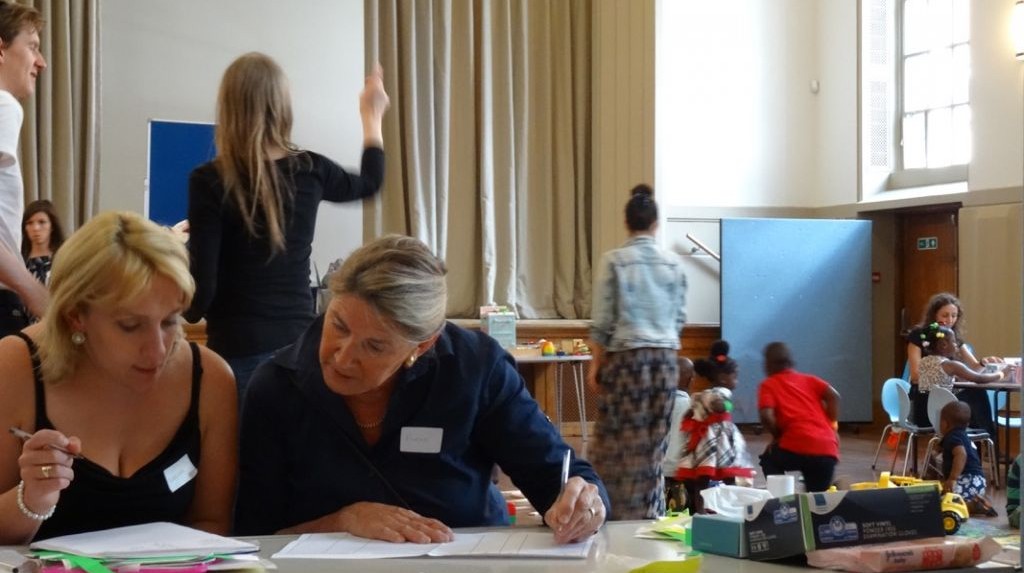
LONDON — On a sunny Sunday afternoon in a north London suburb, two distinct populations throng to a tiny primary school. One population is white, and mainly Jewish. The other is a mixed hodgepodge of races and cultures from all the world’s trouble spots: they are asylum seekers.
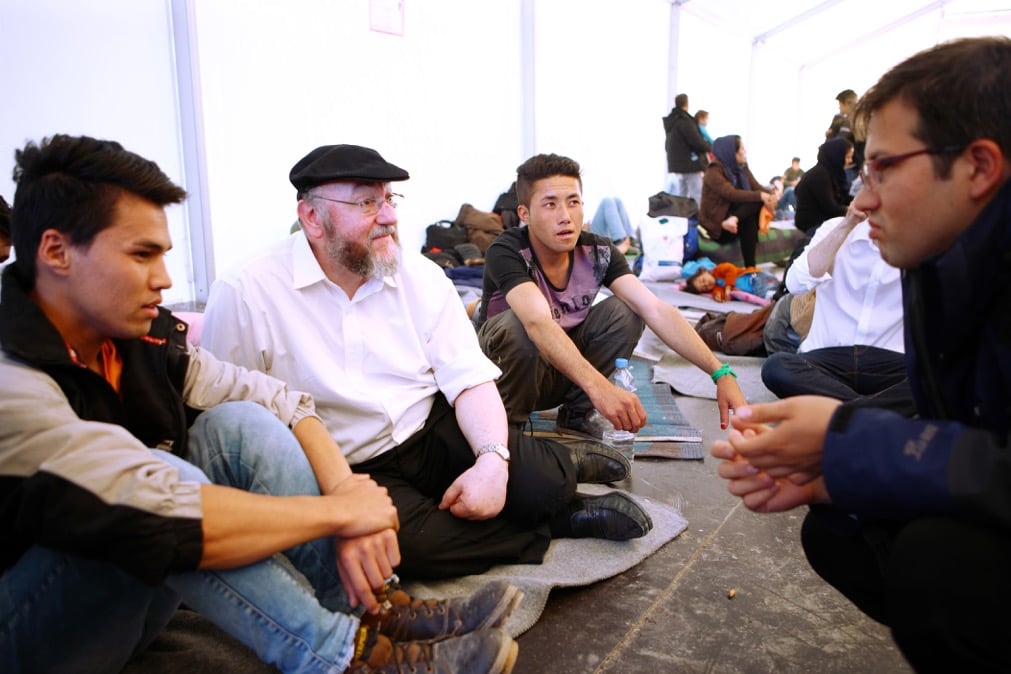
For more than 10 years, alongside volunteers from all walks of life, London’s Jews have been quietly getting on with helping asylum seekers, through monthly drop-in centers run by four separate communities: the Liberal Jewish Synagogue in St John’s Wood; two Reform synagogues, the North Western Reform Synagogue in Golders Green and the West London Synagogue of British Jews in central London; and the New North London Synagogue, a Masorti congregation, in northwest London.
The drop-in centers help hundreds of families caught in the classic asylum-seeker’s bind in Britain — they are not allowed to work while awaiting assessment of their bid to stay in Britain, nor can they claim benefits. For some there is a government allowance, but it is just £5 ($7) a day.
Rabbi Neil Janes, who is in charge of social action at the West London Synagogue, smiles wryly when talking about the asylum-seekers who stream into his congregation’s beautiful 19th century building every month.
“Our visitors are relatively oblivious that they are being helped by Jews,” he says. “We think it’s a good mechanism whereby our community reaches out to parts of society who would never set foot inside a synagogue.”
West London’s clientele, all of whom must produce documentation to show that they are “in the system,” come from various countries including Albania, Algeria, Eritrea, Ethiopia, Nigeria, Pakistan, Sri Lanka and Georgia. By far the largest number, however, come from the DRC, the Democratic Republic of the Congo. Each month between 100 and 120 families arrive, usually having traveled long distances into central London from the outer suburbs.
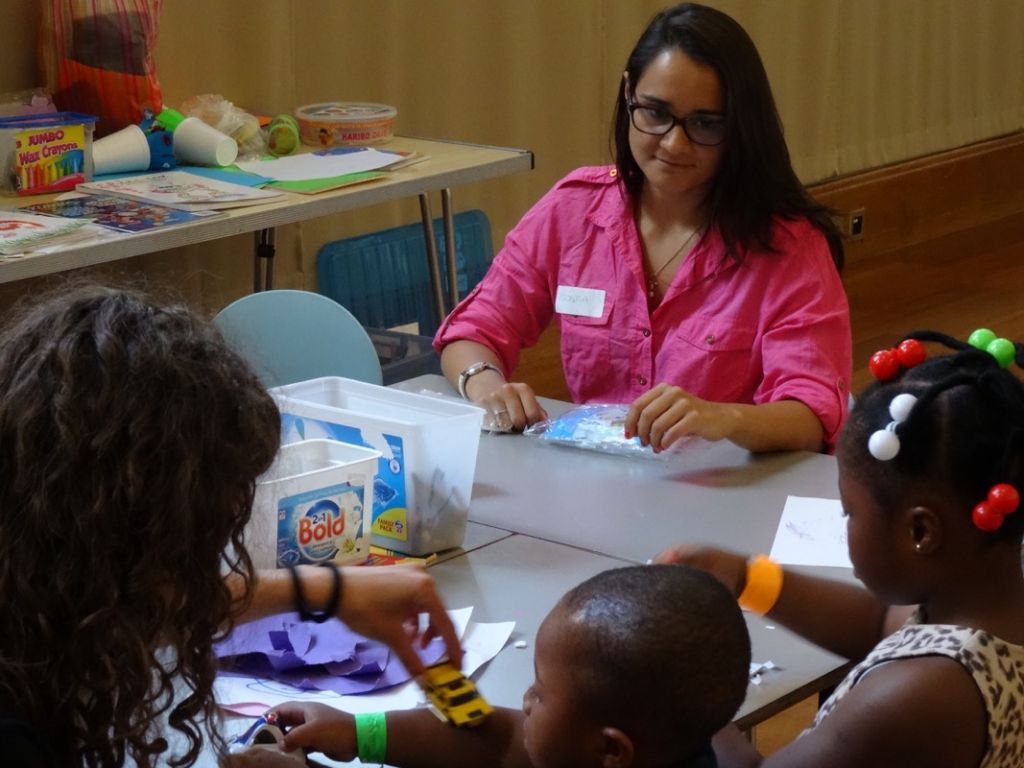
At the north London primary school where the New North London Synagogue, or NNLS, runs its drop-in operations, a veritable army of volunteers assemble to deal with the guests. People enter the building in batches because there are simply too many for them all to come in at once. There were 378 in August, including 47 new clients. They go to the clothing room where men’s, women’s and children’s clothing, together with vital diapers, underwear and shoes, are laid out.
Clutching their booty from the clothing area, the asylum-seekers move around the building. Some take their children into a supervised play area, others come to a snacks and cold drinks stall, where there are bag-loads of cakes and fruit, often donated by local businesses. Hot meals are available, too, and each of the clients gets a supermarket voucher and a small amount of travel expenses.
Others, new to the system, go to meet volunteers who offer legal expertise and advice on how to proceed next with their applications. Each afternoon takes a mountain of preparation on the part of the volunteers, who are almost always busy planning the next drop-in date as soon as the current one has concluded.
The NNLS is the veteran player on the scene, having launched its drop-in initiative in March 2006. Besides the free legal consult, there is help from volunteer doctors and therapists, or vital hand-holding in filling out the forms for accommodation, eye exams or dental treatment.
The asylum seekers are in the process of applying to stay in the UK permanently, and thus be reclassified as refugees. But because the Home Office decision-making process is so questionable, those turned down may reapply or appeal. It can be a long, tedious and soul-crushing process, and going to the drop-in centers represents a little bit of solace for people whose default position is hopelessness.
One woman called the NNLS organizers last month, desperate for help. She lives — put there by the Home Office — in a depressingly filthy house in west London.
“We have rats and cockroaches and bed bugs and snails,” she said. “The kitchen is so filthy we can’t use it, often the toilets don’t flush and we are reduced to using buckets. There is too much dirt and dust. So many of us are ill because of these conditions. We have called the housing manager so many times but he hasn’t sorted these things out.”
“Every time someone takes a shower water pours like rain through the light fitting in the ceiling of the woman whose room is directly below the bathroom. We have filmed the evidence,” she added.
The NNLS team made representations on the woman’s behalf and some temporary solutions have been put in place — council health and safety inspectors have visited twice, along with a Home Office manager and an army of cleaners and pest controllers. But everyone is aware that these are only stop-gap answers.
Since the eruption of the Syrian civil war more than five years ago, asylum-seekers from Syria have become among the top five nationalities seeking to stay in Britain.
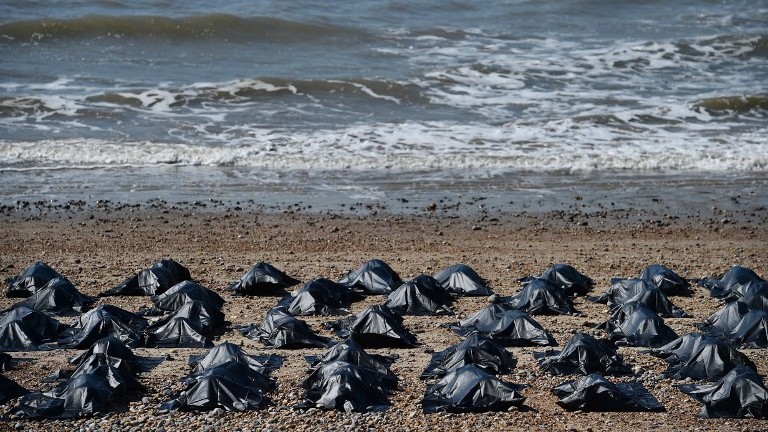
In the wake of the tragic story of Aylan Kurdi, the three year old Syrian boy who drowned on a Turkish beach as his family fled for safety, Britain’s World Jewish Relief launched an emergency appeal in 2015 to help with Europe’s desperate refugee crisis and raised a staggering £944,000 ($1,265,000) — its second biggest ever fundraising campaign.
World Jewish Relief’s Richard Verber says this appeal was noteworthy “because the money didn’t come in big chunks from rich donors, but in tiny amounts from thousands of members of the Jewish community who felt they really wanted to do something. People felt it was the right thing to do morally, we felt there was a Jewish outpouring of love and concern.”
‘The money didn’t come in big chunks from rich donors, but in tiny amounts from thousands who really wanted to do something’
Almost all this money has now been spent on aiding refugees who have fled war zones and ended up in Turkey or Greece. World Jewish Relief does not work in Britain, but because refugees have become a domestic issue, it is about to pilot a groundbreaking scheme in Bradford, in the north of England.
“We know from our history,” says Verber. World Jewish Relief is the successor organization to the Central British Fund, the charity which operated helping Jewish immigrants to the UK in the 1930s. “Refugees need back-up once they have been resettled,” he says.
“The government has committed to allowing 20,000 of the most vulnerable people from Syria enter Britain by the year 2020. WJR is going to commit to helping 1,000 of that 20,000 by offering a pilot program in which people will be taught business English. The first 50 will enroll on a course in Bradford and if it is successful, we will roll it out to West Yorkshire, the West Midlands and Scotland. This course will be funded separately from our emergency appeal and the money is coming from private donors,” he says.
And for those who succeed in achieving refugee status, a helping hand is still needed.
For some, the answer has been the lifeline offered by Nina Kaye and her husband Timothy Nathan, who, with Timothy’s sister, Sara, have launched a remarkable organization, Refugees at Home.
Nina Kaye, a tall, imposing businesswoman, was motivated to begin her work in the summer of 2015 when she saw the Aylan Kurdi pictures.
‘We rang the Refugee Council, we rang the Red Cross, but we got nowhere’
“Both our sons had moved out and left home. We thought, there must be so many destitute refugees around, why don’t we use our extra rooms? We then tried to find how we could do that, we rang the Refugee Council, we rang the Red Cross, but we got nowhere,” says Kaye.
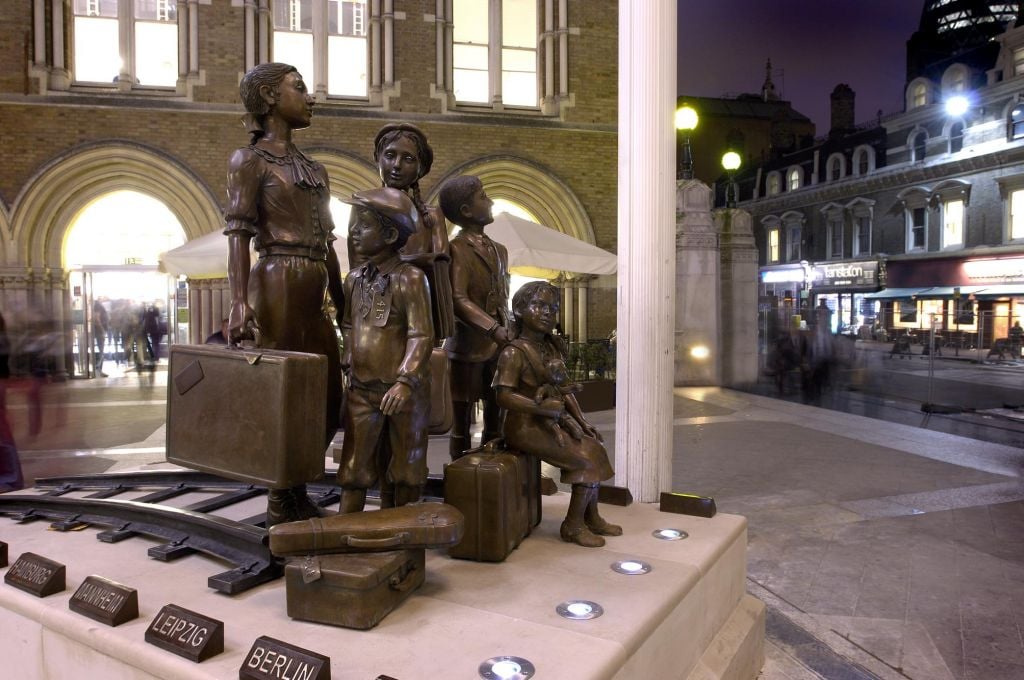
Kaye, whose mother was on the Kindertransporte just prior to World War II, lost patience with the existing organizations, and slightly under a year ago she, her husband and her sister-in-law, launched their own venture.
Familiar with social media, they set up a website and a Facebook page.
Kaye says that after posting the page, someone contacted them saying, “I’ve met this fantastic guy, he’s in Middlesborough, but he needs to be in London, can you find him somewhere to stay?”
The trio could not have been more fortunate. Their first guest, who ended up staying with them for four months in their home in Epsom, 13 miles south-west of London, has become something of a refugee superstar in Britain.
He is a wonderfully articulate young Syrian from Aleppo who was studying English literature and whose life has effectively been saved by his passionate embrace of the English language.
Jwan, as he has asked to be known because of fears for the safety of his family who remain in Syria, is a Kurd.
“We were not allowed to express ourselves in our mother tongue,” he says. “The policy of the government was to make the Kurds a forgotten people.”
Trouble arrived in Jwan’s part of Aleppo in late 2012.
“The place was surrounded by ISIS radicals. The government accused the Kurds of being ‘orphans of the Israelis,’ so we were targeted by both groups,” says Jwan.
It became clear to Jwan that he could not stay in Aleppo. He would either be forced to fight for one side or the other and made to kill people, or he would be killed himself. When the radicals began beheading people in the main square, the 23-year-old knew he had to leave.
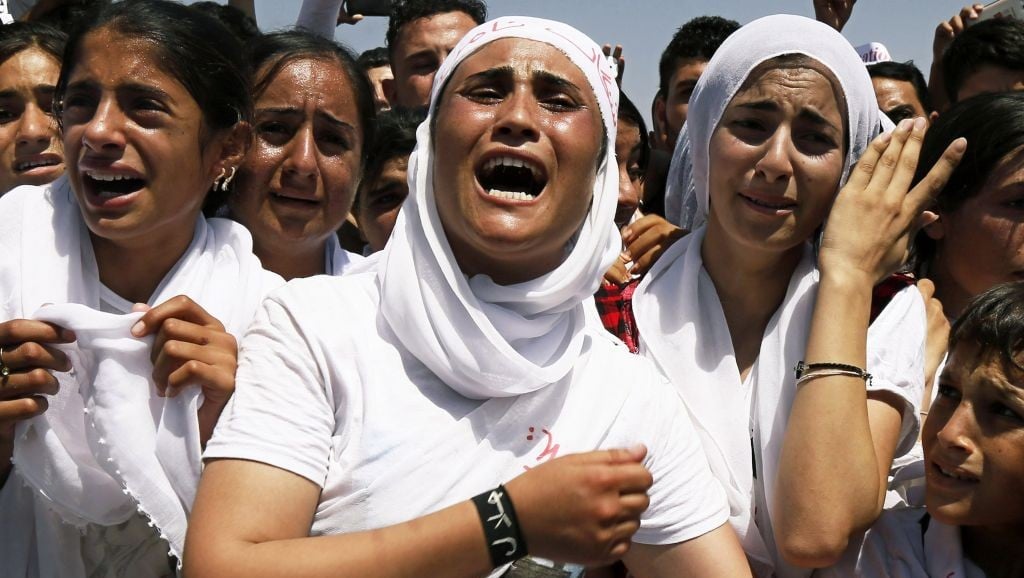
Initially he joined the UN and worked with its staff in northern Iraq translating, using his English and other languages, helping and advising Syrian refugees. But in 2014, after witnessing atrocities against the Yazidi population, Jwan decided he could no longer stay in the region.
‘In Syria I was brought up with the idea of hatred of Israelis and Jews, that they were our enemy, that we must kill them’
After a long series of truly horrible adventures — including nearly suffocating to death after nine hours in a tanker-full of bread flour — Jwan made it first to Calais, France, where he again translated for people, and then, finally, to Hull in the north of England, where he had been smuggled in.
A grateful Jwan was first arrested and then “treated very gently, given food, doctors, a lawyer…” He was applying for refugee status when he met Nina and Timothy.
Only weeks after he became their guest, the family was due to hold its annual Chanukah party. Nina Kaye asked Jwan whether or not he wanted to stay, wondering whether he would be uncomfortable.
“In Syria I was brought up with the idea of hatred of Israelis and Jews, that they were our enemy, that we must kill them,” Jwan says. “You see this on the media, TV, everywhere, and no one questions it.”
This was his first encounter with Jews — and for him, it was eye-opening.
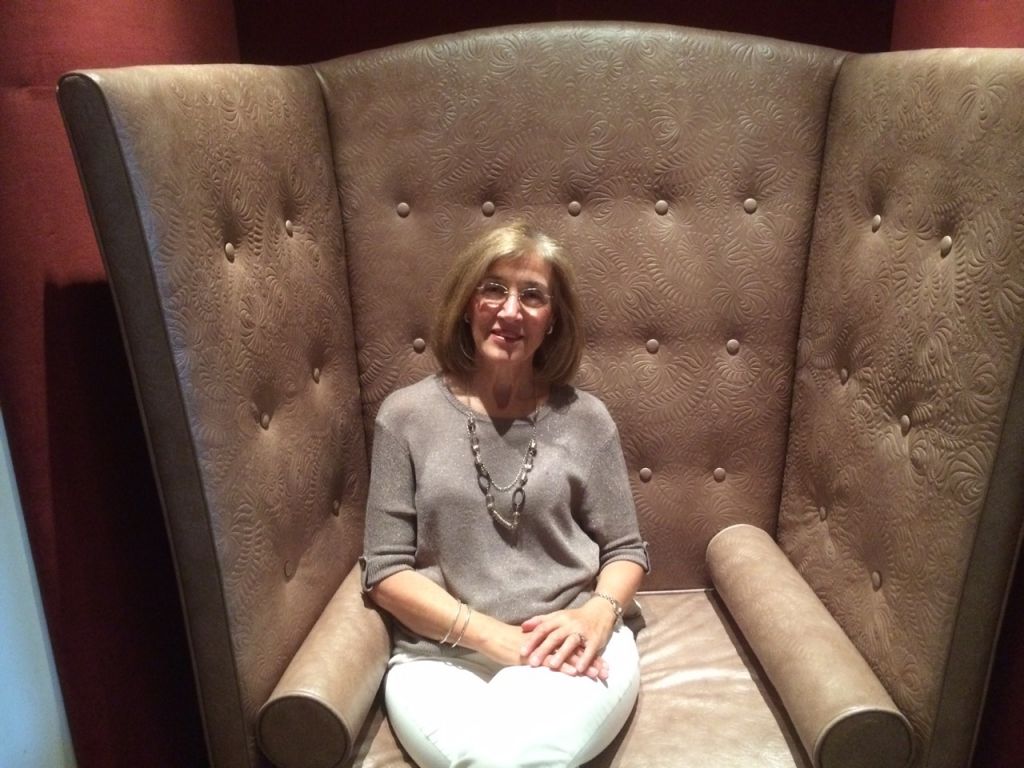
“Lots of Jews have helped me,” he says. “And I saw how these people donate food and money to Syrian refugees, how they opened their arms to help. And I realized we had a lot in common.”
‘Lots of Jews have helped me… and I realized we had a lot in common’
He went to Exeter, seeking a university place, and “stayed with this really nice family for three days and they turned out to be Jewish, too.”
Nina Kaye says that Refugees At Home is deliberately “religion-blind” in that neither hosts nor guests are asked about their faith.
But, she acknowledges, “The parallels with Jews in Nazi Germany are extraordinary. The educated, cultured, middle classes, they’re the ones who have got out, or at least the ones who have had the foresight. The ones who have been smuggled all over Europe, that takes money.”
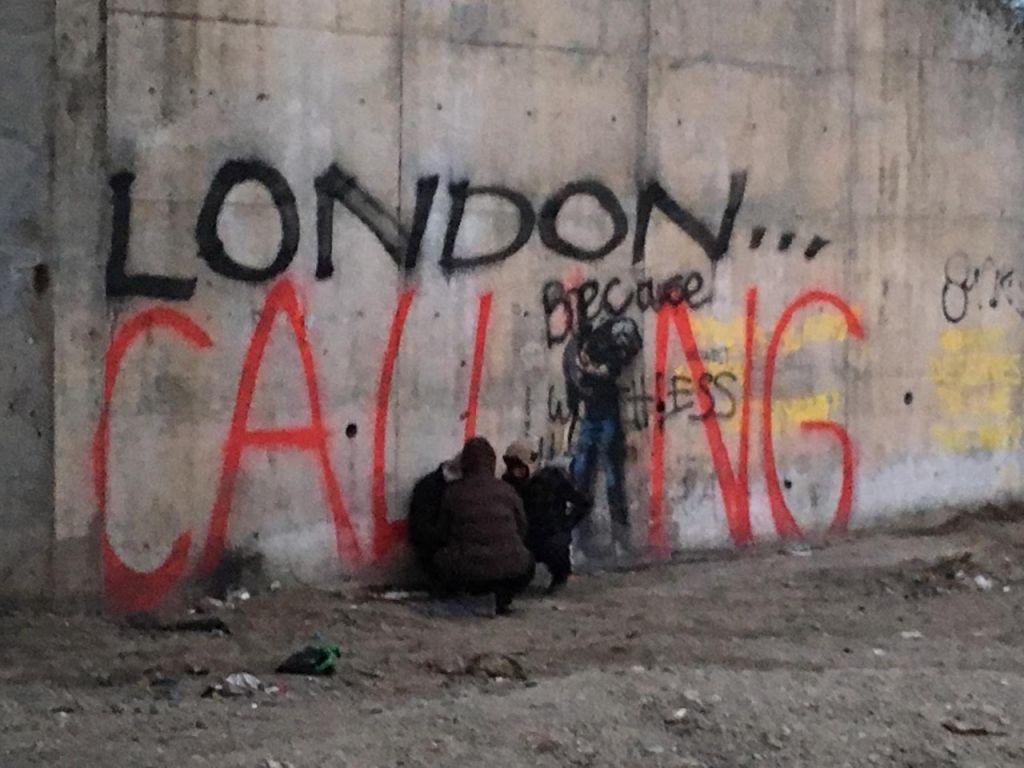
“My grandmother came here and was a cook and bottle washer because it was the only way she could get a job. She came to Britain on a domestic visa. She couldn’t bring her daughter, my mother, with her — my mother went on the Kindertransporte to Sweden when she was 13 and didn’t manage to get here until she was 17. So it very much resonates with me,” Kaye says.
‘My mother went on the Kindertransporte to Sweden when she was 13 and didn’t manage to get here until she was 17. So it very much resonates with me’
Jwan has been reunited with his wife and two little girls. He has been offered a place at SOAS, part of London University, to study post-conflict development, and plans one day to go back to the Middle East.
Meanwhile, Refugees at Home has become one of the vital parts of the asylum and refugee infrastructure in Britain.
“We can’t solve everything,” Kaye says, “but we have about 120 assessed hosts, from penniless students who are offering a bed for a few nights to people who are renting themselves and have a spare room. We have placed guests for at least 3,400 bed nights and they have come from Syria, Iran, Afghanistan, Pakistan, Congo and the Dominican Republic.”
As for Jwan, she says, “He has become a very dear friend. He has been so helpful — he gives back.”





The Times of Israel Community.