

Kremlin crock: 8 things to know for September 25
With Russia promising to provide S-300 batteries to Syria, Israelis show less willingness to go along with Moscow’s accusations in downed plane affair
 Add ToI as a Preferred Source on Google
Joshua Davidovich is The Times of Israel's Deputy Editor
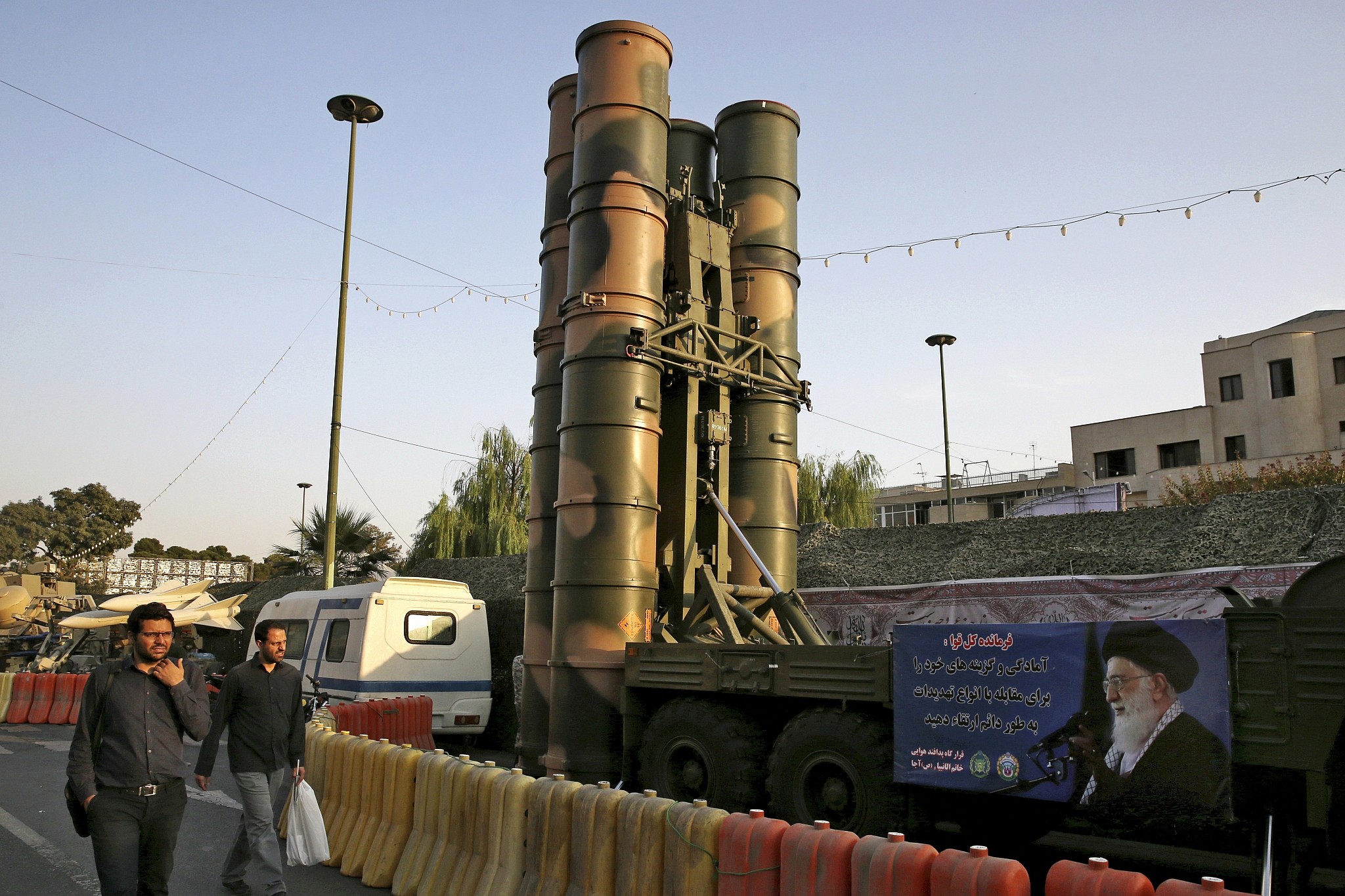
1. Game changer: Israel is up in arms over Russia’s announcement that it will provide S-300 air defense batteries to Syria, warning that it’s a “major mistake” that will “magnify dangers” in the region.
- “Transferring the S-300 is dangerous” reads a top headline in Israel Hayom.
- Yedioth Ahronoth calls the news a “worrying development,” noting that the system can shoot down planes some 200 kilometers away.
- The system is a “game changer,” according to the Walla news site.
- “According to estimates from the defense community, if the system is deployed in Damascus, it can identify via advanced radar planes that will take off from Ben-Gurion Airport [near Tel Aviv], and will represent a danger to Israeli warplanes while they are just taking off, or still in Israeli airspace,” the news site reports.
2. Israel can handle it: Despite the hullabaloo, though, some say that the system being given to Damascus will change little on the ground.
- Haaretz’s Amos Harel notes, quoting foreign media, that Israeli fighter jets have trained for dealing with S-300 batteries: “It’s reasonable to assume that the air force can figure out how to reduce the risk when facing these systems.”
- Yedioth’s Alex Fishman also writes that Israel can deal with the S-300 and the fact that the Russians are not providing the S-400 shows that things aren’t that bad yet. “On the diplomatic front, on the other hand, Israel does not have a good answer for the rift with the Russians.”
- The result, he writes, is that Israel could lose a strategic partnership that allowed it to have near unfettered access to Syria’s skies.
- Former Military Intelligence head Amos Yadlin writes on Twitter that “providing S-300 will only raise the risk from incompetent Syrian operators to Russian air forces, first and foremost,” as well as to Israeli, US and coalition forces and civilian air traffic.
- However, “Israel has been preparing for this threat for twenty years and will cope with it,” he adds.
A. No flashy 3D clip will cover the fact that whoever launched a missile on the Russian aircraft and downed it were irresponsible and professionally incompetent Syrian operators.
— Amos Yadlin (@YadlinAmos) September 24, 2018
3. Only fools Russian: Yadlin’s whole thread is worth reading, and highlights growing Israeli impatience with Russia’s public blaming of the Jewish state.
- That feeling is also evident in Israel Hayom, whose top front page headline reads “The Russians know the truth.”
- Both Israel Hayom, seen as a government mouthpiece, and Yedioth accuse Russia outright of lying, an accusation they previously tiptoed around for fear of angering Moscow.
- An op-ed in Haaretz is titled “The Russians are the problem.”
- In Yedioth, columnist Sever Plotzker writes that the Russians have turned lying “into an art.” Once their defense ministry created a narrative of what happened over Syria, it would not accept any Israeli interpretation that did not jive with it, even if it knows it’s not true.
- “Woe to any facts that don’t fit the narrative,” he writes.
4. Anti-Semitic resurgence: Israel Hayom columnist Ariel Bolstein writes that Russia going head-to-head with Israel has allowed a resurgence of anti-Semitism,
- “The winds of anti-Semitism have always been blowing in Russian society and were only subverted in the last decades from above. Russian TV stations allowed themselves to broadcast harsh statements against Israel, including senior legislators demanding that Russia blow up the military air bases of the Jewish state in response. Until the incident with the plane, talk like this was forbidden in public, since everyone assumed that … Putin … was against it. A new situation, in which a central actor like the Russian defense ministry refers to Israel with language that recalls the slanders of the Cold War, is allowing the flowering of anti-Semitic language in Russia,” he writes.
- It’s worth noting, however, that there have not been any reports of a marked uptick in anti-Semitic attacks in Russia.
5. Israel not totally innocent: Though few Israelis believe the Kremlin, Haaretz’s lead editorial urges the public not to trust Jerusalem 100 percent when it talks about (or hides) what it is doing in Syria.
- “Clearly, the Israeli public has no idea about the management of the ‘battle between the wars’ in the north, and censorship prevents discussion of the army’s methods. The unfolding of events and the danger they reflect require a thorough investigation by Israel,” the editorial reads.
6. Off to New York: The downed plane is expected to be among the topics of conversation when Prime Minister Benjamin Netanyahu meets with a decidedly more friendly US President Donald Trump Wednesday on the sidelines of the UN General Assembly, Haaretz reports.
- The meeting will be the fifth between the two.
- ToI’s Raphael Ahren reports that the White House’s languishing Israeli-Palestinian peace plan will also likely be on the agenda of the meeting, though Iran will dominate conversation.
7. Blood on the road: Two hit-and-runs over the Sukkot holiday have many outraged, with driving under the influence suspected in both.
- In Jerusalem, a Spanish journalist who has worked in Israel for several years is suspected of killing a pedestrian. According to Haaretz, the journalist, who is in his 50s, was caught near Mount Scopus and is thought to have been drinking.
- The result is not quite as bad in the second incident, which left one youth badly injured and another lightly injured, but the fact that both suspects are soccer players in Israel’s premier league means the story gets wider coverage.
- Yedioth reports that the two, one of whom plays for Ashdod and the other for Kiryat Shmona, were in separate cars in Tel Aviv when one smashed into the youths, who were riding an electric bike. The two fled the scene and stashed the damaged car to try and cover up the crime.
- According to the paper, the driver, 20, was five times over the legal drinking limit though had he been an adult, he would not have been considered drunk.
- “Police sources notes that the main crime was that the suspect fled the scene. According to them, it seems the youths on the bike went into their lane, but after the crash, he fled the scene without giving them aid,” the paper reports.
8. What panic? Meanwhile, an Israeli who caused a ruckus at Newark airport when he tried to go through security with a fake bomb has been cleared of causing a public panic, his lawyers say in a statement.
- According to the lawyers, prosecutors threw out the case against Alon Feldman after initially charging him over part of Newark having to be shut down over his fake bomb.
- They say Feldman had the device on him because he was on his way to pitch a branch of the US military on an x-ray system that his company produces to detect real bombs.
- “Mr. Feldman has now returned home and will continue to pursue his business of helping countries, including the United States, remain safe,” a statement from law firm Chiesa Shahinian & Giantomasi reads.







The Times of Israel Community.