

Levin says judge selection panel to meet, but no Supreme Court picks until his nominees okayed
Doubling down on refusal to have judicial appointments ‘forced’ on him, justice minister says only district judges to be tapped, announces reform in family, traffic, juvenile courts
 Add ToI as a Preferred Source on Google
Justice Minister Yariv Levin doubled down Friday on his stated refusal to have Supreme Court judicial appointments “forced” on him, but said that he would convene the Judicial Selection Committee to approve district court judges.
In a lengthy social media post, Levin also said that he will increase the number of judges on family, traffic and juvenile courts, in a reform aimed at addressing heavy caseloads within those judicial systems.
The announcement comes as Levin is due to respond to a High Court order from February demanding he justify his ongoing refusal to make key judicial appointments. Levin’s original deadline was delayed due to the Iran war.
“I will not allow the attempt to force upon me the appointment of judges to the High Court, as long as the boycott on the worthy candidates I have proposed continues,” he proclaimed on Friday.
However, he said he would publish his recommendations for which magistrates’ court judges he believes should be appointed to district court posts, an issue on which there is much less political friction.
Levin’s post continues his long-running feud with High Court President Isaac Amit, whose authority Levin doesn’t recognize and whom the justice minister has refused to work with.
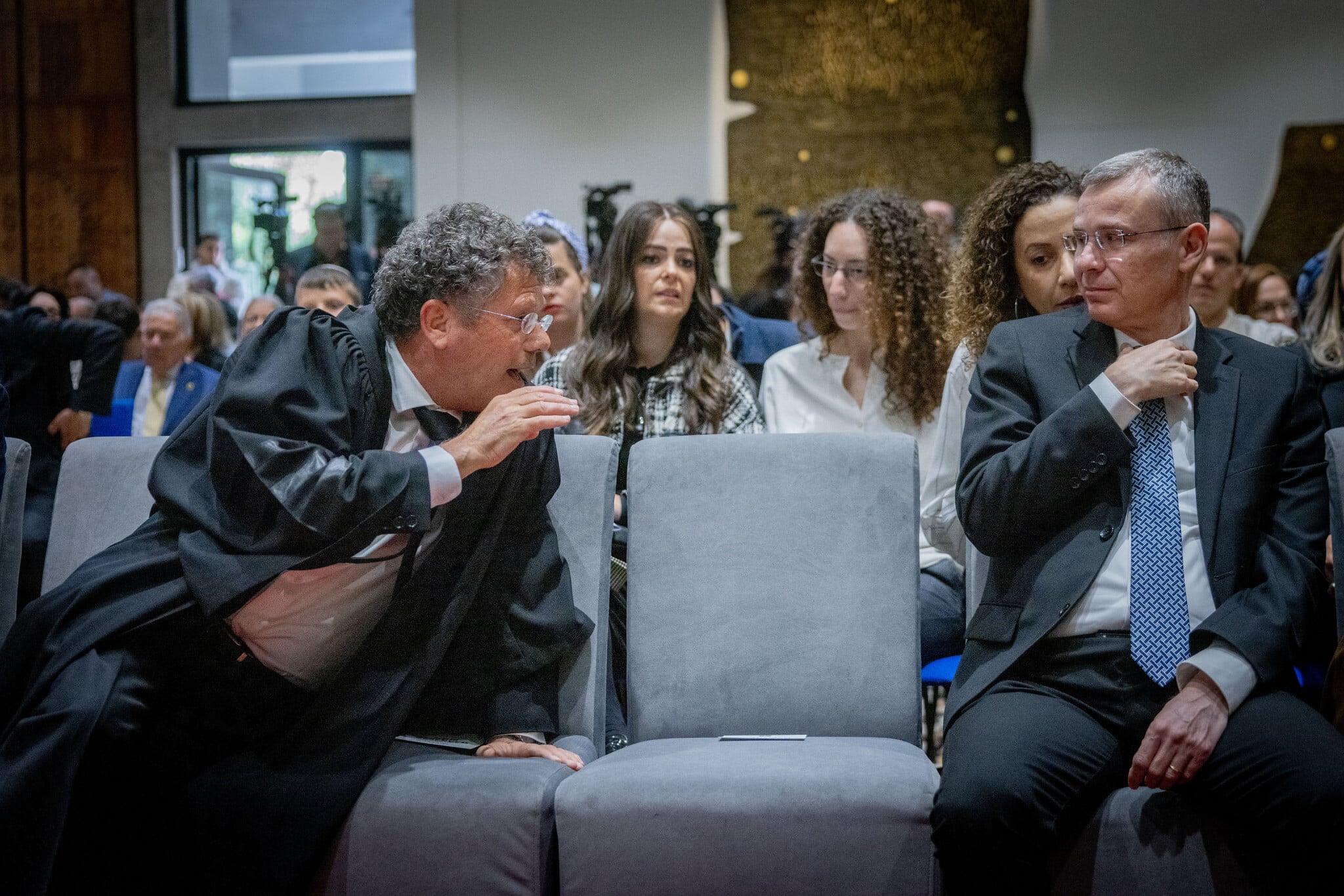
Levin has refused to convene the Judicial Selection Committee, despite dozens of vacancies throughout the court system. The committee last convened in January 2025 and elected Amit president, after being ordered to do so by the top court; Levin boycotted the meeting and has refused to acknowledge Amit’s presidency since.
In February, the High Court of Justice ordered Levin to justify his refusal to convene the committee. At the time, he refused to say at a right-wing conference whether he would honor any rulings in the case, adding: “I will not enable and will not agree to a situation in which they force appointments on us that do not reflect the public.”
There are currently four vacancies on the 15-member Supreme Court, as justices automatically retire when they turn 70.
Levin — who has sought for years to weaken the court system via a sweeping judicial overhaul — is seeking to avoid convening the committee until after this year’s election, when a new law will take effect that increases politicians’ influence over judicial appointments.
According to Basic Law: The Judiciary, enacted in 1984, the Judicial Selection Committee has nine members: two government ministers, two Knesset members, two representatives of Israel’s Bar Association and three judges. No side has a veto for lower court selections, but Supreme Court picks require a seven-strong majority, effectively giving both the government and the judges veto power.
The government passed a law in March 2025 that removes the Bar Association representatives, replacing them with one lawyer who is directly chosen by the coalition and another who is directly chosen by the opposition; it also gives political representatives from the coalition, opposition and judiciary veto power over lower court appointments; and it removes any influence of the three judges on the committee over appointments to the Supreme Court, while granting the coalition and opposition vetoes on it.
However, the law will only come into effect in the next Knesset, meaning after the next elections, which are scheduled to be held no later than October.




The Times of Israel Community.