

 From the Liveblog of
Friday, October 9, 2026
From the Liveblog of
Friday, October 9, 2026
Almost all Gaza residents need shelter as El Niño threatens heavy flooding, UN agency says
 Add ToI as a Preferred Source on Google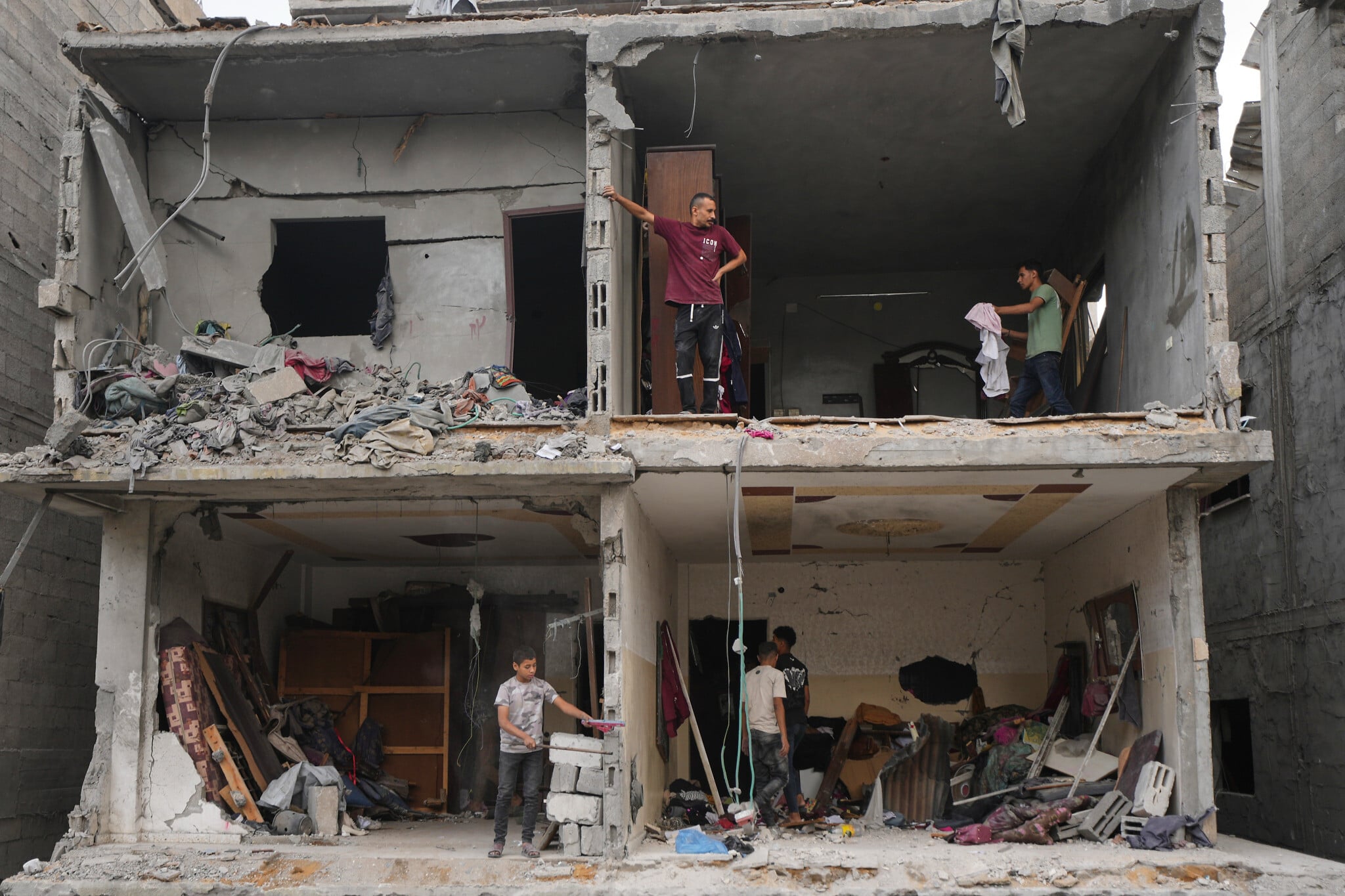
Almost all of Gaza’s population needs tents or help with shelter ahead of winter, with the El Niño weather phenomenon expected to bring heavier rainfall, while supplies remain scarce due to Israeli restrictions, the UN migration agency says.
The El Niño — which could be the strongest ever, according to the UN weather agency — could further weaken unsafe buildings and cause flooding amid the enclave’s heavily damaged drainage systems, the IOM said.
Almost 2 million people inside the enclave, largely devastated by the war launched by Israel in response to Hamas’ assault in October 2023, require assistance, but only about 17% of the needs for winter shelter supplies have been met by humanitarian actors, IOM Director General Amy Pope says.
“Families who have already endured repeated displacement and devastating loss must be able to face the winter in safety and dignity,” Pope says, adding that constraints by Israeli authorities are making it hard for agencies to scale up their responses.
Some 8,600 emergency shelter kits, comprising wood, a tarpaulin and some basic materials, have not been allowed by Israeli authorities to enter Gaza, as they have been determined as dual use, the IOM says.
COGAT, the Israeli body that oversees aid flows into Gaza, does not immediately respond to Reuters request for comment. Israel cites security concerns for its curbs on Gaza.
IOM says they had been able to bring in some tarpaulin and tents, but that it was not enough at the current scale needed in Gaza.
More than half of all tents and makeshift shelters in the enclave need replacing as they are in poor condition, the IOM says, warning that there are few alternatives with war-damaged buildings posing safety risks.
More than 3,600 structures were identified in August as dangerous and at risk of collapse, while around 1.8 million people are living in displacement sites – most in flood-risk areas, the IOM says.





The Times of Israel Community.