

Israel shutters UK’s East Jerusalem consulate; London rebrands it as a ‘mission’
Foreign Minister Sa’ar says move a response to settlement sanctions; UK counterpart Miliband insists Israel doesn’t have right to close office, but says he won’t take reciprocal action
 Add ToI as a Preferred Source on Google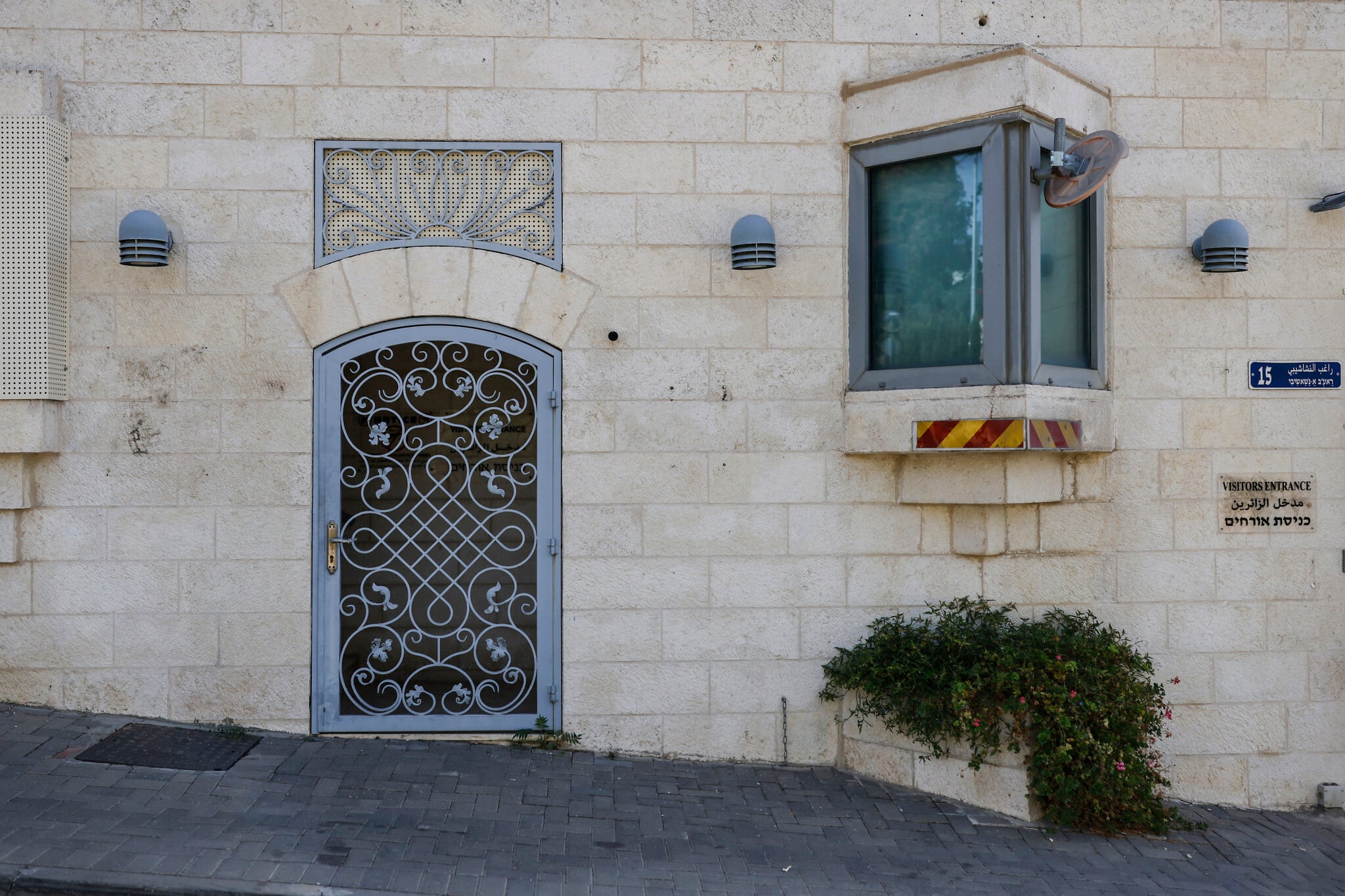
Britain said on Thursday its nearly 200-year-old consulate in East Jerusalem would remain operating at a smaller scale and renamed it “UK Mission, Jerusalem,” after Israel ordered it shut in a dispute over sanctions on settlements.
Israel last month issued a 30-day deadline for Britain to close the consulate after London announced sanctions targeting settlements in the West Bank, the latest move in a dispute that has strained relations between the longtime allies. The deadline expired on Thursday.
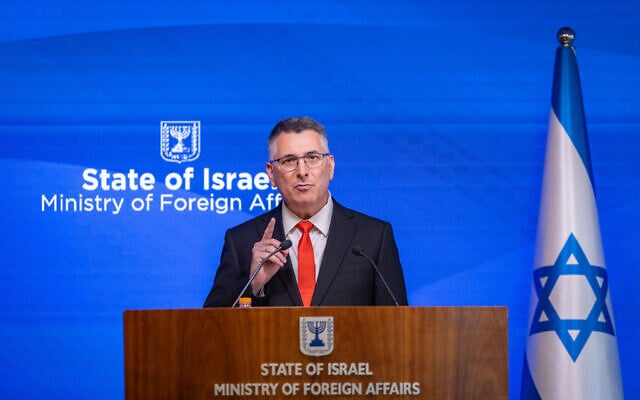
Foreign Minister Gideon Sa’ar said in a statement that the consulate would formally end operations but that some British diplomats would be allowed to continue work in the building under a deal struck between Israel and Britain.
“We established a clear principle: It is not possible to act against Israel without Israel taking appropriate measures in response,” Sa’ar said in his statement. “We did not want to reach this point, but the actions of the UK Labour Government brought us here.”
Saar’s British counterpart, Foreign Secretary Ed Miliband, said his country does not accept that Israel has the legal right to close the consulate. The consulate is in a part of the city Israel captured in the 1967 Six Day War, which Israel later annexed in a move that most countries do not recognize.
Miliband said that following discussions with Israel, “our Consulate General building will not be closing, and will be known as the UK Mission, Jerusalem from today.”
“We have been clear that we do not accept that the government of Israel has the legal right to close the British Consulate General in Jerusalem,” he said, noting that the UK Mission would continue to “deliver vital services and our work with the Palestinian people.”

Miliband said that having withdrawn a number of staff and families in recent weeks, the mission would now work to build up their presence.
He said that staff were withdrawn because, without an agreement with Israel, “we would not have the necessary assurances for the security and protection of our staff and premises.”
Miliband said Britain would not take any reciprocal action against Israel while the two sides engage in talks, following speculation that Britain could expel some Israeli diplomats.
Workers remove signage
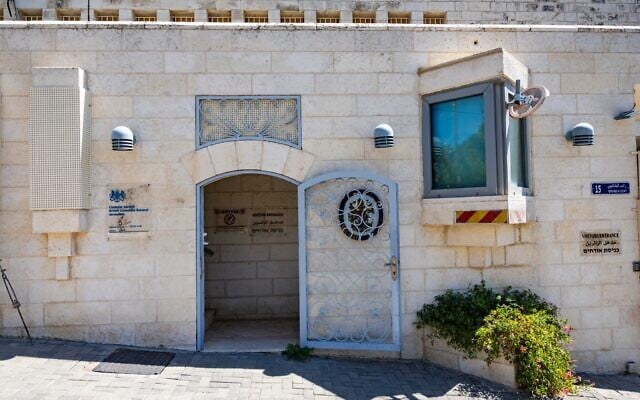
On Thursday, Reuters journalists saw workers in the consulate remove a plaque reading “British Consulate General” and another sign for its consular section. The British flag was still flying over the building.
Last month, Sa’ar announced a series of countermeasures against the United Kingdom in response to Miliband’s announcement of what Sa’ar called a “hostile” sanctions package targeting West Bank settlements, “and following a series of anti-Israel decisions by the Labour government over the past two years.”
France and Canada joined Britain in the settlement sanctions, but Israel has not taken action against them.
Israel has been adamant that the consulate will close even as Britain sought to keep it open, including sending the country’s top national security adviser to Israel last week for talks.
According to an unsourced Ynet report on Monday, Britain had warned Israel that it could expel 27 Israeli diplomats from the embassy in London if Israel follows through on its decision to close the consulate, where 27 British diplomats work.
It would be a highly unusual step for the allies to expel each other’s diplomats. Despite the current strains, the UK and Israel are close economic, security and intelligence partners.
Britain’s consulate was founded in 1839, more than a century prior to the establishment of the State of Israel in 1948. The closure order does not affect Britain’s embassy in Tel Aviv, which handles diplomatic relations with Israel’s government.
The consulate, in the Sheikh Jarrah neighborhood of East Jerusalem, handles Britain’s relations with Palestinians in Jerusalem, as well as in the West Bank and Gaza. It also provides consular services to Palestinians.
The British sanctions announcement and Israel’s order to close the consulate mark a new low in a relationship that has deteriorated over the past three years. Britain has repeatedly criticized Israel over its actions in the war in Gaza and over extremist settler attacks on Palestinians in the West Bank.
Prime Minister Benjamin Netanyahu’s government, which faces an election this month, has accused Britain’s governing Labour Party of being hostile toward Israel.
The United Nations and most countries consider Israeli settlements to be illegal under international law. Israel disputes this and instead defines the West Bank as “disputed territory.”






The Times of Israel Community.