

 From the Liveblog of
Sunday, August 9, 2026
From the Liveblog of
Sunday, August 9, 2026
Arab parties fail to reach deal on shared electoral slate
 Add ToI as a Preferred Source on Google
Sam Sokol is a former political correspondent at The Times of Israel. He was previously a reporter for the Jerusalem Post, Jewish Telegraphic Agency and Haaretz. He is the author of "Putin’s Hybrid War and the Jews"
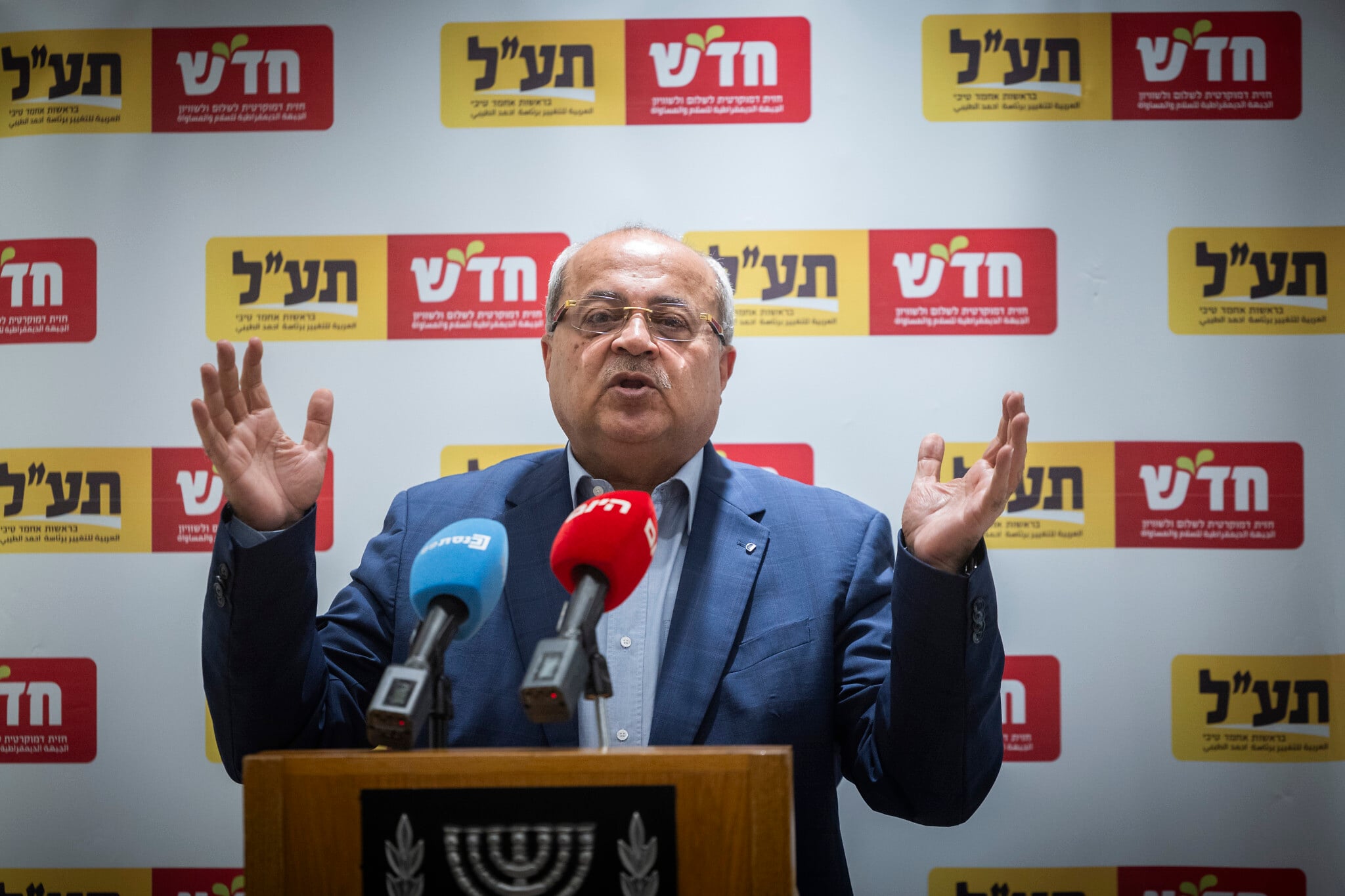
Israel’s Arab parties fail to reach an agreement on a shared electoral slate proposed by an inter-party “reconciliation committee,” leaving the Arab sector’s prospects for representation in the next Knesset uncertain.
According to national broadcaster Kan, MK Ahmad Tibi’s Ta’al party has rejected the proposed slate with Hadash, a joint Jewish-Arab leftist faction incorporating Israel’s old Communist Party, and the secular nationalist Balad party.
Hadash announced in June that it was moving forward with reestablishing a joint electoral list with the Ta’al and Balad parties ahead of the upcoming national vote, while “leaving the door open” for Mansour Abbas’s Islamist Ra’am faction to join at a later stage.
The four Arab-majority parties signed an agreement in January committing to work together to revive the joint ticket ahead of this year’s election, but negotiations stalled for months, mainly due to Abbas’s insistence that the bloc be purely technical, to preserve Ra’am’s ability to join a governing coalition, which the other Arab parties oppose.
Abbas told Channel 12 in July that he will not run jointly with the other Arab parties in the upcoming elections.
The Joint List slate of Arab parties was first formed in 2015 and split up in 2021 after Ra’am broke away from the other parties to join the coalition led by Naftali Bennett and Yair Lapid. The slate collapsed altogether ahead of the 2022 election, when the nationalist Balad pursued an ultimately unsuccessful solo run, leaving the remaining two parties to form the joint Hadash-Ta’al list.
Bennett, considered a leading candidate to unseat Prime Minister Benjamin Netanyahu, has rejected Ra’am as a potential coalition partner, though the 2021-2022 government that he led did include Ra’am. Abbas has tried to distance Ra’am from its Islamist roots and is reportedly in talks about including former Yesh Atid MK Yoav Segalovitz, the former head of the Israel Police investigations and intelligence unit, on his slate.








The Times of Israel Community.