

 From the Liveblog of
Thursday, May 28, 2026
From the Liveblog of
Thursday, May 28, 2026
‘I don’t cry in bed, that’s not me’: Ex-hostage Eli Sharabi speaks about life after captivity
 Add ToI as a Preferred Source on Google
Jessica Steinberg, The Times of Israel's culture and lifestyles editor, covers the Sabra scene from south to north and back to the center
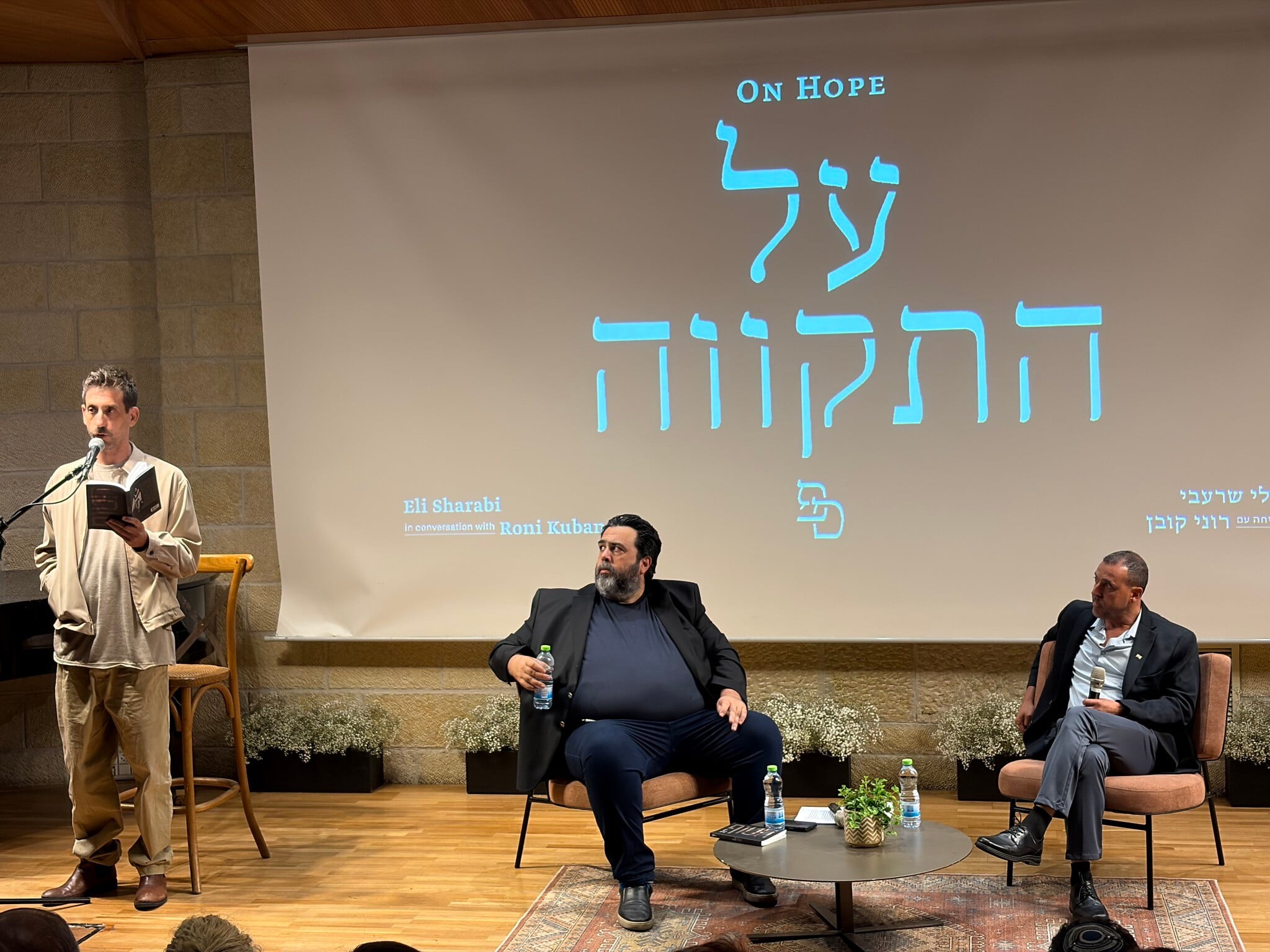
Former Hamas captive Eli Sharabi speaks at the final event of the Jerusalem Writers Festival about his bestselling book, “Hostage,” and his experiences since his release in February 2025.
Sharabi, who was taken captive on October 7, 2023, from his home in Kibbutz Be’eri, says he has been enveloped by his family after returning home to find out that his wife, Lianne, and two daughters, Noya and Yahel, were murdered on October 7, and that his brother, Yossi, was killed in captivity.
Sharabi says his intensive work, including writing the book, and his many media appearances and interviews, helps with his mourning.
“I don’t cry in bed, that’s not me,” he says. “When I see my daughters’ friends in army uniforms, or now in 11th grade, that makes me stop and pause.”
Sharabi, who is interviewed by journalist Roni Kuban, is alternately serious and even humorous when speaking about his time in captivity.
He relates some of the conversations he had in captivity with his fellow hostages Alon Ohel, Eliya Cohen and Or Levy, and says that as a former business manager, he would build business plans for the others.
“Alon wants to live in Copenhagen and when he wondered how he would make a living, Eliya said he should sell jachnun,” says Sharabi, referring to the Yemenite Jewish pastry.
The four men became a group, says Sharabi.
“And a group has power and that’s amazing,” he says.
“Hostage” has been translated into 20 different languages and has sold more than half a million copies, says Sharabi.
He has been asked to write another book about the last year and three months since his release, but says he wants to rest.
“I don’t have a day when I’m not happy,” says Sharabi. “I don’t have a day that I don’t think about them [his family] or captivity. Five minutes of sadness.”








The Times of Israel Community.