

 From the Liveblog of
Thursday, January 29, 2026
From the Liveblog of
Thursday, January 29, 2026
Israeli official: EU listing of IRGC as terrorist org makes it easier to build cases against members
 Add ToI as a Preferred Source on Google
Lazar Berman is The Times of Israel's diplomatic reporter
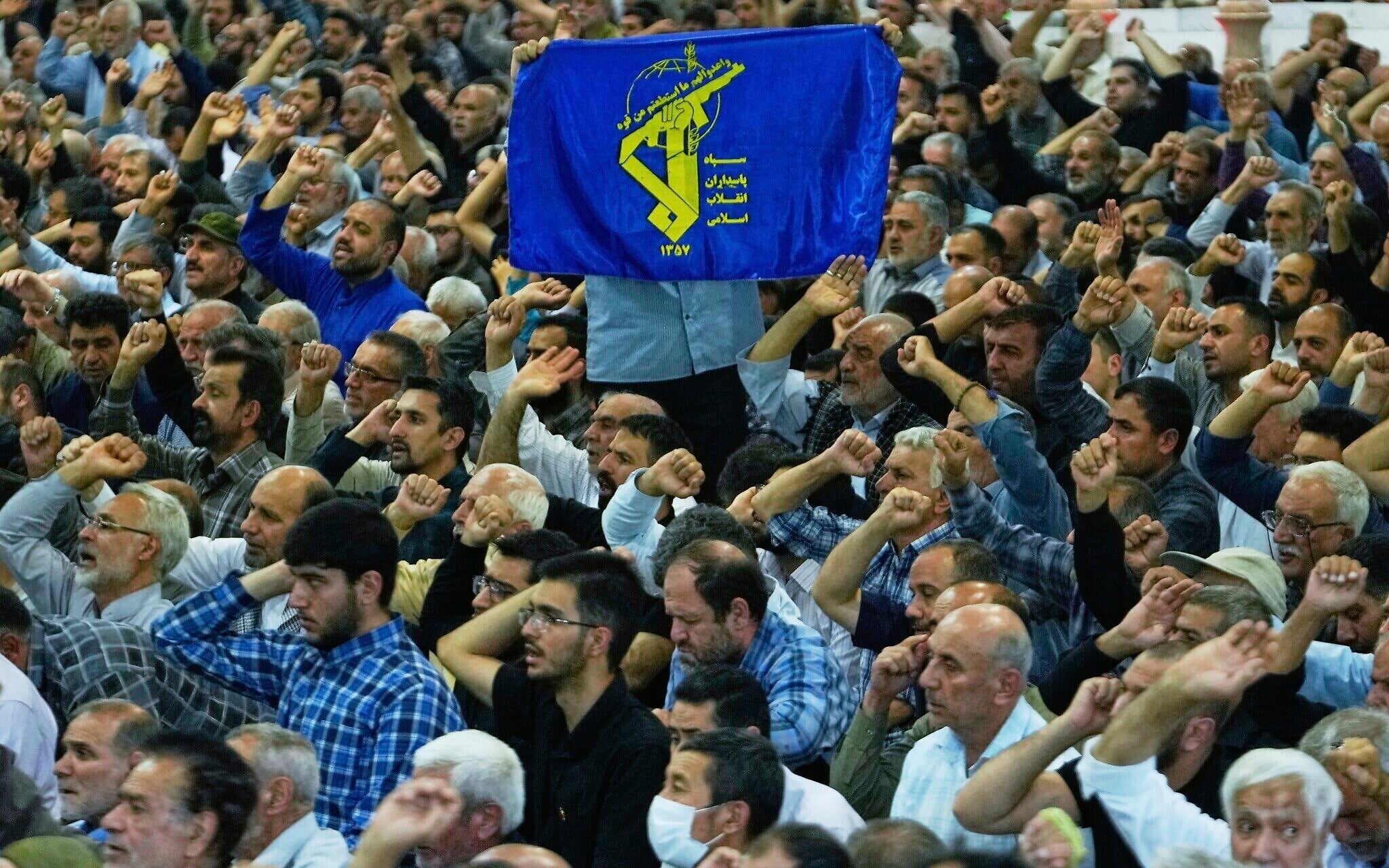
The European Union designation of the Islamic Revolutionary Guards Corps as a terrorist organization “gives the EU practical, operational tools to act more forcefully,” says an Israeli official.
The IRGC and individuals within the organization are already under heavy EU human rights, WMD, and drone sanctions.
“There is first of all a dimension of support for the protesters who took to the streets,” notes the official in a briefing to Israeli reporters.
Beyond the demonstration of support, the listing will make it easier to build the legal case to take action against IRGC members.
To take legal action, the state must present an evidence-based case to the court, in which it is difficult to use many forms of classified intelligence. Following the designation, the burden on the state is not to prove that an individual is involved in a specific terror plot, but only that he belongs to or is operating on behalf of the IRGC. The same applies to assets that the state can freeze.
“The linkage between law-enforcement bodies within Europe — sharing information and cooperating through Europol — will be easier,” notes the official, “and it will also be easier for the EU, which coordinates ties between police forces, to turn this into an official, clear mission with goals and targets.”
The official also argues that the IRGC’s use of European criminal networks for terror attacks will be much harder to do once the gangs “realize that all the eyes of European law-enforcement bodies are on them.”
Private companies will likely take extra care to distance themselves from any activity connected to the IRGC in order to protect themselves.
Germany led the effort within the EU to convince Italy, France, Spain and Portugal to agree to back the move, the official says, adding that there were many other European states that joined in as well.
“We tailored our messages,” says the official of the yearslong Israeli effort to get all 27 EU states to agree. “The IRGC portfolio allowed us to speak about wide-ranging terror activity across many fields: terror within European states, arms transfers to the front in Ukraine, proxy activity, and human rights violations. Through our missions, we tailored the message to what most resonated in each country, and we can point to concrete shifts.”
“That doesn’t mean everything happened because Israel acted,” the official continues. “It means there was willingness, and we served that willingness with the right messages — that’s what we tried to do.”
A January 14 phone call between Foreign Minister Gideon Sa’ar and his French counterpart, Jean-Noel Barrot, was a key element in convincing Paris to change its mind, says the official.
There was also a seminar on the IRGC hosted by the US in Budapest last week that many countries attended.


The Times of Israel Community.