

 From the Liveblog of
Monday, October 27, 2025
From the Liveblog of
Monday, October 27, 2025
Liberman confident that Zionist anti-Netanyahu bloc will win comfortable majority in 2026 elections
 Add ToI as a Preferred Source on Google
Sam Sokol is a former political correspondent at The Times of Israel. He was previously a reporter for the Jerusalem Post, Jewish Telegraphic Agency and Haaretz. He is the author of "Putin’s Hybrid War and the Jews"
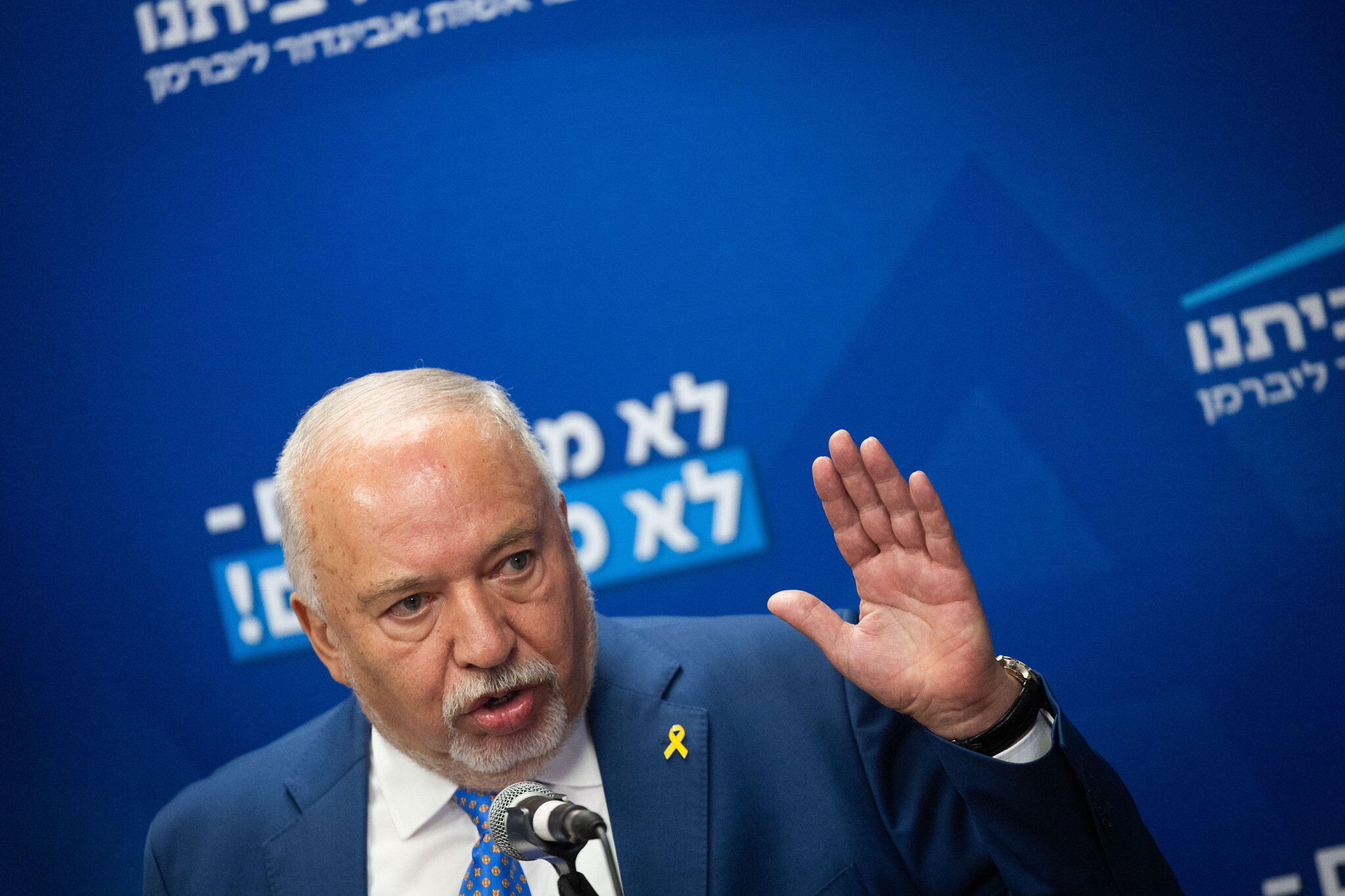
Yisrael Beytenu chairman Avigdor Liberman rules out merging with another party ahead of the 2026 Knesset elections, telling reporters that he “will lead Yisrael Beytenu, and anyone who wants is welcome to join. Period.”
Speaking ahead of his party’s weekly faction meeting in the Knesset, Liberman says that the important thing for the anti-Netanyahu bloc to do is create a coordinated strategy, as he argues that the lack of such a “bloc strategy” is what led to the opposition’s failure in the last election.
“I am sure that the Zionist (opposition) bloc will receive more than 63 seats,” he continues, ruling out sitting with any “anti-Zionist parties” such as the Arab parties and the ultra-Orthodox factions.
Turning to the controversy over ultra-Orthodox conscription, Liberman says that those who do not serve should not be allowed to vote, citing the precedent of convicted felons in the United States.
“We do not have enough space in prisons. So it is enough for them to have a criminal record, and they will not be able to vote,” he says.
Liberman also accuses the ultra-Orthodox Shas and United Torah Judaism of being “racist parties” who do not allow women to run on their electoral lists, comparing them to the Taliban in Afghanistan.
Asked by The Times of Israel about Likud MK Avichai Boaron’s bill aimed at hampering former prime minister Naftali Bennett from running in the next election due to outstanding debts from his previous parties, Liberman says that he supports the idea in principle but that the way it is being implemented now is blatantly political.
The proposed legislation would require any new party established by a chairman whose previous party dissolved within the past seven years to assume responsibility for paying off that party’s outstanding debts before being able to use campaign funds raised for his new party to finance its electoral campaign.
“First of all, pay back debts. This is a rule in life, regardless of the parties. But you don’t change the rules of the game in the middle of play. If they had brought this law two or three years ago, then maybe we would have supported this law too. But now, in an election year, they are turning it into a personal law. We are against personal laws, no matter for whose benefit,” Liberman says.
Bennett has said that Likud has a far greater current campaign finance debt, and that he was not the most recent party leader of either Jewish Home or Yamina, which were headed by Rafi Peretz and Ayelet Shaked, respectively, after his departure. Therefore, he claims, he is not liable for any such debts.










The Times of Israel Community.