

 From the Liveblog of
Monday, April 3, 2023
From the Liveblog of
Monday, April 3, 2023
Magen David Adom scrambling to fill blood donation shortage
 Add ToI as a Preferred Source on Google
Renee Ghert-Zand is the health reporter and a feature writer for The Times of Israel.
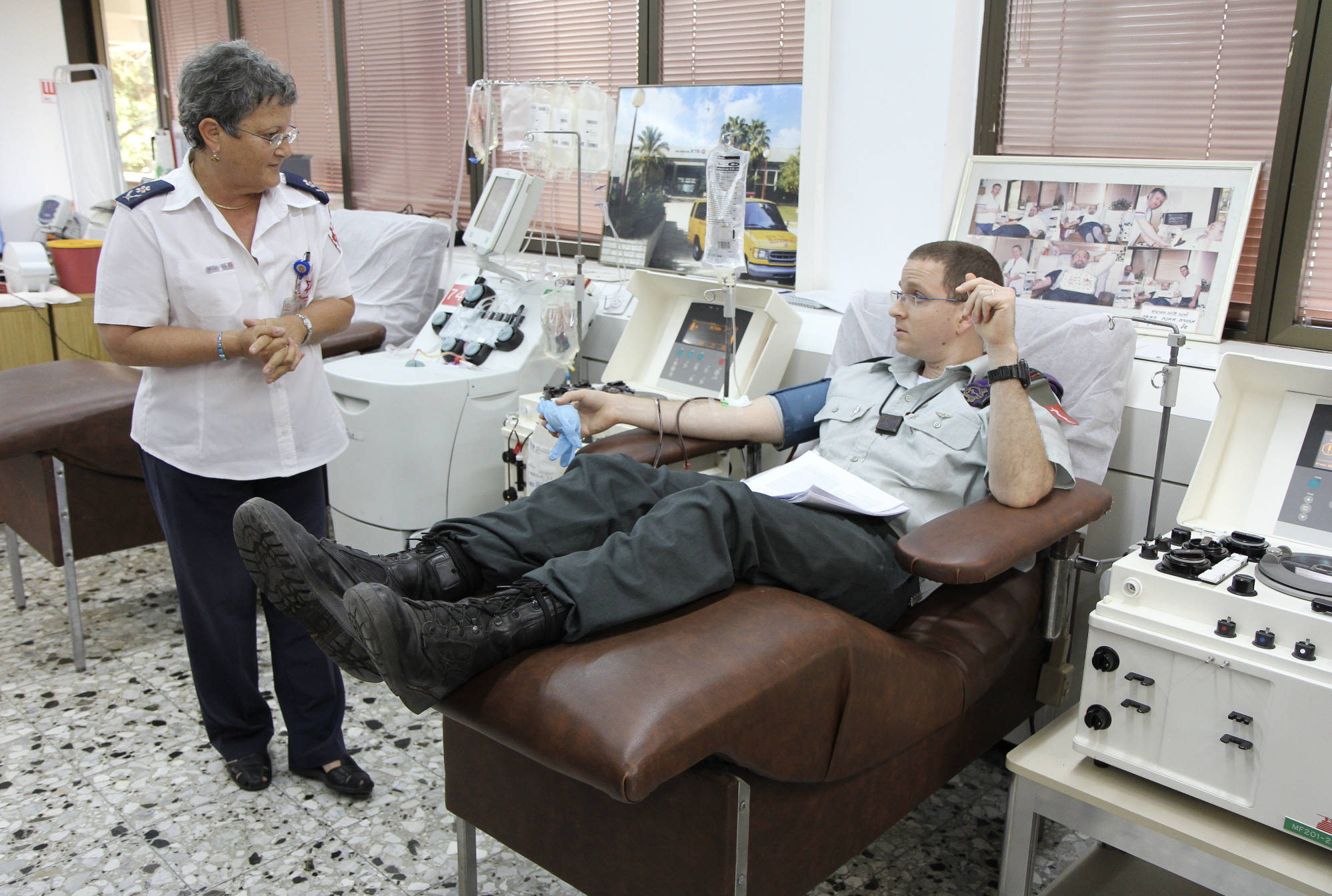
Magen David Adom National Blood Services announces that blood supplies are low, as the Passover holiday approaches.
The emergency medical organization is particularly concerned about the supply of platelets. After blood is donated, it is separated into plasma, red blood cells, and platelets. Plasma can be frozen for up to a year and red blood cells have a shelf life of 35-42 days. However, platelets are good for only five days after donation.
“Platelets are for people at risk for severe bleeding, such as oncological patients, bone marrow transplant recipients, and trauma victims,” says the head of MDA Blood Services Prof. Eilat Shinar.
A full 50 percent of blood donations in Israel come from workplaces, schools, universities, yeshivas, and army bases. The seven weeks between the Passover and Shavuot holidays are a consistent challenge for recruiting blood donors, as these places are intermittently closed for holidays.
The situation is complicated this year by the fact that Passover and the Muslim month-long Ramadan holiday coincide. Those observing the daily Ramadan fast are disqualified from donating blood.
To prevent a shortage, Israel requires 1,100 units of blood donated per day. All blood types are needed, especially the universal donor type O.
MDA urges the public to go to donate at one of its sites around the country during the holiday period.
A directory of sites can be found on the MDA website or by calling 03-5300400.










The Times of Israel Community.