

US: North Korea missile launch longest-range yet, poses global threat
Rocket could likely fly 13,000 kilometers on non-lofted trajectory, according to initial assessment; Trump says Washington will ‘take care of it’
 Add ToI as a Preferred Source on Google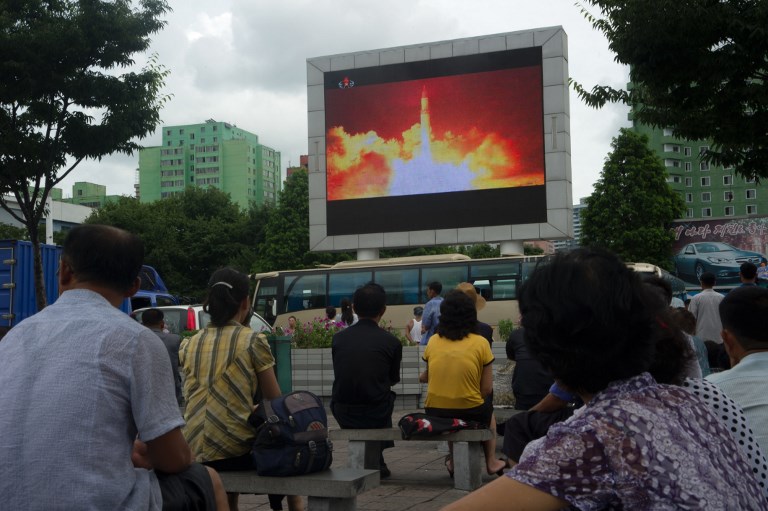
US Defense Secretary Jim Mattis on Tuesday said North Korea’s latest missile test was its highest yet and can “threaten everywhere in the world.”
North Korea abruptly ended a 10-week pause in its weapons testing Tuesday by launching what the Pentagon said was an intercontinental ballistic missile — possibly its longest-range test yet — a move that will escalate already high tensions with Washington.
Pentagon spokesman Col. Rob Manning said the missile was launched from Sain Ni, North Korea, and traveled about 1,000 kilometers (620 miles) before landing in the Sea of Japan within 370 nautical kilometers (200 nautical miles) of Japan’s coast. It flew for 53 minutes, Japan’s defense minister said.
US scientist David Wright said that based on initial reports on the altitude and duration of the test, it appeared to be North Korea’s longest-range test yet. If flown on a standard trajectory rather than at a lofted angle, the missile would have a range of more than 13,000 kilometers (8,100 miles), said Wright, a physicist at the Union for Concerned Scientists.
The launch was the first in two months and came just a week after the US slapped fresh sanctions on the hermit state and declared it a state sponsor of terrorism.
North Korea called the terror designation a “serious provocation” that justifies its development of nuclear weapons.
According to an initial US assessment, the missile flew within Japan’s Economic Exclusion Zone (EEZ). In a statement, the Pentagon said the missile did not pose a danger to North America, any US territories or any ally nations.

But Mattis charged that North Korea was endangering world peace, regional peace and “certainly the United States.”
He said the missile flew higher than its previous projectiles.
South Korea has fired pinpoint missiles into surrounding waters to make certain that North Korea understands it can be “taken under fire” by the South, Mattis added.
He spoke Tuesday during a White House meeting with US President Donald Trump and the top Republican congressional leaders.
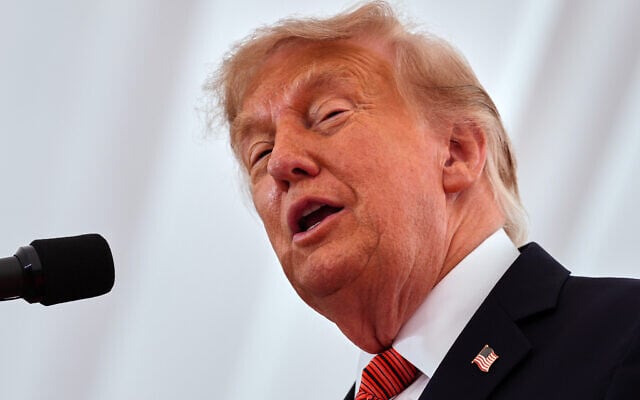
In response to the launch, Trump said the United States will “take care of it.” He told reporters: “It is a situation that we will handle.” He did not elaborate.
An intercontinental ballistic missile test is considered particularly provocative. It would signal further progress by Pyongyang in developing a weapon of mass destruction that could strike the US mainland, which Trump has vowed to prevent — using military force if necessary.
Echoing the initial US assessment, Japan’s Defense Minister Itsunori Onodera said the missile was likely an intercontinental ballistic missile. He said it was launched on highly lofted trajectory and reached a high point exceeding 4,000 kilometers (2,400 miles) — exceeding the height of previous missile tests. He said it flew for about 53 minutes.
“We can assume it was ICBM-class,” Onodera said.
Seoul’s Joint Chiefs of Staff said the US and South Korean militaries were analyzing the launch data from the missile. It said it traveled a distance of 960 kilometers (600 miles) and estimated the apogee at 4,500 kilometers (2796 miles).
In response to the North Korean test, it said South Korea conducted a “precision-strike” drill, firing three missiles, including one with a 1000-kilometer (620-mile) range, to accurately hit a target that stood for the North Korean launch site. South Korea’s presidential office said it was holding a National Security Council meeting Wednesday morning local time to discuss the launch.

Japanese Prime Minister Shinzo Abe called for an emergency meeting of the U.N. Security Council. He said Japan will not back down against any provocation and would maximize pressure on the North in its strong alliance with the U.S.
“We will not tolerate North Korea’s reckless action,” he told reporters.
The test is likely to trigger moves by the U.S. and its allies to condemn North Korea’s latest test as a violation of Security Council resolutions that prohibit its use of ballistic missile technology and possibly seek more sanctions.
Trump has ramped up economic and diplomatic pressure on the North to prevent its development of a nuclear-tipped missile that could strike the U.S. mainland. Thus far, the pressure has failed to get North Korea’s totalitarian government, which views a nuclear arsenal as key to its survival, to return to long-stalled international negotiations on its nuclear program.
UN Security Council President Sebastiano Cardi said he was scheduled to brief the council Wednesday.
Tuesday’s launch came as the U.S. discussed with South Korea next steps on North Korea. The South’s top nuclear negotiator, Lee Do-hoon, was in Washington for talks with Joseph Yun, the US envoy for North Korea policy.
US Secretary of State Rex Tillerson said Tuesday that diplomacy was still an option in US dealings with North Korea, “for now.”
Tillerson called on the international community to take “additional measures” beyond existing sanctions to enhance maritime security, including the right to intercept vessels transporting goods to and from North Korea.
“Diplomatic options remain viable and open, for now. The United States remains committed to finding a peaceful path to denuclearization and to ending belligerent actions by North Korea,” Tillerson said in a statement after the missile test.








The Times of Israel Community.