

Migrants stream out of Calais ‘Jungle’ before demolition
France evacuates squalid shantytown, where thousands displaced by war or escaping poverty waited to build new lives in Britain
 Add ToI as a Preferred Source on Google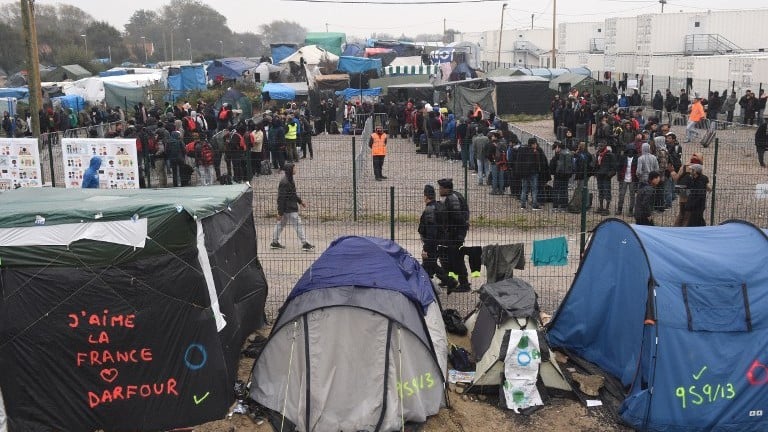
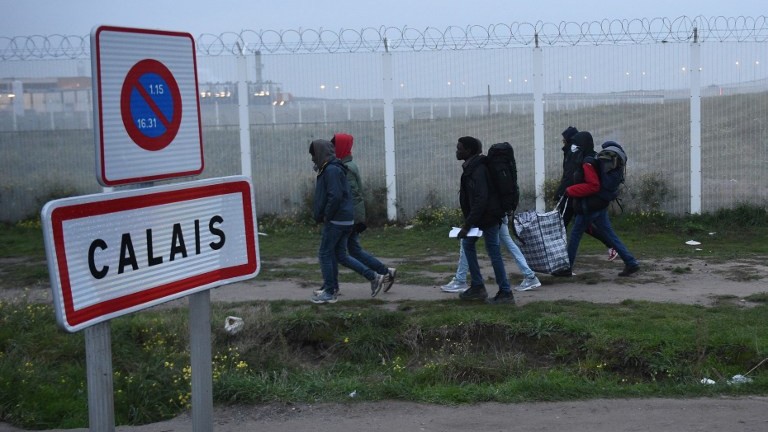
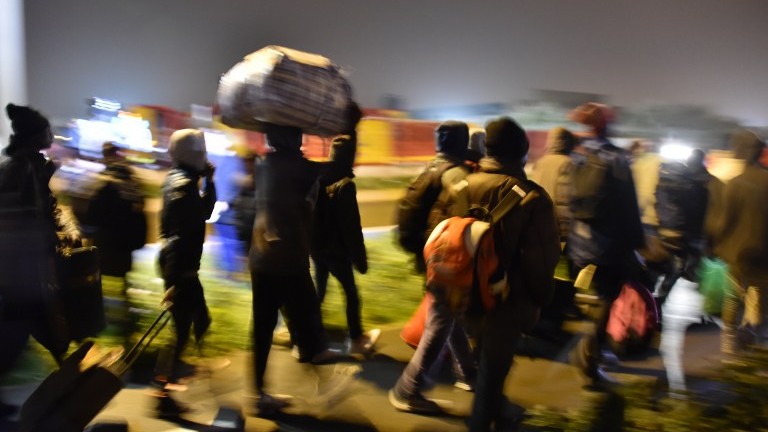
CALAIS (AFP) — Almost 2,000 migrants rode buses out of the Calais “Jungle” on Monday as French authorities kicked off an operation to dismantle the notorious camp that has become a symbol of Europe’s refugee crisis.
“Bye Bye, Jungle!” one group of migrants shouted as they hauled luggage through the muddy lanes of the shantytown where thousands of mainly Afghans, Sudanese and Eritreans had holed up, desperate to sneak into Britain.
A total of 2,318 migrants were “taken to shelter” on the first day of the operation, French Interior Minister Bernard Cazeneuve said.
Of those, 1,918 left Calais on buses for 80 reception centers elsewhere in France and 400 minors were taken to “provisional reception centers” within the camp ahead of their transfer elsewhere, he said.
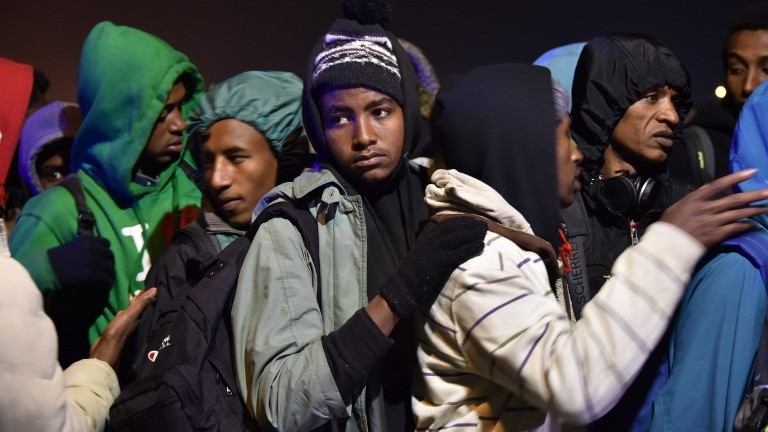
Around 1,200 police officers — some in riot gear — were on hand as hundreds of migrants queued to be put on coaches.
“We don’t know yet where we are going, but it will obviously be better than the Jungle, which was made for animals not humans,” said Wahid, a 23-year-old Afghan.
Police at one point intervened to break up a scuffle but Cazeneuve said the operation proceeded in a generally “calm and orderly manner”.
The Jungle’s hundreds of unaccompanied minors have been the main focus of charities’ concerns.
In an eleventh-hour gesture, Britain has taken in nearly 200 teenagers over the past week, mostly children with relatives in the UK, but the transfers were on hold Monday.
Hundreds more have been interviewed by British immigration officials and many are still awaiting a reply.
They will be provisionally housed with other minors in shipping containers in a part of the Jungle where families had been living.
Cazeneuve said Britain would eventually take in all unaccompanied minors “with proven family links in Great Britain.”
British interior minister Amber Rudd London was contributing up to £36 million (40 million euros, $44 million) towards the operation to clear the Jungle, as well as to help reinforce Britain’s border controls in Calais.
On Tuesday, demolition crews will move in to start tearing down the slum, one of the biggest in Europe where 6,000 to 8,000 people — among them an estimated 1,300 children — have been living in dire conditions.
The operation is set to continue through Wednesday.
Christian Salome, head of the Auberge des Migrants (Migrants’ Hostel) charity, said the process was “working well because these are people who were waiting impatiently to leave”.
“I’m much more concerned about later in the week when the only ones remaining are those who do not want to leave, who still want to reach England,” he said, estimating their number at around 2,000. The interior ministry dismissed that figure as exaggerated.
On Sunday night, the police fired tear gas during sporadic skirmishes with migrants around the camp.
Riots erupted when the authorities razed the southern half of the settlement in March.
‘Is this justice?’
Located on wasteland next to the port of Calais, the four-square-kilometer (1.5-square-mile) Jungle has become a symbol of Europe’s failure to resolve its worst migration crisis since World War II.
More than one million people fleeing war and poverty in the Middle East, Asia and Africa poured into Europe last year, sowing divisions across the 28-nation bloc and fueling the rise of far-right parties, including France’s own National Front.
Those seeking to smuggle themselves into Britain, believing it to offer better chances of work and integration than France, have been converging on Calais for well over a decade. The first makeshift camp on the site of the Jungle dates back to 2002.
Over the past year, police in the northern town have been battling near nightly attempts by migrants to climb onto trucks heading across the Channel.
Karhazi, a young Afghan, sounded a defiant note: “They’ll have to force us to leave. We want to go to Britain.”
The redistribution of the migrants is a risky enterprise for Socialist President Francois Hollande, coming six months before national elections in which migration will be a key issue.
Some French people have opposed plans to resettle asylum-seekers in their communities.
Risk of deportation
French authorities say those who agree to be relocated can apply for asylum in France. Those who resist face possible deportation.
Jean-Marc Puissesseau, chief executive of Calais port where migrants in January briefly occupied a ferry, told Britain’s BBC radio he was “a very, very happy man.”
“It’s for us really the D-Day,” he said, hailing an end to the “constant stress” of drivers fearful of being ambushed by migrants. Dozens of people have been killed on the road or while trying up to jump onto passing trains.
Puissesseau warned that new camps would sprout up around Calais unless police remained vigilant.
A Syrian man told AFP he had decamped from the Jungle at the weekend to another site about 12 kilometers (7 miles) away, along with dozens of other migrants.










The Times of Israel Community.