

Most Israelis think bid to limit Supreme Court endangers democracy — poll
Israel Democracy Institute survey finds 65 percent of public believe proposed legislation would give government ‘unlimited power’
 Add ToI as a Preferred Source on Google
Raoul Wootliff is a former Times of Israel political correspondent and Daily Briefing podcast producer.
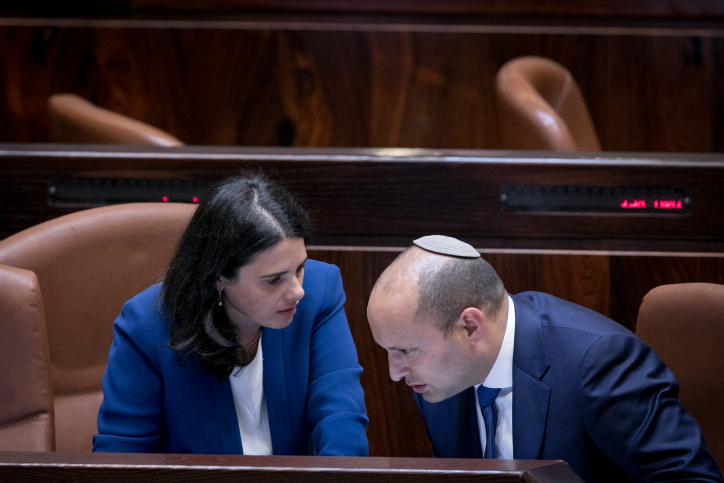
As Prime Minister Benjamin Netanyahu’s coalition partners push for legislation to limit the Supreme Court’s ability to disqualify Knesset legislation, a new poll released Sunday suggests that a majority of Israelis believe the law could endanger the country’s democracy.
The survey, published by the Israel Democracy Institute, found that 65 percent of the Israeli public believes that if the Supreme Court is denied the power to strike down laws enacted by the Knesset, there will be no checks on the government and it will be granted “unlimited power.”
Furthermore, 59% of respondents think the law would raise the risk of political corruption.
Just 28% said that passing the so-called supercession bill would be “in the best interest of the Israeli state,” according to the poll.
The legislation proposed by the right-wing Jewish Home coalition party would allow 61 out of the Knesset’s 120 members to re-approve laws struck down by the Supreme Court — when it sits as the High Court of Justice, Israel’s supreme constitutional tribunal — effectively giving any government the ability to quash court rulings.
The legislation would take the form of a passage added to the Basic Law: Human Dignity and Liberty. In the absence of a constitution, Israel’s basic laws set the parameters of the balance of power between different branches of government.
Netanyhau met with Supreme Court Chief Justice Esther Hayut and Justice Minister Ayelet Shaked on Sunday in a bid to hammer out a compromise on the constitutional reform.
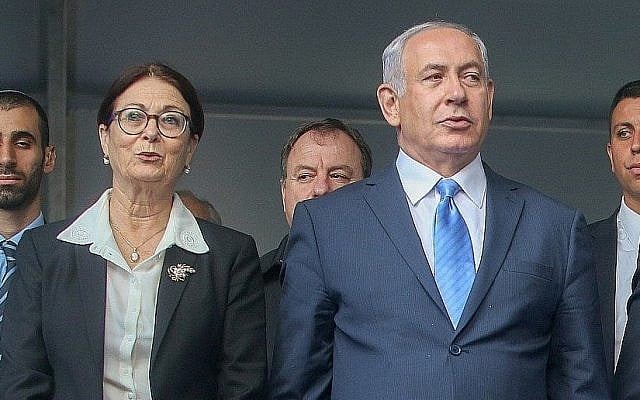
During the Sunday discussion, Hayut warned against setting a bar for such a vote at a simple majority of parliament — 61 votes in the 120-seat Knesset — a figure any ruling coalition in Israel’s parliamentary system is almost guaranteed to possess.
Such a low bar was a “danger to democracy and to the court,” she is said to have warned, according to Hebrew-language reports. She also insisted that the High Court overturns Knesset legislation only in “extreme” cases.
“The meeting lasted about two hours,” the Prime Minister’s Office said in a laconic statement Sunday afternoon. “The different views were heard and the discussion was thorough and serious.”
Attorney General Avichai Mandelblit has urged the government to pursue a supercession majority of 70 MKs as a means of ensuring that only a significant majority can pass a law deemed unconstitutional by the High Court.
Netanyahu initiated Sunday’s meeting with Hayut at Mandelblit’s suggestion.
Public Security Minister Gilad Erdan rejected Mandelblit’s suggestion of a higher vote requirement on Sunday.
If the figure is higher than 65 votes, “it would cancel out the entire purpose of the supercession clause,” he said at the start of Sunday’s weekly cabinet meeting.
The leaders of the right-wing Jewish Home party, Shaked and Education Minister Naftali Bennett, agreed to delay a vote in the cabinet’s Ministerial Committee for Legislation set for Sunday in order to allow the Netanyahu-Hayut meeting to take place.
But in a statement Sunday, the party said, “we agreed last night to the prime minister’s request to delay the vote on the supercession clause by one week in order to allow for a deeper discussion and examination of the issue. But the Jewish Home faction is determined to pass the supercession clause, the most significant constitutional change in 25 years.”
In 1992, the Knesset passed two landmark Basic Laws, “Human Dignity and Liberty” and “Freedom of Vocation,” on which the High Court has relied for many rulings that angered the right.






The Times of Israel Community.