

Netanyahu and Ya’alon bury the hatchet — until the next time
Tension between prime minister and defense minister appears settled for now, but underlying issues go unresolved
 Add ToI as a Preferred Source on Google
Judah Ari Gross is The Times of Israel's religions and Diaspora affairs correspondent.
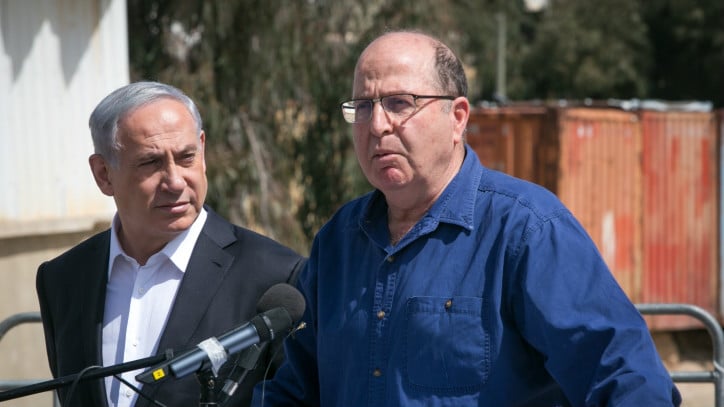
The latest dust-up between Prime Minister Benjamin Netanyahu and Defense Minister Moshe Ya’alon may be behind us, but underlying discord all but guarantees the two will be at it again in the near future.
The most recent spat was ostensibly triggered by a speech delivered by Ya’alon on Sunday night, in which he appeared to contradict the prime minister on the issue of political expression among army officers. The defense minister later clarified his position, denying he had intended to oppose Netanyahu or encourage military officials to make political statements.
The two came to an agreement on Monday morning, with the release of a joint statement that effectively told the country: “Go about your business, there’s nothing to see here.”
The origins of the public rift between the two men can be traced back to a number of issues, most of which have far more to do with the political realities facing Netanyahu than with any substantial policy differences.
Sitting pretty in the Defense Ministry for over three years, Ya’alon has been consistent in his positions. Bogie — as the defense minister is known — circa 2016 is essentially Bogie circa 2013.
Netanyahu, meanwhile, has had to contend with a shifting political landscape.
The prime minister’s Likud party has been in coalition expansion talks with the right-wing Yisrael Beytenu party, led by Avigdor Liberman, who has been gunning for Ya’alon’s ministerial position for well over a year. With just a one-seat majority in the Knesset, a desperate Netanyahu could potentially be looking to expand his government by offering Liberman Ya’alon’s prestigious seat in his cabinet.
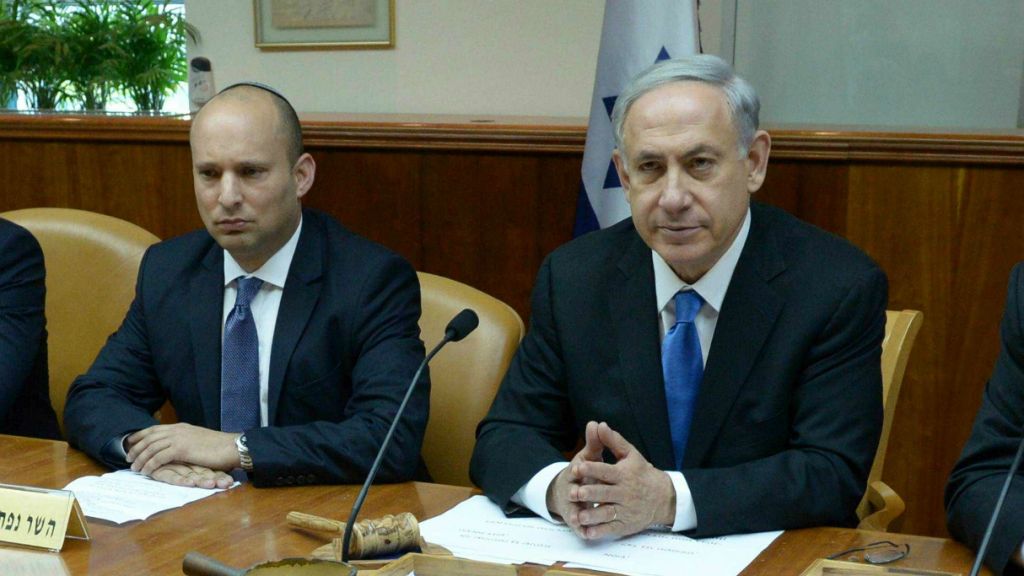
All the while, Jewish Home leader Naftali Bennett has been needling Netanyahu from the right, forcing the prime minister to adopt tougher stances in order to maintain his razor-thin edge, something he didn’t have to do in the past.
The push to the right and the allure of a stronger coalition have put Netanyahu at odds with Ya’alon, who doesn’t appear to be making an effort to realign himself with the prime minister in light of the shifting landscape.
Ya’alon’s Sunday speech, which instructed officers to “speak their minds” even in the face of opposition from the political leadership, brought the situation to a head. (It is worth noting that the defense minister’s speech never called for any sort of military “junta,” as Likud MK and devout Ya’alon-basher Oren Hazan would describe it. Nor did he call for generals to speak their minds publicly, but rather to voice their opinions “at the discussion table.”)
Before Ya’alon’s address had even ended, Netanyahu summoned him to a meeting first thing the next morning to “clarify” his intentions. In the barely 12 hours between Netanyahu’s summons and the meeting itself, rumors swirled over the possibility that Ya’alon could be fired from his position.
Ultimately the latest firestorm was resolved with a bland, two-sentence statement issued in both men’s names: “Prime Minister Netanyahu and Defense Minister Ya’alon met this morning and clarified the matter. There is no dispute, nor was there ever, as to the army being subordinate to the political echelon, and officers are free to express their views in relevant forums.”
The joint statement was all but meaningless and did nothing to address the core issues.
By Tuesday, the defense minister was delivering another long speech at a conference in Zichron Yaakov. A 13-page printout of the address contained nary a word about the tiff that some had hazarded would spell Ya’alon’s political downfall. It was as though the incident had never taken place. For the time being, all is quiet again.








The Times of Israel Community.