

Obama: Diplomacy that produced Iran deal needed for Mideast peace
President repeats claim that Israeli intelligence officials now support nuclear accord, as he lists his security accomplishments to troops
 Add ToI as a Preferred Source on Google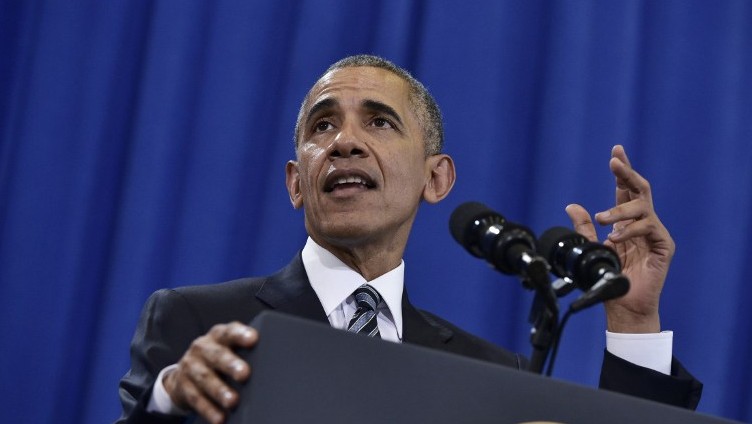
US President Barack Obama touted the effectiveness of the nuclear deal with Iran Tuesday in his final address on national security, and said such feats of diplomacy could be a model by which to achieve Mideast peace.
“Just think about what we’ve done these last eight years without firing a shot. We’ve rolled back Iran’s nuclear program,” he told gathered troops at MacDill Air Force Base in Tampa, Florida.
“That’s not just my assessment, that’s the assessment of Israeli intelligence, even though they were opposed to the deal,” he said.
“Sustained diplomatic efforts, no matter how frustrating or difficult they sometimes appear, are going to be required to resolve the conflicts roiling the in Middle East, from Yemen, to Syria, to Israel and Palestine.”
Obama has claimed a turnaround by Israeli officials in the past. In August he said Israeli defense leaders were now behind the deal. The “Israeli military and security community…acknowledges this has been a game changer,” he said. “The country that was most opposed to the deal.”
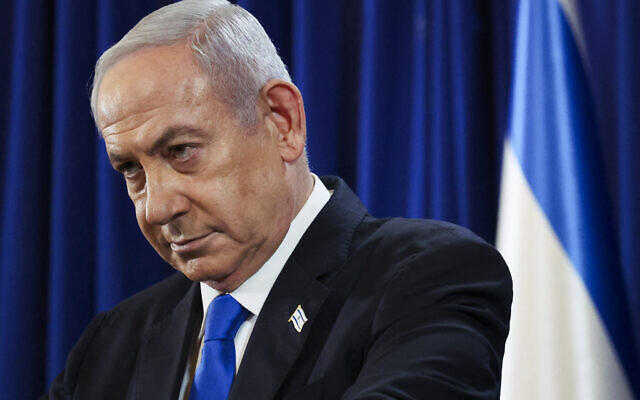
Israel rejected that assessment at the time, with Prime Minister Benjamin Netanyahu saying Israel’s stance had not changed, while the Defense Ministry compared the accord to the Munich Agreement signed by the European powers with Nazi Germany in 1938. The ministry later apologized for the comparison.
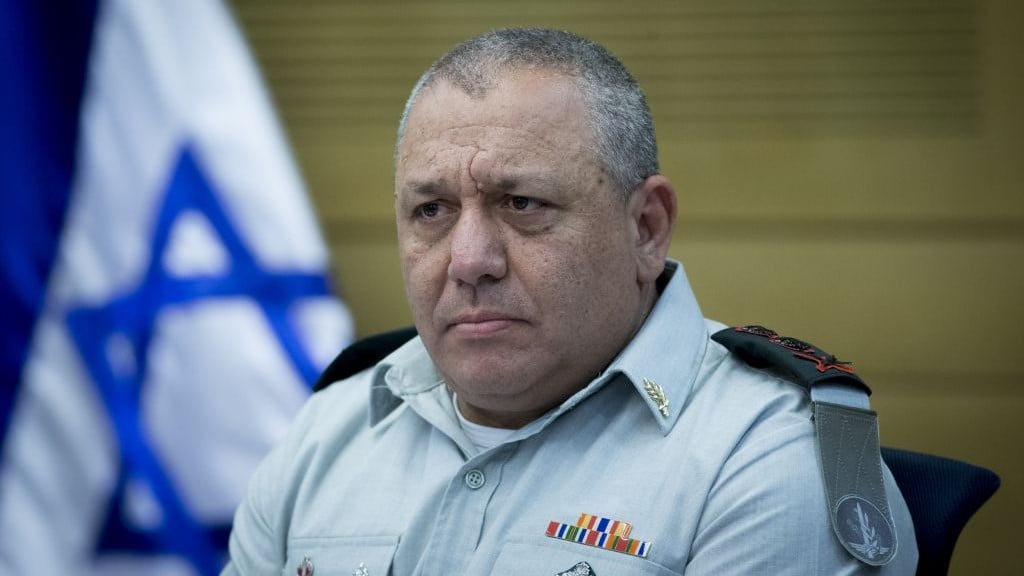
Some high-level former and current Israeli defense figures have spoken out in sometimes conditional defense of the nuclear deal. Chief of staff Gadi Eisenkot said warily in January that it could present “opportunities” in the future but also raised concerns at the “challenges” it poses.
Obama on Tuesday went on to defend his approach to the fight against terror, calling for coalition-building to continue battlefield successes while rejecting the use of torture.
Highlighting the lines drawn during his eight years as commander in chief, Obama did not mention Donald Trump by name, but he clearly addressed his successor, who has yet to spell out his own counterterrorism strategy.
“Rather than offer false promises that we can eliminate terrorism by dropping more bombs or deploying more and more troops or fencing ourselves off from the rest of the world, we have to take a long view of the terrorist threat,” Obama said.
“And we have to pursue a smart strategy that can be sustained.”
Obama claimed a clear break from the strategy under former president George W. Bush, highlighting the withdrawal of most US troops from Iraq and Afghanistan, from 180,000 to about 15,000 today. That number also includes advisers in Syria.
“Instead of pushing all of the burden onto American ground troops, instead of trying to mount invasions wherever terrorists appear, we’ve built a network of partners,” he said.
Obama also defended his approach to fighting the Islamic State group in Iraq and Syria, much of it centered around an intense air strike campaign directed from MacDill Air Force Base.
The installation, where the president gave his speech, houses the headquarters of US Special Operations Command and CENTCOM, the US military’s command for operations stretching from the Gulf to Central Asia.
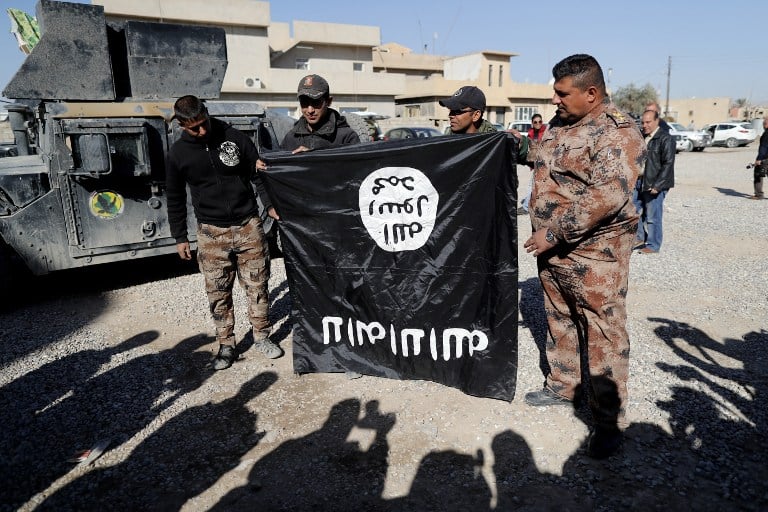
The jihadist group that wants to establish a “caliphate” straddling the two countries has lost “more than half” its territory, Obama said.
“ISIL has lost control of major population centers. Its morale is plummeting. Its recruitment is drying up. Its commanders and external plotters are being taken out, and local populations are turning against it.”
Obama, who authorized the strike to take out al-Qaeda leader Osama bin Laden, said that the group was now “a shadow of its former self.”
Obama stressed that the fight against terror should not come at the expense of civil rights and American democratic traditions.
“We need the wisdom to see that upholding our values and adhering to the rule of law is not a weakness. In the long term, it is our greatest strength,” he said to sustained applause.
Trump, who has pledged to upend his predecessor’s entire agenda including foreign and security policy, takes over in the White House in just over six weeks.
He has not yet announced a nominee to head the State Department and has been vague at best about how he plans to defeat IS, but on the campaign trail he insisted that America must be “unpredictable” in order to win.
Obama touched on issues like torture that had provoked controversy during Trump’s White House run. The 44th president had banned extreme CIA interrogation techniques used on terror detainees as soon as he took office.
“We prohibited torture everywhere at all times and that includes tactics like waterboarding,” he said.
“And at no time has anybody who has worked with me told me that doing so has cost us good intelligence.”
On the campaign trail, Trump pledged to restore waterboarding — a form of simulated drowning widely regarded as torture — and permit “far, far worse.”
But since his election, he seems to be softening his views — a change that may reflect the influence of his nominee to head the Pentagon, retired marine general James Mattis.
Still, the threat of global terror will remain an issue “for years to come,” Obama said.
He cautioned that extremists do not represent American Muslims, and that the US should never impose a religious test on its people, a reference to another controversial Trump campaign proposal.
“We’re a nation that believes freedom can never be taken for granted. And that each of us has a responsibility to sustain it, the universal right to speak your minds and to protest against authority, to live in a society that’s open and free, that can criticize our president without retribution.”




The Times of Israel Community.