

On Ukraine border, dual citizens nervously rely on Israeli travel papers to flee war
Diplomats cross into Ukraine daily to issue travel documents to Ukrainian-Israelis, hopefully enabling men of military age to leave despite ban
 Add ToI as a Preferred Source on Google
Carrie Keller-Lynn is a former political and legal correspondent for The Times of Israel
KRAKOVETS, Ukraine – As the journey from Lviv to the Polish border entered its 10th hour, tensions on the bus of mostly Ukrainian-Israeli dual citizens reached their zenith.
On paper, the gambit seemed like a good idea. Ukrainian men, officially barred from leaving the country, had been given Israeli travel documents by diplomats who had crossed back into the war-torn country expressly to help spirit the group out of danger.
Now, after a mostly quiet ride from Lviv, the bus was idling with Poland just beyond reach. Thirty minutes earlier, the group had given over their newly issued papers to border guards to examine them. As the minutes ticked by, doubts that the handwritten travel papers would be accepted crept in.
Someone cracked a nervous joke, but not everyone appreciated the attempt at levity.
“It’s not funny,” a male passenger snapped back.
“We have no idea if they’ll pass [border control],” Israeli consul Alon Shoham had said earlier in the day. “It depends on who is present at the border, and whether the authorities present identify them as Ukrainian or Israeli.”
Under an emergency order issued shortly after Russia’s February 24 invasion of Ukraine, male citizens aged 18-60 are prohibited from leaving the embattled nation, should they be needed for military service. But by using Israeli papers and hiding their Ukrainian citizenship, dual citizens have been making it out with their families.
According to Israeli and European officials, the number of refugees attempting to leave Ukraine has slowed to a trickle in recent days. Some 3.5 million Ukrainians have already fled the country, while another 6.5 million have been displaced internally.
Many of those streaming toward the border are holdouts that had tried to wait out the war, but have since concluded that the situation is too volatile to remain. Rather than exhaling a gasp of relief upon approaching the border, families openly carry a heavy heart.
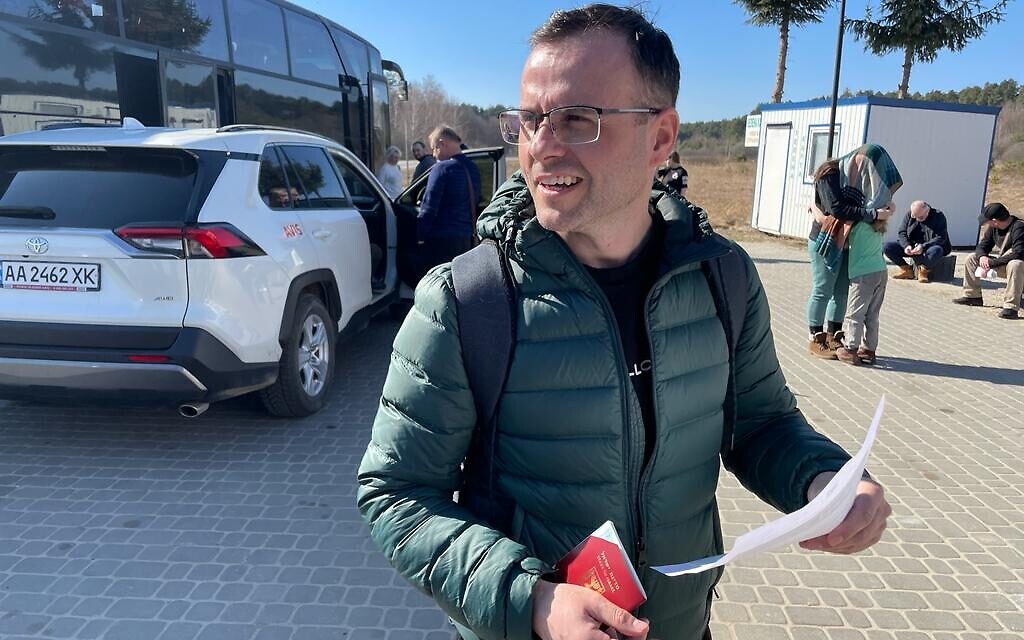
“I hoped it would end sooner,” said Alex Gonchor, from the suburbs of Kyiv. “I waited and waited, and finally understood that it wasn’t ending quickly and that I needed to get my kids out of here.”
“The problem is not just the war, it’s that my city is destroyed,” said Gonchor, flipping through photos of the destruction that his friends sent him. “I hope to have a house to go back to.”
Gonchor was one of 25 people who had boarded the outdated couch bus in Lviv Wednesday morning. As the bus lumbered toward the Polish border crossing at Krakovets, a deafening silence blanketed the group, who sadly internalized the fact that they were being forced to flee their homeland.
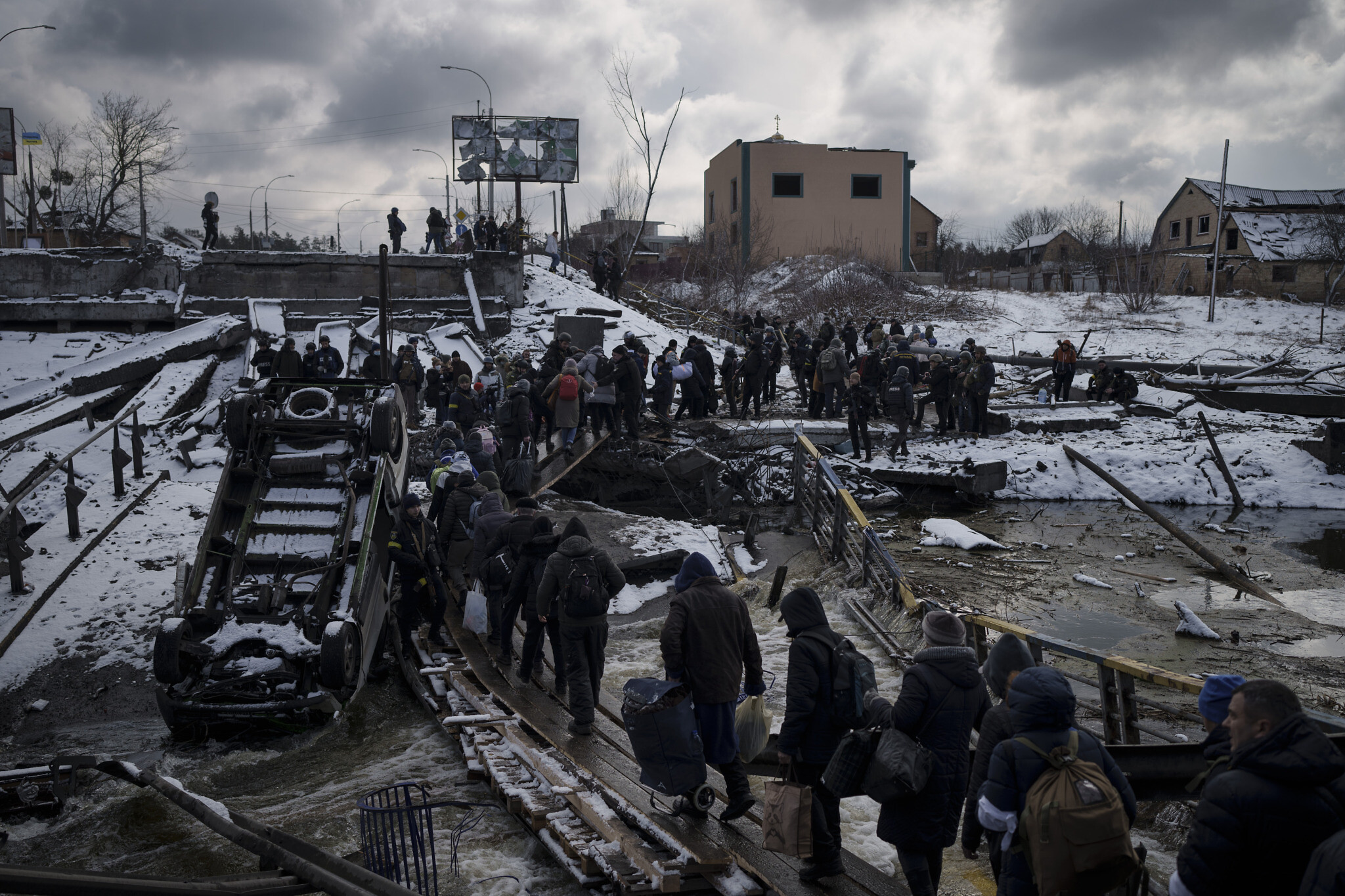
Israeli diplomats have been at the forefront of helping refugees leave, including venturing into Ukraine to provide papers for those who might not be able to leave otherwise.
This bus itself was half full, but just last week, Foreign Ministry-arranged buses were at capacity, albeit with a minority of Israelis aboard.
“It started as 10 buses a day and now it’s one daily,” said Shoham, part of the Israeli mission to Ukraine, which is currently operating out of Przemyśl, Poland.
The change felt especially stark in Lviv, a western Ukrainian city that had become a hub for internally displaced and transiting refugees during the war’s first weeks. While a week ago train stations and shelters were struggling to accommodate newly arrived escapees, on Wednesday, the same central station was almost empty and an adjacent humanitarian aid camp had more aid workers than aid seekers.
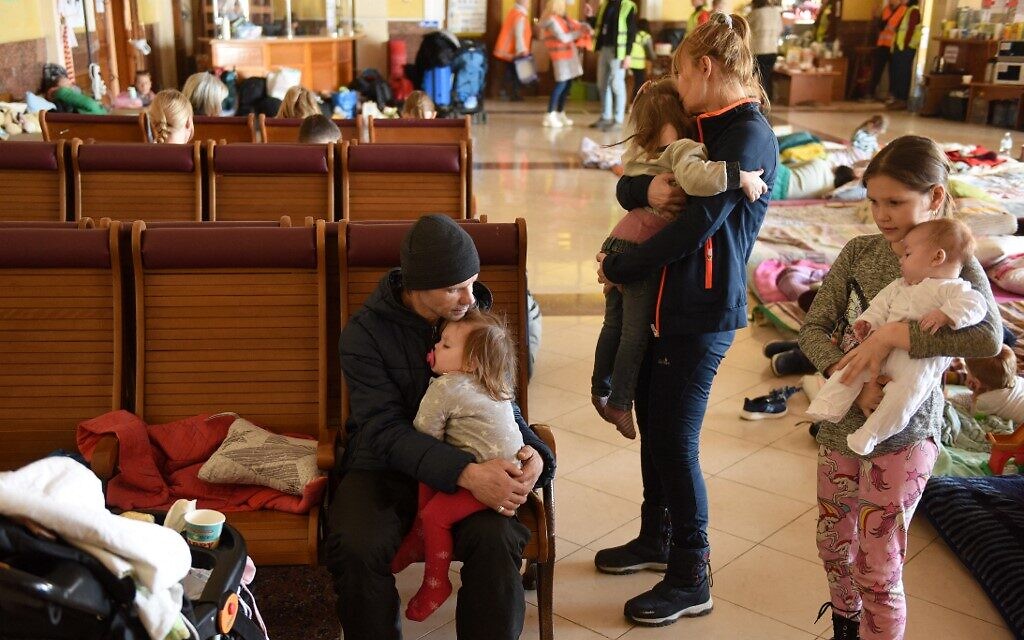
Israeli diplomats think the lull won’t last. The embassy is already preparing to evacuate a second wave of Israelis and Jews who are currently trapped in embattled cities, once they can get to western Ukraine.
“We’re in a pause where things have calmed down, but we expect it to get busy again as soon as humanitarian corridors open from the east,” Shoham said.
Rest stop rescue
Gonchor, a Ukrainian-Israeli dual citizen of fighting age, is technically subject to Ukraine’s martial order to remain in country, in case he be called upon to defend the country.
To get him and others out of the country, Israeli diplomats have been crossing into Ukraine to issue laissez-passer travel documents, which function as emergency passports, though border guards can refuse to honor them if they suspect the pass holder is also a Ukrainian citizen barred from leaving.
Shoham said it could go either way. There were “a handful of cases” in which a dual Ukrainian-Israeli citizen presenting an Israeli travel document was prohibited from crossing, he said.
As the bus neared the Polish border, it pulled into a rest stop to wait for Israeli diplomats to arrive from across the border in Poland.
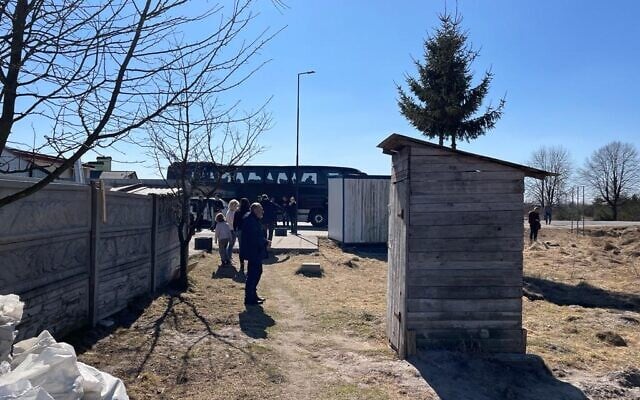
The spartan turnoff sported little more than an open-sewer outhouse, roaming chickens, and a spot in the sun for passengers to stretch their legs, walk their cats, and wait.
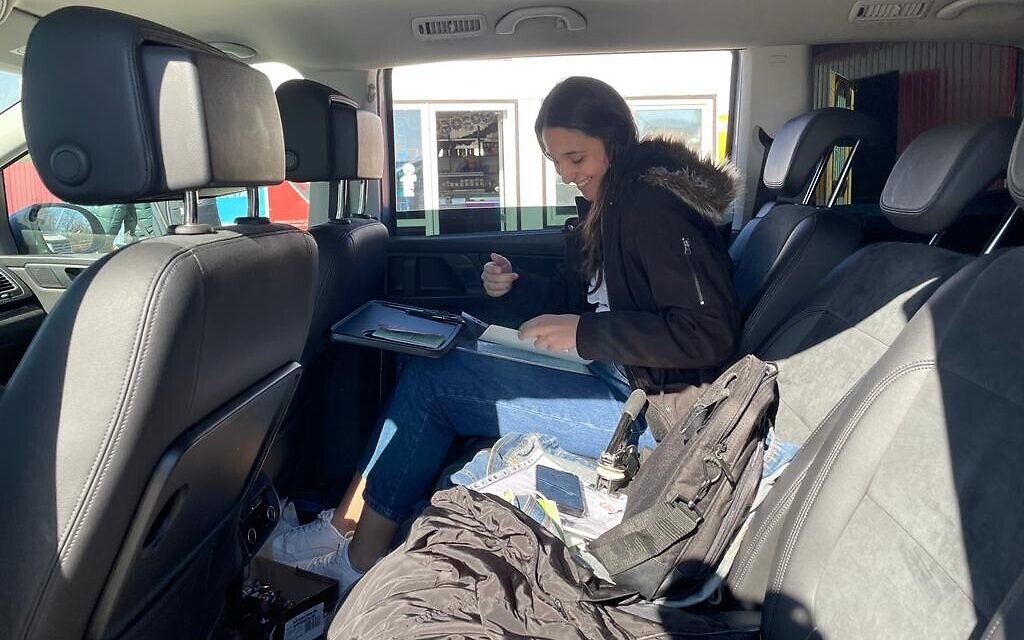
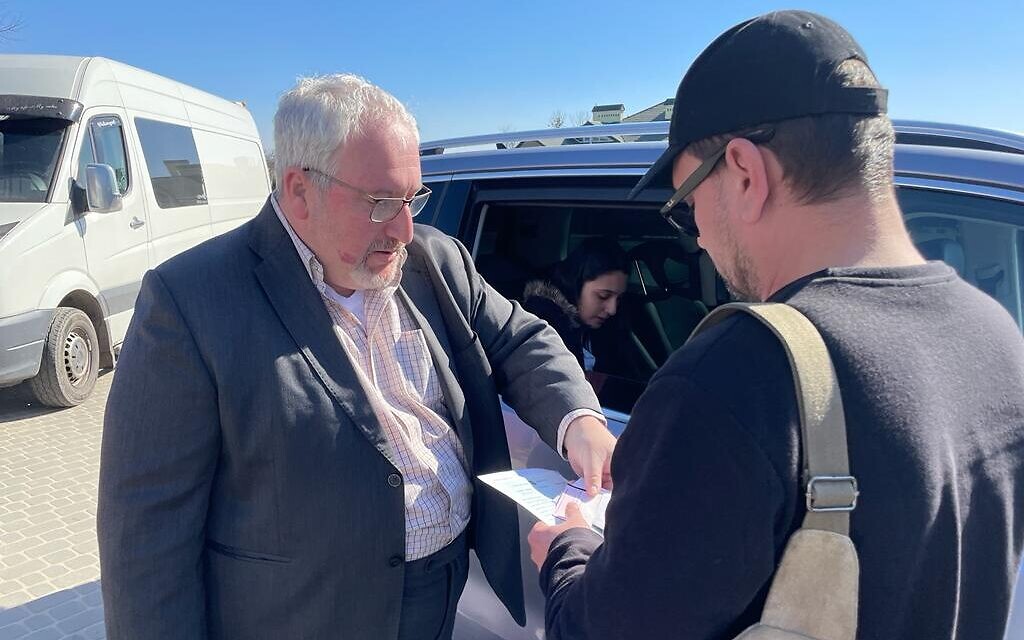
After an hour, a mobile Israeli consulate arrived, adorned with Polish diplomatic plates and carrying Shoham, diplomatic staff, and the tools to create laissez-passer travel permits on the fly to the majority of bus passengers who didn’t have valid Israeli passports.
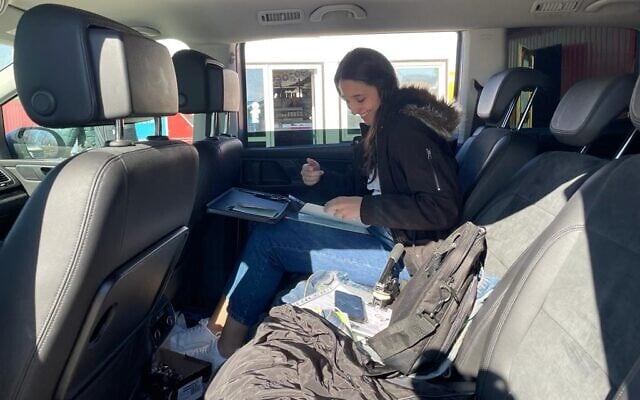
Over the course an hour, the Israeli embassy team checked documents, handwrote approvals, and using a glue stick, assembled legal travel documents that would enable dual citizens to cross the border in order to head toward Israel.
“We are the only country in the world doing this, coming [into Ukraine] to take care of citizens even after evacuating our embassy,” Shoham said.
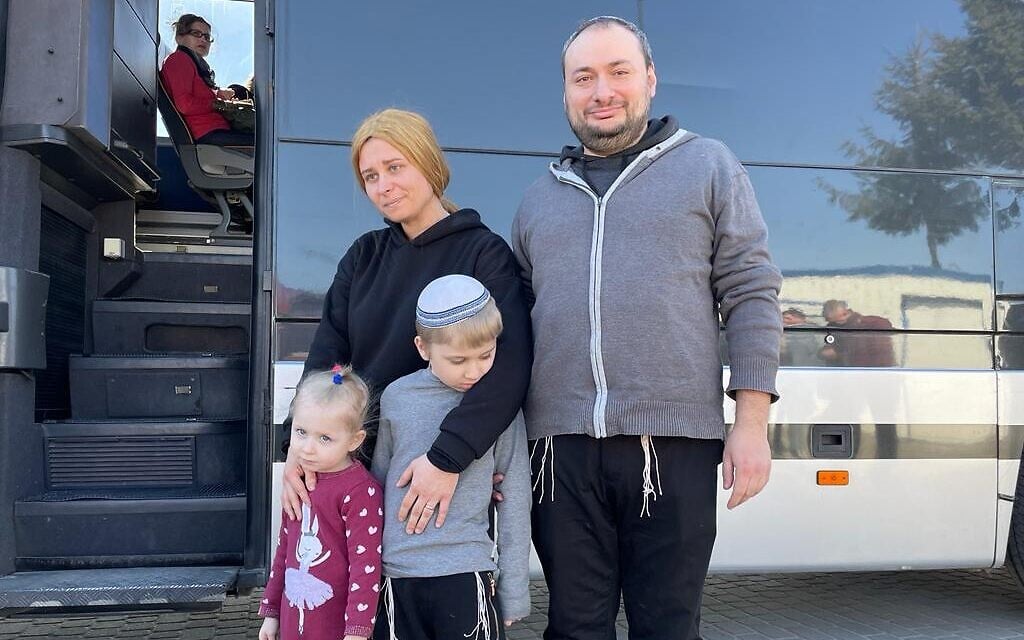
Also on the bus were the Groismans, a religiously observant Jewish family from Kyiv.
The family had left their home immediately upon Russia’s invasion, and had been bouncing around family homes across Ukraine since. Now they had decided to flee.
Meira Groisman, a conservative women’s wear professional, her kosher certifier husband Aaron, and their two children are also Ukrainian-Israeli dual citizens. But the children needed their documents refreshed, and so the family was issued travel documents at the rest stop.
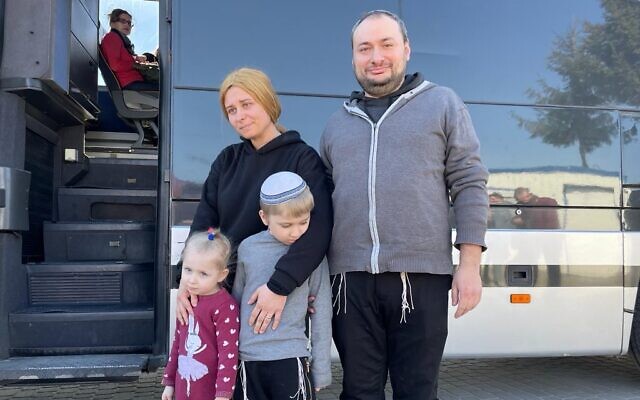
“We were waiting for it to get better and it didn’t,” Meira Groisman said.
The decision to leave had not been an easy one.
“In Israel, it’ll be hard because we don’t have anything. Here, we have everything we need: an apartment, family, work,” she said.
That difficult journey would be even harder if they were split up. “I hope Aaron will make it through,” she said.
Let my people cross
Roads approaching the border were better than only a few days previous, but congested enough that the coach bus’s driver entered a lane on the opposite side of the highway in an attempt to bypass nearly a kilometer of backed up traffic.
Among those already at the border were Gonchor’s wife and two daughters who had went ahead and were waiting for him in hopes of crossing as a family.
“I hope it’ll be fine,” he said.
After waiting for several hours, Gonchor, Aaron Groisman, and fellow traveling Ukrainian-Israelis of military age presented their brand new laissez-passer to border control, standing firm against repeated requests to produce a Ukrainian passport.
Doubtful that Ukrainian speakers with Ukrainian names on their way out of Ukraine really lacked Ukrainian citizenship or documentation of such, the border control guard gave brief interrogations. Eventually she muttered, “Israelis, huh?” and walked away with their travel documents.
After a tense 30 minutes she returned, handed over a stack of papers and left without saying a word. They were free to cross.
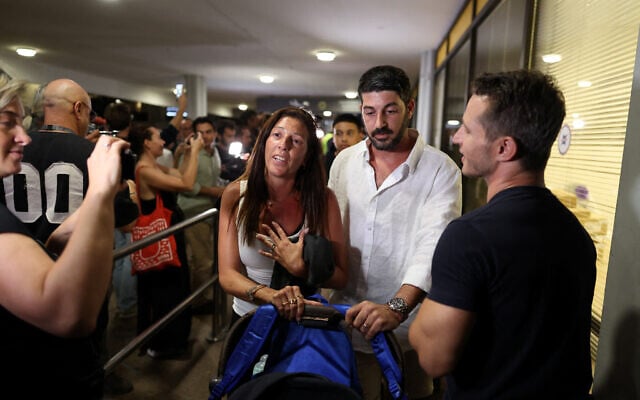
As the bus lurched forward towards the Polish border, loud cries of exclamation emanated from the seats, cheering started, and in the same breath, a collective exhale and the first idle chatter of the day was heard.
What felt like the end of a journey was actually just a start, this time without Israeli consular support.
As the bus disgorged its passengers, the Groismans huddled together, Gonchor waited to hug his wife and children, and everyone began taking their next step toward figuring out whatever comes next.





The Times of Israel Community.