

Once clean-shaven, Israelis no longer bristling at beards
The founders of Barberia and Maapilim believe in facial hair and grooming, and not just for hipsters, either
 Add ToI as a Preferred Source on Google
Jessica Steinberg, The Times of Israel's culture and lifestyles editor, covers the Sabra scene from south to north and back to the center

Beards, that trendy mark of male facial splendor, are said to be on their way out in New York and Los Angeles.
In Israel, however, they’re still around. And growing.
“I hate to call it a trend,” though, said Asaf Gorelik, the founder of Barberia, a chain of hipsterish barber shops in Tel Aviv and Haifa. “It’s kind of binary — you either have it or you don’t.”
Gorelik has a beard, of course, a well-trimmed set of whiskers that matches his slightly mussed brown hair.

“It’s natural to keep your facial hair going,” he said. “Around 99% of guys look better with a beard.”
If you don’t count the thousands of beards grown by Israeli ultra-Orthodox men for religious reasons — following the biblical edict to avoid shaving the edges of one’s beard — Gorelik thinks it has taken longer for the beard trend to catch on in Israel because of the military, where regulations forbid face fuzz.
In a land where faces are shaved clean from the ages of 18-22, and sunglasses often perched on top of a shorn head, men are not used to having beards, and that extends from 20-year-old soldiers to middle-aged lawyers, he said.
“Some people don’t like the way it feels when a bearded man shows them love, some workplaces don’t approve, and some dudes lack discipline to wait out the itchy stage,” he said.
That sensibility is changing. Thanks to more than a few bearded men on the street, taming one’s facial hair is now a thing, along with barbers to trim them, and experts and products for grooming one’s face and head.
“There have been advances,” said Matan Haverim, a barber in Pisgat Ze’ev in Jerusalem, whose barber shop works only with men and children. “A beard isn’t comfortable on the skin; it gets dry and it can get smelly and itchy, and it’s right there on your cheeks. You have to take care of it and invest in it.”
Many of his customers, religious men with beards, are more than happy to have better ways of tending their bristles.
“They remember how it used to be,” he said. “No one wants an itchy beard, Jewish law or not.”

Mustaches and beards sometimes get food caught in them, and have to be kept clean, said Jonathan Keren, a Tel Avivian with a penchant for facial hair.
“It’s kind of gross to have a dirty beard,” said Keren, who sports a longish, soft brown beard.
For a while, Keren, a former music producer and later the marketing manager at Wix, would shop during business trips in the US for what he calls “indie boutique male grooming products” and bring them home to Israel.
There just wasn’t anything comparable in Israel.
“Manliness is so rigid in Israel,” said Keren. “We don’t consider ourselves feminine at all for keeping ourselves moisturized, I just want my skin to feel good. And I wanted to go into a store that would have a really wide range of products for men. But everything in the market was either masculine products by a feminine manufacturer, or skulls on the container.’
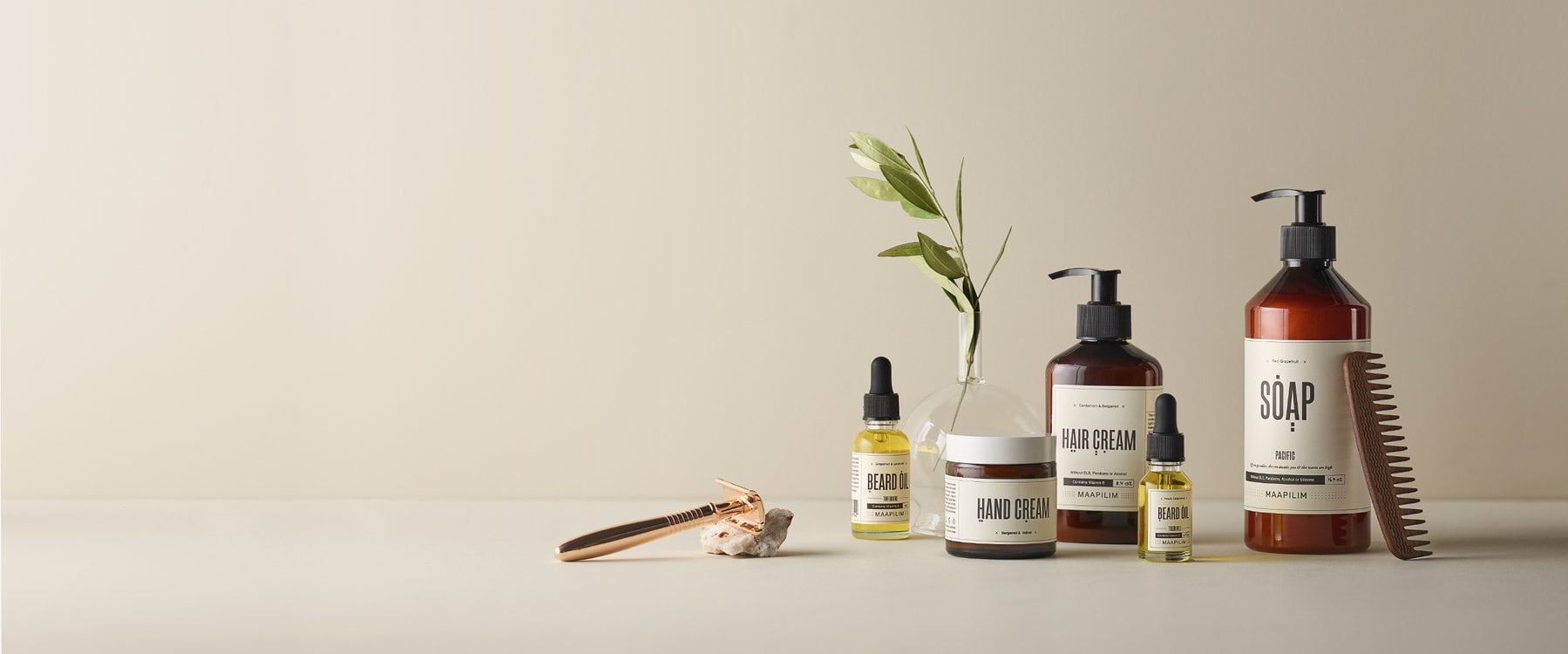
Keren began experimenting with essential oils — the oils extracted from plants using distillation — and using YouTube demos, he spent hours working with the oils, mixing woodsy and citrus scents, seeing what happened when you added pepper or bergamon or lavender.

“It was a passion project,” said Keren, albeit one he was heavily invested in, eventually taking an online, high school-level chemistry course in order to better understand what he was mixing.
Keren and his life partner, Doron Baduach, a designer at Wix who sports a chin puff, a small patch of hair just on his chin — eventually figured out they were onto something and launched a website.
They called it Maapilim, the biblical name for the Israelites who went into the land of Israel without permission, as well as the later term for Jews who immigrated illegally to Palestine during the British Mandate period.
Each delivery box receives two drops of pine oil, to instill that smell of the Carmel Forest, the pine-filled mountain just above Haifa, where Keren grew up.
“We try to make our products feel like a vacation in the Mediterranean, mint and olive oil, all that vibe and scent,” said Keren.
These two male grooming pioneers, Gorelik and Keren, first met at Barberia’s first location, a one-chair barber shop in Jaffa.
The store itself was a complete failure, said Gorelik, but one of his first clients was Keren.
“He wasn’t a male grooming guy back then, but he had the bug,” he said.
Gorelik closed that first location, but eventually met Ziv Friedman, now the head barber at Barberia and his business partner — who sports a full, curly black beard — and the two opened up their first official Barberia location a year later on Dizengoff.

They now have 20 barbers in three locations, including Haifa, with customers, who range from guys in their twenties to men in their fifties, both hipsters and hippies, gay and straight.
“It’s a place that’s cool enough for the coolest guys in the city, but not intimidating or unapproachable for a shy guy,” said Gorelik.
Soon after Gorelik opened Barberia, Keren left Wix and went the startup route with Maapilim, working with chemists to create a line of 25 products, producing the toiletries — which are certified OU kosher — at three different factories.
Just a year and a half after going full-time, Maapilim has already been featured in the New York Times and Forbes, as one of the top ten grooming products for guys in 2017. They’ve also hosted pop-up shops and art shows, featuring men, their beards and the scents that inspire them.
And right at the entrance of Barberia’s Herzl Street location, along with the retro grooming kits and Shapira beer on tap, is a display case full of Maapilim products.
Truth be told, most Israeli guys do not really know how to use this stuff, said Alex Goz, the Barberia manager carrying on the profession of his Russian grandfather, who was also a barber.
“It’s really warm here in Israel,” he said. “Putting oil on your beard? That’s tough in the hot summer. But beard shampoo? You should do that twice a week.”
As expected, Maapilim’s beard shampoo is lined up next to each sink in Barberia.

The Barberia barbers, draped in heavy, 1920s styles aprons with leather tabs, trim, shave and hot towel their steady stream of customers, who lean back in antique barber chairs Gorelik curates from the US.
Barberia is a modern barber shop with old school values and a high-tech approach, said Gorelik. He’s aiming to add more e-commerce options to his website, as well as conventional booking via WhatsApp and possibly bitcoin for payment. He also brings in master barbers from London to offer advanced training to his barbers.
But it’s really all about hair, and the beards.
“What men love here is that they’re finally getting paid attention to,” said Goz. “We show them how to love their hair, and to get a man to groom himself, something that wasn’t here for many years. Since the 1970s.”
He blames The Beatles and the Rolling Stones, those hippy years when men’s grooming took a back seat.

“Men used to go to barbers, to dress well and groom themselves,” said Keren. “Now they’re all just sloppy Joes.”
“We’re slowly giving them products to take care of themselves, convincing them not to take their wife’s facial soap,” said Goz.
“What’s interesting about Maapilim and Barberia is that neither of us was born and raised in this industry,” said Gorelik. “We bring something else to the game. We’re not confined or bound by any previous misconceptions.”
Except for their beards. Always the beards.








The Times of Israel Community.