

Piercing animated Anne Frank film focuses on the little girl behind the symbol
Debuting at Cannes, Israeli director Ari Folman’s newest release embraces the vibrant world of animated fantasy as it artfully reframes the iconic diary through modern teenage eyes
 Add ToI as a Preferred Source on Google
Jordan Hoffman, a member of the New York Film Critics Circle, is The Times of Israel's long-time film reviewer and the co-host of The Reel Schmooze.
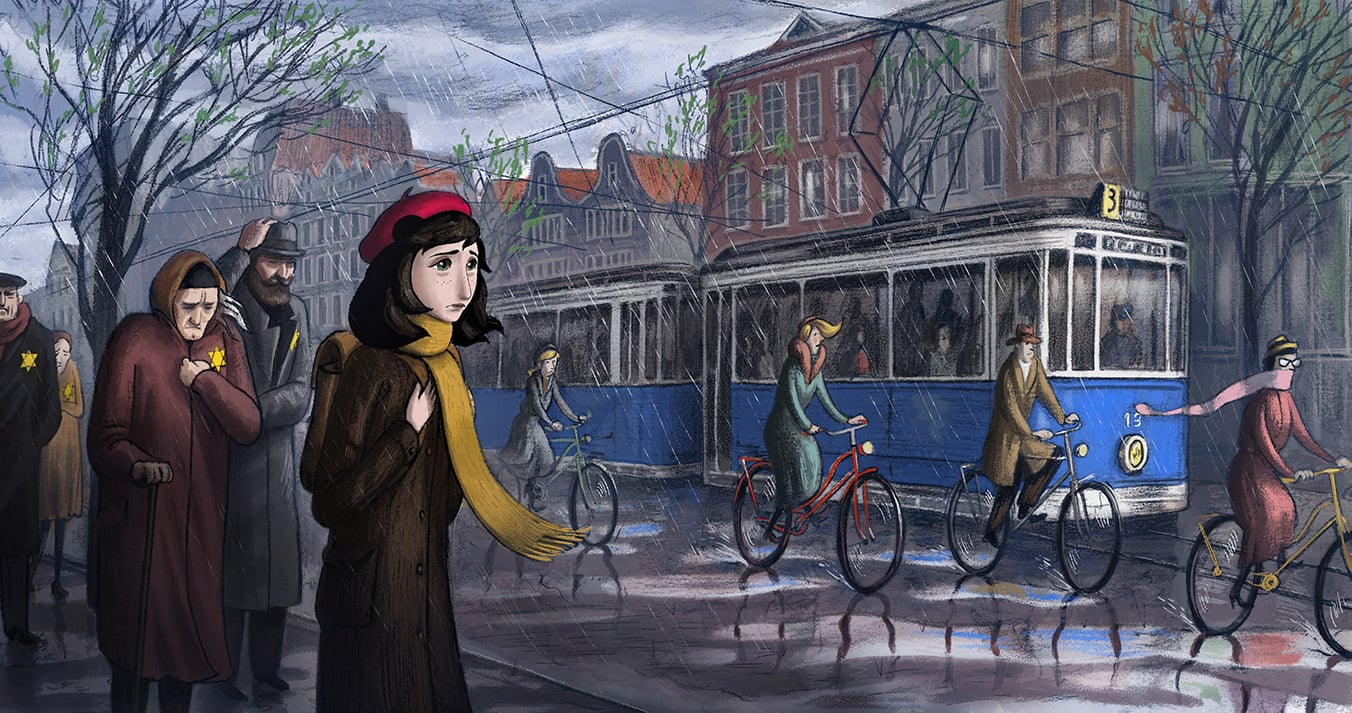
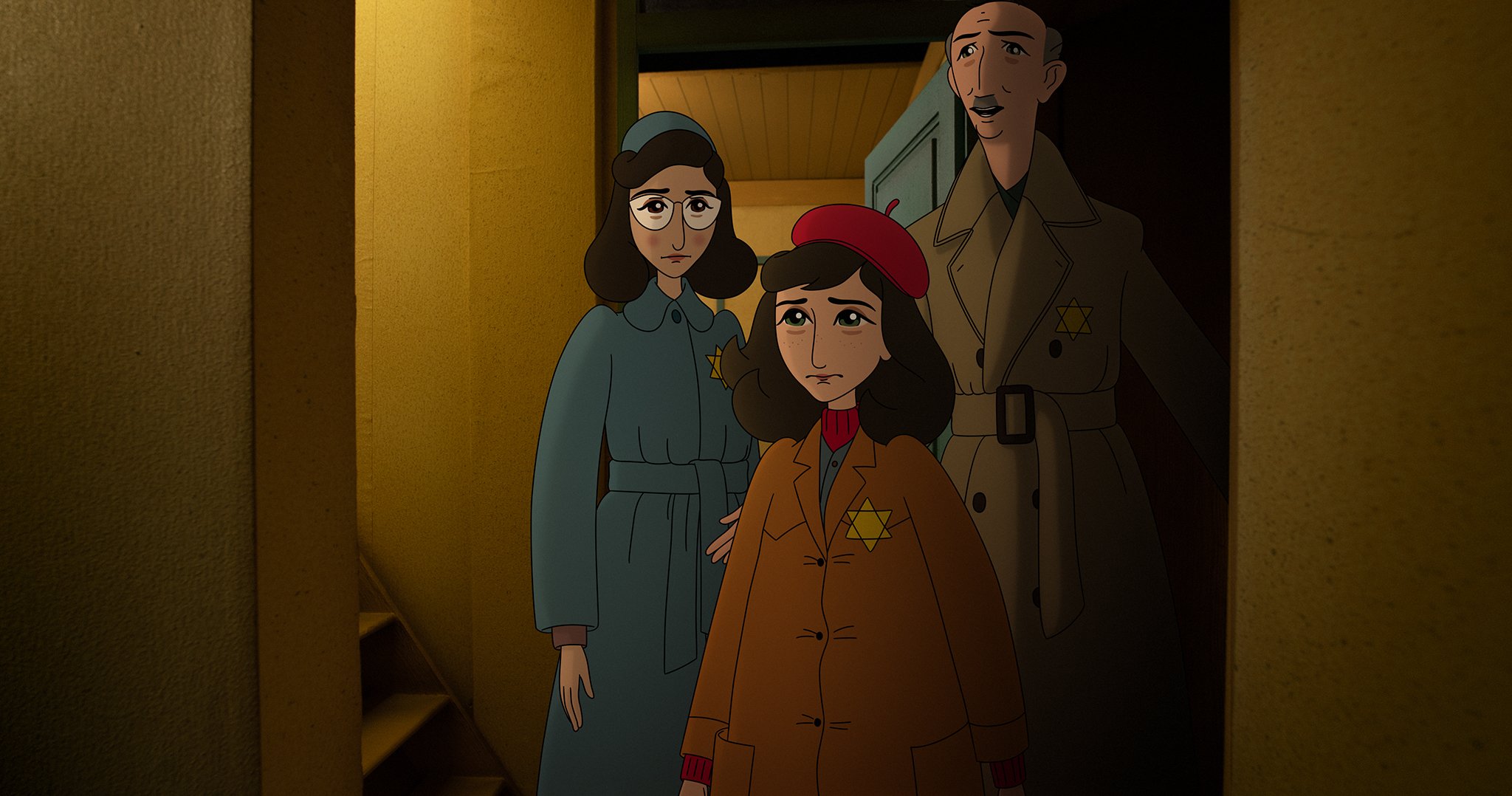
NEW YORK — “Anne Frank Bridge. Anne Frank School. Anne Frank Theater.” This is a mantra said by Anne Frank’s imaginary friend Kitty once she is summoned to life and escapes the confines of her surroundings, the Anne Frank House. The repeated, rhythmic phrase speaks to the larger story — one of the larger stories — in Ari Folman’s brilliant and essential new film “Where is Anne Frank.” When you spend so much time turning someone into a symbol, you can forget that they were also once a human being.
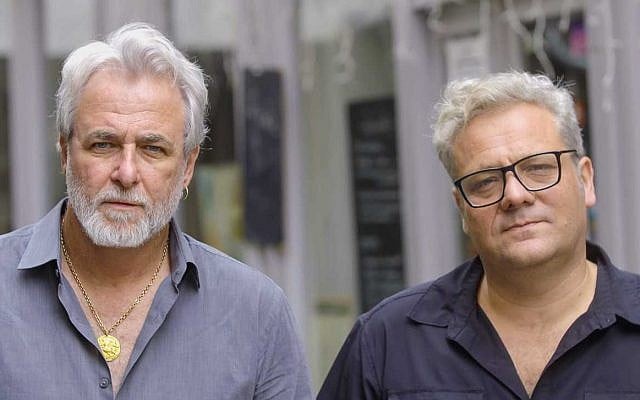
Folman, the Israeli director whose previous animated films include “Waltz With Bashir,” which investigated repressed memories and Israel’s 1982 Lebanon War, and “The Congress,” a near-indescribable hallucinogenic inquiry into the nature of identity, was approached by the Anne Frank Fund to make this film eight years ago.
This new project — debuting at this year’s Cannes Film Festival — is not, simply, “the diary as a cartoon,” but an imaginative story firmly rooted in the work of the celebrated author who died at 15 in the Bergen-Belsen concentration camp. It is appropriate, even designed for, early teens to watch, and while the subject matter is certainly upsetting, Folman pulls his punches on the explicit horrors and violence. This is more of a break than Anne ever got.
We begin on a stormy day in modern Amsterdam, outside the Anne Frank House, when a lightning strike causes the ink of the famous red-checked diary, Anne’s 13th birthday present, to come to life. Soon, a fair-skinned, red-headed girl is wandering around the museum.
This is Kitty, the imaginary girl to whom Anne’s diary entries have been addressed, and, with a “Peter Pan” or “Pinocchio”-like wonder, she’s on a mission to find her friend. As Kitty explores the world of today she encounters tourists, police, street punks, and migrants at risk for deportation. She also nicks the diary (giving the film’s title a second meaning) and reads from it, offering us flashbacks.
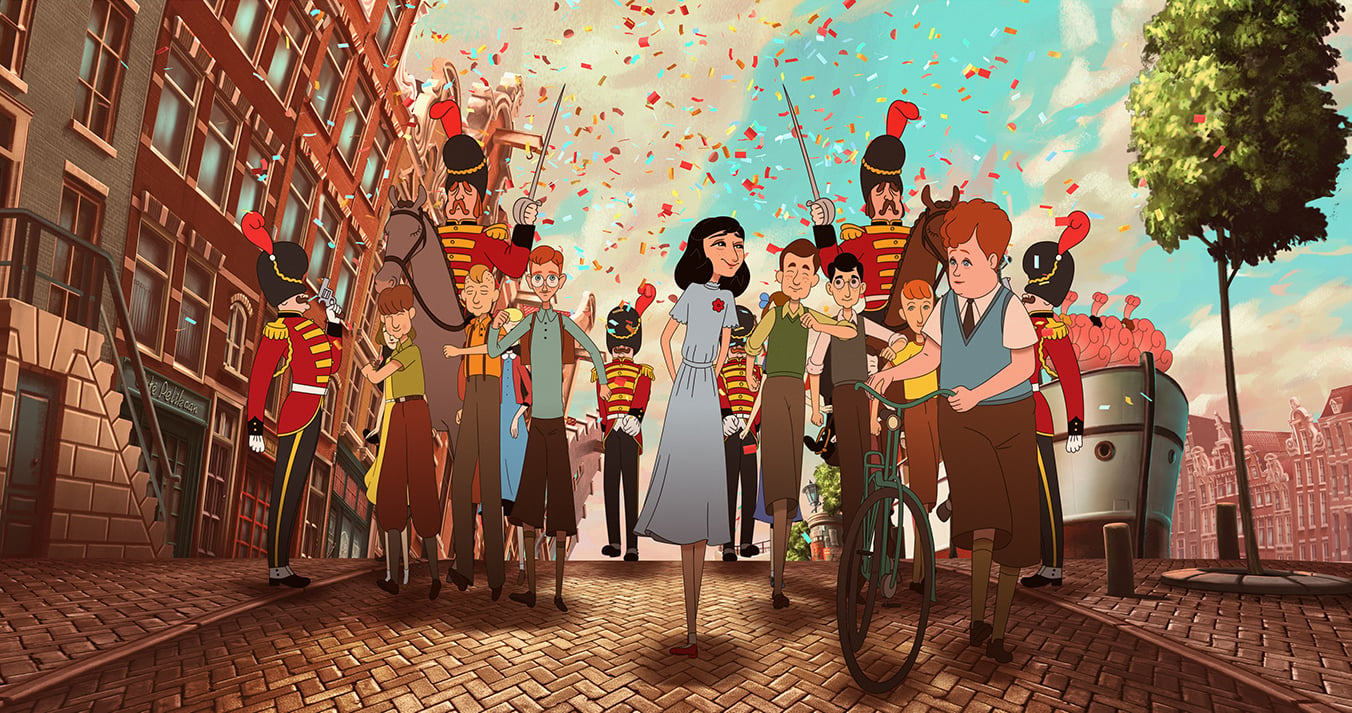
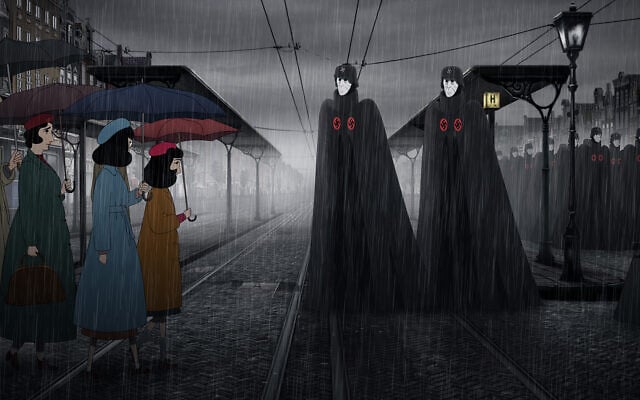
But the scenes from the past are immersed in the imagination we’ve come to expect from Ari Folman. Images toggle between strict naturalism to exaggerated expressionism, sometimes in the same frame. An advertisement for Opekta, the fruit preserve company Otto Frank ran, is rendered in classic Walt Disney form. Nazis marching through Amsterdam look like Chas Adams drawings, and the Frank family’s eventual train deportations are imbued with Hellenistic motifs, as per Anne’s fascination with Greek myths.
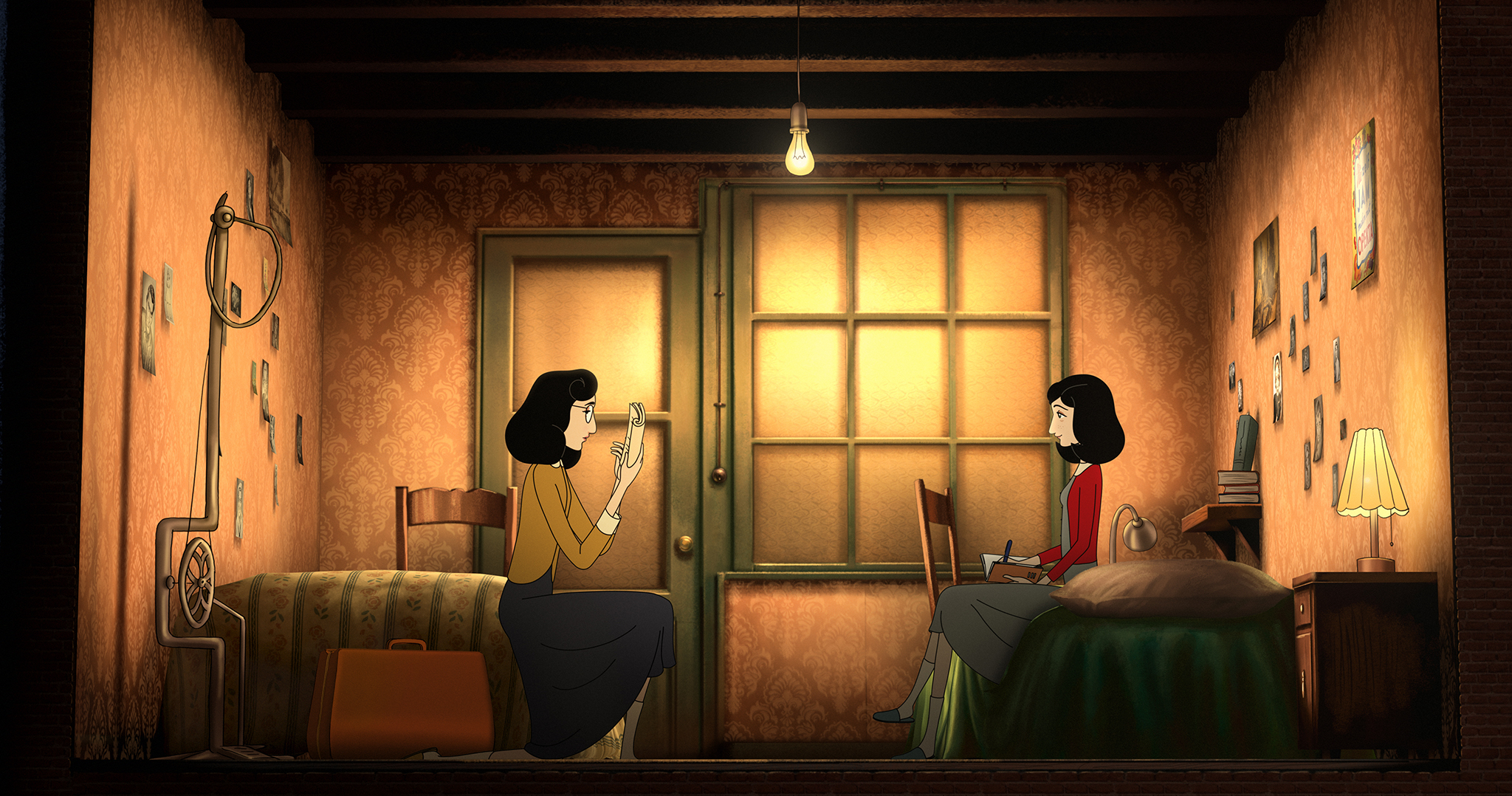
Scenes from the diary become more realistic as they play out with Kitty, our eyes and ears in this film, present for the action.
Indeed, a trip to the Anne Frank Theater to watch scenes from the 2014 play “ANNE” — just the type of “official version” of Anne’s story we’ve grown accustomed to for all these decades — seems silly by comparison. (Folman visualizes the dramatic retelling for a school group as literally “cartoonish” and “flat.”)
A bumbling police officer, voiced by Folman himself, puffs his chest out and calls Anne Frank the biggest spiritual treasure in Holland since Rembrandt. And certainly the country has done its part to memorialize her. (“Anne Frank Bridge. Anne Frank School. Anne Frank Theater.”)
But this is not what makes her diary entries — which were written (and certainly published) with readers in mind — so mesmerizing. Before becoming a symbol for the largest, most systematic atrocity committed against a single group of people, she was just a regular (though talented) kid.
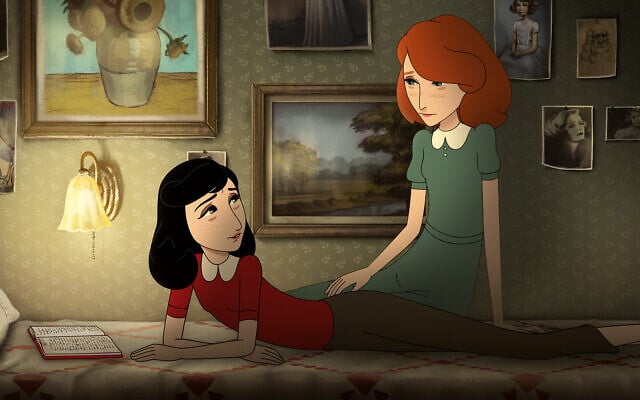
Anne Frank loved movie stars, flirted with boys in her class, and argued with her mother. She was annoyed by “Mme. van Dann,” who shared the secret annex with the Franks, and if maybe she never imagined a sequence of her cabbage-borne flatulence as Luftwaffe bombing, she’d likely have chuckled at Folman’s extrapolation.
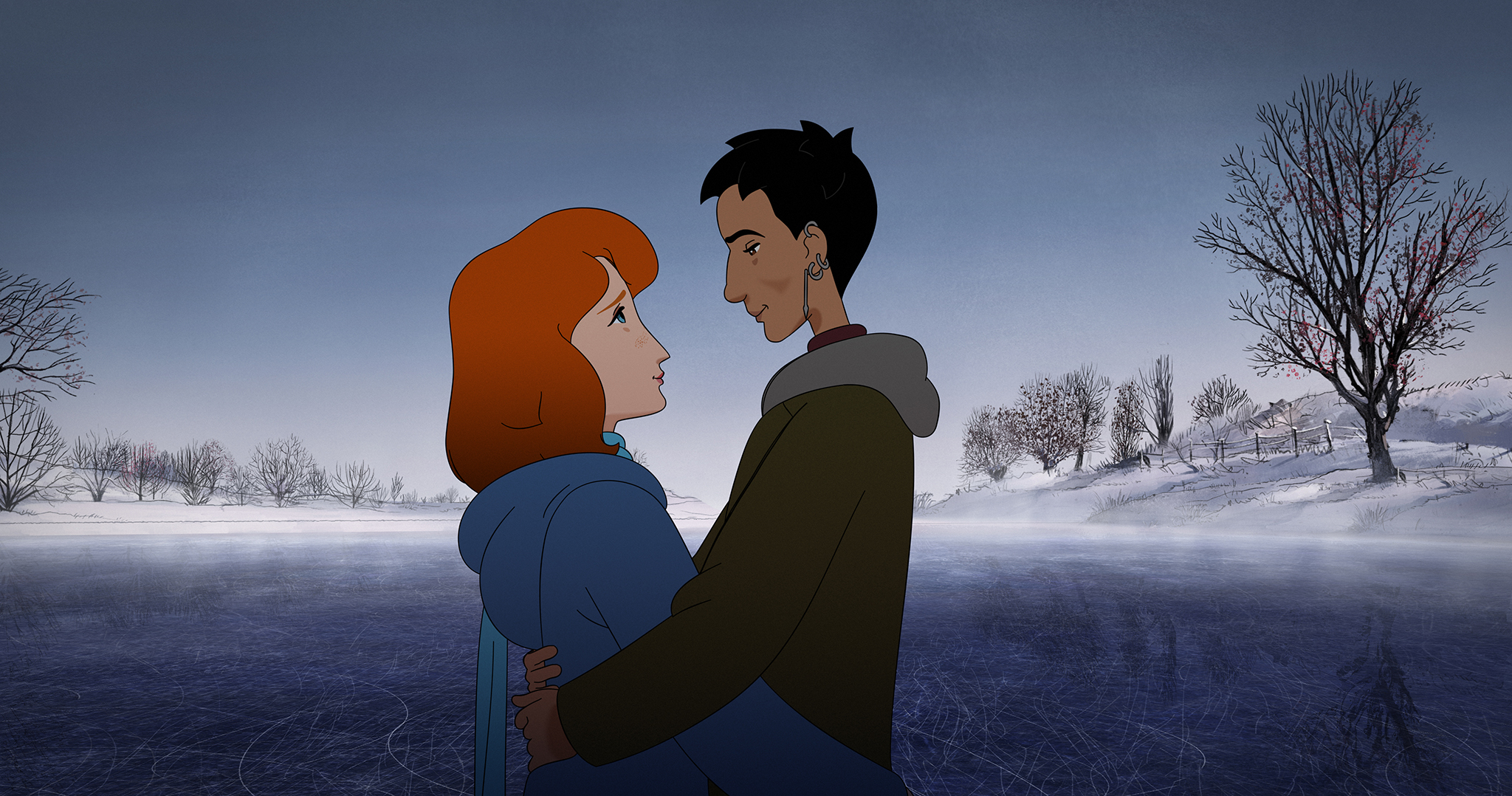
As Kitty reads through the diary, her own story works not quite in parallel, but in a kind of rhyme. As Anne tiptoed toward a relationship with a boy named Peter, Kitty also meets someone with the same name. As Anne hears rumors about the horrors of “the East,” Kitty is made aware of the struggles of African and Middle Eastern migrants in Western Europe.
https://www.youtube.com/watch?v=htzlVFazClI
Folman threads a fine needle to show comparisons between Anne and the plight of a Malian girl named Awa, who woke up one day with her village in flames, but he does not reductively conclude that “this treatment is precisely the same as the Shoah.” Importantly, though, children, and especially Jewish children, can always use a reminder that the past is never as far away as we might hope.

As a Diaspora Jew who can’t really remember a time without knowledge of the Holocaust, I’ll admit that I, too, can sometimes forget that Anne Frank was not always a statue. (This is, I would imagine, part of what Philip Roth was getting at in his 1979 novel “The Ghost Writer,” in which he convinces himself that a woman he meets is actually Anne Frank living under a different name.)
It’s fitting, I suppose, that it takes a film with one foot so planted in fantasy — in which Clark Gable and a unicorn battle the Wehrmacht in bright, bold colors — to splash cold water on my face, to remind me that behind the myth, at the other end of the pen, there always was, and will be, a person.










The Times of Israel Community.