

Prosecutors believe Ori Ansbacher murder wasn’t a terror attack — report
Despite charging Palestinian Arafat Irfaiya with terror offenses over brutal rape-murder, officials said to accuse Shin Bet of leading suspect to confess to nationalistic motive
 Add ToI as a Preferred Source on Google
Senior officials in the State Prosecutor’s Office reportedly believe that a Palestinian man charged with the brutal rape and murder of Israeli teenager Ori Ansbacher earlier this year did not pick his victim due to her nationality, contradicting the indictment against him which includes terror offenses.
The officials were cited in a report Sunday by the Haaretz daily as accusing the Shin Bet security agency of purposefully leading Arafat Irfaiya to confess to a nationalistic motive.
The evidence in the case and the nature of the murder point to a criminal motive rather than terrorism, the prosecution officials reportedly said. The Shin Bet denied the claim.
The 29-year-old suspect has been charged with terror offenses at the Jerusalem District Court over the February 7 murder of the 19-year-old Ansbacher, from the settlement of Tekoa, in a Jerusalem forest. The Jerusalem district psychiatrist in May found him to be responsible for his actions and fit to stand trial following an evaluation.
The case sparked shock and outrage across the country and prompted the government to approve implementing a law under which Israel would deduct from tax revenues it collects on behalf of Palestinians the amount that the Palestinian Authority pays out every month to Palestinian attackers and their families.
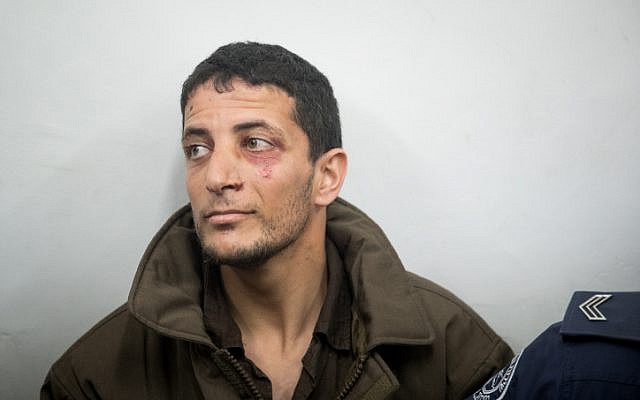
The Haaretz report said that in his first Shin Bet questioning, Irfaiya did not mention a nationalistic motive. Only after interrogators asked him about the matter did he confess to it. The State Prosecutor’s Office reprimanded the Shin Bet for that tactic, according to the report, but nevertheless included the terror charge in the indictment.
It wasn’t clear how exactly the terror motive came up in the interrogation, the report added, saying the material handed to Irfaiya’s lawyers included only a general summary rather than a detailed protocol of the questioning as is standard Shin Bet practice.
Responding to the report, the Shin Bet said discussions had been held with prosecutors toward the end of Irfaiya’s investigation, but added that it could not comment on what was said in the meetings, since the court case is still ongoing.
“Unlike what is being claimed, after examining the evidence the Prosecutor’s Office prepared a charge sheet accusing the defendant of nationalistically motivated murder and rape, and that speaks for itself,” the Shin Bet said.
“As always, the main goal of the Shin Bet investigation is to prevent harm to the state’s security — and therefore it strives to uncover the truth, and nothing other than that.”
The indictment against Irfaiya says he entered Israel from the West Bank illegally in early February armed with a knife.
On the day of the killing, Ansbacher, who was a volunteer at a youth center in the capital, went for a walk in the woodland of Ein Yael on the southern edge of Jerusalem, encountering Irfaiya by chance.
“He came across Ansbacher and decided to kill her because she was Jewish,” the charge sheet says. “He attacked Ori with violent cruelty, and though she tried to fight him off, he overpowered her. He stabbed her with a knife multiple times throughout her body, causing her death.”
During a court hearing earlier this year, state prosecutors presented the court with evidence against Irfaiya, including his DNA that was found on the murder weapon and at the crime scene. Prosecutors also told the court that during his interrogation, Irfaiya revealed details about Ansbacher that implicated him in her murder.
On April 19, Israeli security forces demolished his home in the West Bank city of Hebron.







The Times of Israel Community.