

Rouhani offers protesters ‘space for criticism,’ but warns against violence
In first remarks since outbreak of demonstrations, Iranian president says Trump has no right to ‘sympathize’ with protesters after he’d called Iran a nation of terrorists
 Add ToI as a Preferred Source on Google
TEHRAN — Iran’s President Hassan Rouhani said Sunday that government bodies must provide “space for criticism,” as he sought to head off days of unrest, but warned protesters that violence was unacceptable.
“Criticism is different to violence and destroying public property,” he said in a cabinet meeting, according to the state broadcaster.
“Government bodies should provide space for legal criticism and protest,” Rouhani said in his first public comments since the protests began on Thursday.
He also said US President Donald Trump had “no right” to sympathize with Iranian protesters who he has previously called terrorists.
“This man who today in America wants to sympathize with our people has forgotten that a few months ago he called the nation of Iran terrorist,” Rouhani told the cabinet meeting.
“This person whose whole being is against the nation of Iran has no right to feel pity for the people of Iran.”
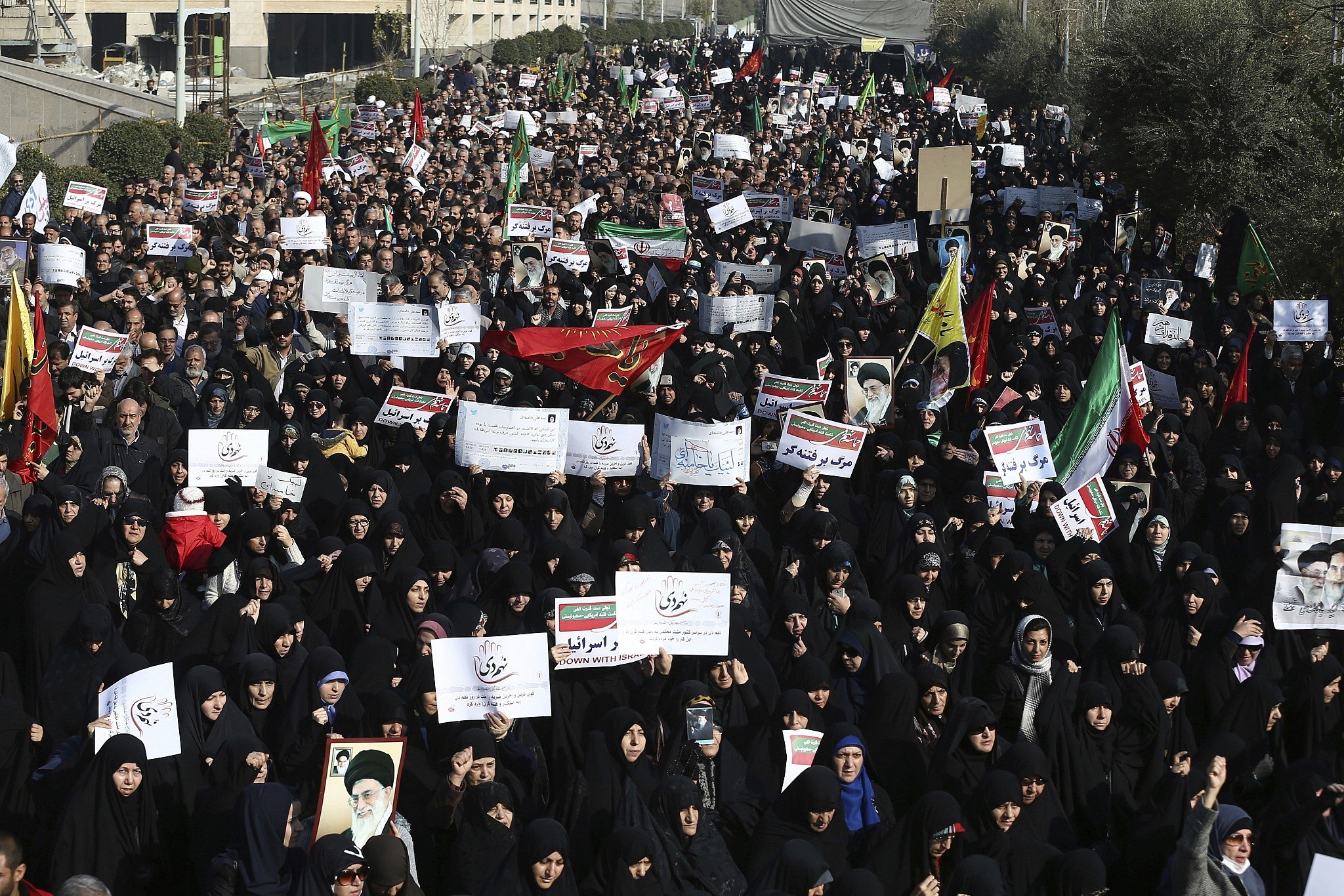
Protests against economic conditions began in second city Mashhad on Thursday, before quickly spreading across the country and turning against the Islamic regime as a whole.
“The point should be made clear to everyone that we are a free nation and according to the constitution… the people are absolutely free in expressing their criticisms and even protests,” he said.
“At the same time, we should not allow for an atmosphere to be created in which the supporters of the revolution and the people are worried about their lives and security.”
Several hundred people gathered in Tehran and the western city of Khorramabad on Sunday evening in the fourth day of demonstrations.
Unconfirmed videos on social media showed protests in other parts of the country, with people shouting “Death to the dictator.”
Rouhani, who was re-elected in May on promises of boosting the economy and improving civil liberties, said people were demanding more transparency.
He said state broadcaster IRIB should better reflect different opinions, after criticism in recent days that the media has been stifled.
“The resolving of some issues is not easy and it will take time and the government and the nation must join hands to solve them,” Rouhani said.
The demonstrations, which began Thursday over the economic woes plaguing Iran and continued Sunday, appear to be the largest to strike the Islamic Republic since the protests that followed the country’s disputed 2009 presidential election.
They were fanned in part by messages sent on the Telegram messaging app, which authorities blocked Sunday along with the photo-sharing app Instagram, which is owned by tech giant Facebook.
#Rasht – During demonstrations in this city today, protesters called on the security forces to support the people. “Death to #IRGC”, “I’ll kill whoever kills my brother.” and, “Basiji, get lost.”#FreeIran #Iranprotests #Iran #News#RegimeChange #IranProtests pic.twitter.com/GJXqxDbVDx
— Iran Freedom (@4FreedominIran) December 31, 2017
Many in Iran had been learning about the protests and sharing images of them through Telegram, a mobile phone messaging app popular among the country’s 80 million people. On Saturday, Telegram shut down one channel on the service over Iranian allegations that it encouraged violence, something its moderator denied.
On Sunday, Telegram CEO Pavel Durov wrote on Twitter that authorities had blocked access to the app.
“Iranian authorities are blocking access to Telegram for the majority of Iranians after our public refusal to shut down … peacefully protesting channels,” he wrote.
Iran’s state TV news website, iribnews.ir, quoted an anonymous source saying that social media in Iran would be temporarily limited as a safety measure.
The city of #Aligudarz tonight joining protests; while protests become epidemic, govt may face strong disagreement from some factions of security forces who refuse to suppress people. #Tehran ….#IranProtests #Update96 #Update97 #University_of_Tehran #Iran #Iran #MiddleEast pic.twitter.com/MOCrxtlA9p
— Jamal R. Ekhtiar (@JREkhtiar) December 31, 2017
Facebook itself has been banned in Iran since protests against the disputed 2009 re-election of hard-line President Mahmoud Ahmadinejad. However, some in Iran access it and other banned websites using virtual private networks.
Meanwhile, authorities acknowledged the first fatalities in the protests in Doroud, a city some 325 kilometers (200 miles) southwest of Tehran in Iran’s western Lorestan province. Protesters had gathered for an unauthorized rally that lasted into the night Saturday, said Habibollah Khojastepour, the security deputy of Lorestan’s governor. The two protesters were killed in clashes at the rally, he said.
Videos circulating on social media late Saturday also appeared to show fallen protesters in Doroud as gunshots sounded in the background. The Associated Press could not immediately verify the footage.
Iranian Interior Minister Abdolreza Rahmani Fazli warned protesters that police would not hesitate to confront lawbreakers.
“Those who misused cyberspace and spread violence are absolutely known to us and we will definitely confront them in due time,” Fazli said, according to state TV.
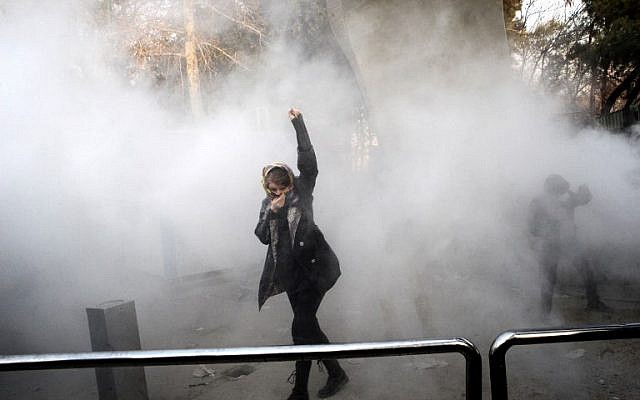
State TV also has reported that some protesters invoked the name of the US-backed shah, who fled into exile just before Iran’s 1979 Islamic Revolution and later died.
Iran’s economy has improved since its 2015 nuclear deal with world powers, which saw Iran limit its enrichment of uranium in exchange for the end of some international sanctions. Tehran now sells its oil on the global market and has signed deals to purchase tens of billions of dollars’ worth of Western aircraft.
That improvement has not reached the average Iranian, however. Unemployment remains high, and official inflation has crept up to 10 percent again. A recent increase in egg and poultry prices by as much as 40%, which a government spokesman has blamed on a cull over avian flu fears, appears to have been the spark for the economic protests.





The Times of Israel Community.