

Shooting to miss: 7 things to know for June 17
Israeli missiles miss Gazan kite launchers, apparently on purpose; and those that take shots of soldiers to make them lose morale may soon face punishment
 Add ToI as a Preferred Source on Google
Joshua Davidovich is The Times of Israel's Deputy Editor
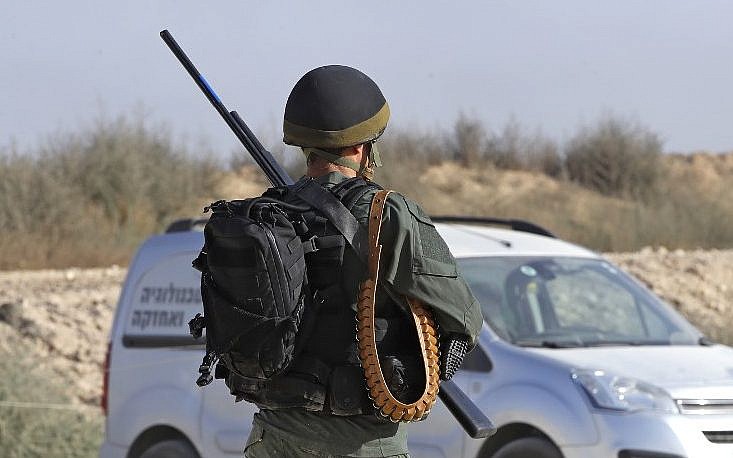
1. The Israeli military said it targeted the car of a leader of a Gazan cell launching kites and balloons into Israel early Sunday, and the language suggests it is getting more serious about the childish-sounding weapons.
- Palestinian media report that the car was parked outside a mosque and was empty at the time. If Israel knew the car was empty it means it was a warning shot. If Israel did not, it means it was a return to its assassination policy. Either way, it may represent a significant shift in the army’s strategy.
- Until now, Israel has only shot at people in the act of preparing kites and balloons, and only near them. A strike on somebody going about their day is more like what the military does to bona fide terror leaders when it wants to send a fiery message.
- Indeed, a picture supposedly of the flaming wreck of the car making the rounds is actually from an airstrike on terror leader Ahmed Jabari from 2012 (which sparked a mini war with Gaza).
- The Ynet news site copies and pastes its lede from the IDF statement on the strike, but reads enough between the lines to call it a “warning shot” even if the army doesn’t.
- Another sign of Israel stepping up its policy regarding Gazan kite and balloons launchers was a warning shot fired Saturday evening that injured three Gazans, indicating the missiles may be whizzing by closer to them.
- However, the Walla news site reports that the army has decided to “not sharpen its responses to terror cells launching kites and balloons, but make do with warning shots. Hamas understands that anytime it crosses a line that will lead to a much more aggressive response from the IDF.”
2. The strike came after a day that saw at least 20 fires started by the incendiary flying devices, according to tallies in Israeli media.
- Israel Hayom, calling the fire kites and balloons “terror in every sense of the word,” writes that southern residents think it’s only a matter of time until a fire kite or IED balloon turns into a real disaster.
- “They need to shoot at them. By a miracle none of them have come down on a house. One day it will,” one resident tells the paper.
3. While Israel’s response is ramping up, the numbers of Gazans protesting are going down. Haaretz says Friday’s protests were the smallest since the weekly demonstrations began, with only a few dozen people showing up on the border.
- The paper’s Yaniv Kubovich writes that it’s Iran’s Gaza proxy Islamic Jihad that’s calling the shots, and not always Hamas: “Hamas may finance, direct and decide the level of intensity of the border protests, but to a large extent it is Islamic Jihad that determines whether the confrontation with Israel remains along the border — or escalates into the firing of mortar shells and rockets over the border.”
4. Ministers are set to vote Sunday on a bill that would make it illegal to distribute film of IDF soldiers that demoralizes troops, essentially saving them from being painted in a negative light, at least in Israel.
- Haaretz reports that the bill, vague wording and all, already has the support of coalition parties.
- It also apparently has the backing of Israel Hayom, which devotes its first two news pages to what it says is another effort to sully the good name of the IDF: European Union funding for left-wing NGOs seeking to put IDF soldiers on trial for alleged wrongdoing.
- The paper bases its expose on a grant proposal, apparently published by NGO Monitor, from the Yesh Din, Doctors Without Borders and Breaking the Silence groups for a project seeking to show that Israel cannot investigate its own, which the paper claims is a way to open a door to ICC investigations (which the Hague can only carry out if the local authority refuses to).
- According to the report, the EU funded the project with 250,000 euros until November 2019. The report also claims that the project will hurt the army and help terrorists, which the groups reject outright.
5. Israelis got a reminder of just how far they are from World Cup competition when the tourney kicked off over the weekend, with the Kan broadcaster showing the games from a wide angle only, making it hard to see the action on the pitch — at least according to Yedioth (this viewer noticed no difference).
- Yedioth reports that the broadcaster messed up and bought the rights to the wide-angle view because it goes with 4K technology, but the end result was a less clear picture.
- Kan tells the paper it did not mess up, just that 4K angles are different, but will buy the rights for the old angle and broadcast them on the main channel to make the complainers happy, while shunting those who want the better 4K view to a new channel.
- “In other words,” Yedioth writes,” after complaints, Kan worked to get the better picture to channel 11, in HD. Anyone who wants the 4K will get it on channel 511.”
- Kan’s flub (if it was one) was nothing compared to Lionel Messi’s missed shot that allowed Iceland to get away with a 1-1 draw against Argentina. To Defense Minister Avigdor Liberman, Messi’s miss is thanks to something called karma. “In the Argentina vs Iceland game we saw just how much Messi needed the warmup game against Israel,” he tweeted after the game Saturday.
6. Liberman’s biggest headache may be going away, with several news reports indicating that the Shas and UTJ parties will defy rabbinical leaders and go ahead with a compromise bill on exempting yeshiva students from army service, rather than try to dismantle the coalition over it.
- Haaretz reports that the rabbinical steering committee that had called for the hard line will meet again later this week to discuss a response, but actual politicians say the law is fine.
- People in the coalition are still seemingly annoyed about the threats leveled over the bill, with one telling Yedioth that “the ultra-Orthodox are serial crisis-makers.”
- Israel Hayom reports that all the screaming and threats over the law were likely a bluff, after Mishpacha magazine published transcripts of UTJ head Yaakov Litzman telling American yeshiva heads before the proposal was even published that they won’t have any issues with the enlistment law.
7. Another creator of avoidable crisis may be Prime Minister Benjamin Netanyahu’s son Yair. Yedioth Ahronoth reports that the young troll was the person behind an official Netanyahu tweet last year on the importance of walls that sent Israeli-Mexican relations into a tailspin.
- The paper reports that Yair and dad went ahead with the pro-Trump tweet despite the vociferous objections of pretty much everybody: “It was unnecessary,” a figure involved in the case tells the paper.
- A sloppy tweet may seem like a trifle, but the paper reports that it matters because police are reportedly investigating if Netanyahu’s wife and son had undue influence over sensitive decisions regarding Israel’s diplomacy and security.
- The tweet “may not have been criminal,” the source says, “but it adds on to other decisions Netanyahu made.”







The Times of Israel Community.