

Suddenly, for Trump, Israel-Palestinian conflict may not be all about the money
Dollars make the world go round in US president’s worldview, but his propensity for seeing diplomatic issues as financial problems was missing when he met Netanyahu on Monday


 Add ToI as a Preferred Source on Google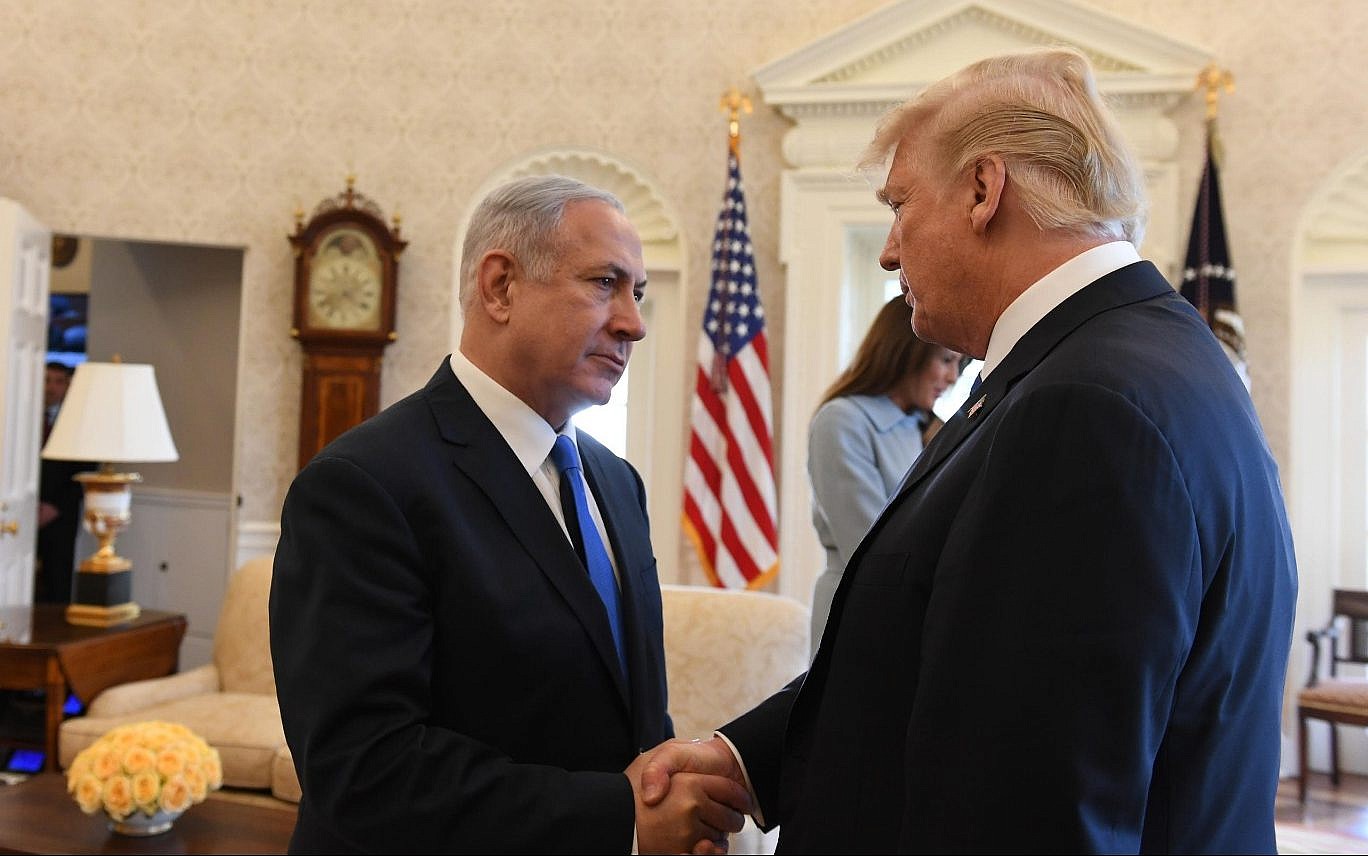
Welcoming Prime Minister Benjamin Netanyahu to the White House on Monday, US President Donald Trump’s mind seemed tuned in to the power — and limitations thereof — of a host of other Benjamins: $100 bills.
More than perhaps any other US president, Trump has touted the might of the dollar in both making America great again and solving the rest of world’s problems. But on Monday, even as he spoke about protectionist tariffs and how to build an embassy cheaply, he seemed to walk back his view of the Israel-Palestinian conflict as something akin to a particularly complex real estate deal that could be massaged to fruition with a little more of the green stuff.
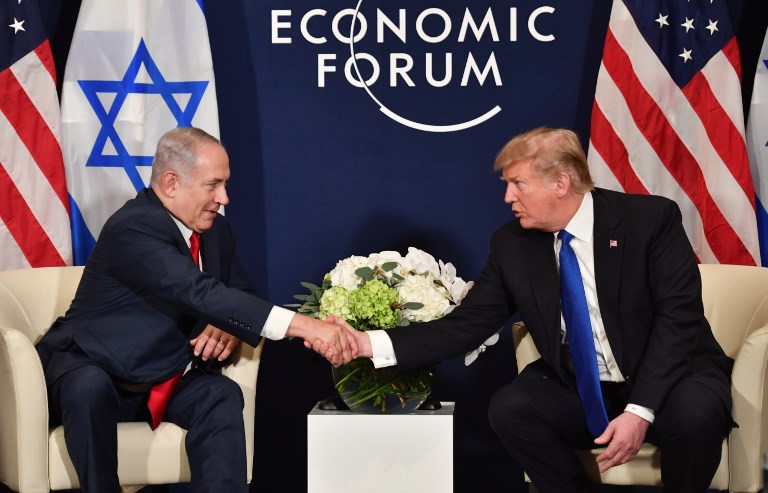
In January, during Netanyahu’s last meeting with Trump at the World Economic Forum in Davos, Switzerland, the president had trumpeted the threat of withdrawing or cutting financial support to the Palestinians. “We give them tremendous amounts, hundreds of millions of dollars a year. That money is on the table,” he warned.
But on Monday in Washington, Trump did not repeat this particular threat. Neither did he return to his assurance that “Israel will pay for” his recognition of Jerusalem as Israel’s capital, as he did in Davos.
Instead he acknowledged that the issues keeping the sides from reaching an agreement went beyond real estate to ideology, one of the few fortresses even the dollar finds difficulty in penetrating.
Brokering an Israeli-Palestinian peace agreement has been so herculean because of “years and years of opposition and, frankly, hatred, and a lot of things involved in this deal beyond the land,” the president said.
And while in the past he has described brokering an accord as “the ultimate deal” but one he could well get done because of his business acumen, this time he seemed to indicate that this conflict might be beyond the ken of financial experts.
“Whenever you have a hard deal, like in business, you say, ‘Oh, this is almost as bad as Israel and the Palestinians,’” he said.
Such emphasis as he did place on financial matters, never far from his mind, related to side issues.
While he was “very proud” of his decision to move the US embassy from Tel Aviv to Jerusalem, he said, for instance, the new facility will be built “very inexpensively.”
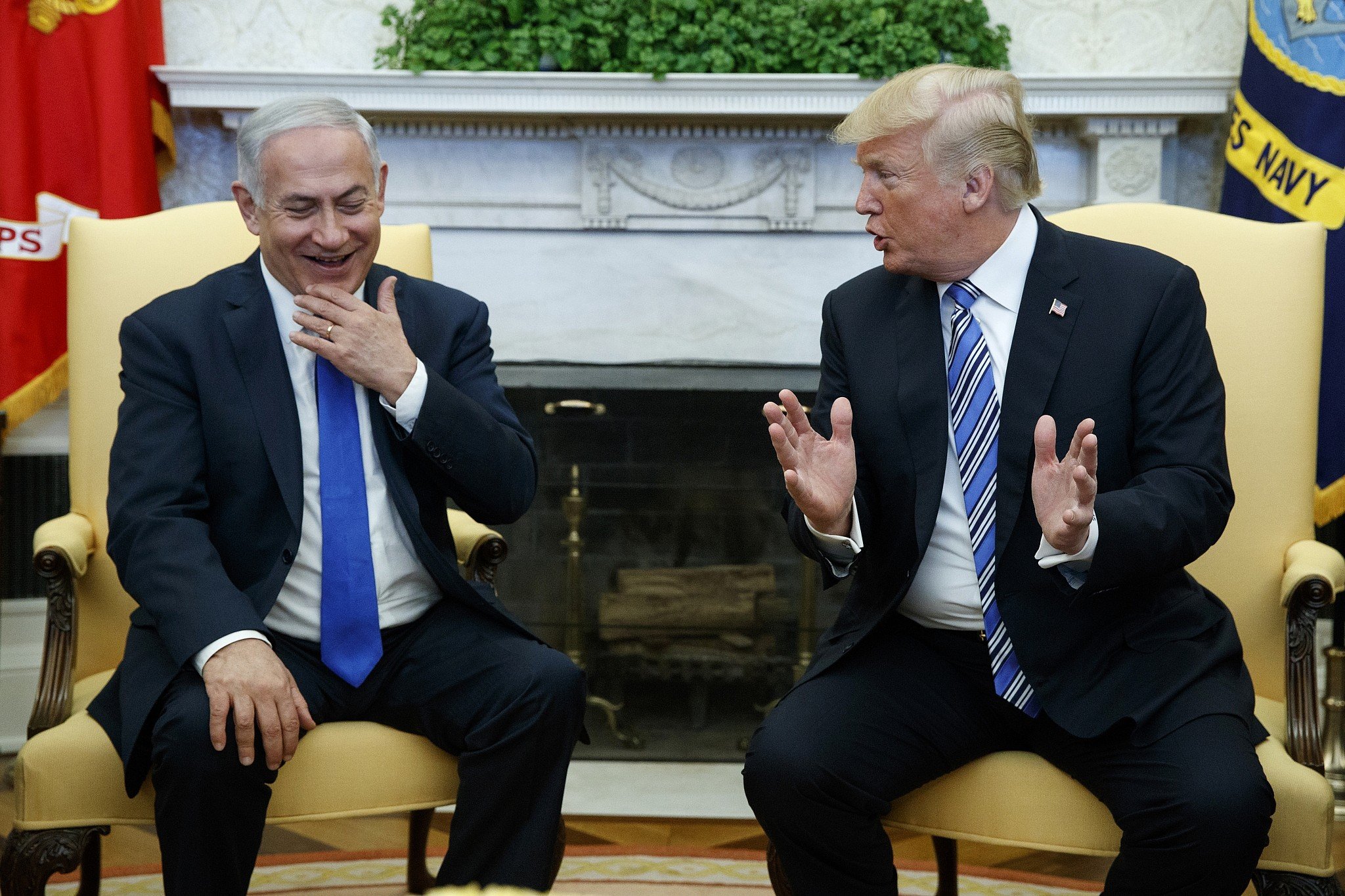
“They put an order in front of my desk last week for a billion dollars,” the former real estate magnate stressed during the photo op. “I said, ‘We’re not going to spend a billion dollars.’ And we’re actually doing it for about $250,000… Two hundred and fifty thousand dollars versus a billion dollars. Is that good?” he asked.
Netanyahu replied dutifully: “Yeah. It’s good.”
Responding to an unrelated question about trade agreements, Trump lamented at some length that the US “has been ripped off by virtually every country in the world,” having lost $800 billion per year due to deals he argues greatly disadvantaged the American economy. “Not going to happen. We got to get it back,” he vowed.
Netanyahu himself has campaigned on the idea of an economic peace with the Palestinians, seeing boosting their economy as key to avoiding conflict. On this occasion, in the Trump-Netanyahu public remarks, the Palestinians went almost unmentioned, with the prime minister saying only that he’d like to “exploit the opportunity for peace.”
He did not specify which opportunity he had in mind, and most analysts see the prospects of a peace deal in the near future as slim to none, with the Palestinians having rejected the American outline for negotiations even before it has been released.
Still, on Monday in the White House, the president surmised that the Palestinians “are wanting to come back to the table very badly.”
While the Palestinian ambassador in Washington Husam Zomlot has said he is open to speaking to the administration, other Palestinian officials have boycotted the administration’s peace efforts.
Yet Trump is nothing if not mercurial, his habit of shifting stances well-known.
In late January in Davos, he asserted that “Israel does want to make peace,” but appeared to doubt the Palestinians were willing to negotiate. “They’re going to have to want to make peace too, or we’re going to have nothing to do with it any longer.”
In mid-February, Trump told the Israel Hayom newspaper that “the Palestinians are not looking to make peace.” However, he added that he was “not necessarily sure that Israel is looking to make peace,” either.
Trump’s seeming shift away from viewing the Israel-Palestinian conflict as a financial problem could prove to be just as evanescent.
While he undeniably has a special affinity for Israel and its prime minister, the president is first and foremost a businessman, not an ideologue. By recognizing Jerusalem as Israel’s capital he has given Netanyahu a lot of front money, and he may well ask for concessions in return in the weeks to come as his team gets ready to publish that much-expected peace plan.
For now, asked about that proposal, the president asserted that, with Jerusalem now “off the table,” there was a “real opportunity” for peace. Was he prepared to go into specifics? Not at this stage. The best Trump could offer was the noncommittal line he has grown accustomed to throwing out on everything from North Korea to the Mueller investigation: “We’ll see how it works out.”






The Times of Israel Community.