

Syrian government, rebels sign on to truce agreement
Deal brokered between US and Russia allows fighting to continue against Islamic State, al-Qaeda and other ‘terror groups,’ causing doubt ceasefire will take hold
 Add ToI as a Preferred Source on Google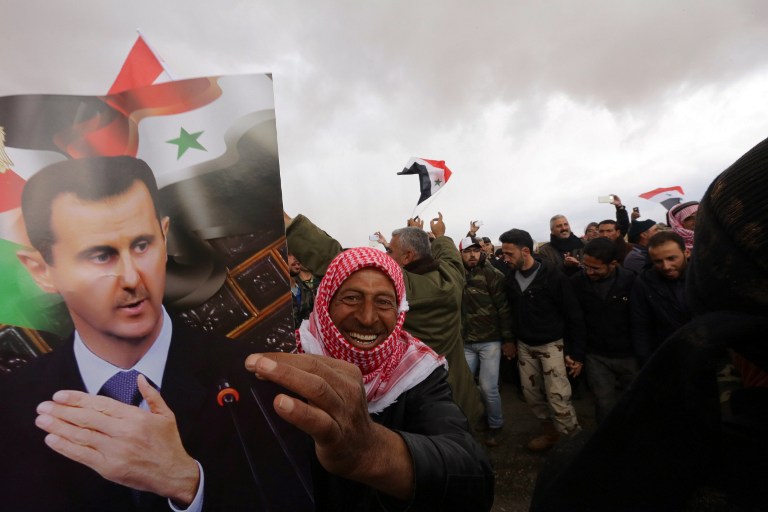
The Syrian government on Tuesday accepted the terms of a ceasefire deal announced by the United States and Russia a day earlier, joining the main opposition group in backing the truce.
A Foreign Ministry statement said the government would stop armed operations but would “continue counter-terrorism efforts” against the Islamic State group, al-Qaeda and affiliated groups.
IS and Al-Qaeda were excluded from the ceasefire agreement announced on Monday.
Hours earlier, the main umbrella for Syrian opposition and rebel groups said it “agrees to a temporary truce” as long as its demands are met: the lifting of sieges, the release of prisoners, a halt to bombardment of civilians and the delivery of humanitarian aid.
The agreement calls for President Bashar Assad and opposition forces to agree by noon on Friday to comply with a “cessation of hostilities” that would then take effect at midnight.
Moscow and Washington have been leading the latest diplomatic push to try to resolve Syria’s nearly five-year civil war, a brutal conflict that has left more than 260,000 dead and forced millions from their homes.

The two countries are on opposing sides of the conflict — with Russia backing Assad and the United States supporting the opposition — but in recent weeks have joined forces to press for the ceasefire.
“This is a moment of opportunity and we are hopeful that all the parties will capitalize on it,” White House press secretary Josh Earnest said after US President Barack Obama and Russian counterpart Vladimir Putin discussed the deal by phone.
Putin said Moscow would do “whatever is necessary” to ensure Damascus respects the agreement.
“We are counting on the United States to do the same with its allies and the groups that it supports,” he said.
UN Secretary General Ban Ki-moon called the deal a “long-awaited signal of hope” and urged all sides to abide by it.
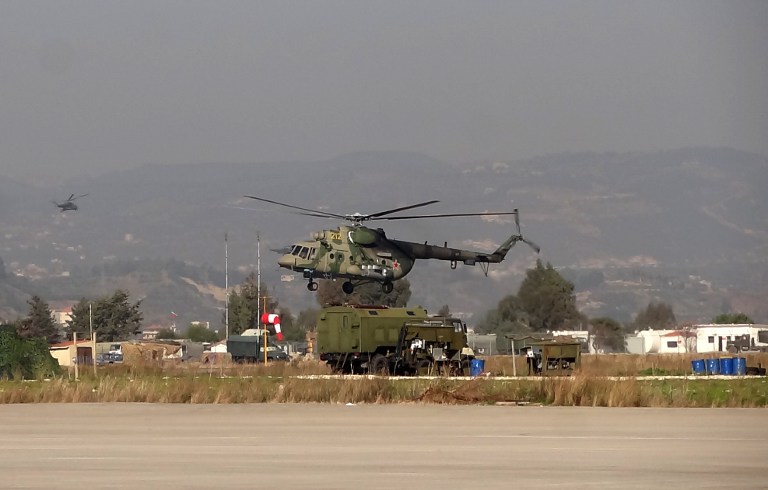
Even if the truce is implemented, the fighting and violence in Syria won’t stop. Moscow and Washington are both pursuing air wars in Syria. A US-led coalition launched airstrikes against IS positions in both Syria and Iraq in 2014 while Russia began its own aerial raids in Syria in September.
Despite the agreement, Russia is almost certain to continue an air campaign that it insists is targeting terrorists. The US and its partners accuse Russia of mainly hitting moderate opposition groups and killing civilians.
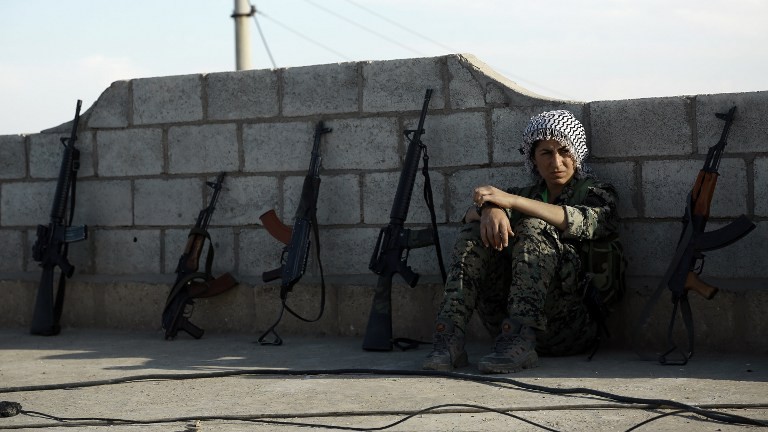
While IS tries to expand its self-proclaimed caliphate in Syria and neighboring Iraq, al-Nusra, as al-Qaeda is known in Syria, is unlikely to end its effort to overthrow Assad. The Kurds have been fighting IS, even as they face attacks from America’s NATO ally Turkey. And Assad has his own history of broken promises when it comes to military action.
Iran has also sent military advisers to Syria and the Tehran-backed Lebanese Shiite movement Hezbollah has deployed at least 6,000 militants to fight alongside Assad’s forces.
Analysts say that given the facts on the ground — in particular the complicated makeup of Syria’s opposition forces and frequently shifting frontlines — the ceasefire may already be doomed to fail.
While IS control over territory is relatively clear and stable, its jihadist rival Al-Nusra works closely with many other rebels groups.
“‘Cessation of Hostilities’ allows attacks on Nusra. That likely dooms it, since Russia/regime tend to hit others & call em Nusra (or IS),” Noah Bonsey, a senior analyst at the International Crisis Group, said on Twitter.
“To have any chance of addressing this, US/Russia must delineate Nusra areas BEFORE implementation,” he wrote.
The ceasefire plan was announced by top diplomats in Munich earlier this month, but failed to take hold last week as initially planned.
As well as reducing violence and expanding humanitarian access, it aims to pave the way for a resumption of peace talks that collapsed earlier this month in Geneva.
The talks had been scheduled to resume on February 25, but the UN Syria envoy has already acknowledged that date is no longer realistic.
The opposition High Negotiations Committee said its commitment to the truce was conditional on the lifting of sieges, the release of prisoners, a halt to bombardment of civilians and the delivery of humanitarian aid.
“We agreed to respond positively to international efforts to reach a truce deal” if the conditions are met, the Riyadh-based HNC said in a statement.

It quoted HNC head Riad Hijab as saying he did not have high expectations that the regime and its allies “would be able to commit to stopping their hostile acts.”
The ceasefire announcement came just a day after IS claimed responsibility for two deadly attacks in regime-held areas, which a monitor said killed 134 people near a shrine south of Damascus and at least 64 in central Homs.
The shrine bombings marked the deadliest jihadist attack since Syria’s conflict erupted in March 2011, said the Britain-based Syrian Observatory for Human Rights.
Shortly after the truce was announced, Assad issued a decree for parliamentary elections to be held on April 13, as the four-year term of the current legislature comes to a close.
The last such elections were held in May 2012 and although multiple parties were allowed to stand, most of the 250 lawmakers who were elected were from the ruling Baath party.


The Times of Israel Community.