The sea takes migrants and brings back bodies
Many of those who try to reach Europe via the Mediterranean are swallowed by the ocean — and all that’s left is the occasional belonging that washes to shore
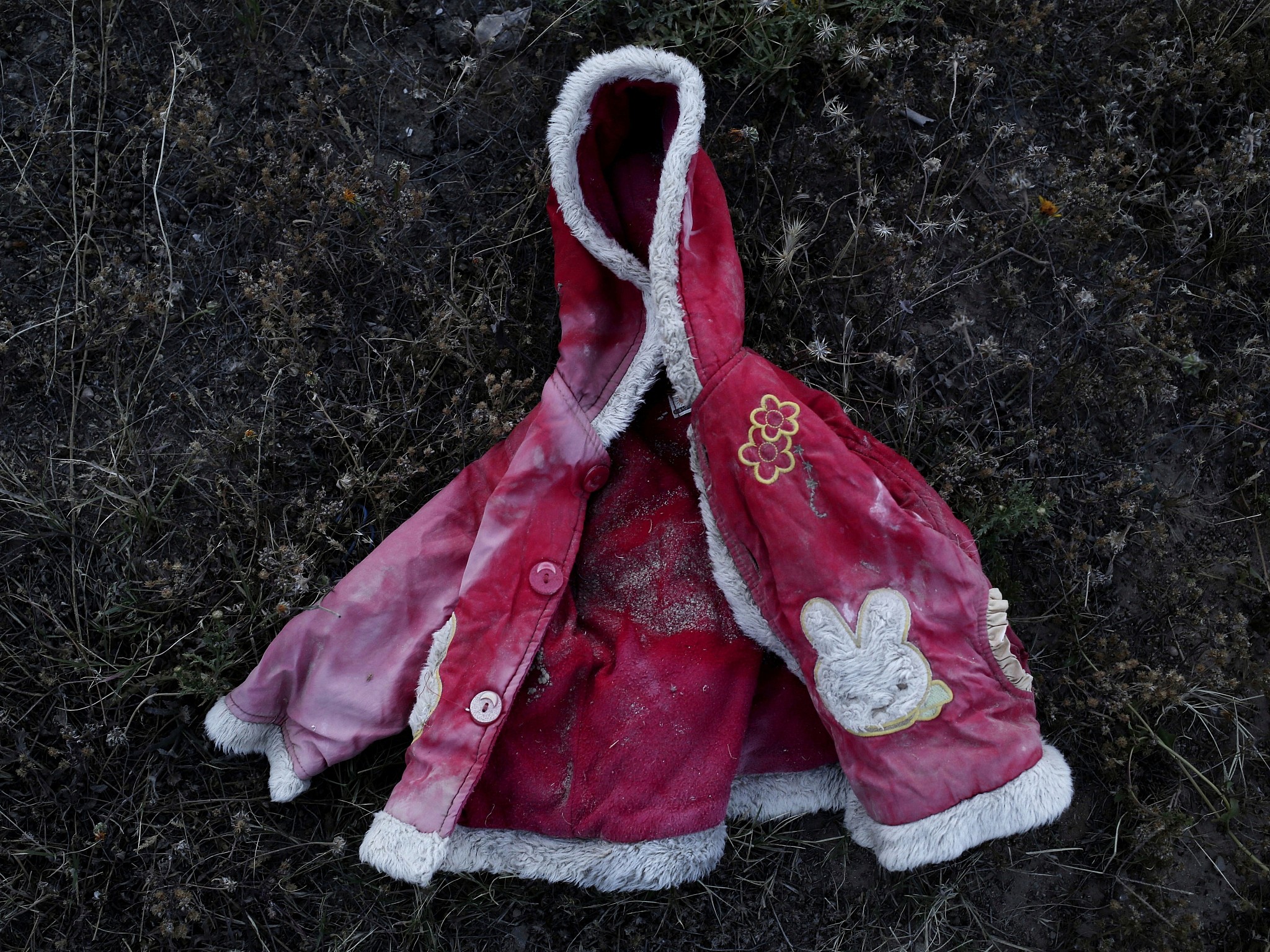
This April 15, 2018 photo shows a migrant child's jacket which was retrieved by artist Mohsen Lahzib, who tries to create beauty out of sorrow, at his space in the southern port town of Zarzis, Tunisia. (AP Photo/Nariman El-Mofty)
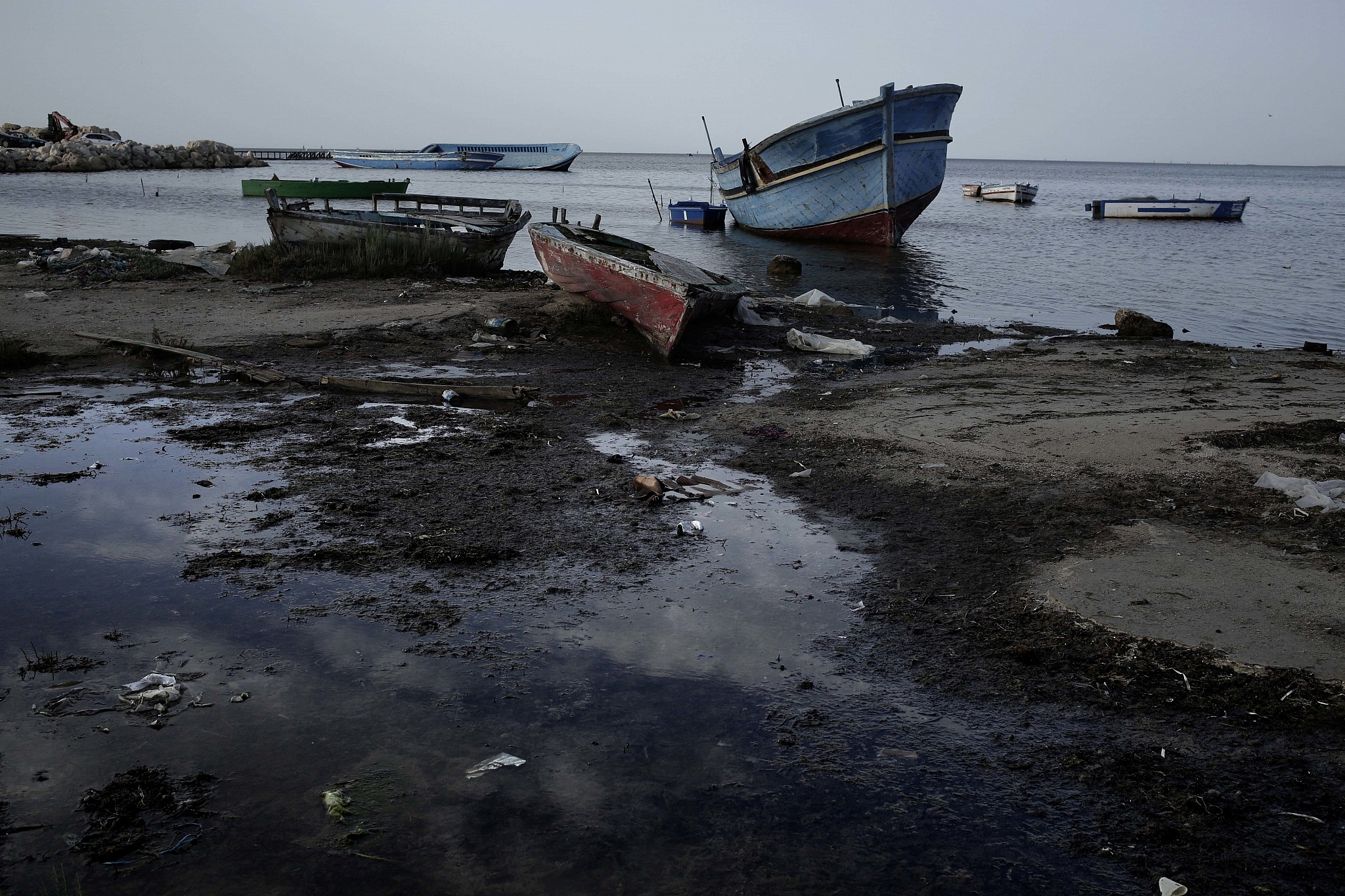
This April 16, 2018 photo shows wrecked boats that have carried migrants at the coastal city Monastir, Tunisia. (AP Photo/Nariman El-Mofty)
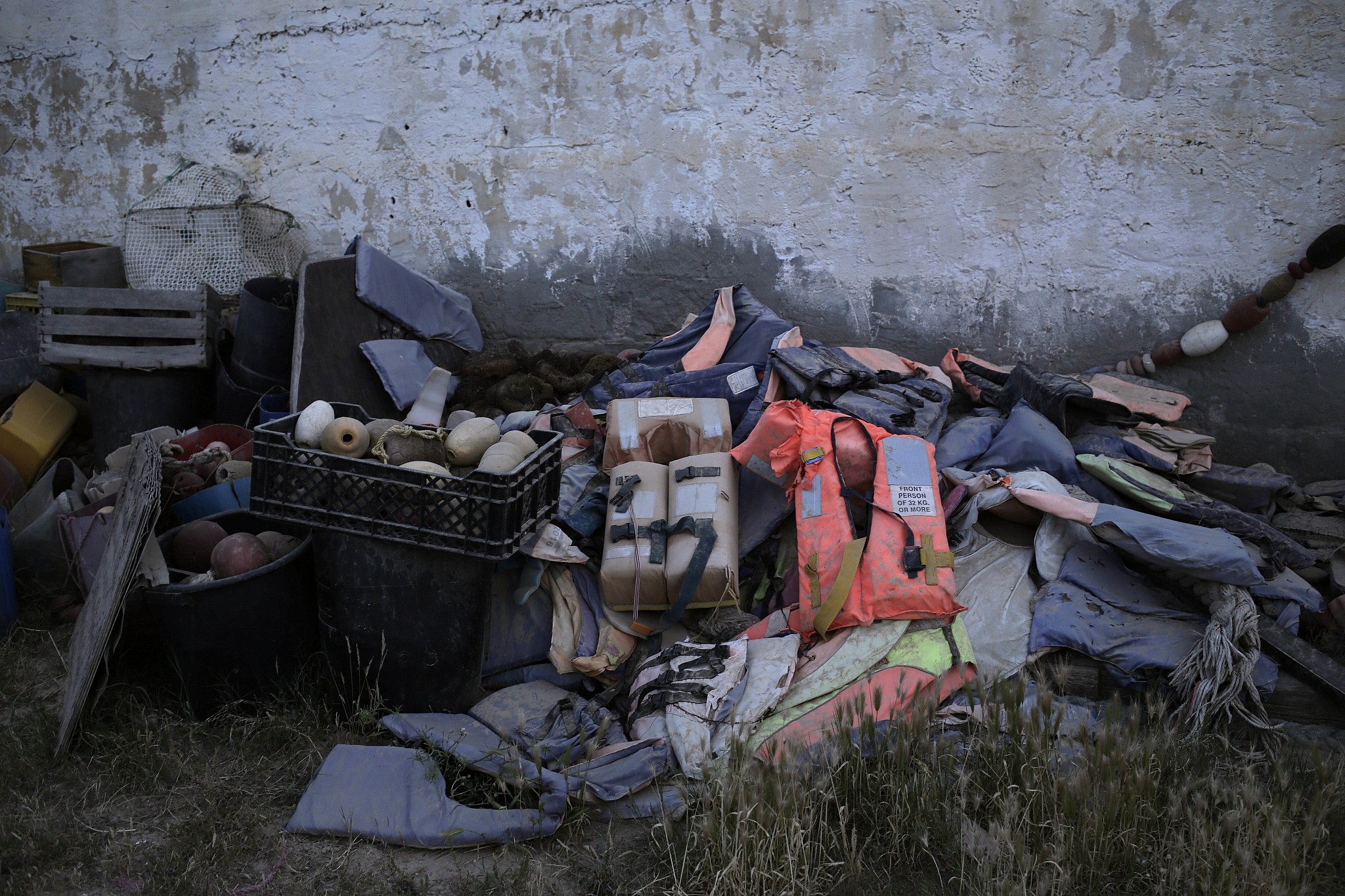
This April 15, 2018 photo shows the belongings of migrants which were collected by artist Mohsen Lahzib, who tries to create beauty out of sorrow, at his space in the southern port town of Zarzis, Tunisia. (AP Photo/Nariman El-Mofty)
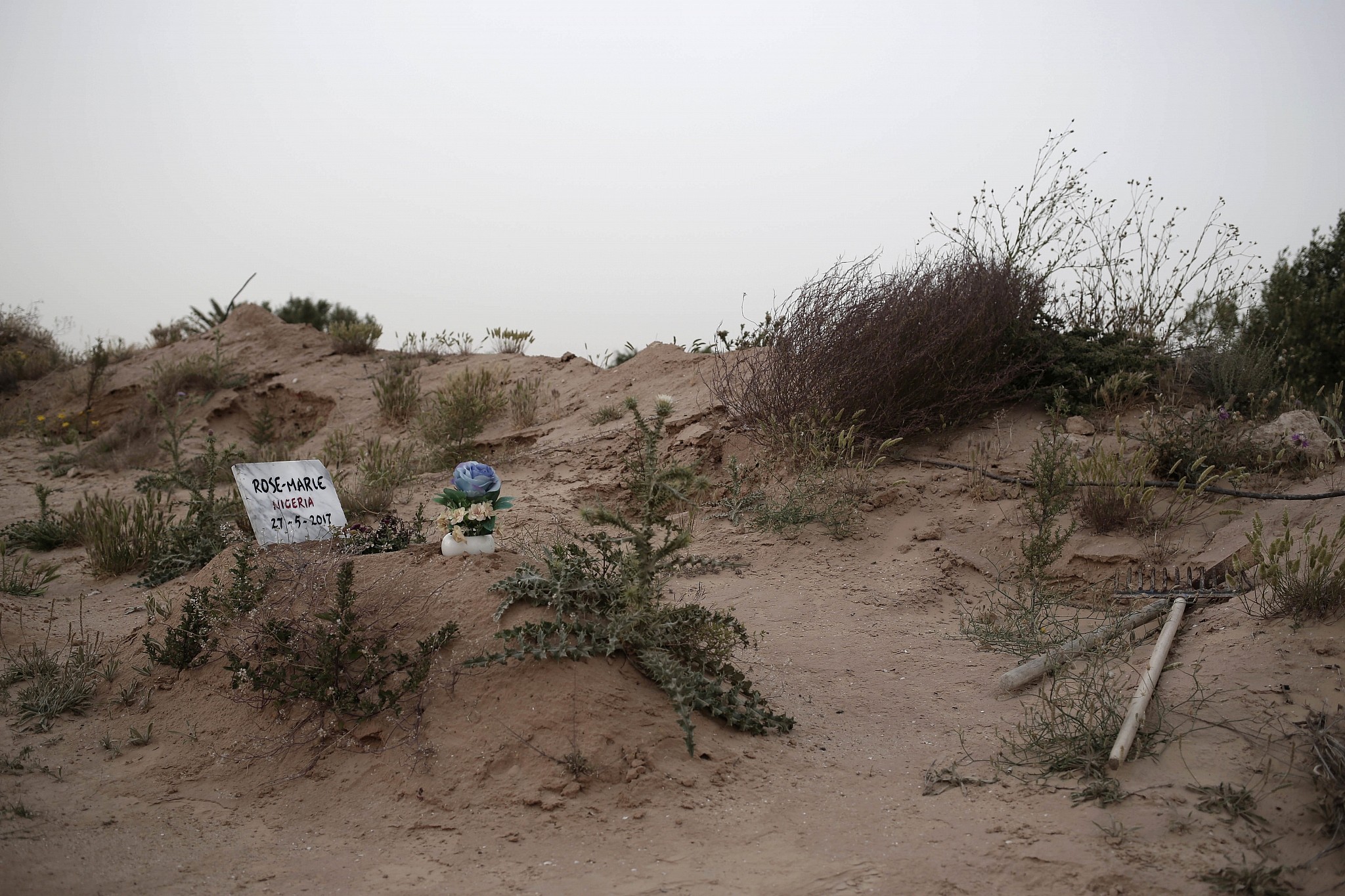
This April 15, 2018 photo shows the "Cemetery of the Unknown" which holds bodies of migrants who were found dead on the shores near the southern port town of Zarzis, Tunisia. (AP Photo/Nariman El-Mofty)
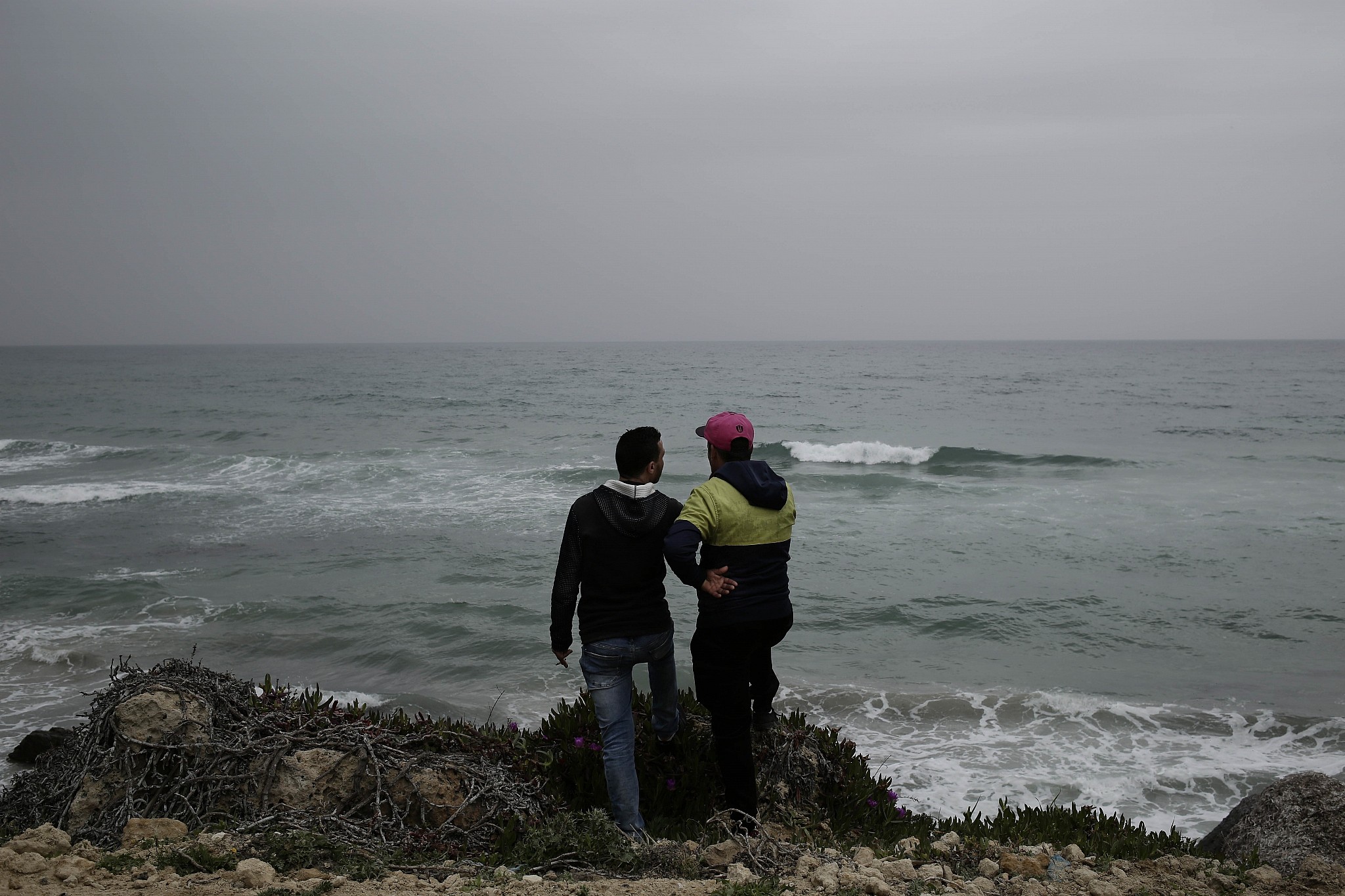
Ahmed Ayouby, 32, left, and Mounir Aguida, 30, who want to leave Tunisia, stand at the beach where migrants leave for Italy, in the town of Ras Jabal, Bizerte, Tunisia, on April 14, 2018. (AP Photo/Nariman El-Mofty)
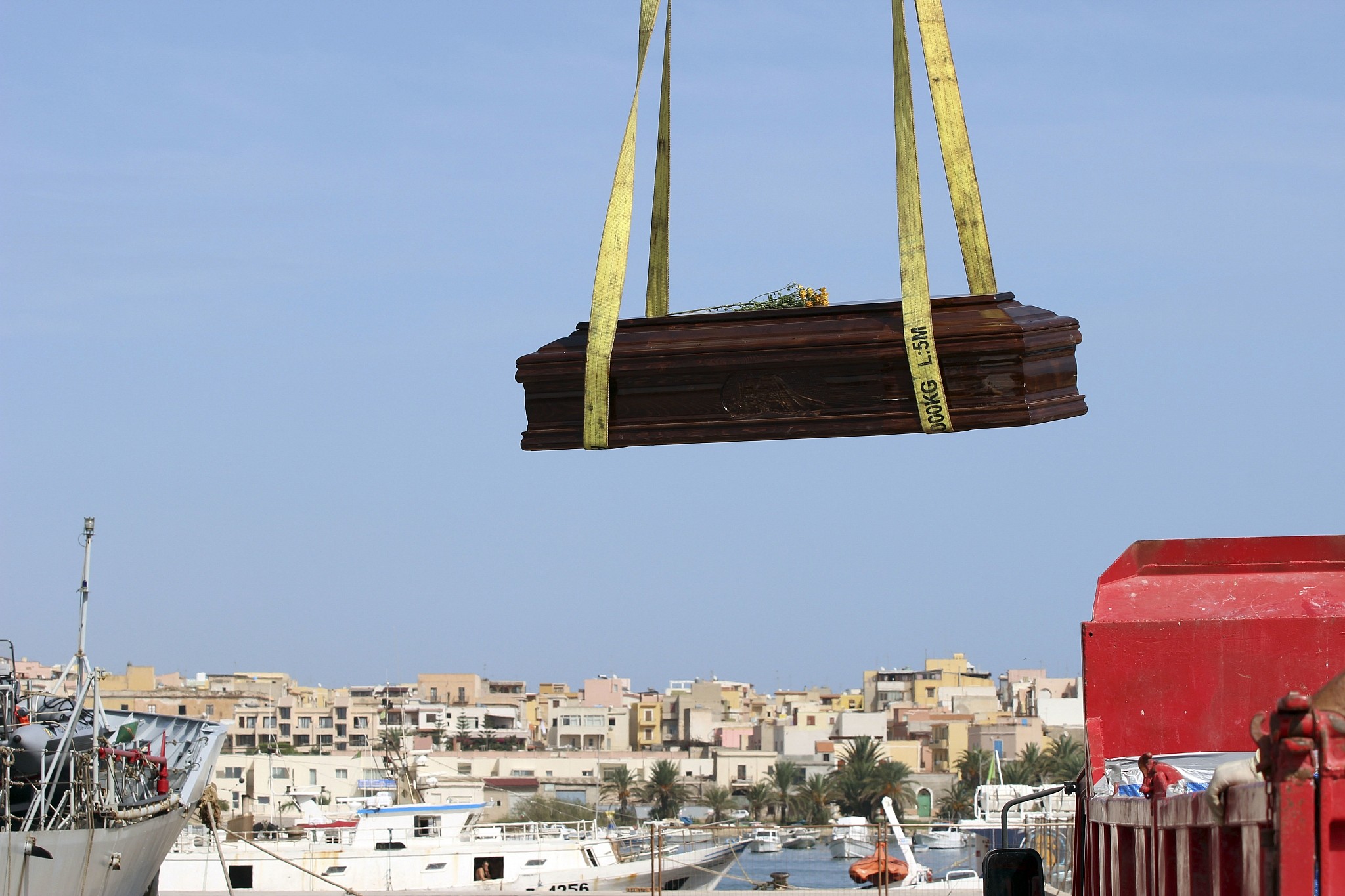
In this October 12, 2013 file photo, the casket of one of the migrants who died when their boat capsized off in the Canal of Sicily is lifted by crane to an Italian Navy ship at the Lampedusa island harbor. (AP Photo/Mauro Buccarello)
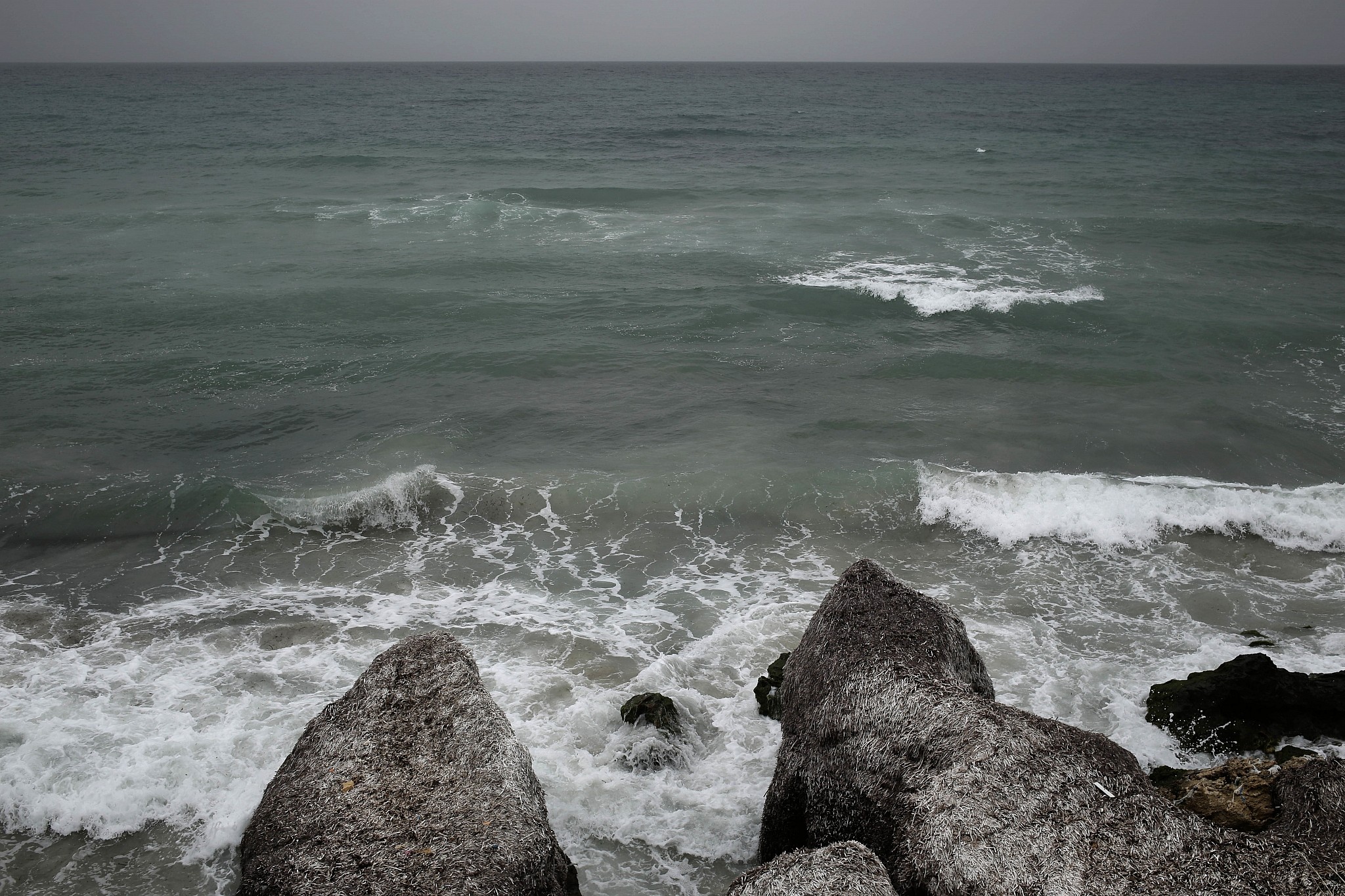
This April 14, 2018 photo shows the beach from where migrants leave for Italy, in the town of Ras Jabal, Bizerte, Tunisia. (AP Photo/Nariman El-Mofty)
RAS JEBEL, Tunisia (AP) — The boys grew up within sight of the sea that took them away, rambling along paths and climbing rocks that would later be the launching pad for their flimsy rafts.
The Mediterranean has been robbing Tunisia of its young, who abandon their homeland in hopes of a better life in Europe. At the closest points, Ras Jebel in the north and the Kerkennah Islands in the east, it’s a half-day sail if all goes well.
But the sea often swallows the rafts whole, and their passengers disappear without a trace.
Migrants who go missing are a daily reproach to political failure, so there is rarely an official count of the departed, the dead or the disappeared. However, an Associated Press tally has documented at least 56,800 migrants dead or missing worldwide since 2014 — almost double the number found in the world’s only official attempt to count them, by the U.N.’s International Organization for Migration.
This includes the 11 young Tunisians who disappeared off the coast on May 7, 2011, and were never counted by their government. They left behind parents and siblings, who on a clear day can see the island where the boat crashed against the rocks and sank. Their photos, school notebooks and clothing for the most part remain untouched in their rooms. In case they return.
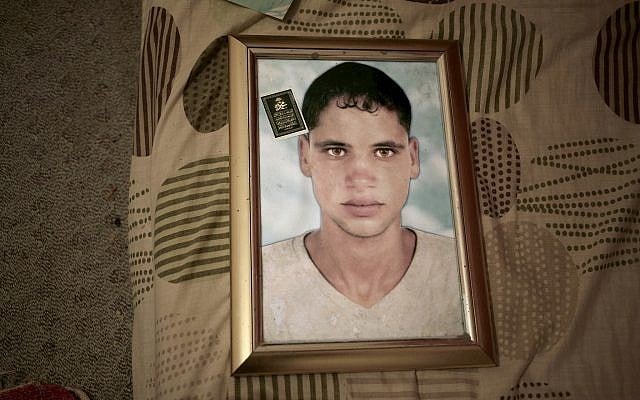
Often the tides of the Mediterranean bring ashore instead the bodies and belongings of others who attempted a similar migration — those from distant countries who hoped that the beaches of North Africa would be their last stop before Europe. These migrants have already traveled thousands of miles just to reach the Mediterranean coast, where their journey stops abruptly.
The belongings are painstakingly gathered by an artist who tries to create beauty out of sorrow — a torn pink bra, a child’s worn jacket, a pack of cigarettes. And the bodies are retrieved by a retired fisherman, who has made it his life’s work to provide a proper burial to the foreigners even though they die without a name.
“Europe is protecting its borders but has no interest in the human beings,” said Chamsedding Marzouk, the former sailor who maintains the cemetery of the unknown as a volunteer. “Who will visit the graves of our relatives when they die? Who will visit these graves? Who will weep for them?”

As a multimedia journalist, my job is to take the quality, fact-based journalism produced by The Times of Israel newsroom and make it accessible across every platform — from Instagram posts to podcasts to short-form videos.
This is how many, especially young people, consume news these days. But misinformation is rampant on social media. Our team at ToI produces accurate, responsible short-form reporting on Israel and the Jewish world.
If you believe in the importance of factual social media journalism, please consider joining our reader support group, The Times of Israel Community. Your financial support is essential to sustain responsible multimedia reporting.
— Gabriella Jacobs, multimedia journalist
We’re really pleased that you’ve read X Times of Israel articles in the past month.
That’s why we started the Times of Israel - to provide discerning readers like you with must-read coverage of Israel and the Jewish world.
So now we have a request. Unlike other news outlets, we haven’t put up a paywall. But as the journalism we do is costly, we invite readers for whom The Times of Israel has become important to help support our work by joining The Times of Israel Community.
For as little as $6 a month you can help support our quality journalism while enjoying The Times of Israel AD-FREE, as well as accessing exclusive content available only to Times of Israel Community members.
Thank you,
David Horovitz, Founding Editor of The Times of Israel
The Times of Israel Community.