

They come for the hajj but leave with carpets as Saudis chase tourism dollars
Spending by 2.35 million Muslim pilgrims rises dramatically as royals seek to diversify kingdom’s oil dependent economy
 Add ToI as a Preferred Source on Google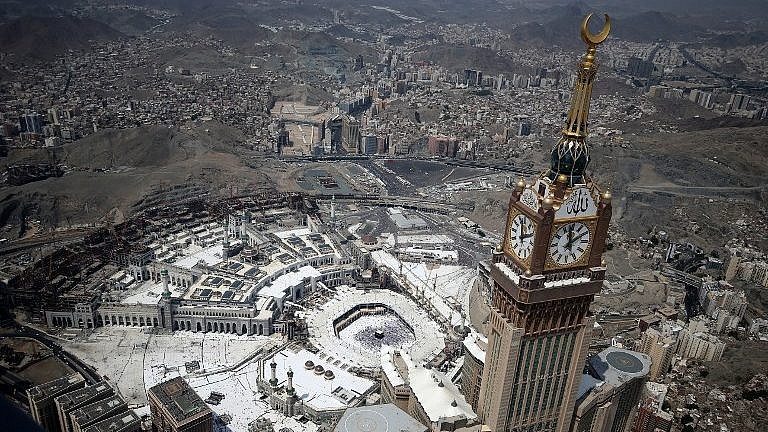
MINA, Saudi Arabia (AFP) — With global oil prices flailing, Saudi Arabia is turning to another natural resource: billions of dollars gained from religious tourism as the kingdom hosts the annual hajj pilgrimage.
Shops line the packed esplanade of the Great Mosque of Mecca, one of the holiest sites in Islam, lowering their awnings only at prayer time and re-opening their doors minutes after the mosque empties.
Saudi authorities have reported 2.35 million Muslims are participating in this year’s hajj, the pilgrimage to the western Saudi Arabian city of Mecca that forms one of the five pillars of Islam.
Of those, around 1.75 million pilgrims from 168 countries arrived from abroad, according to the state-run SPA news agency.
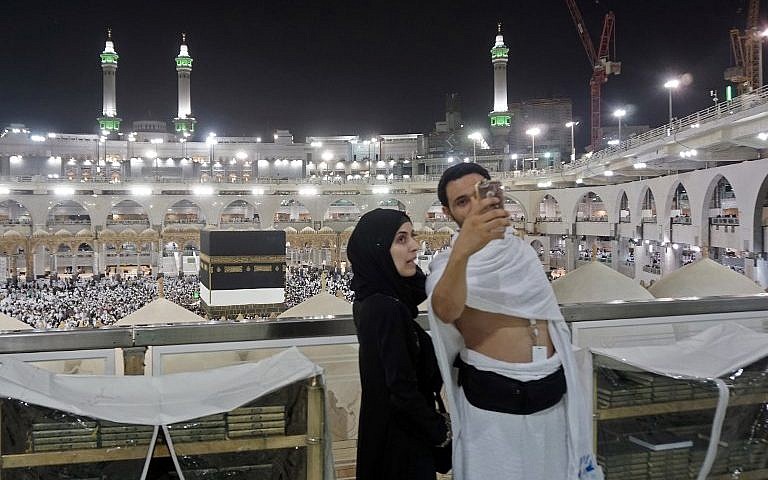
Even at the foothills of Mount Arafat, where Muslims believe the Prophet Mohammed delivered his last sermon, carpet merchants were scouting for customers among the faithful.
“The money spent by pilgrims this year could be from 20 to 25 billion riyals ($5.3 to $6.7 billion),” said Maher Jamal, head of Mecca’s Chamber of Commerce and Industry — an estimated 70 percent increase from the previous year.
Jamal told AFP the jump in revenue stemmed from a 20 percent increase in the number of pilgrims compared with last year.
Each of them contributes on average thousands of dollars to the kingdom’s domestic economy, spending money on food, lodging, souvenirs and gifts.
Religion and commerce
The increase in numbers is no accident but rather part of the ambitious Vision 2030 plan aimed at diversifying the Saudi economy, which was dealt a serious blow after oil prices plummeted in 2014.
According to historian Luc Chantre, whose research focuses on hajj during colonial times, “even before the advent of Islam, Mecca was a place for merchants.”
“It was an area of international exchange, where religion and commerce were always linked,” Chantre told AFP. “Until the discovery of oil, the hajj was Saudi Arabia’s primary source of revenue.”
Saudi Arabia — the world’s top crude oil exporter — has announced a plan to shift the kingdom’s economy away from oil dependency toward other sources of revenue, including religious tourism.
The Vision 2030 plan aims to draw six million pilgrims to hajj annually. In addition, the kingdom hopes to attract 30 million pilgrims to umrah, a lesser pilgrimage that can be completed during the rest of the year.
Years before the 2030 targets were unveiled, work was already under way to expand the capacity to accommodate as many pilgrims as possible during the five-day hajj.
The past decade has seen cranes rise above the Great Mosque for projects including the expansion of the holy mosques of Mecca and Medina, an underground metro line and new flooring built around the Kaaba — a black masonry cube which pilgrims circumambulate through now-air conditioned or ventilated corridors.
The expansion projects have been met with some criticism for distorting the ancient sites, sparking major safety concerns along the way.
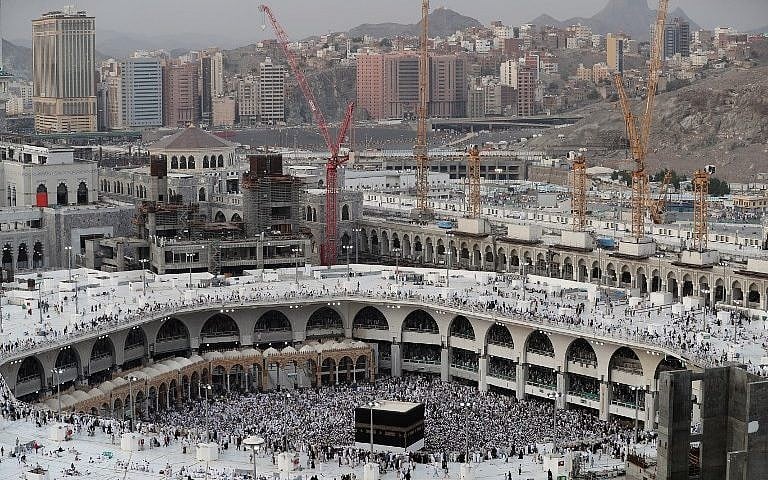
In September 2015, a construction crane crashed over pilgrims congregating at the Grand Mosque in Mecca, leaving more than 100 people dead.
Later that month, the hajj saw its worst ever disaster when a deadly stampede along the route killed around 2,300 people.
The stampede drew fierce criticism, in particular from rival Iran which reported 464 of its citizens killed.
After refusing to send pilgrims in 2016, Iranian authorities say more than 86,000 of their nationals are taking part this year.
On Friday, as pilgrims carried out the last major ritual of the pilgrimage, Saudi authorities held a televised press conference to report that the 2017 hajj had passed without major health or safety upsets.




The Times of Israel Community.