

Tough breaks: 8 things to know for October 24
Netanyahu reportedly put off elections over fears of a presidential ‘coup,’ Israel tries to keep its head down in the Khashoggi affair, and US Jews face off with Israelis
 Add ToI as a Preferred Source on Google
Joshua Davidovich is The Times of Israel's Deputy Editor
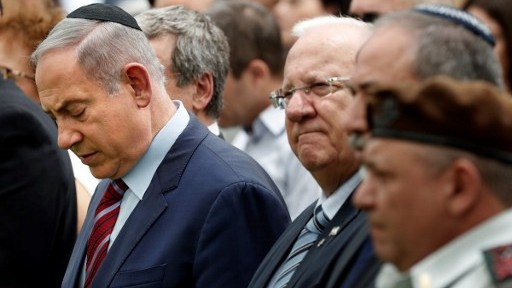
1. The president is dissing: It’s been a while since early elections have been at the top of the news agenda, with Gaza tensions and other items rising to the top of the conversation. Now the Israel Hayom daily is reporting that it may stay that way for a while, with Prime Minister Benjamin Netanyahu shelving plans for a snap poll.
- The reason? Netanyahu apparently got word that President Reuven Rivlin would not give him first dibs at forming a government, even if the Likud party came away with the most seats.
- As president, Rivlin has a fair amount of leeway in choosing who gets the first chance to form a government. While most polls show Likud comfortably winning over 30 seats again, the ideological blocs from which governments can be formed remain about even, depending on how a few wild cards swing. In 2009, then-president Shimon Peres turned to Netanyahu to form a coalition, despite Likud having fewer seats than Kadima (which Peres hailed from).
- According to the report, which cites an unnamed Likud source, later identified as former minister Gideon Sa’ar (who denies the report), Netanyahu is looking into different ways of dealing with the issue, including legislation that would take away pretty much the only power the president has.
- “This is the most rotten maneuver in history,” another senior Likud source tells the paper. “They know they can’t replace Netanyahu with elections so they are trying anyway they think of to push him out of his seat.”
2. Paranoid: Responding to the report, Rivlin’s office called it “paranoia.”
- Nonetheless, coalition head David Amsalem says he’ll bring a law forward to tie Rivlin’s hands, calling the reported attempt a “kind of coup.”
- Tourism Minister Yariv Levin also voices support, telling the Kan public broadcaster that “there is a gap in the law regarding presidential authority in the forming of a government, and it needs to be fixed.”
3. Charges loom: The report comes hours after Hadashot news reported that police had wrapped up their investigative work in the probes against Netanyahu and were starting to put together recommendations on whether to indict.
- According to the channel, indictments could come as early as the spring.
- Why that matters is that the looming indictments were seen as the main impetus driving Netanyahu to elections. If Netanyahu wants to head-off the rap sheet and hold elections by March, he’ll have to dissolve the Knesset in the next few weeks at latest.
- Once new elections are called, though, it could give the attorney general pause before releasing indictments, or a statement dropping the case, for fear of interfering in the democratic process.
4. Caught in the crossfire: Like many Western counterparts, most Israeli newspapers are prominently covering the killing of Saudi journalist Jamal Khashoggi.
- The coverage isn’t just rubbernecking. Israel does have some skin in the affair, given its role in the region, and while Khashoggi was certainly no fan of Israel, his bumbling murder has put Jerusalem in an even worse spot, writes ToI’s Raphael Ahren.
- “On the one hand, it does not want to see Riyadh’s position in the region diminished in favor of Tehran, or Ankara,” he writes. “On the other hand, Israel should be careful not to be regarded as Riyadh’s mouthpiece in the US and Europe, several analysts interviewed for this article warned.”
- Former US envoy Dan Shapiro, who has commented extensively on the case, tells Ahren that “it would have significant negative reputational impact on Israel to be seen as the defender and as the explainer and as the advocate of MBS after this brutal performance, which was followed by several weeks of lying — which actually still continues — about what happened in Istanbul.”
5. The Turks won’t talk, and maybe now the Saudis won’t either: That “damned if you do, damned if you don’t” role is likely behind Jerusalem’s total silence on the matter.
- Yedioth Ahronoth’s Ronen Bergman writes that things may be even worse than they seem, surmising that some of the people taking the fall were also those Israel was in talks with, as part of the not secret/secret Saudi-Israel relationship.
- And Israel also does not see ties flowering with Ankara out of the affair: “I wish the Turks would have the same determination in collective intelligence when it comes to Hamas and senior officials in its country like they are showing toward the killing of the Saudi journalist,” an Israeli intel source tells Bergman, pining for the return of the now obsolete Jerusalem-Ankara intelligence sharing relationship.
- Haaretz’s Anshel Pfeffer writes that Turkish leader Recep Tayyip Erdogan is milking the affair for all the international leverage he can, specifically referring to a speech by Erdogan, in which he offered some news on the investigation, but held his cards close to his chest on other info.
- “This wasn’t the same Erdogan who often viciously attacks his rivals with angry slurs. He was speaking with all the politeness of a mafia don informing his victim, ‘I know where you live,’” he writes.
6. Tour de fire: Gaza has calmed down somewhat, but there are still almost daily low level protests near the fence and fire balloons being launched into Israel.
- A picture making the rounds in Israeli social media Wednesday shows a child on a bike as a line of fires rage behind him.
https://twitter.com/ShaiCohen13/status/1054775483429281792
- Yedioth calls it a “photo that became a symbol,” writing that it was snapped by a member of Kibbutz Miflasim who saw some kids, including 7-year-old Yonatan Regev, pictured, riding away after being told by fire authorities to scram.
- While not nearly on the same level, the picture is somewhat reminiscent of an iconic photo snapped of a kid riding his bike near burning oil fields outside of Mosul, Iraq, in 2016.
7. Playing for the tourist vote: Like Israel’s beaches, food, weather and style of parliamentary democracy, but not enough to live here? Good news. MK Betzalel Smotrich told a group of visiting Jewish leaders on Tuesday that he wants to propose a bill giving American Jews who visit for a couple weeks a year the right to vote.
- A Jew who decides to spend two weeks in Israel “cares about Israel, is connected to it and knows what’s going on here,” said Smotrich, a freshman lawmaker, who has frequently been mired in controversy, most recently for calling to kneecap a teenage Palestinian girl.
- The move would seem strange both for diluting the vote of actual Israeli citizens, as well as the fact that it comes as a time when Israel has been giving more and more visiting Jews the business over perceived criticism of the government or support for Palestinians. Would Smotrich support giving Peter Beinart the vote?
- And while most American Jews are more liberal than most Israeli Jews, there is also the fact that many of the Orthodox American and French Jews who visit Israel yearly, who own those ghost apartments making wastelands of Jerusalem, Tel Aviv, and Netanya, can be quite far to the right.
8. Two peoples separated by a common religion: JTA’s Ben Sales reports that the discrepancies between how American and Israeli Jews think is on full display at the JFNA conference, where Smotrich made his pitch.
- “Around the conference hall in North Tel Aviv, signs displaying a series of statistics showed that the world’s two largest Jewish populations don’t think alike: Sixty percent of American Jews believe in the possibility of a Palestinian state, versus 40 percent of Israeli Jews. Half of American Jews are liberal. Israeli Jews? Eight percent,” he writes.
- “I think you have an American Jewry that is growing up and is focused, especially in the younger generation, on social action, social justice issues, and [who] aren’t really looking through an Israeli lens,” Federations head Jerry Silverman tells him.
- Putting it in ever starker terms, Rabbi Amitai Fraiman, who organizes tours for Israelis around New York to show them the context of American Jewish liberalism, says “Israelis have a huge knowledge gap.”
- “They don’t have an emotional connection because they can’t sympathize with a country they can’t understand,” he’s quoted saying. “When you’re able to see with your eyes and walk with your feet in these places, you make this emotional connection, you can empathize with the other.”






The Times of Israel Community.