

Trump uses Israel to fuel partisan fires at home
Aides say US president deliberately accuses his critics of being anti-Semitic or anti-Israel to shore up support among conservative voters
 Add ToI as a Preferred Source on Google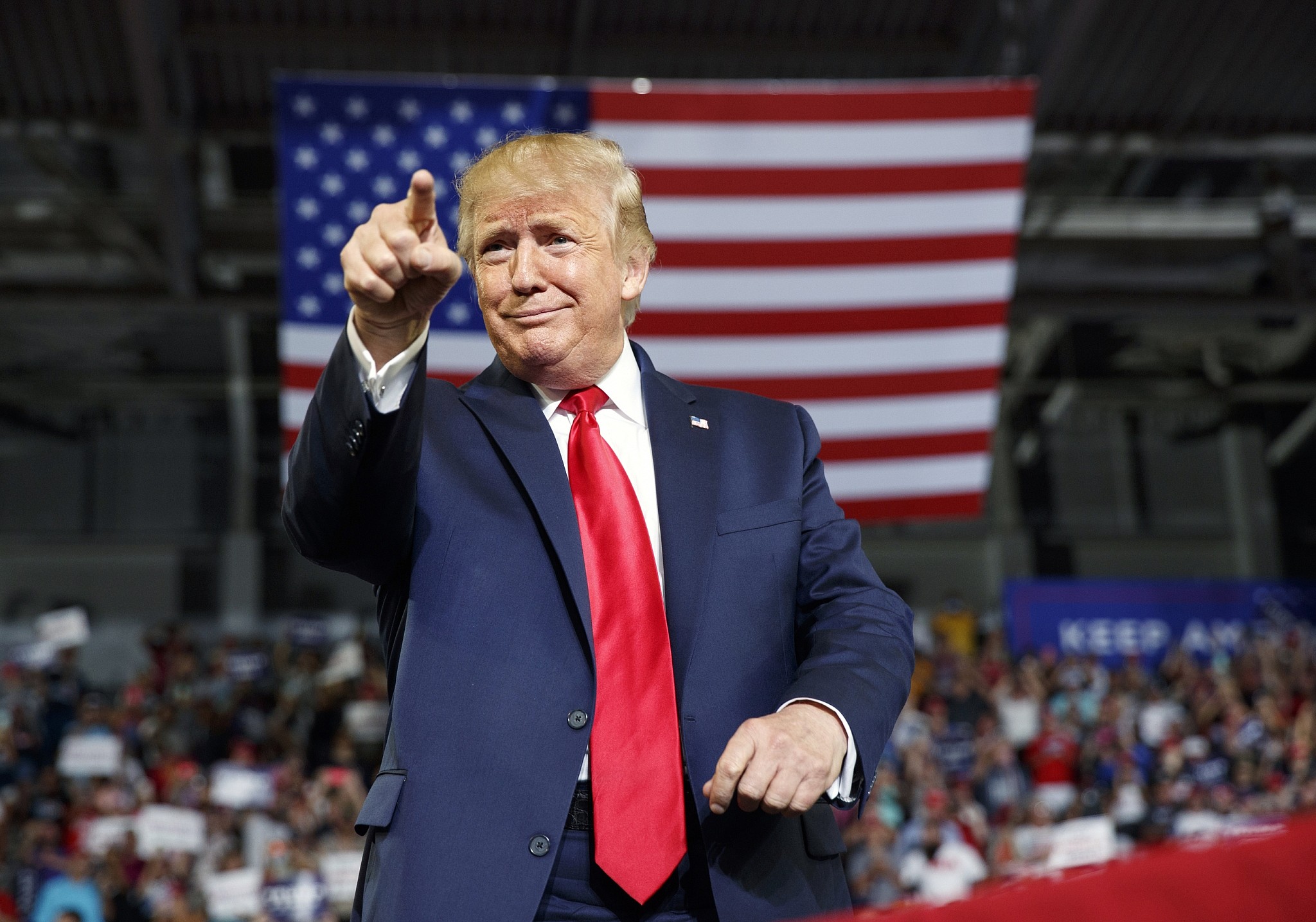
WASHINGTON (AP) — US President Donald Trump’s encouragement and support of Israel’s decision to ban two Democratic lawmakers may play well to his political base, but it could endanger the foundations of the US-Israel relationship in the longer term.
The move to bar Representatives Rashida Tlaib of Michigan and Ilhan Omar of Minnesota from Israel fueled a partisan fire over the Jewish state that has been raging in the United States, with Trump eagerly fanning the flames.
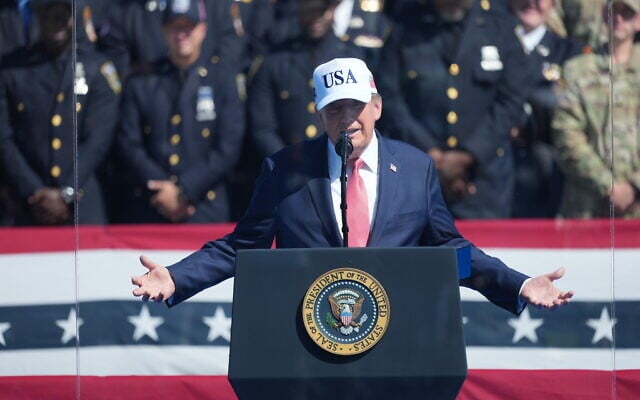
Trump celebrated Israel’s decision on Twitter and framed the issue in decidedly political terms: “Representatives Omar and Tlaib are the face of the Democrat Party, and they HATE Israel!”
Shortly before the decision was announced, Trump offered a not-so-subtle nudge to Prime Minister Benjamin Netanyahu, tweeting that “it would show great weakness” if Israel allowed the women to visit.
Bipartisan support from Congress has been a bedrock of the US-Israel relationship since Israel’s founding, and critics of Thursday’s decision said they worried that Trump and Netanyahu were exploiting the situation for short-term political gain.
Netanyahu faces an election next month, and Trump next year.
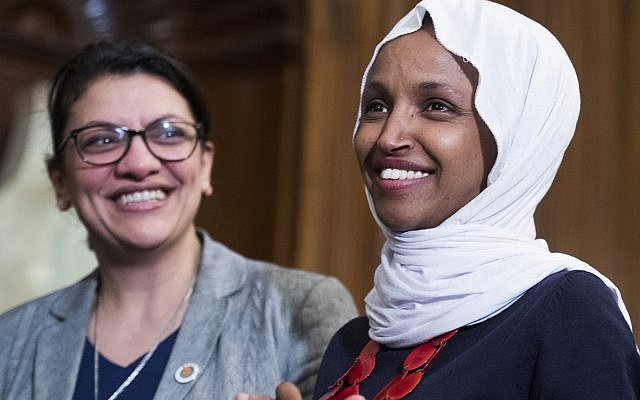
Tlaib and Omar, two newly elected Muslim members of Congress, are outspoken critics of Israel’s treatment of the Palestinians. They had planned to visit Jerusalem and the West Bank on a tour organized by a Palestinian organization aimed at highlighting the plight of the Palestinians.
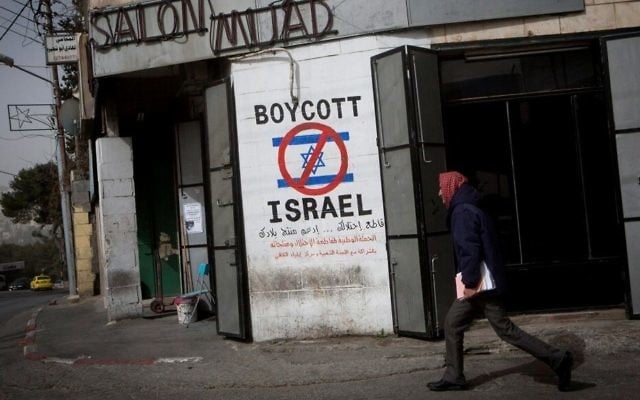
Israel cited their support for the so-called “boycott, divestment, sanctions” movement, or BDS, in support of the Palestinians. Israel, and many pro-Israel US politicians, believe BDS is anti-Semitic and seeks the destruction of the Jewish state, something its proponents deny.
But even some of Israel’s strongest supporters denounced Thursday’s move, saying it would deepen existing divides in the US over support for Israel.
Senate Minority Leader Chuck Schumer of New York, the highest-ranking elected Jew in the country and one of Israel’s staunchest defenders, said the move “will only hurt the US-Israeli relationship and support for Israel in America.”
“Denying entry to members of the United States Congress is a sign of weakness, not strength,” he added.
The American Israel Public Affairs Committee, which has sought to stay above the partisan fray over Israel, weighed in against the decision.
“We disagree with Reps. Omar and Tlaib’s support for the anti-Israel and anti-peace BDS movement, along with Rep. Tlaib’s calls for a one-state solution,” AIPAC said in a tweeted statement. “We also believe every member of Congress should be able to visit and experience our democratic ally Israel firsthand.”
Although there has been partisan friction between the US and Israel in the past, Trump has sought to exploit it unlike any of his predecessors. The seeds were planted during the contentious debate and negotiations over president Barack Obama’s 2015 Iran nuclear deal, which Netanyahu vociferously opposed.
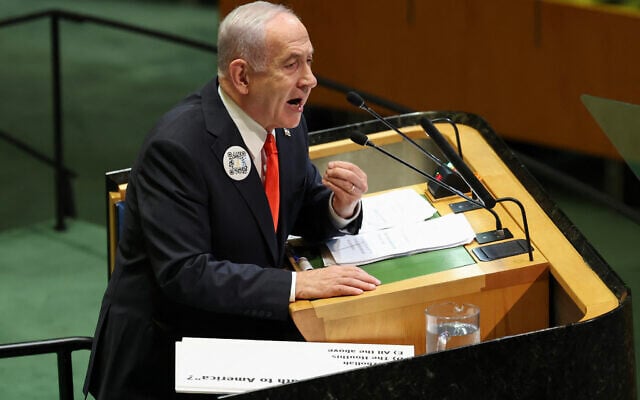
Netanyahu spoke at length against the deal at every opportunity he had, including on numerous occasions in the United States while at the White House, before a joint session of Congress and at the United Nations.
Republican lawmakers overwhelmingly opposed the deal, agreeing with Netanyahu’s argument that it opened, rather than closed, Iran’s path to a nuclear weapon because many of its most onerous restrictions expired over time. Then-candidate Trump seized on the issue, campaigning on an unabashedly pro-Israel platform that had withdrawing from the nuclear deal as a top goal.
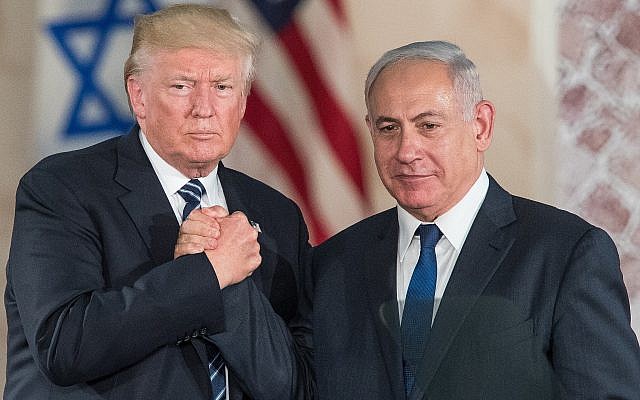
As president, Trump decided against the advice of former top aides and over the objections of Democrats to recognize Jerusalem as Israel’s capital, move the embassy there from Tel Aviv, recognize Israeli sovereignty over the Golan Heights and slash assistance to the Palestinians.
Trump has tried to silence his critics and opponents of his decisions by accusing them of anti-Semitism and of being insufficiently pro-Israel.
In recent months, Trump has tried to elevate the two Democratic women of color to the fore of the nation’s political debate, believing they will repel Democratic voters, according to Trump allies.
It’s part of a Trump strategy that has placed racial animus at the forefront of his reelection campaign in an effort that his aides say is designed to activate his base of conservative voters and those who fear cultural changes across America. The aides, who spoke on condition of anonymity to discuss campaign strategy, also say Trump is banking that his loud support for Israel will attract more Jewish and evangelical Christian supporters.
His latest exhortation to Netanyahu to bar Omar and Tlaib from Israel may play well with his base, including the evangelical community he will need to win reelection, but it complicates matters for other parts of the administration, notably the State Department.
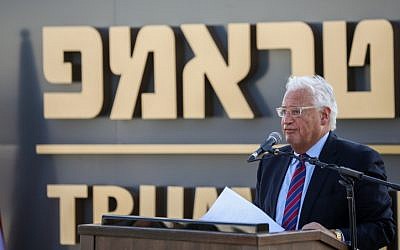
Although the US ambassador to Israel, David Friedman, tweeted support for the ban, his embassy’s primary responsibility is ensuring the safety and security of Americans overseas.
For Israel, the West Bank and Gaza, that has long meant, and still does, a call for all Americans, including those of Palestinian descent or with pro-Palestinian views, to be treated fairly and equally by Israeli authorities.
“The US government seeks equal treatment and freedom to travel for all US citizens regardless of national origin or ethnicity,” the department says in its latest travel advisory for Israel. The advisory notes that some Arab Americans, including Palestinian Americans, “have experienced significant difficulties and unequal and hostile treatment at Israel’s borders and checkpoints.”
The department urges those who have faced such treatment to immediately report it to the American Citizen Services unit at the embassy in Jerusalem.







The Times of Israel Community.