

Trump’s moment: How the US president can help Netanyahu make the wise choice on Gaza
Israel’s threat of expanded war has yielded the opportunity for precisely the kind of deal the PM had been demanding. The US can make sure he takes it by brokering the terms for a post-Hamas era

 Add ToI as a Preferred Source on Google
David Horovitz is the founding editor of The Times of Israel. He is the author of "Still Life with Bombers" (2004) and "A Little Too Close to God" (2000), and co-author of "Shalom Friend: The Life and Legacy of Yitzhak Rabin" (1996). He previously edited The Jerusalem Post (2004-2011) and The Jerusalem Report (1998-2004).
This Editor’s Note was sent out earlier Wednesday in ToI’s weekly update email to members of the Times of Israel Community. To receive these Editor’s Notes as they’re released, join the ToI Community here.
Israel stands at a fateful crossroads.
After 22 months of war triggered by Hamas’s invasion and massacre, having radically degraded the terror group’s 24-battalion army but failed to secure the release of the final 50 of its hostages, Israel under the government of Prime Minister Benjamin Netanyahu faces a clear-cut choice: It can choose to approve a proposal, ostensibly accepted by Hamas and broadly similar to the government’s own previously advocated frameworks, for a phased accord ultimately intended to see all the hostages returned and the war brought to an end. Or it can press ahead with a planned expansion of the war into Gaza City in an effort to compel Hamas to accept an all-at-once comprehensive deal — to sign off, that is, on terms for its surrender.
The coalition’s strategy for achieving its three core war goals — destroying Hamas, bringing home the hostages and ensuring that Gaza can never again pose a threat to Israel — has been incoherent and inconsistent from the start. The leadership has never been able to reconcile the determination to utterly destroy Hamas with the imperative to get back all the hostages — because Hamas abducted those hostages, and will not let them all go, precisely to ensure that it could survive the war it deliberately precipitated in its ongoing strategic determination to destroy Israel.
Floundering and internally riven, the coalition has spoken and acted in ways increasingly damaging to core national interests: to Israel’s internal cohesion, its moral compass, and its international legitimacy. It has expanded and contracted the war. It has approved deals and, most recently, in March, abrogated them. Key members have openly declared the goal of occupying and resettling the Gaza Strip; the prime minister has denied any such intention but disciplined nobody for asserting it. One minister last month declared that Israel was “racing ahead for Gaza to be wiped out” and that “all Gaza will be Jewish.” Netanyahu clarified that this was not government policy but, again, the minister remains in situ.
Appallingly, for 11 weeks between March and May, the coalition ordered a halt to all aid supplies into Gaza, asserting that there was sufficient food and other vital aid available inside the Strip but that Hamas and other armed groups were stealing it. This may well have been the case, but as the IDF subsequently acknowledged, adequate aid was not available to all Gazans. Hamas — which of course steals as much of the aid as it can, feeds itself and extorts Gaza’s noncombatants for the rest, filling its coffers and funding its recruitment — made major international media play of undernourished Gazan children.
The no-aid policy deepened Israel’s global pariah status, fueled a further spike in antisemitism, stirred deep dismay and criticism among Jews worldwide, and left many Israelis ashamed of their government’s policy. Needless to say, it did not force a softening of Hamas’s terms for a hostage-ceasefire deal, since Hamas cares not a whit for the suffering of the Gazan populace, on whose head it brought down this war with its October 7, 2023, massacre in southern Israel.
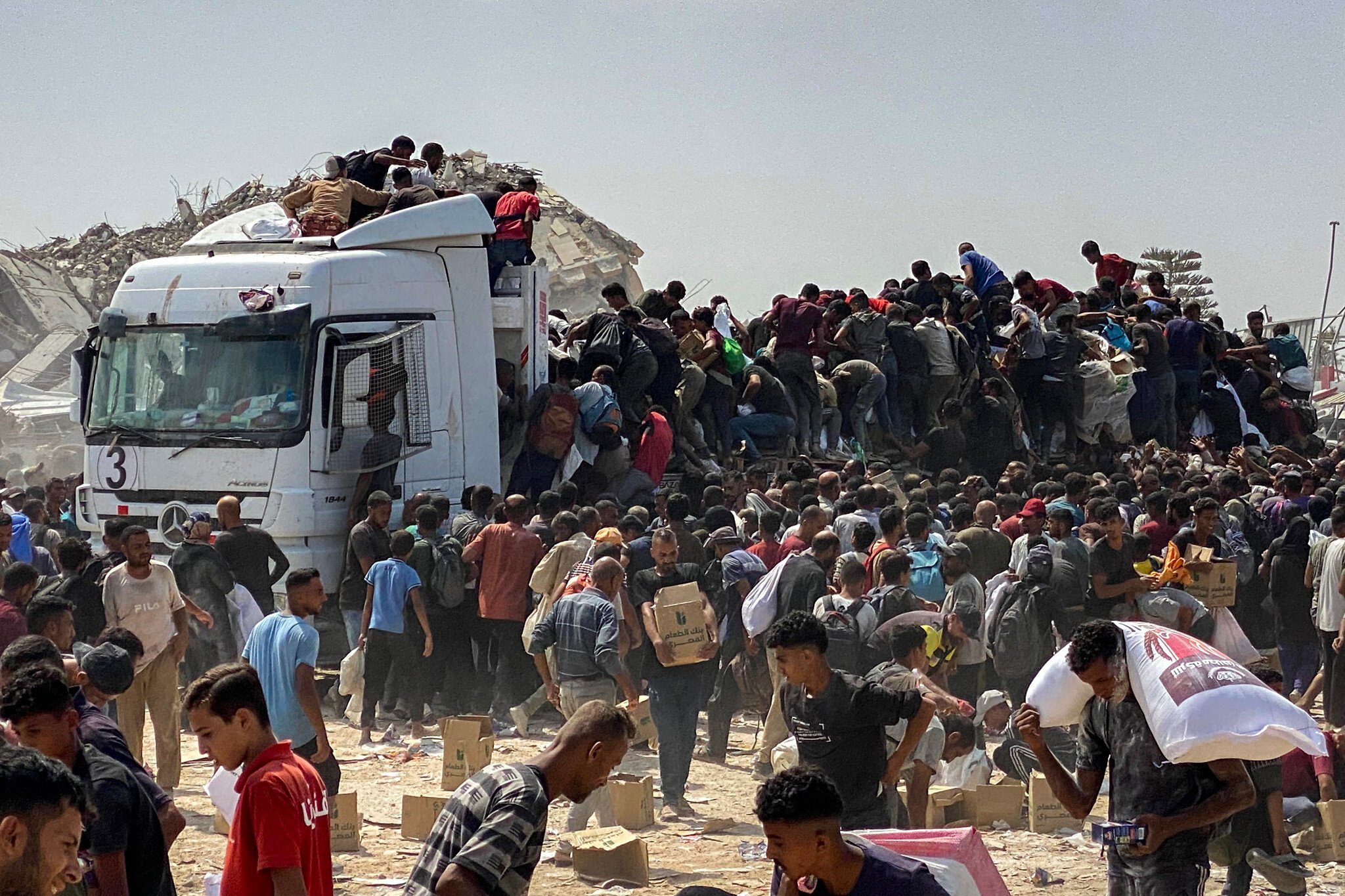
Now Israel, far, far too late, has restored aid supplies, and this week its finance minister approved billions of dollars in aid for Gaza — the same would-be West Bank- and Gaza-annexing finance minister who vowed in April, during the aid suspension, that “not a single grain of wheat” would enter the Strip.
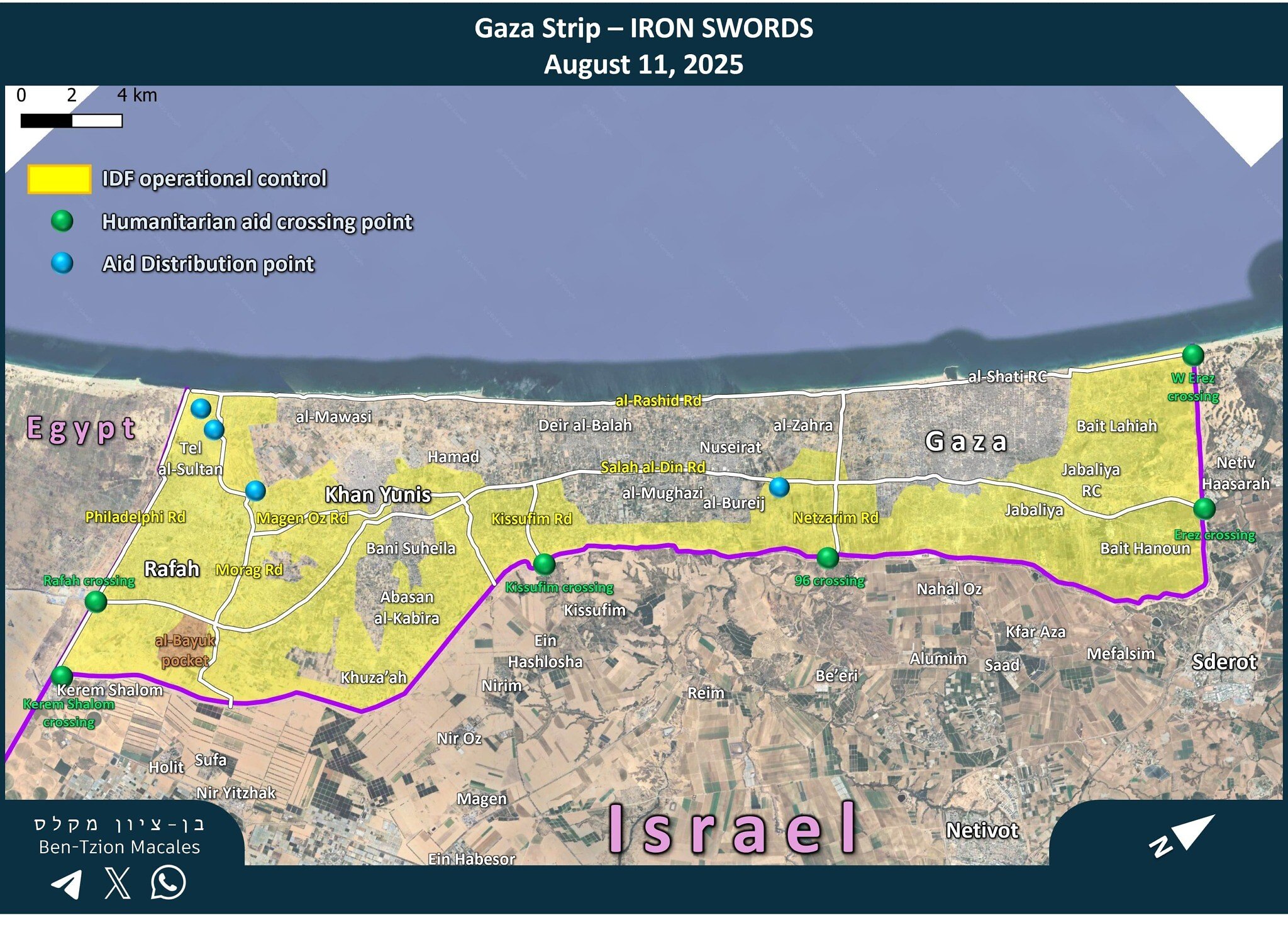
Netanyahu this week attributed Hamas’s declared acceptance of a version of the so-called Witkoff proposal to the “immense pressure” the terror group is under, as the IDF gears up to order the evacuation of something in the order of a million Palestinians from Gaza City and to conquer what he has termed the last key Hamas stronghold. The question is whether Israel should capitalize on that, suspend the expanded war, and cut the deal, or press on into Gaza City, risk the lives of hostages believed to be held there, risk the lives of more soldiers, further exhaust an over-extended standing and reservist IDF, and garner increased world opprobrium and isolation, possible sanctions, and international support for a Palestinian state.
As of this writing, Netanyahu is considering how to proceed, while the military leadership is gearing up its Gaza City preparations.
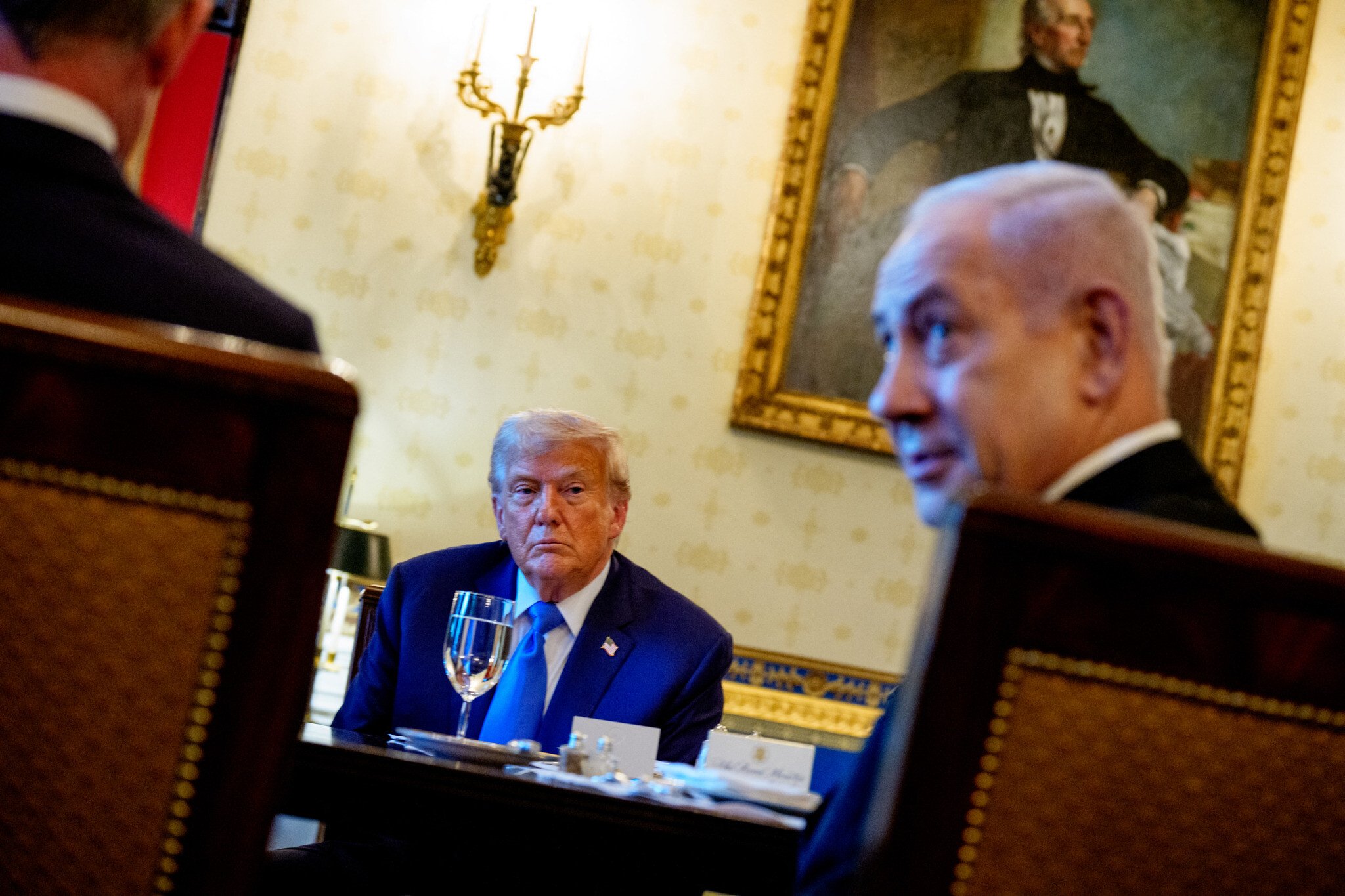
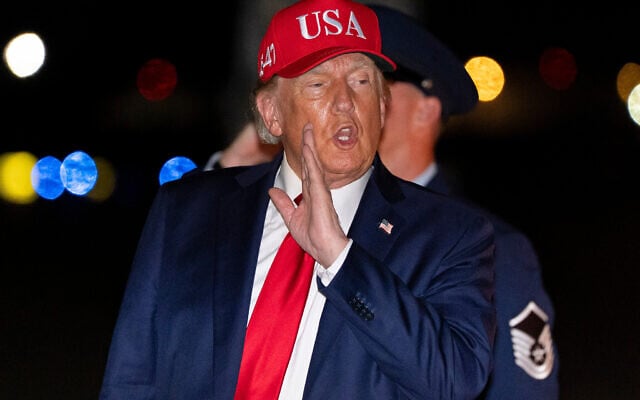
This is where US President Donald Trump can step in. His repeatedly stated goal has been to bring the war to a rapid end and to secure the release of all the hostages. His heart is with Israel, but parts of his base are no longer with us; Israel is losing young Americans across the spectrum. As elsewhere, more and more of the US public overall has shifted from horror at Hamas’s barbarism, via a certain admiration for aspects of Israel’s response — including the devastation wrought on Hezbollah, and the 12-day assault on Iran’s nuclear and ballistic missile programs — to a conviction that an extremist Israeli government is fueling radicalism. An April Pew survey, conducted during the aid ban, found most Americans now have an unfavorable view of Israel.
“We will only see the return of the remaining hostages when Hamas is confronted and destroyed!!! The sooner this takes place, the better the chances of success will be,” the US president wrote on Monday, implying support for Netanyahu’s planned war expansion.
But the capacity to demolish Hamas and its ability to implement its “destroy-Israel” raison d’être in the long term requires not only defeating its army — which Israel has largely achieved — but also disarming it and demilitarizing the Strip, and eliminating its currently robust capacity to maintain its rule of fear as the only governing authority in Gaza.

Trump’s ubiquitous Special Envoy Steve Witkoff played a key role in finalizing the January truce-hostage deal that Israel essentially abrogated in March, though he may have been less involved in the slightly revised phased framework that Hamas now claims to accept.
Where Trump, via Witkoff, could and should now act is in negotiating terms for the “day after” in Gaza. Hamas will not give up; it has to be moved aside, and that requires the establishment of alternative governance. Egypt — which has stepped up its mediating role, somewhat sidelining the Al-Jazeera-funding, Hamas-backing Qatar — has proposed installing a government of Palestinian technocrats in postwar Gaza, as part of a mechanism that would enable Egypt, Jordan, the UAE and others to, legitimately in Arab eyes, become deeply engaged in ensuring the demilitarization of the Strip and its reconstruction.
This is precisely the kind of mechanism that Netanyahu has been demanding as part of his five requirements for ending the war: a non-Israeli, non-Hamas, non-Palestinian Authority civilian governing body, as he said earlier this month, “that basically is willing to live in peace with Israel and give Gazans a different future.”
Trump’s opening here is to broker a deal — not between Israel and Hamas, which will never sign off on its own path to oblivion, but between Israel and the regional actors who have indicated willingness in principle to step in and rehabilitate the Strip. Netanyahu doesn’t want the PA there. Regional players and Israel’s (now unreliable) international allies have demanded a role for the PA, while stressing the imperative that it be reformed and closely overseen. Washington should strive to produce a viable accommodation, paving the way for non-Hamas governance, negotiating a security mechanism that enables Israel to intervene when necessary, and conditioning the rehabilitation and reconstruction of Gaza on its demilitarization.
Rather than expanding the war, Trump has the unique ability to encourage Netanyahu to move ahead with the Witkoff proposal, secure the release of as many hostages as possible, and prepare to put in place a US-backed mechanism for postwar Gaza in which, as Israel requires, Hamas is disarmed and marginalized.

The expanded war carries far more dangers than benefits, including the potential destabilizing of the Israeli-Egyptian peace accords. It also risks further drastic erosion of support from the one ally Israel simply cannot lose: the United States.
The threat of expanded war, by contrast, has yielded a genuine opportunity. The one person who can best persuade Netanyahu to seize it — to defy the far-right parties in his coalition who have prodded his intermittently unconscionable, non-strategic war policies — is Trump.
He’d deserve the Nobel Peace Prize he seeks. Israelis and Gaza noncombatants deserve peace or, if that’s a long, long way off, then at least a path toward it.








The Times of Israel Community.