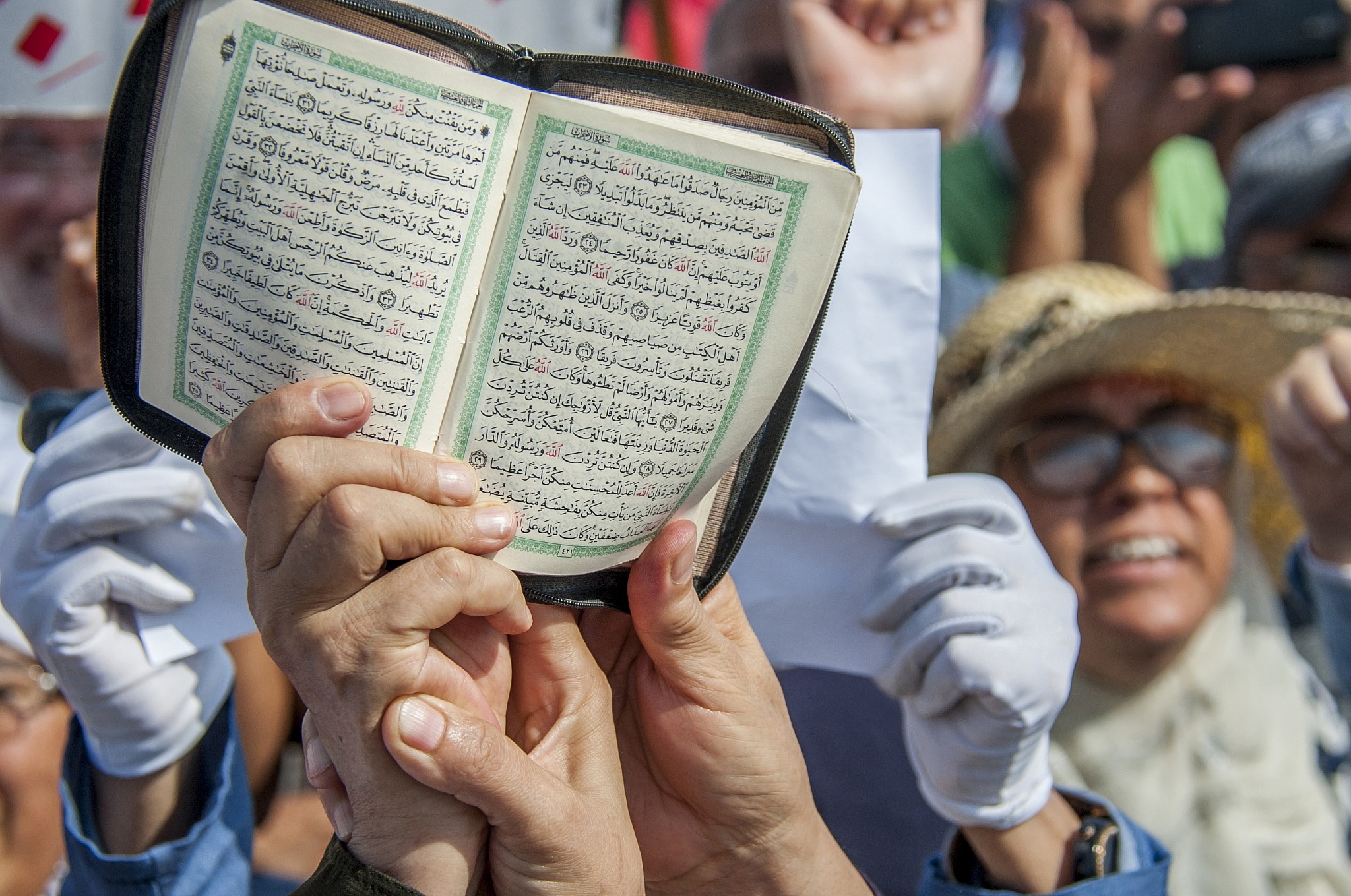
A person holds a copy of the Quran during a demonstration in Tunis, August 11, 2018. (AP Photo/Hassene Dridi)
TUNIS, Tunisia (AP) — Tunisia’s president promised Monday to submit a bill to parliament soon that aims to give women equal inheritance rights to men, as debate over the topic of inheritance reverberated around the Muslim world.
In a speech marking Women’s Day in Tunisia, President Beji Caid Essebsi said he wants to submit the proposal “as soon as possible,” probably when parliament resumes in October.
The current system, which is based on Islamic Sharia law, generally grants daughters only half the inheritance given to sons, and is standard practice in most Muslim countries.
Many Muslim clerics see the inheritance rules as enshrined in the Quran, Islam’s holy book.
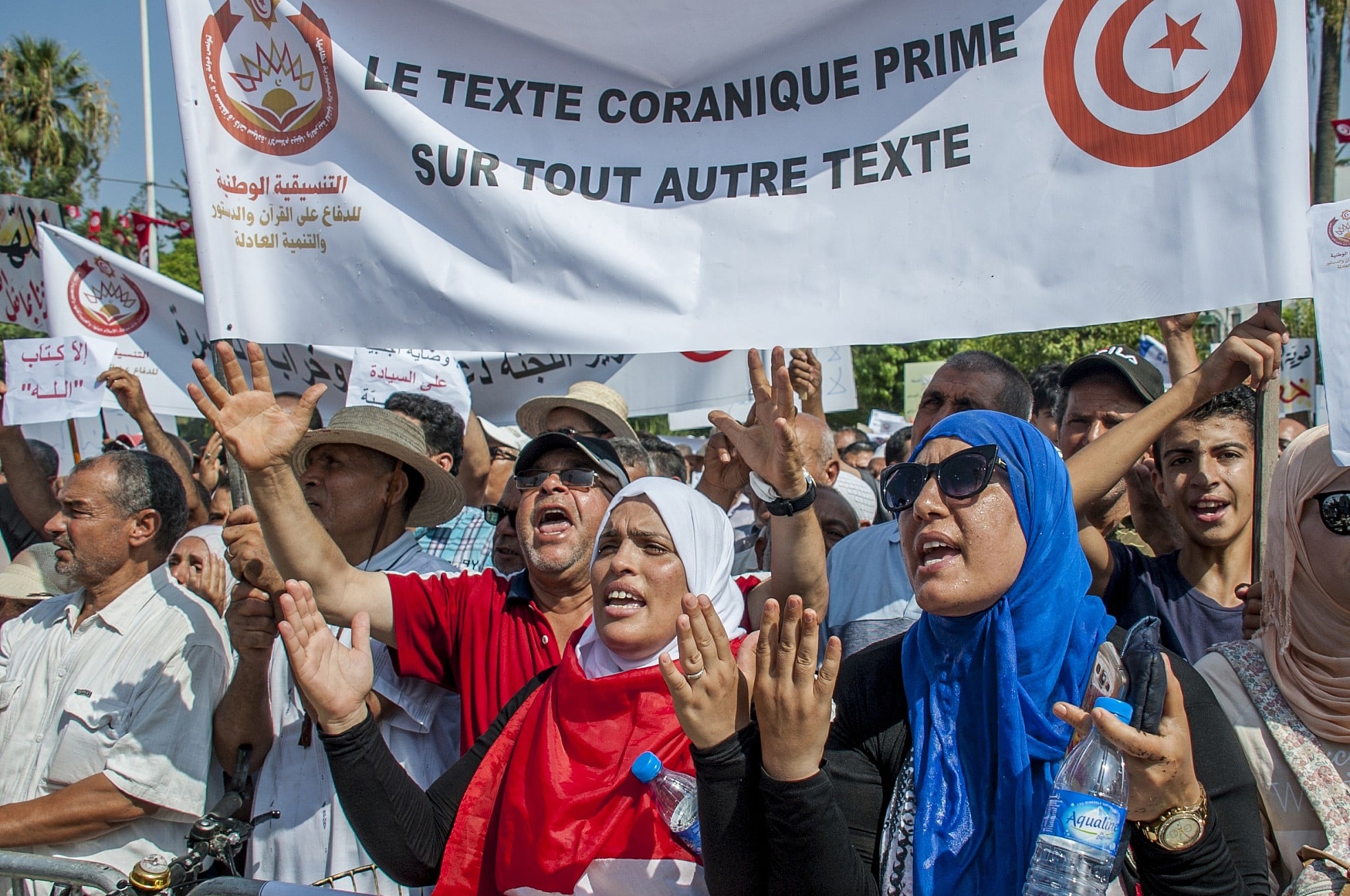
People demonstrate with a banner reading “Quran text before any other text” during a demonstration in Tunis, August 11, 2018. (AP Photo/Hassene Dridi)
Since independence from France in 1956, Tunisia has been a standard-bearer in the Muslim world for women’s rights. Last month, a woman from Tunisia’s moderate Islamic party was elected mayor of Tunis, the capital, the first time a woman has held the post.
Get The Times of Israel's Daily Editionby email and never miss our top stories
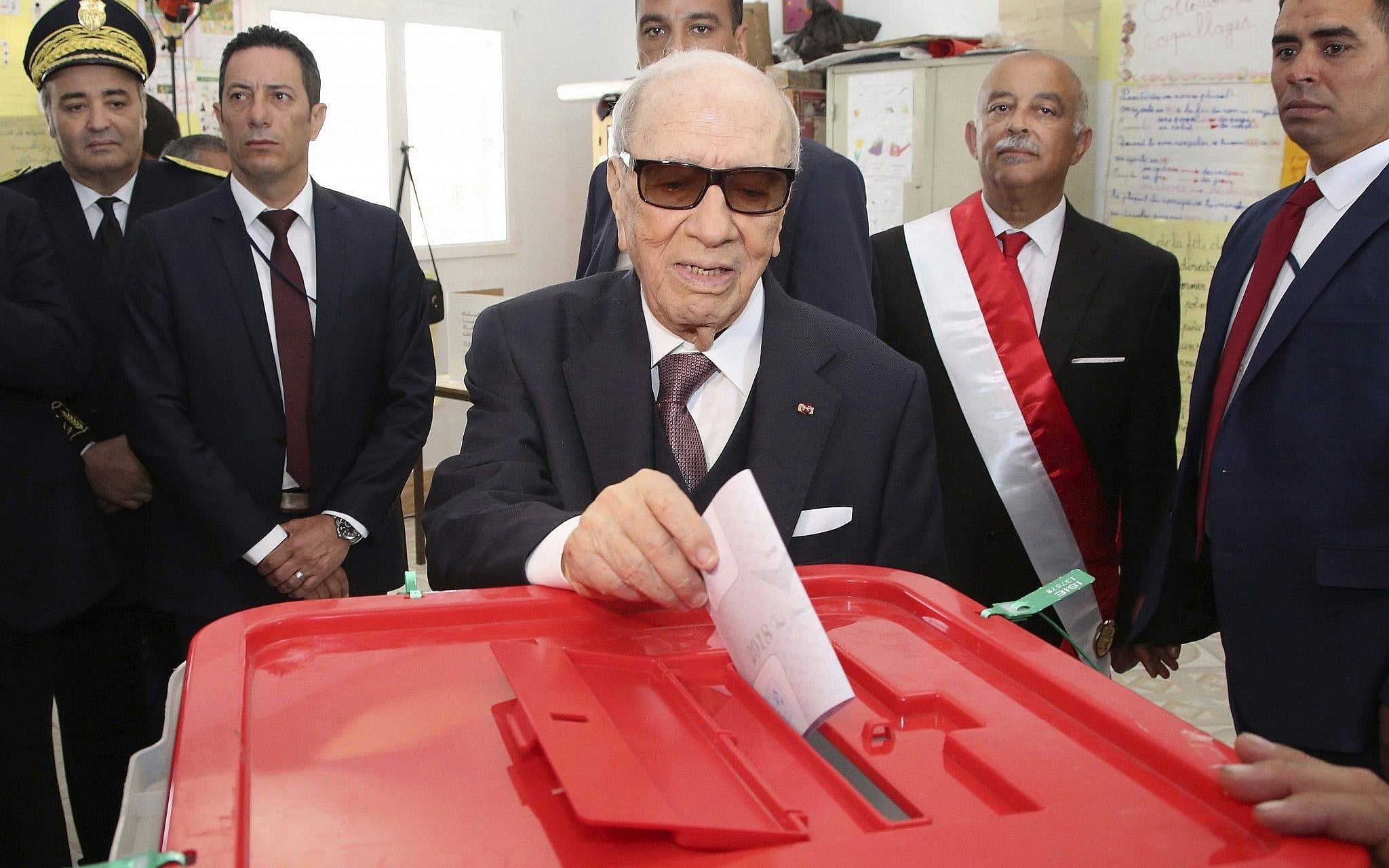
Tunisian President Beji Caid Essebsi casts his vote for city and town councils at a polling station in La Soukra, outskirts of Tunis, Tunisia, on May 6, 2018. (Slim Abid/Tunisian Presidency via AP)
The president’s decision is based on the recommendations of a 300-page government report known as the Colibe report. It recommended the change in inheritance rights, as well as proposals to end the death penalty and legalize homosexuality, which is currently outlawed in Tunisia is outlawed and punished with three years in prison.
Essebsi said Monday his decision is based on Article 2 of the country’s Constitution, which he said “stipulates that Tunisia is a state based on citizenship, the will of the people and the supremacy of law” rather than religion.
On Saturday, thousands of fundamentalist men and veiled women marched under a blazing sun from Tunis to Bardo, outside the capital, where Tunisia’s parliament is located, to protest the Colibe report.
Advertisement
Help us report truthfully on social media
As a multimedia journalist, my job is to take the quality, fact-based journalism produced by The Times of Israel newsroom and make it accessible across every platform — from Instagram posts to podcasts to short-form videos.
This is how many, especially young people, consume news these days. But misinformation is rampant on social media. Our team at ToI produces accurate, responsible short-form reporting on Israel and the Jewish world.
If you believe in the importance of factual social media journalism, please consider joining our reader support group, The Times of Israel Community. Your financial support is essential to sustain responsible multimedia reporting.
We’re really pleased that you’ve read X Times of Israel articles in the past month.
That’s why we started the Times of Israel - to provide discerning readers like you with must-read coverage of Israel and the Jewish world.
So now we have a request. Unlike other news outlets, we haven’t put up a paywall. But as the journalism we do is costly, we invite readers for whom The Times of Israel has become important to help support our work by joining The Times of Israel Community.
For as little as $6 a month you can help support our quality journalism while enjoying The Times of Israel AD-FREE, as well as accessing exclusive content available only to Times of Israel Community members.
Thank you, David Horovitz, Founding Editor of The Times of Israel


 Add ToI as a Preferred Source on Google