

Turkey spends $6.5 billion to boost ‘Steel Dome’ air defenses amid Israel tensions
Erdogan asserts system is built to mirror Israel’s Iron Dome and will put his country ‘in a different class in terms of air defense’; it’s expected to take years to complete
 Add ToI as a Preferred Source on Google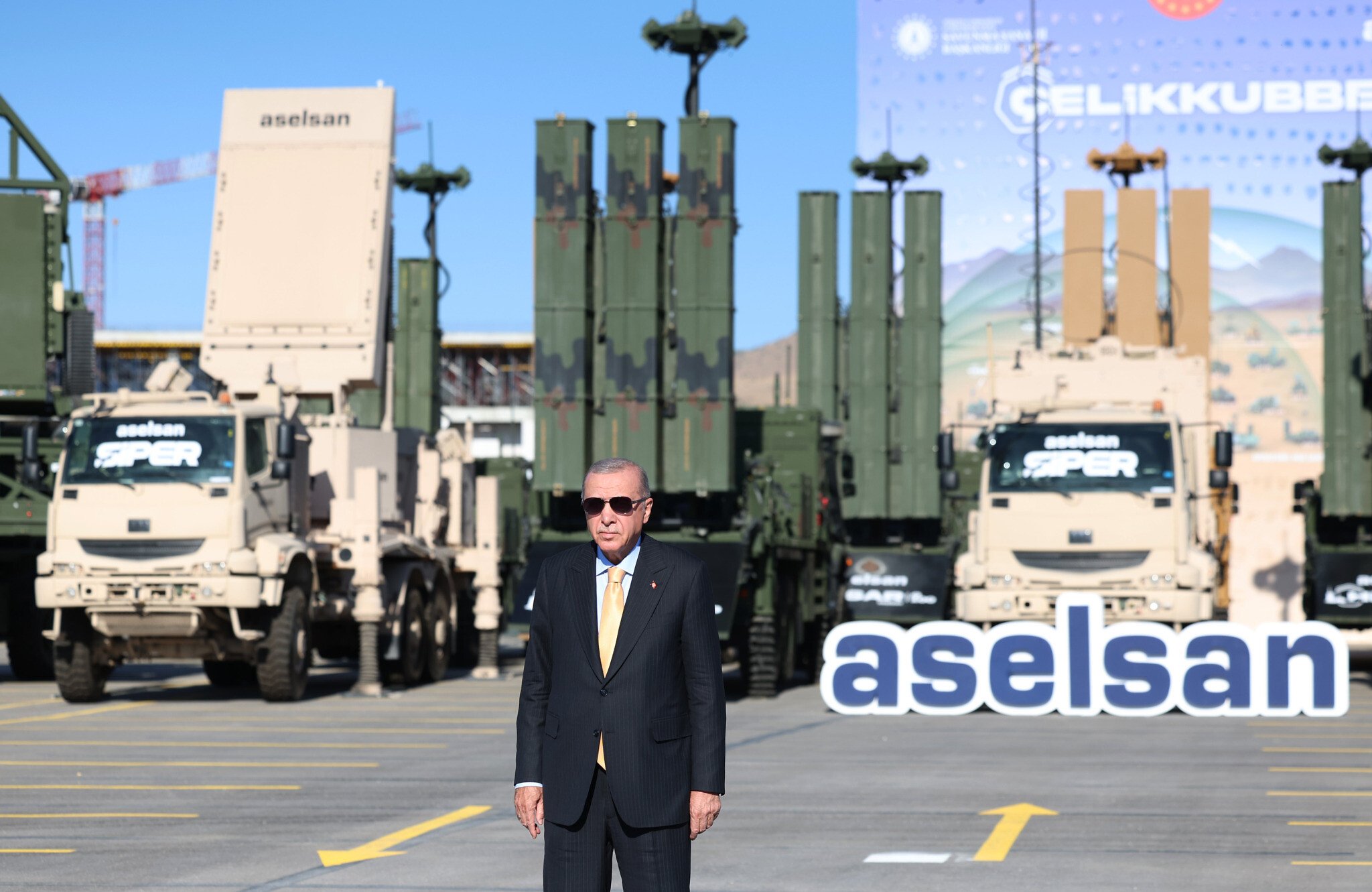
ANKARA — Turkish defense companies signed $6.5 billion worth of contracts to reinforce and develop Turkey’s integrated, multi-layered Steel Dome air defense system, the Turkish Defense Industries Presidency (SSB) said on Wednesday.
NATO member Turkey, which in recent years has significantly ramped up its defense industry production and reduced dependence on external suppliers, first announced plans to build its Steel Dome — similar to Israel’s Iron Dome system — in July 2024.
The project is composed of 47 components, including radars, missiles, electro-optical sensors, command and control centers, and air defense elements with different ranges.
In August, at a ceremony celebrating the delivery of several air defense systems, Turkish President Recep Tayyip Erdogan said that “recent conflicts around us have revealed the importance” of radar systems detecting incoming threats from the air.
“Unless a country can develop its own radar and air defense system, it cannot look to its future with confidence in the face of current security challenges, especially in our region,” he added. “We are aware of the importance of not leaving anything to chance… With the Steel Dome, we will now be in a different class in terms of air defense.”
Strikes by Israel — the Middle East’s most advanced military with hundreds of US-supplied F-15, F-16 and F-35 fighters — on Turkey’s neighbors Iran and Syria, as well as other regional countries, unnerved Ankara in the last year and pushed it to ramp up air power and air defense to counter any possible threats.
Israel’s September strike in Qatar, which hit the Hamas office in Doha, unsuccessfully targeting several top members of the terror group’s political leadership, likely also added to Turkey’s worries, as Ankara also hosts a Hamas office and Erdogan has been a vocal Hamas supporter for years.
While Israel has yet to threaten Turkey directly, relations between the two countries have deteriorated severely over the course of the war in Gaza, with Erdogan’s government recently issuing arrest warrants for alleged genocide against Prime Minister Benjamin Netanyahu and 36 other senior Israeli officials.
Turkey also last year joined South Africa’s case accusing Israel of genocide at the International Court of Justice, an accusation that Jerusalem has repeatedly rejected as false and antisemitic.
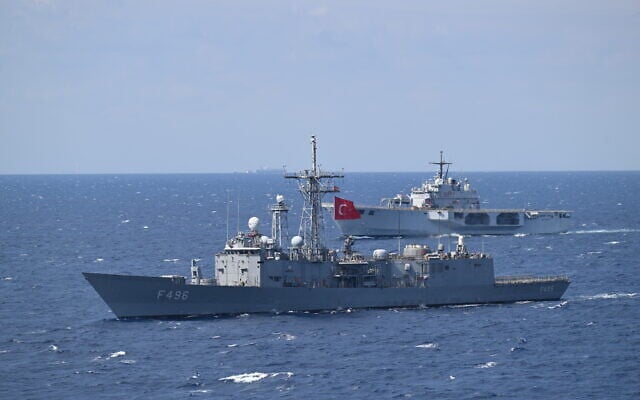
As the tensions in the region have continued to grow, Turkey has boosted its defense spending, and has become a leading manufacturer and exporter of arms, especially drones, which have been used in conflicts in Ukraine, Syria, Nagorno-Karabakh, and across Africa.
In a statement, SSB chairman Haluk Gorgun said the contracts included combat systems and their advanced versions, which would be developed by Roketsan, adding that the Steel Dome would be made of fully domestic systems.
Gorgun said the contracts would help increase Turkey’s deterrence, while also contributing to efforts to increase the range and scope of its combat systems.
The chairmen of defense firms Aselsan and Roketsan said the contracts were of “strategic importance,” and added they included space and air defense systems, anti-tank systems, and other strategic systems.
Turkey has long said it is working to build up its defenses, including long-range missiles, although officials and analysts say the Steel Dome project is years away.
Gorgun said Turkey was now among the top exporting countries in the world in the defense industry.






The Times of Israel Community.