

Turkey’s takeover of northern Syria all but certain, but will come at a price
Erdogan’s forces face formidable opponent in Kurds, who are fighting in their own territory on their own terms, drawing blood that will test support at home for Turkish president

 Add ToI as a Preferred Source on Google
Avi Issacharoff, The Times of Israel's Middle East analyst, fills the same role for Walla, the leading portal in Israel. He is also a guest commentator on many different radio shows and current affairs programs on television. Until 2012, he was a reporter and commentator on Arab affairs for the Haaretz newspaper. He also lectures on modern Palestinian history at Tel Aviv University, and is currently writing a script for an action-drama series for the Israeli satellite Television "YES." Born in Jerusalem, he graduated cum laude from Ben Gurion University with a B.A. in Middle Eastern studies and then earned his M.A. from Tel Aviv University on the same subject, also cum laude. A fluent Arabic speaker, Avi was the Middle East Affairs correspondent for Israeli Public Radio covering the Israeli-Palestinian conflict, the war in Iraq and the Arab countries between the years 2003-2006. Avi directed and edited short documentary films on Israeli television programs dealing with the Middle East. In 2002 he won the "best reporter" award for the "Israel Radio” for his coverage of the second intifada. In 2004, together with Amos Harel, he wrote "The Seventh War - How we won and why we lost the war with the Palestinians." A year later the book won an award from the Institute for Strategic Studies for containing the best research on security affairs in Israel. In 2008, Issacharoff and Harel published their second book, entitled "34 Days - The Story of the Second Lebanon War," which won the same prize.
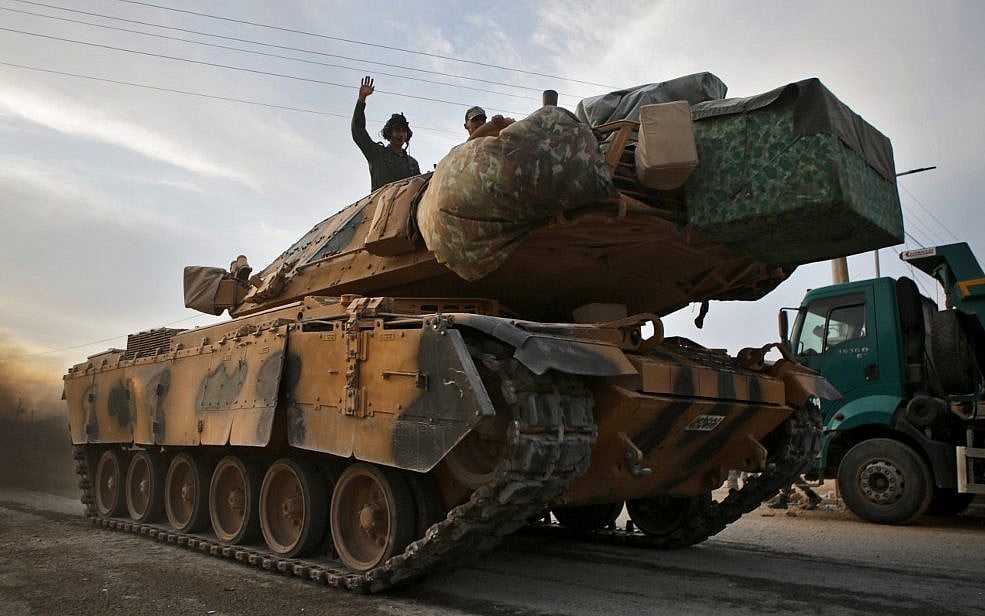
In the deepening military conflict in northern Syria, there’s no doubt that the Turkish army enjoys a clear advantage over Kurdish forces.
The Turks — with their advanced air force, armored corps, attack drones and technological capabilities — are expected to soon overtake the remaining Kurdish-controlled territory in northern Syria.
Nevertheless, the latest updates after four days of fighting suggest that a total Turkish takeover of Kurdish lands, which reach a depth of 30 kilometers from the border, will not be a simple task.
Four Turkish soldiers have been killed since the beginning of the offensive that began on Wednesday, including two who were killed in Syria’s northwest.
At the same time, the Kurdish fighters in the region, the Syrian Democratic Forces, announced Saturday morning that they intended to send reinforcements into battle zones such as Ras al-Ayn and Tell Abyad.
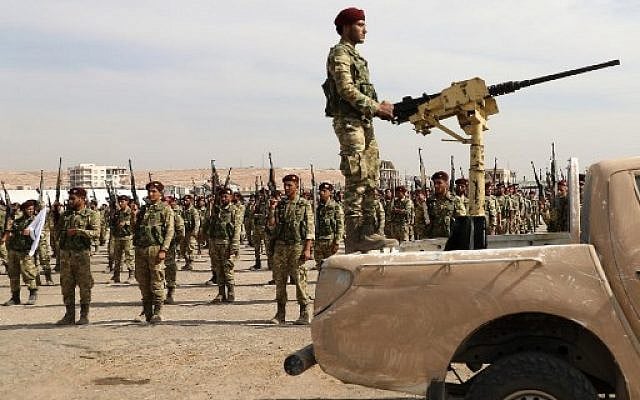
The takeover is only a matter of time, with the Turks progressively gaining ground on Friday and Saturday.
But it’s also worth remembering something about this very same Ras al-Ayn: In November 2012, powerful Syrian opposition jihadist forces, such as the al-Nusra Front, launched an offensive to conquer the village — only to encounter a fierce adversary in the Kurdish fighters who were ruling some of the area.
Ras al-Ayn was split into two during months of intensive fighting, but the Kurdish forces eventually managed to take the city and run out the jihadists with almost no outside help.
This is just one of many stories that characterize the resolve of the Kurdish fighters during the peak years of the Islamic State, as jihadist forces wreaked havoc across the Middle East.
After IS began its expansion, dealing blows to the armies of Syria and Iraq, the jihadists set their sites on a small Kurdish town called Kobane, which straddles Syria’s border with Turkey.
The forces in the city were commanded by a female fighter from the YPG, a Kurdish group deemed by President Recep Tayyip Erdogan’s government a terrorist organization over its ties with the Turkey-based PKK.
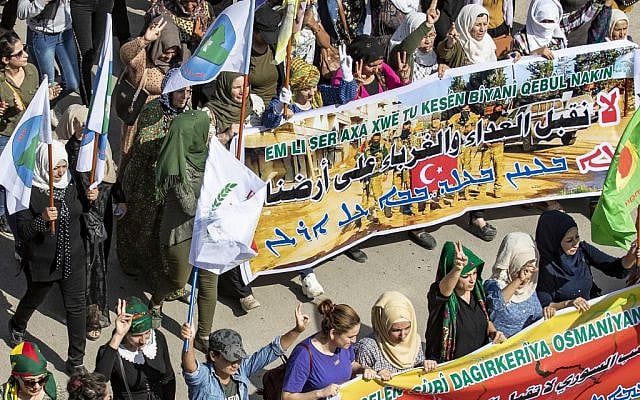
After months of an IS siege on the town, the invaders were forced to withdraw from the sector, marking a tipping point for the Kurds and broader coalition forces in the fight against the Islamist terror group.
Certainly the Turkish army is more than a step above the mercenaries of IS or the al-Nusra Front, and the Kurdish ability to hold off such a formidable power will be limited at best.
Still, the Turkish occupation of northeast Syria will come at a lethal price. Miles deep into hostile territory, the Turkish army will become a target for guerrilla attacks, with the Kurds implementing tactics they’ve used for decades in battles with the Syrians and Iraqis.

Turkey will also have to deal with the consequences of thousands of IS fighters in Kurdish prisons who could find themselves freed during the mayhem of war.
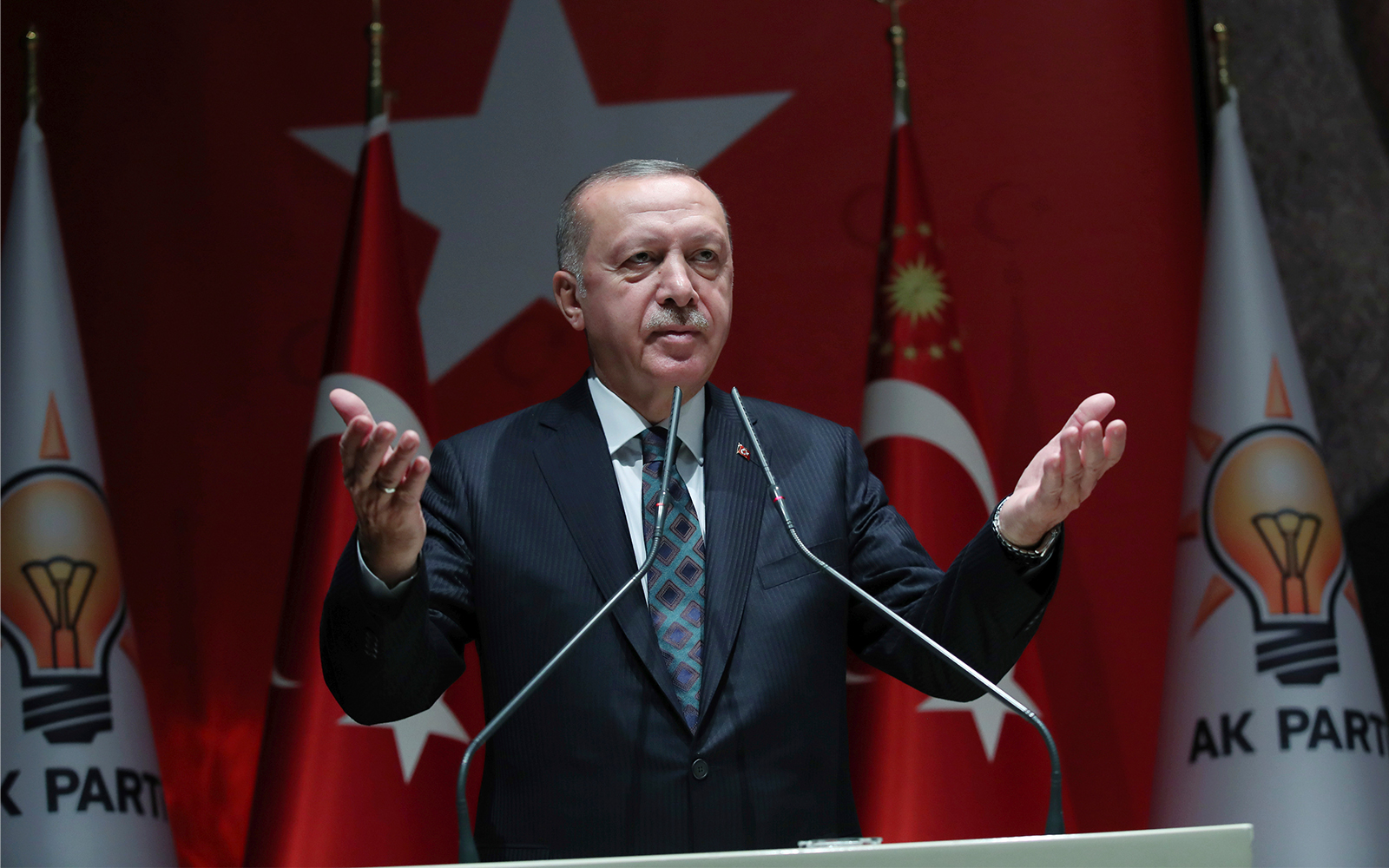
Erdogan may eventually be able to hail his achievements over the Syrian Kurds to his ardent supporters.
But the Turkish president will also face increasing domestic criticism when the number of casualties among his fighters increases, as it is certain to do.




The Times of Israel Community.